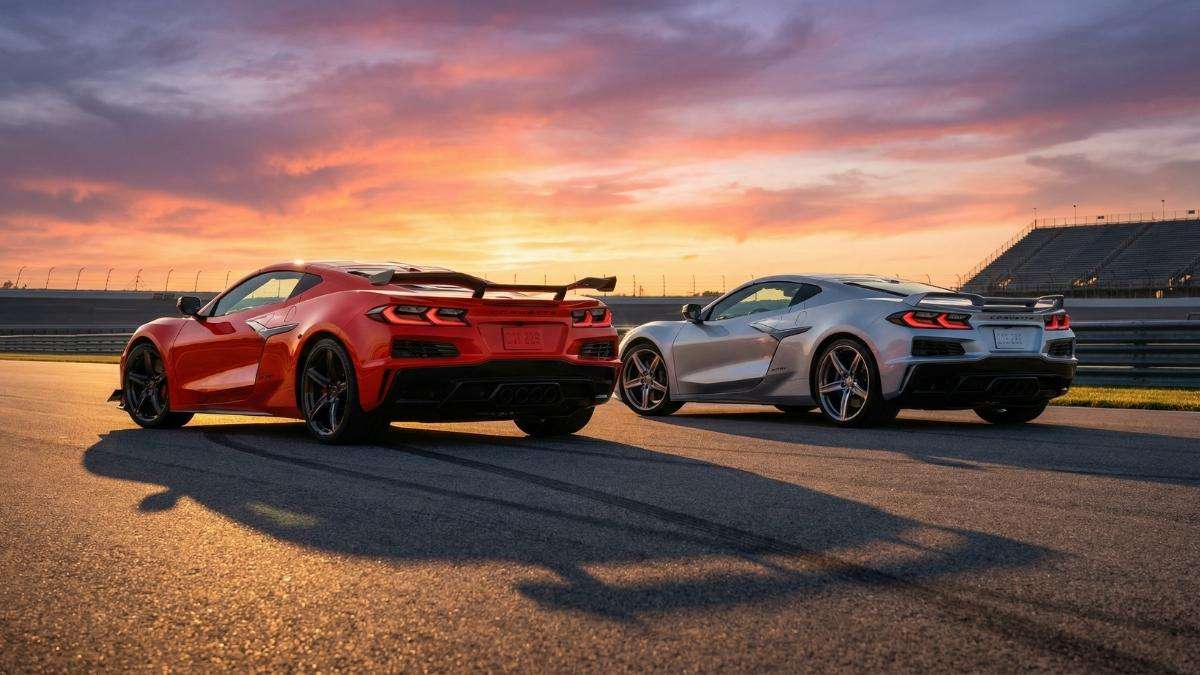

It appears the "no-flip" era for the electrified Corvette is officially coming to a close. In a move that signals a significant shift in supply chain stability and market demand, General Motors has effectively lifted the resale restriction on the 2025 and 2026 Corvette E-Ray and Z06 models.
For the past two years, the fear of "flipping"—buying a high-demand car and immediately selling it for a massive profit—drove GM to institute a controversial policy: sell your car within the first six months, and you lose your warranty and are blacklisted from future high-demand vehicle orders. But as of late November 2025, that policy has been relaxed for the E-Ray and Z06, though it notably remains in force for the monstrous ZR1 flagship.
This decision raises several critical questions: Did the program work? How has the E-Ray actually performed in the marketplace? And perhaps most importantly, does this mean the "electric Corvette" dream is fading or just getting started?
The Rise and Fall of Resale Restrictions
Resale restriction programs are a double-edged sword in the automotive world. Designed to protect the brand's image and ensure true enthusiasts get behind the wheel rather than profit-seeking scalpers, they have a mixed track record of success.
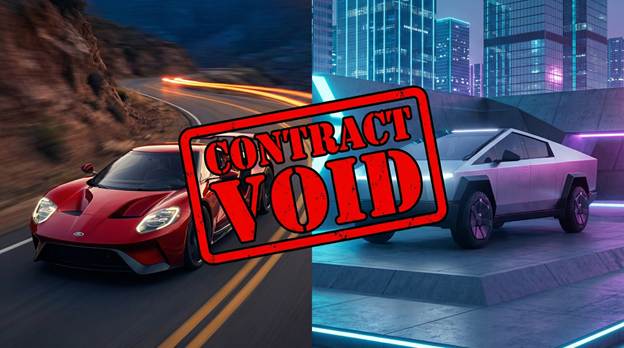
The most famous modern example was the Ford GT, where Ford famously sued wrestler John Cena for selling his car too early. While Ford won the legal/PR battle in the short term by enforcing the contract, it created a chilling effect for owners who felt they didn't truly "own" their vehicle. More recently, Tesla implemented a similar clause for the Cybertruck, threatening a $50,000 penalty for early resale. However, Tesla flip-flopped on the policy, removing and then reinstating clauses as market premiums fluctuated.
Are these programs successful? Yes, but only temporarily. They work exceptionally well during the initial 6-to-12 months of "hype" when supply is non-existent. They prevent the bad optics of a $100,000 car selling for $250,000 on an auction site a week after launch. However, as production ramps up, these restrictions become a nuisance. They transform from a "shield" against scalpers into "handcuffs" for legitimate owners who may need to sell due to life changes. GM's decision to drop the restriction now is a tacit admission that the "hype phase" for the E-Ray is over, and the "market phase" has begun.
The E-Ray: A Misunderstood Market Performer?
The Corvette E-Ray has occupied a strange middle ground since its debut. It’s not the screaming track weapon that the Z06 is, nor is it the entry-level bargain of the Stingray. It is the sophisticated, all-weather grand tourer. But has it been a sales hit?
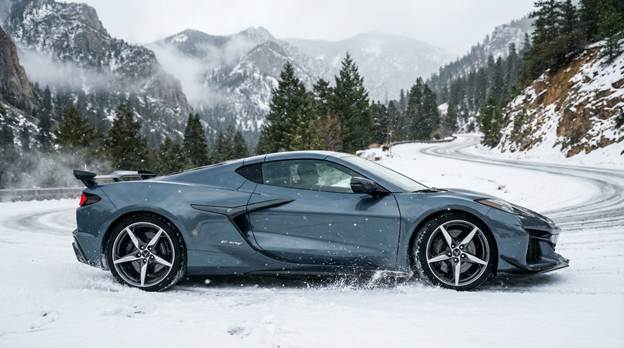
Production numbers suggest the E-Ray remains a niche product, accounting for roughly 3-5% of total C8 production in recent tallies. Unlike the Z06, which commanded $50,000 markups for years, E-Ray prices softened much faster. By late 2024 and throughout 2025, reports surfaced of E-Rays sitting on dealer lots, with some even selling below MSRP.
The "marketing disaster" some critics cite is less about the car's quality—which is widely praised—and more about its positioning. Traditionalists wanted a V8; EV enthusiasts wanted a plug. The E-Ray gave us a hybrid that doesn't plug in, confusing some buyers. However, for those who understand its mission—0-60 in 2.5 seconds and all-season usability—it is arguably the best "real world" Corvette ever made.
Impact on Sales: Why Freedom Buys Confidence
Lifting the resale restriction will likely have a positive impact on sales.
When a manufacturer enforces a strict "no-sale" clause, it artificially suppresses the buyer pool. Hesitant buyers, worried they might not like the hybrid system or concerned about their own financial fluidity, often stay on the sidelines. No one wants to buy a $120,000 asset they are legally forbidden from liquidating if an emergency strikes.
By removing this barrier, GM is signaling confidence. They are telling consumers, "We are making enough of these that you don't need to scalp them, and if you need to sell, you can." This normalizes the transaction. It allows the second-hand market to find the car's true value naturally, rather than artificially propping it up or suppressing it through fear of blacklisting. While immediate flippers might try to dump inventory, the long-term stabilization of the used market will give new buyers the confidence that they are purchasing a vehicle, not signing a restrictive lease disguised as a loan.
The Electric Horizon: When Will We See the Corvette EV?
With the E-Ray restriction lifted, eyes naturally turn to the "Ultium" Corvette—the fully electric successor. Early rumors and aggressive roadmaps pointed to a potential 2025 reveal, but the reality of the EV market slowdown has shifted those timelines.
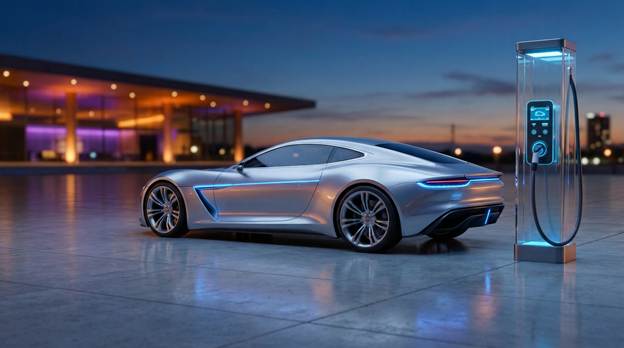
Current intelligence suggests the fully electric Corvette has been pushed back significantly. While GM remains committed to an all-electric future, trusted automotive sources like Car and Driver have updated their projections, indicating the model may not arrive until at least 2030.
This delay makes strategic sense. The E-Ray bridges the gap perfectly, offering electrification benefits (torque fill, AWD) without the range anxiety or charging infrastructure hurdles that currently plague pure EV sports cars. GM seems content to let the C8 platform—especially the upcoming ZR1 and Zora—finish its glorious combustion-powered run before pivoting completely to battery power.
Wrapping Up
General Motors’ decision to lift the resale restriction on the Corvette E-Ray and Z06 is a victory for the free market and the consumer. It acknowledges that supply chains have healed and that the artificial scarcity tactics of the post-pandemic era are no longer necessary for these models. While the program successfully curbed the wildest excesses of "flipping" during the launch window, its removal will breathe normalcy back into the Corvette ecosystem.
The E-Ray can now stand on its own merits. It doesn't need a legal threat to keep owners in the driver's seat—its 2.5-second launch and all-weather capability should be incentive enough.
Disclosure: Images rendered by Artlist.io
Rob Enderle is a technology analyst at Torque News who covers automotive technology and battery developments. You can learn more about Rob on Wikipedia and follow his articles on Forbes, X, and LinkedIn.
Set Torque News as Preferred Source on Google
Follow us today...