


For years, my automotive focus remained firmly fixed on the refined luxury of the West. As a long-time Jaguar enthusiast, I followed the brand through its various evolutions, drawn to the "grace, space, and pace" that defined the British icon. However, my interest in Jaguar naturally led me to its parent company, Tata Motors. While I’ve watched Jaguar struggle to find its footing in the pure-electric era, Tata has been quietly orchestrating a revolution in its home market of India.
The recent launch of Tata’s ultra-cheap electric vehicle (EV), priced at approximately $7,000 (roughly 5.8 Lakh INR), is more than just a local product launch. It is a shot across the bow of every legacy automaker in Detroit and Stuttgart. Supported by aggressive protectionist policies and a deep understanding of emerging market needs, Tata is proving that the "Global South" is where the real EV race is being won—and currently, the U.S. is not even on the podium.
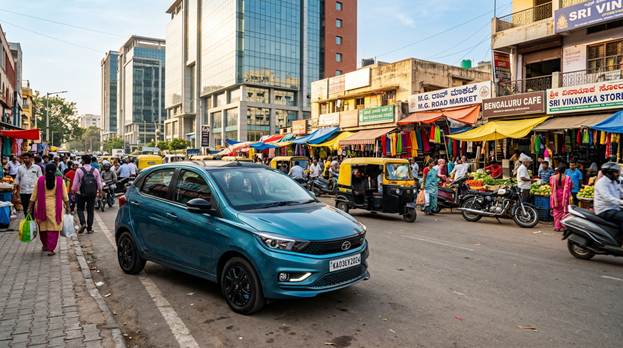
The Specs: What Does $7,000 Buy You?
When Americans think of a $7,000 car, they usually imagine a decade-old used sedan with high mileage. Tata has flipped this script by delivering a brand-new, purpose-built electric hatchback. While the final naming conventions vary by trim, the core architecture—the Tiago.ev platform—offers surprising utility.
The base model features a 19.2 kWh battery pack, delivering a MIDC (Modified Indian Driving Cycle) range of approximately 250 kilometers (155 miles). For the urban commuter in Delhi or Mumbai, where average daily speeds rarely exceed 25 mph due to congestion, this is more than sufficient. The motor produces roughly 60 horsepower and 110 Nm of torque, allowing for a 0-60 km/h (37 mph) sprint in just 5.7 seconds.
Technologically, it isn't a "penalty box." It features connected car tech, automatic climate control, and multiple regenerative braking modes. By utilizing a high-voltage system, Tata ensures that the car can utilize DC fast charging, recouping 10% to 80% of its battery in under an hour.
Why the $7,000 Price Point is a Global Game Changer
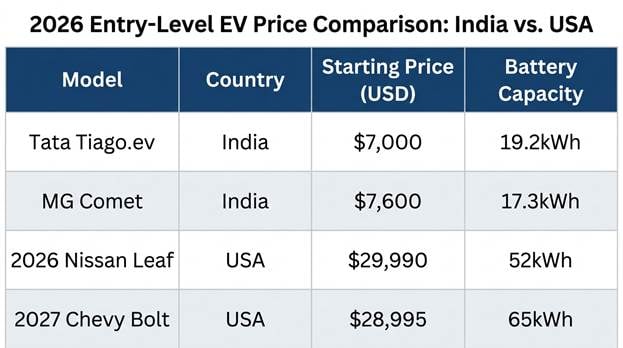
The "EV transition" in the West has hit a pricing plateau. With the average price of a new EV in the U.S. hovering around $50,000, electrification remains a luxury pursuit. Tata’s $7,000 entry point changes the fundamental math of mobility.
In the Global South—comprising India, Southeast Asia, Latin America, and Africa—the barrier to EV adoption isn't "range anxiety"; it’s "price anxiety." According to OICA’s latest news digest, the shift toward affordable mobility is the primary driver of global production volume increases.
By hitting the $7,000 mark, Tata has made the Total Cost of Ownership (TCO) of an EV lower than that of a budget petrol car. This isn't just about selling cars; it’s about capturing the next billion consumers. While Ford and GM focus on $70,000 electric pickups, Tata is building brand loyalty with the rising middle class of the world’s most populous nation.
Viability: Quality, Safety, and Performance
The immediate question for Western skeptics is: Is it safe? In the past, Indian-made budget cars performed poorly in crash tests. However, Tata has made safety a cornerstone of its brand identity. Most of Tata’s modern fleet carries 4 or 5-star GNCAP ratings. Specifically, the Tiago.ev maintains a 4-star safety rating, a benchmark that many of its regional rivals fail to reach.
Performance-wise, the car is optimized for its environment. It doesn't need to cruise at 85 mph on a freeway; it needs to survive potholes, extreme heat, and stop-and-go traffic. The liquid-cooled battery pack is a critical inclusion here, ensuring longevity in India’s 110°F summers—a feat many early budget EVs failed to achieve.
The Competitive Landscape: The Race to the Bottom
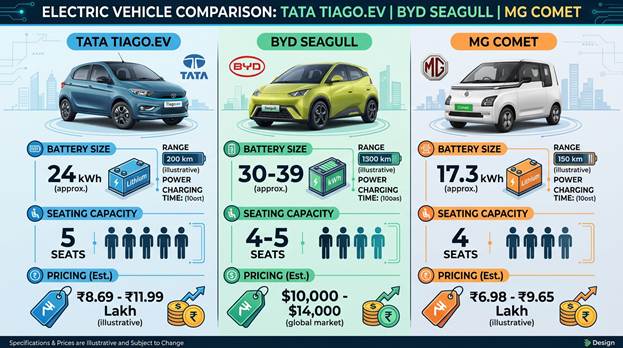
Tata is leading the charge in South Asia, but competition is stiffening. The primary rival is the BYD Seagull (Dolphin Mini).
- BYD Seagull: Starting around $10,000 globally, it offers more refined interiors and BYD’s Blade Battery. However, Tata’s $7,000 price point undercuts BYD significantly in India due to local manufacturing.
- The MG Comet: A quirky micro-EV starting at roughly $7,600. It is tech-heavy but lacks the traditional hatchback utility that Tata provides.
Tata’s advantage lies in "Made in India" protectionism. The Production Linked Incentive (PLI) schemes effectively subsidize the domestic supply chain, allowing them to scale without the immediate threat of being undercut by Chinese giants.
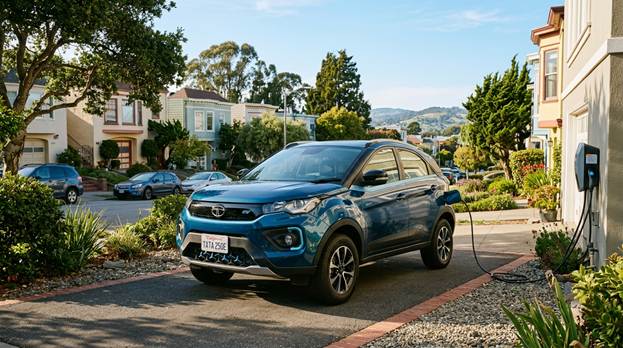
Could this car work in America? Under current regulations, the answer is a complicated "no," but the market demand says "yes." To make the Tata EV "U.S. legal," the company would need to add structural bracing and advanced sensor suites. Furthermore, since the federal tax credit has become more volatile, the affordability gap in the U.S. has widened.
Wrapping Up
The Tata $7,000 EV is a masterclass in "frugal engineering." It challenges the Western notion that an EV must be a high-performance luxury gadget. By focusing on essential mobility, safety, and incredible cost-efficiency, Tata has created a vehicle that can actually displace internal combustion engines on a mass scale.
While my heart remains with the classic lines of a Jaguar E-Type (here is mine), my head is firmly watching Tata. They are no longer just the "custodians" of British heritage; they are the architects of the future of global mobility. If legacy U.S. automakers don't find a way to compete in this "race to the bottom" (in price), they may find themselves relegated to being niche players in an increasingly affordable, electric world.
Disclosure: Images rendered by Artlist.io
Rob Enderle is a technology analyst at Torque News who covers automotive technology and battery developments. You can learn more about Rob on Wikipedia and follow his articles on TechNewsWord, TGDaily, and TechSpective.
Set Torque News as Preferred Source on Google
Follow us today...







Comments
Delivering over 7m/kwh means…
Permalink
Delivering over 7m/kwh means an incredibly light small vehicle going at golf cart speeds. Don’t see its utility outside of dense urban areas. 20kwh battery not sufficient for usage anywhere else.