The neon lights of Miami Art Week usually illuminate the future of the avant-garde, a place where boundaries are pushed, and taste is subjective. But this year, the glare is particularly harsh for Jaguar. As the art world descends on South Beach, the British marque finds itself in the center of a storm that has been brewing for twelve months. The Jaguar Type 00, the concept car that was supposed to herald a "fearless" new era of "Exuberant Modernism," is back in the conversation—but its architect is not.
Just days ago, news broke that Gerry McGovern, the design titan responsible for Jaguar Land Rover’s (JLR) aesthetic revolution, has reportedly been dismissed. The timing, coinciding with the anniversary of the Type 00’s controversial debut at this very event last year, is impossible to ignore. It signals a panic at the highest levels of Tata Motors and raises a burning question: In the wake of this leadership earthquake, will the car that broke the internet—and perhaps the brand—ever actually see a showroom?
The King is Dead, Long Live the... What?
For two decades, Gerry McGovern was the unassailable arbiter of taste at JLR. He successfully guided Land Rover from a utility brand to a luxury powerhouse with the Defender and Range Rover. But his tenure at Jaguar, specifically the "Reimagine" strategy, has ended in abrupt ignominy.
Reports indicate that McGovern was "escorted out" of the building earlier this week, a brutal end for an executive of his stature. This move comes shortly after P.B. Balaji took the reins as CEO, tasked with stopping the bleeding. The reason for the decapitation is clear to anyone who has opened a web browser in the last year: the disastrous reception of the "Copy Nothing" rebrand.
The strategy was bold: delete the heritage, forget the "Leaper," and reinvent Jaguar as an ultra-luxury entity closer to a fashion house than a carmaker. But the execution was catastrophic. The marketing campaign launched in late 2024 featured androgynous models in techno-color outfits but famously included no cars, leading to widespread mockery and accusations that the brand had lost the plot. The firing of McGovern is the board’s admission that the "Bud Light moment" of the automotive world was not just a PR stumble, but a strategic failure.
Anatomy of a Mess: The Type 00
To understand why the design chief had to go, one must look at the car itself. The Type 00 (pronounced "Type Zero Zero") is a monolith of contradictions. Unveiled in Miami last year, it was intended to shock. It succeeded.
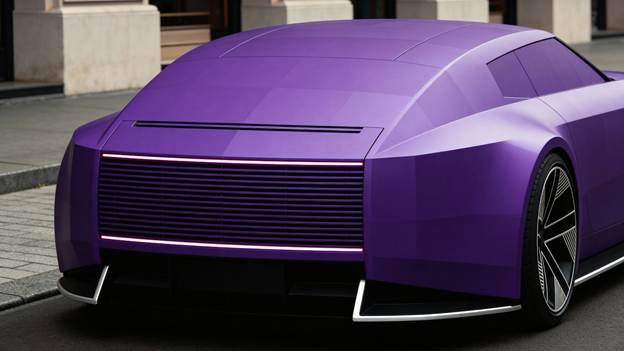
Visually, the car is a slab-sided fastback with a hood long enough to land a Cessna on, yet it contains no engine. It features a "pantograph" rear screen that isn't a window at all, but a digital display, necessitating a reliance on cameras that many purists find unnerving. The "Miami Pink" and "London Blue" paint jobs, combined with the removal of the iconic growler logo in favor of a mixed-case "JaGUar" script, felt like a deliberate provocation.
The design has been slammed as "robotic," "chunky," and reminiscent of a low-polygon video game asset. Critics argued that in trying to "Copy Nothing," Jaguar ended up copying the brutalist anonymity of a generic sci-fi prop. By prioritizing shock value over the "Grace, Space, Pace" ethos that defined the E-Type and XJ, McGovern alienated the very enthusiasts who kept the brand alive during its lean years.
Abandoning the Base: A Dangerous Gamble
Perhaps the most problematic aspect of the Type 00 era is the explicit disdain for Jaguar’s existing customers. In a move that will be studied in business schools for decades, Jaguar executives frankly admitted they expected to lose 85% of their current customer base.
The plan was to abandon the "value luxury" segment—the territory of the F-Pace, XE, and XF, where cars sold for $50,000 to $80,000—and leapfrog directly into the ultra-luxury stratosphere to fight Aston Martin and Bentley. The target? A new, younger, wealthier, and "progressive" demographic willing to pay $130,000+ for an electric GT.
This strategy ignored a fundamental reality: brand cachet is built over decades, not declared in a press release. You cannot simply tell a BMW 5-Series driver that you are now a competitor to Rolls-Royce because you raised your prices and deleted your rear window. By killing production of their internal combustion models early to create a "firebreak" before the new EVs arrived, Jaguar created a vacuum. Dealers have had nothing new to sell for nearly a year, and sales in Europe plummeted 96.5% in April 2025. They burned the bridge before building the boat.
Will the Type 00 Still Be Built?
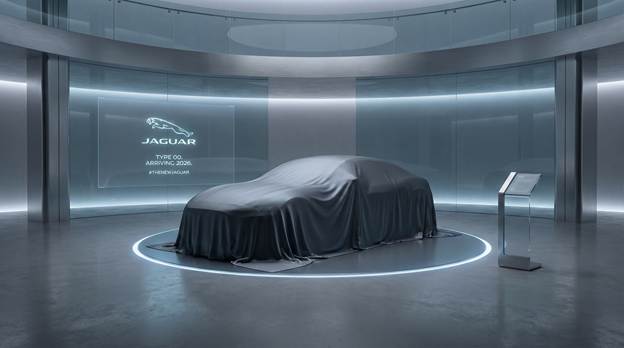
With McGovern gone, the fate of the Type 00 is the billion-dollar question. The official line is that the production model, a four-door GT based on the Jaguar Electric Architecture (JEA), is still coming. However, its launch has already been delayed until 2026, a slip that suggests internal turmoil was raging long before the public firing.
It is unlikely Jaguar will scrap the car entirely. The JEA platform is finished, tooling is likely ordered, and the company has invested too much to turn back now. However, Balaji’s arrival and McGovern’s exit suggest we might see a frantic "de-weirding" of the final product.
We might see the return of a rear window. We might see the "JaGUar" script quietly retired in favor of a modernized Leaper. The fundamentals of the car—1,000 horsepower, 430 miles of range, and rapid charging—are competitive. If the new leadership can pivot the marketing from "political statement" back to "automotive excellence," they might salvage the chassis, if not the original vision.
Wrapping Up
Jaguar is currently a brand in purgatory. It has shed its past but has been rejected by its future. The Type 00’s presence in the zeitgeist of Miami Art Week 2025 serves as a ghost of a strategy that failed before it even started.
For the Type 00 to succeed, Jaguar needs to do the one thing it forgot to do last year: build a car that people actually want to drive, rather than an art piece they are told to appreciate. With the design dictator gone, the engineers might finally get their say. If they can deliver a machine that drives like a Jag—engaging, supple, and fast—they might survive. If not, the Type 00 will be remembered not as a rebirth, but as the tombstone of a British icon.
Disclosure: Images rendered by Artlist.io
Rob Enderle is a technology analyst at Torque News who covers automotive technology and battery developments. You can learn more about Rob on Wikipedia and follow his articles on Forbes, X, and LinkedIn.
Set Torque News as Preferred Source on Google
Follow us today...