
He got a deal on a 2WD Chevy Silverado in Texas, but the moment he drove off the lot, he was stuck, and his regret was instant. What truck buyers need to know.
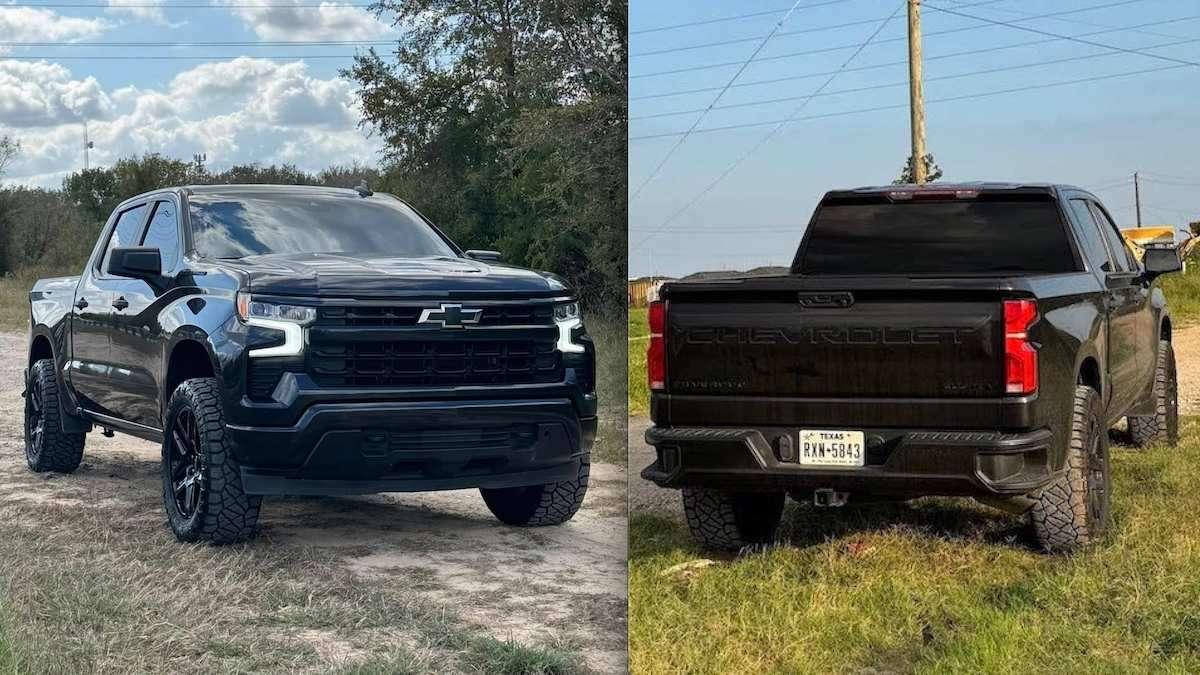
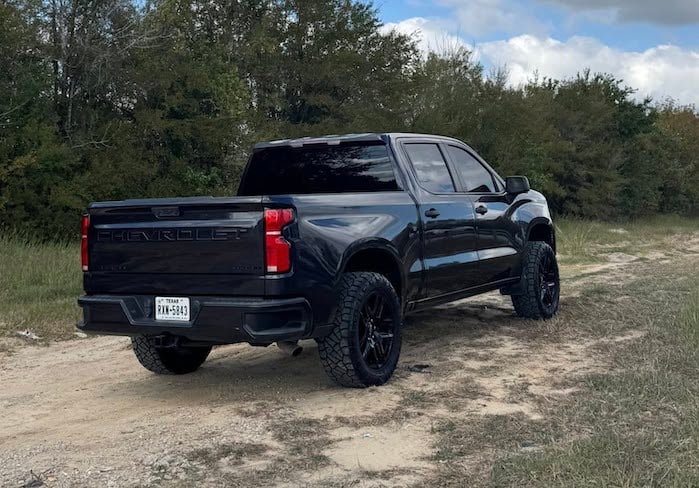
In researching the common dilemmas faced by truck buyers looking for a great deal, I found a post from Palma Salazar on the 2019 - 2026 Chevrolet Silverado & GMC Sierra Owners Facebook page that perfectly illustrates the problem. Salazar recently purchased a 2WD 2022 Chevy Silverado and, after a minor incident, is already regretting not opting for the 4WD model, especially since he lives in Texas, a state known for demanding four-wheel-drive capability.
This immediate buyer's remorse raises a critical question for all truck shoppers: Is a good deal on a 2WD pickup worth the potential sacrifice in capability?
Palma Salazar says,
"This is probably the only 'off-roading' my 2022 Chevy Silverado 2WD is gonna see in its life. Now I'm not sure I made the right choice, I hope I'm not sorry I didn't go 4WD. I live in Texas."
It's Not Just a Texas Problem
As a Senior Reporter at Torque News who has spent over a decade analyzing the truck segment, test-driving these machines, and listening closely to owners across the country, I can tell you this: Salazar's hesitation is entirely valid. It highlights a common, costly mistake that I've covered time and time again.
The initial savings on a 2WD model, which can range from $3,000 to $5,000 off the sticker price compared to its 4WD equivalent, often look attractive on paper. But as soon as you hit real-world conditions, whether it's a muddy campsite or a sudden snowstorm, that initial discount evaporates into a massive headache. The underlying issue is that truck buyers are prioritizing price over the core utility the vehicle is meant to provide.
When we consider the impact of 2WD on truck resale value and safety, the cost calculus shifts immediately. I've reported on studies, like the one in my article, that suggest a significant safety disparity. While 4WD doesn't help you stop, the increased control and traction when accelerating out of a tough spot is a lifesaver. Furthermore, in markets like Texas, Colorado, and the Pacific Northwest, 4WD is a non-negotiable feature that dramatically bolsters resale value, sometimes offsetting the original upcharge entirely.
When Buyers' Remorse Sets In
Palazar's specific post, "This is probably the only 'off-roading' my 2022 Chevy Silverado 2WD is gonna see in its life," is the perfect definition of buyer's remorse. He didn't even need to tackle a serious trail; he just required slightly soft ground to realize the deficiency. This scenario reminds me of the hard lesson I learned when I missed a crucial safety system for a good price. The lesson is identical: saving money by skipping a core, essential feature results in daily disappointment.
For those asking, is a 2WD Chevy Silverado practical in Texas?
The answer is generally no. Texas is vast, and even if you stick to pavement, you will inevitably encounter dirt roads, slick construction sites, or muddy pastures. Trucks with 2WD (especially in the rear-wheel-drive configuration standard on the Silverado) suffer from a fundamental physics problem: the light rear end struggles to find traction, especially under acceleration.
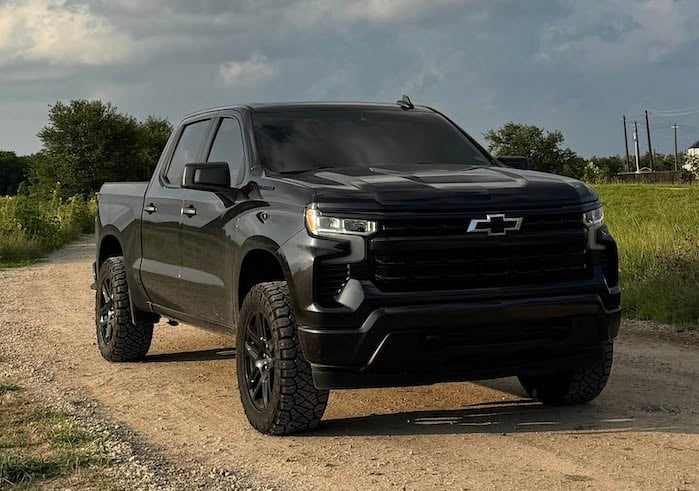
This leads us to the long-term financial risk of buying a 2WD truck. The risk isn't just getting stuck; it's the cumulative cost of limited usability. You might pass on a weekend trip, avoid a job site, or have to pay for a tow, all costs that quickly exceed the initial savings.
And that doesn't even touch on long-term reliability.
A cheap initial price doesn't guarantee a cheap ownership experience. While we're talking about drive systems, it's critical to consider the entire drivetrain, a topic I covered in My 2020 Chevy Silverado Is On Its 6th Torque Converter, I'm Shopping For a New Truck, But I Don't Think Anything Manufactured Now Is Trustworthy Anymore. If you're pushing a 2WD truck to its limits in terrain it can't handle, you are putting unnecessary stress on components like the transmission and rear differential. The savings from skipping 4WD are insignificant when compared to a major drivetrain repair bill.
How To Be a Smart Truck Buyer
So, what truck buyers need to know before settling for 2WD? You must define your non-negotiables.
Your dream truck should never be a compromise. This echoes the frustration I documented where a buyer was willing to wait months just for a specific off-road feature. If four-wheel-drive capability is a need, and in Texas, it often is, it is one of those essential truck features you should never compromise on.
To avoid truck buyer's remorse after a good deal, follow this simple rule: Don't let the price dictate your core features. If a truck's price is $4,000 cheaper but limits your usage to 10% of the time, that truck is actually worthless for that 10% of use.
Takeaways For All Truck Buyers
- Capability Over Cost: Never skip core utility (like 4WD) just for a discount. The cost of a tow dwarfs the small savings, lost work time, or diminished resale value.
- The Resale Multiplier: In 4WD-centric states (Sun Belt, Mountain West), 4WD helps secure a better trade-in or private-sale price, making the initial upcharge a wise investment.
- Define Your 1% Use Case: If you need 4WD 1% of the time, that 1% is the most critical time you will ever use your truck. Buy the capability you need for the worst-case scenario, not the daily commute.
- Traction Aids Are Not Equal: Electronic limited-slip differentials or off-road tires help, but they are not a substitute for the mechanical power distribution of a true 4WD system.
Owners Who Know
The sentiment shared by Palma Salazar is widespread among owners who realize too late the necessity of 4WD. Here is what other truck owners are saying across the web:
Reddit (r/Silverado) "I bought a 2WD WT model to save money, figured I only drive highway. Then the first time I tried to pull my small boat out of a slimy ramp, the tires just spun. Felt like an idiot. The $4K I saved cost me a $150 tow bill and a weekend of embarrassment. Never again."
Another owner says, "As a Houston contractor, I see these deals all the time. 2WD trucks sit on dealer lots longer. Buyers see the discount. They don't realize that one good rain makes the 2WD truck useless for getting tools to a muddy site. It's penny-wise, pound-foolish."
Quora - "Living in Dallas, you see tons of 2WD pickups. They're commuter trucks, not workhorses. But if you ever plan to leave dry asphalt, tow anything heavy on uneven ground, or drive during a major storm, you need 4WD. It's the cost of entry for being a truck owner.”
The Wrap Up
The story of Palma Salazar buying a 2WD Silverado in a 4WD world underscores understanding the real cost of a cheap 2WD pickup: the price you pay in capability, frustration, and eventual diminished resale value far outweighs the initial discount. Always buy the truck that meets your needs 100% of the time, even if it means waiting for the right deal on the right drivetrain.
We Want To Hear From You
If you own a 2WD truck in a demanding climate, or if you upgraded to 4WD after dealing with buyer's remorse, share your experience in the comments below!
I'm Denis Flierl, a Senior Torque News Reporter since 2012, bringing over 30 years of automotive expertise to every story. My career began with a consulting role for every major car brand, followed by years as a freelance journalist test-driving new vehicles, equipping me with a wealth of insider knowledge. I specialize in delivering the latest auto news, sharing compelling owner stories, and providing expert, up-to-date analysis to keep you fully informed.
Follow me on X @DenisFlierl, @WorldsCoolestRides, Facebook, Instagram and LinkedIn
Photo credit: Denis Flierl via Palma Salazar - Facebook post
Set Torque News as Preferred Source on Google
Follow us today...