
In my previous investigative report today, I exposed a growing financial gap in the 2024 Honda CR-V Electronic Power Steering (EPS) recall. While the replacement of the steering gearbox is covered under warranty, dealerships across the country, and notably here in my home state of Colorado, are charging owners for the essential four-wheel alignment that must follow.
As a veteran automotive journalist with decades of experience in technical advisory and mechanical analysis, I refuse to let a "free" safety repair become a $180 penalty for the consumer. Today, I am providing the "substance moat" to my initial findings: a strategic roadmap for securing a refund and forcing corporate accountability. This isn’t just maintenance; it is a consequential expense born of a factory defect.
Why the "Maintenance" Argument Fails in Colorado
Colorado drivers face unique challenges that make a precise alignment non-negotiable. Whether you are navigating the high-altitude curves of I-70 or the pothole-prone streets of Denver and Parker, a vehicle that "crabs" or pulls to one side is a liability.
When a technician "drops" the engine subframe or disconnects tie-rod ends to swap the 2024 CR-V’s steering rack, the factory geometry is obliterated. Dealers often claim alignments are "wear-and-tear" items, a tactic I scrutinized in my report on inflated $1,300 Honda service quotes. However, in the context of a federal safety recall, this logic is flawed. According to NHTSA guidelines, a recall repair must restore the vehicle to its pre-defect condition at no cost. If the repair itself destroys the alignment, the alignment is part of the repair.

Step 1: The "Paper Trail" Strategy
To get your money back, you must treat your dealership visit like a forensic audit. Before you leave the service bay at your local Colorado Honda dealer, ensure your paperwork is airtight.
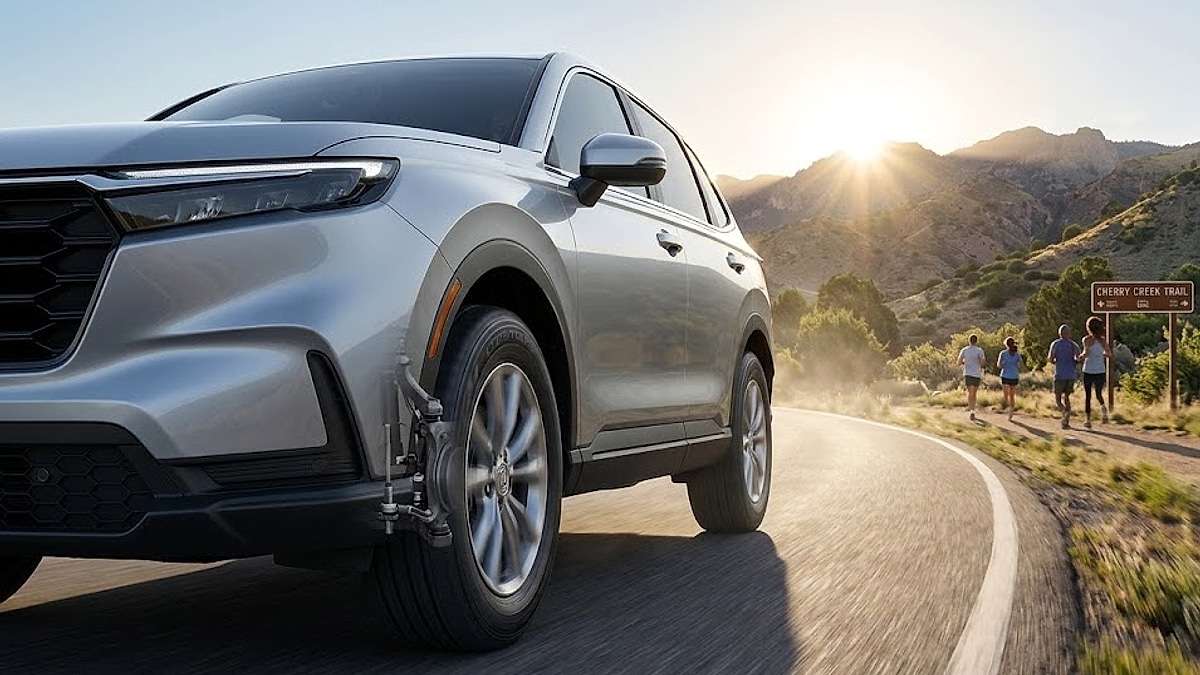
- Request a Pre- and Post-Alignment Printout: Most modern alignment machines (like Hunter systems) provide a color-coded sheet showing your "Before" and "After" specs. This is your "smoking gun" evidence that the rack replacement moved your vehicle out of factory tolerances.
- Itemized Invoicing: Ensure the invoice explicitly links the alignment to the Recall/Warranty Claim Number. Do not let them list it as a standalone "Customer Pay" oil change or routine service.
- The "Protest" Notation: If you are forced to pay to get your keys back, write "Paid under protest seeking corporate reimbursement for recall-related expenses" on the credit card slip and the dealer's copy of the repair order. As I’ve advised in my analysis of the $1,385 CR-V oil change nightmare, never sign without noting that you are paying under protest for recall-related expenses.
Step 2: Escalating to Honda American Motors (AHM)
Once you have paid the fee, your battle shifts from the dealership's service desk to Honda’s corporate headquarters. Dealerships are independent franchises; they often charge you because Honda’s warranty labor codes may not adequately compensate them for the time required for alignment.
The Solution: File a "Case Request for Reimbursement." You can reach Honda Automobile Customer Service at 1-800-999-1009. When you call, use the technical language I’ve established in my investigative reporting. Tell them: "The EPS gearbox replacement on my 2024 CR-V necessitated the removal of steering linkages, which rendered the vehicle's safety geometry invalid. As this was a consequential result of a federal safety recall, I am requesting a refund of the alignment fee."

Step 3: Leveraging ADAS
One of the strongest levers you have for reimbursement involves your car’s Advanced Driver Assistance Systems (ADAS). The 2024 Honda CR-V relies on a front-mounted camera and radar that assume the steering wheel is perfectly centered.
If the dealership replaces your rack and skips the alignment (or charges you for it), your Lane Keeping Assist (LKAS) and Road Departure Mitigation may be calibrated incorrectly. In my decades of consulting for major automakers, I’ve seen how a fraction of a degree in toe-in can cause these systems to "ghost-brake" or drift. Frame your reimbursement request as a safety necessity: Without the alignment, the safety technology Honda marketed to me cannot function as designed.
The 2024 CR-V relies on Honda Sensing cameras that assume a centered steering wheel. If the alignment is skipped, your Lane Keeping Assist may calibrate incorrectly. I’ve seen how electronic architecture failures can lead to "phantom" issues; don't let a bad alignment become the next one.

The Rocky Mountain Factor
In the Rocky Mountain Automotive Press (RMAP) circuit, we often discuss how Colorado’s extreme temperature swings (8 inches of snow yesterday) affect rubber bushings and steering components. For a CR-V owner in the Rockies, an improper alignment after a rack replacement doesn't just cause tire wear, it compromises traction on icy inclines.
I have received reports from owners in Colorado Springs and Fort Collins who were told the alignment was "optional." My professional advice is clear: It is never optional. If you don't do it, you risk ruining a $1,000 set of tires within 5,000 miles. Pay the $180 now to protect your tires, but use the steps above to ensure that money eventually comes back to your pocket.
Final Thoughts from the Trenches
The value for owners around this issue is simple: Mechanical reality must override corporate accounting. Honda corrected the "sticky steering" issue with this recall, but by failing to mandate alignment coverage, they’ve left a financial "sticky" situation for their most loyal customers.
As a Colorado native, I’ve seen the automotive landscape shift toward passing costs onto consumers. I will continue to track these claims and provide the technical data needed to win these disputes. If you’ve successfully received a refund from Honda for your alignment, I want to see the documentation so I can share your success with the community.
Tell Us What You Think: Did your dealership cover the alignment for free, or did they give you the "maintenance" speech? By sharing your specific dealer’s name, we can identify which franchises are prioritizing customer safety over profit margins. Use the "Add new comment" link below to join the investigation.
About The Author
Denis Flierl is a 14-year Senior Reporter at Torque News and a member of the Rocky Mountain Automotive Press (RMAP) with 30+ years of industry experience. Explore his full investigative reporting archives and technical guides at DenisFlierl.com. Based in Parker, Colorado, Denis leverages the Rockies' high-altitude terrain as a rigorous testing ground to provide "boots-on-the-ground" analysis for readers across the Rocky Mountain region, California EV corridors, the Northeast, Texas truck markets, and Midwest agricultural zones. A former professional test driver and consultant for Ford, GM, Ram, Toyota, and Tesla, he delivers data-backed insights on reliability and market shifts. Denis cuts through the noise to provide national audiences with the real-world reporting today’s landscape demands. Connect with Denis: Find him on LinkedIn, X @DenisFlierl, @WorldsCoolestRides, Facebook, and Instagram.
Photo credit: Denis Flierl
Set Torque News as Preferred Source on Google
Follow us today...