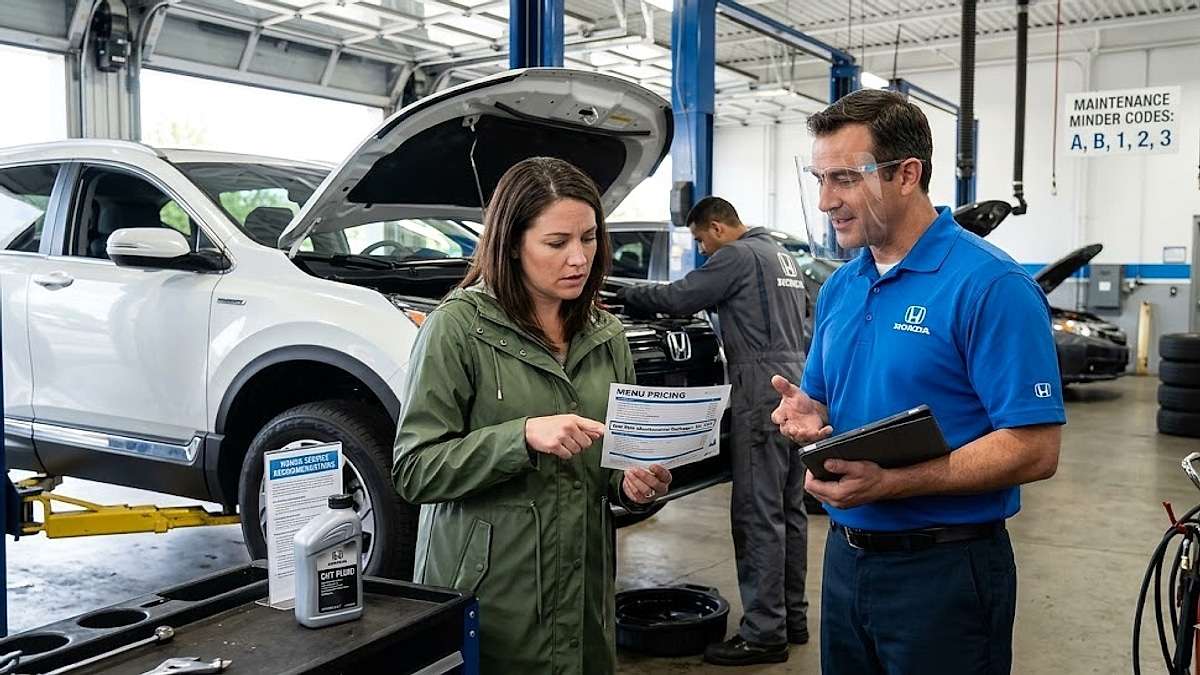

The $1,300 Service Trap: Why Your 2022 CR-V Does Not Need a $300 Fuel Induction "Rescue."
I have audited the $1,300 maintenance quote recently handed to a 2022 Honda CR-V owner, and my analysis confirms that while some fluid changes are vital for the CVT's survival, nearly half of that bill is comprised of "wallet-flushing" dealer profit centers. The shocking discovery here is that the dealership scanned a vehicle with only 65,000 miles and recommended a valve adjustment and a fuel induction service, two items that are almost never required by Honda’s official Maintenance Minder system at this early stage of the vehicle’s life.
Quick Audit
- Is it necessary? No to the $300 induction; Yes to the CVT fluid.
- Potential Savings: ~$600.
- The Red Flag: Valve adjustments at 65k miles (Honda says 100k).
In my experience working with service advisors at the dealerships, I have seen these "bundled packages" thrive on owner fear rather than mechanical necessity. We found that by sticking strictly to the manufacturer's requirements, this owner could have reduced their bill by nearly $600 without compromising a single mile of longevity.
Cutting Through the 60,000-Mile Maintenance Noise
This investigative report dissects the aggressive upselling tactics currently targeting 2022 Honda CR-V owners as they hit the critical 60,000-mile mark. After reviewing technician manuals and real-world owner testimonials, we provide a clear roadmap to help you distinguish between essential CVT fluid preservation and predatory "induction services" that deliver no measurable performance gains.
- The Verdict: The $1,300 quote is a classic example of "menu pricing" where dealerships wrap necessary items like transmission fluid changes around high-margin, unnecessary chemical flushes.
- The Strategy: Owners must demand a line-item breakdown and compare it against the onboard Maintenance Minder codes (B, 1, 2, 3) before authorizing work.
- The Goal: Maintain the 1.5-liter turbocharged engine’s integrity while avoiding the $300-$400 overcharge common at modern service desks.

The Owner’s Dilemma: A South Carolina CR-V Caught in a "Service Storm"
The catalyst for this investigation comes from a specific owner experience shared on social media that highlights a growing trend of confusion at the service desk. Samantha Walters, a 2022 Honda CR-V Touring owner from South Carolina, posted her frustration on the Honda CRV Community Owners Facebook page:
“I have a 2022 Honda CRV Touring. The Toyota dealership states that I need a valve adjustment, fuel induction service, a CVT transmission service, and a coolant drain-and-fill. The cost is $1,300, and I have 65,000 miles on it. Are all of these necessary to do at this time? I would be bringing it to the dealer, as I am not going to do this myself. I thought Toyotas were supposed to be cheaper to maintain.”
The irony of a Honda owner visiting a Toyota dealership for service is not lost on me, but the technical advice she received is what we need to address. Dealing with a different brand's service department often results in generic recommendations that overlook Honda’s specific engineering requirements.
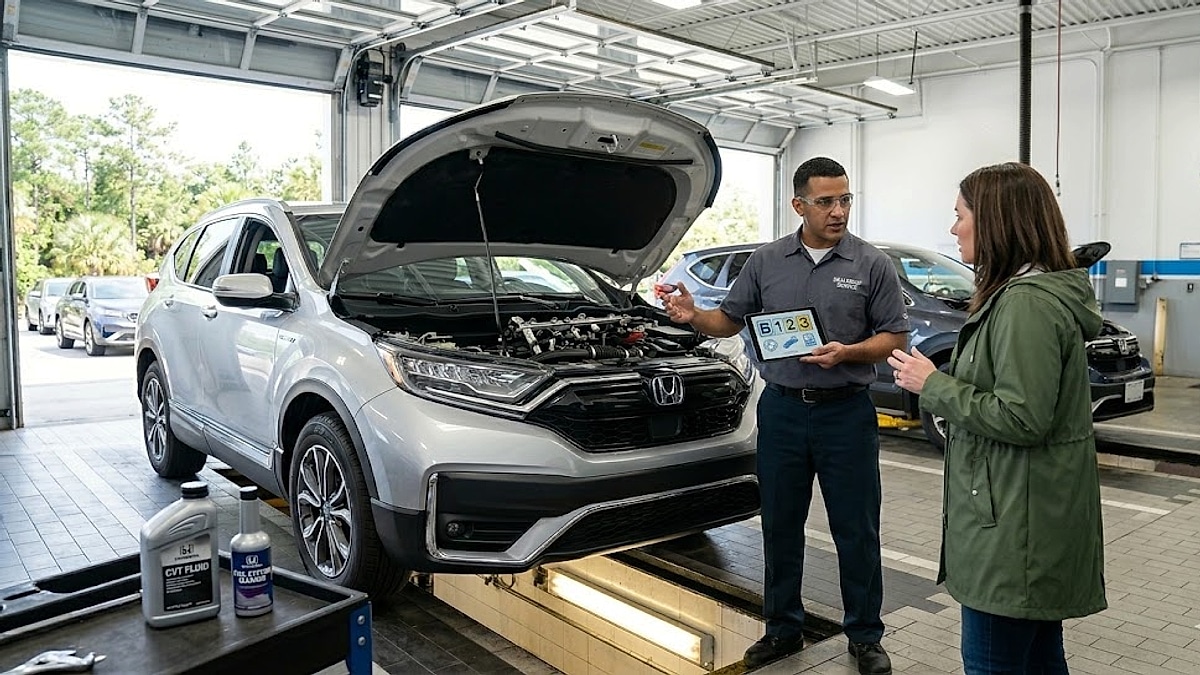
Analyzing the 1.5L Turbo Maintenance Reality: Fact vs. Dealer Fiction
When a dealership tells you that you need a "Fuel Induction Service" at 60,000 miles, they are often performing what I call a "chemical placebo." According to specialized technical analysis from Consumer Reports regarding maintenance upsells, many of these fluid flushes are "profit-boosters for the dealer that provide little to no benefit for the car," a sentiment that perfectly mirrors the situation Samantha is facing.
Wait, let's look at the valve adjustment. Honda’s official Maintenance Minder system typically only triggers a "Sub Code 4" for a valve clearance check when the spark plugs are due, which is usually at 100,000 miles. In my previous reporting, I detailed how this 2024 Honda CR-V owner's 25K service morphed into a $1,385 nightmare, and your best defense is knowing that Honda's actual requirements are often much leaner than what is written on a dealer's whiteboard.
Furthermore, expert technicians at AAA emphasize that modern engine management systems have made many traditional "tune-ups" obsolete, noting that "dealerships often suggest service intervals that are more frequent than what the manufacturer recommends in the owner’s manual."

Essential Services: Where Your Money Should Actually Go
We need to be clear: the CVT (Continuously Variable Transmission) service is non-negotiable. Over my 30 years of experience, the Honda CVT is a precision-engineered component highly sensitive to fluid degradation. If you skip the "Sub Code 3" drain-and-fill, you are inviting a $6,000 replacement down the road. I have consistently warned readers that technical analysis of the 1.5L Turbo suggests a 5,000-mile maintenance interval is vital for gasket integrity, and extending that vigilance to your transmission fluid is the smartest move you can make.
The coolant service is another area of debate. While Honda's "Type 2" blue coolant is rated for 10 years or 100,000 miles for the first change, some "Severe Service" schedules (think South Carolina humidity and stop-and-go traffic) might pull that forward to 60,000 or 75,000 miles. However, demanding it at 65,000 miles alongside a $300 valve adjustment is where the dealership's story begins to fall apart.
Community Technical Feedback: Field Observations from Owner Communities
To ensure we weren't just looking at a single isolated case, I monitored the broader CR-V community. The consensus among those who actually turn wrenches is that "Maintenance Menus" are the enemy.
On r/Honda, one experienced owner shared a similar frustration regarding induction services, stating: "The fuel induction service is a ripoff. They're going to dump a $10 bottle of fuel additive in that probably won't do anything that you could get at an auto parts store," found in this Reddit discussion.

From my perspective, this aligns with the trend of "service bundle" inflation. Another owner in the r/CRV community recently scrutinized the dealer's logic, noting: "Any place that wants to do a fuel induction service at that mileage is not where you want to be. Be very specific about what you want done, not just the '60,000 mile service'," which you can read in this full thread.
The reason users feel this way is that modern direct-injection engines can suffer from carbon buildup, but a simple "induction flush" rarely solves the problem once it has started; it’s more of a preventative measure dealers use to inflate the bottom line of a routine oil change.
Key Takeaways: How to Protect Your CR-V and Your Wallet
- Verify the onboard Maintenance Minder codes on your dash before agreeing to any service package, as these are the only instructions your car actually needs.
- Reject any "Fuel Induction" or "Valv-tect" cleaning services unless you are experiencing specific drivability issues, such as rough idling or significant MPG drops.
- Prioritize draining and refilling the CVT fluid every 30,000 to 50,000 miles, regardless of what the dealer says, as this is the single most important factor in Honda transmission longevity.
- Request a written quote for only the items specified by the "Sub Codes" appearing on your instrument cluster to bypass the dealer’s custom "Gold" or "Platinum" packages.
What Happens If I Only Do the CVT Service?
The very next logical question an owner will have is whether performing only the essential CVT and oil services will void their powertrain warranty. The answer is a definitive no. Under the Magnuson-Moss Warranty Act, a manufacturer cannot void your warranty simply because you didn't perform "recommended" dealer services that aren't listed in the official maintenance schedule. As long as you have proof that the required items (like oil and transmission fluid) were changed according to the Maintenance Minder intervals, your 5-year/60,000-mile (or extended) powertrain coverage remains fully intact.
Navigating the Future of Your Honda Maintenance Journey
We have reached a point where the "Service Advisor" at a dealership is often a salesperson first and a technician second. To keep your 2022 CR-V running for 200,000 miles without going broke, you must become the active investigator of your own vehicle's needs. Use the tools I've provided here to challenge the desk, demand the data, and never pay for a "valve adjustment" that your car isn't even asking for yet.
Tell Us What You Think! Have you been quoted over $1,000 for a 60K service on your Honda? Leave a comment in the red Add new comment link below and let’s discuss what your dealer tried to sell you.
About The Author
Denis Flierl is a 14-year Senior Reporter at Torque News and a member of the Rocky Mountain Automotive Press (RMAP) with 30+ years of industry experience. Explore his full investigative reporting archives and technical guides at DenisFlierl.com. Based in Parker, Colorado, Denis leverages the Rockies' high-altitude terrain as a rigorous testing ground to provide "boots-on-the-ground" analysis for readers across the Rocky Mountain region, California EV corridors, the Northeast, Texas truck markets, and Midwest agricultural zones. A former professional test driver and consultant for Ford, GM, Ram, Toyota, and Tesla, he delivers data-backed insights on reliability and market shifts. Denis cuts through the noise to provide national audiences with the real-world reporting today’s landscape demands. Connect with Denis: Find him on LinkedIn, X @DenisFlierl, @WorldsCoolestRides, Facebook, and Instagram.
Photo credit: Denis Flierl
Set Torque News as Preferred Source on Google
Follow us today...