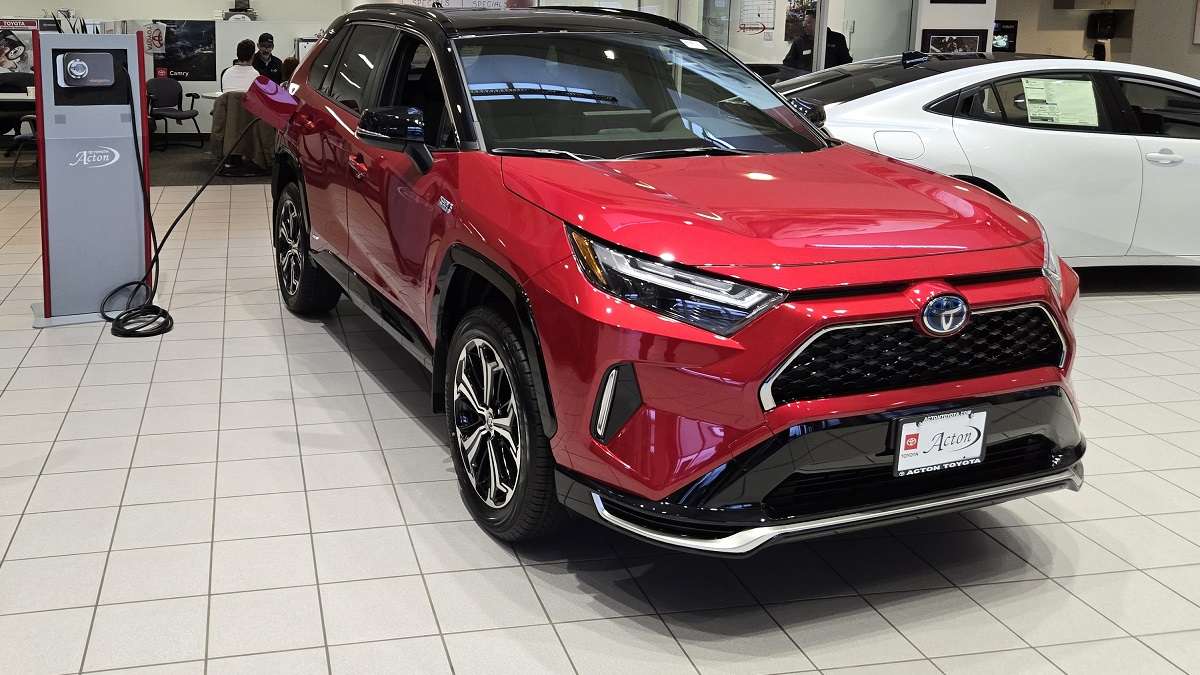

A new study conducted by Toyota proves without any doubt that owners of plug-in hybrid-electric vehicles (PHEVs) like the Prius Prime and RAV4 Prime almost always plug them in. This will come as upsetting news to those who want you to believe there is only one green vehicle powertrain path worthy of consideration. Or permission.
The folks who want you to own an EV (whether you want to or not) have been wringing their hands for years over this issue. “What if plug-in hybrid-electric vehicle owners don’t plug in their vehicles?” After all, we can’t have green vehicle owners operating their plug-in hybrids (PHEVs) as hybrids now, can we? Imagine the horror.
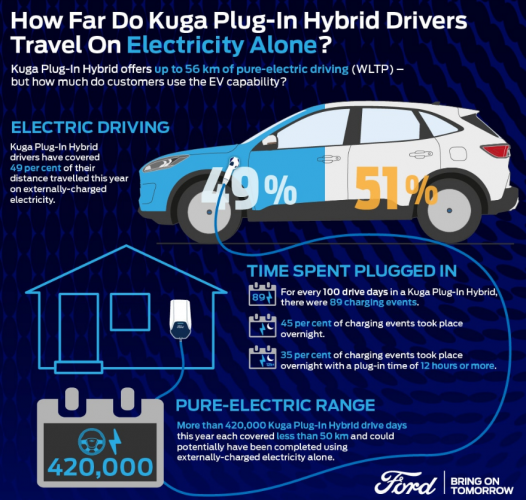
Ford answered the question of how often PHEV owners plug them in once already, but some time passed, it was a study done in the European market, and the folks who want to mandate you into a battery-only vehicle pretended that Ford didn’t answer the question well enough (despite including a nifty infographic). They were also not satisfied with polls in PHEV owner groups on social media that made it clear the owners enthusiastically plug them in. Now, Toyota has stepped up. And the answer is that pretty much all plug-in vehicle owners plug them in, and almost all of the miles they cover are electric. Duh.
Toyota doesn’t make the most plug-in hybrids, just the best ones. The folks from Stellantis made the most, but they folded their PHEV tent this year and quit making them. I’m a big fan of Stellantis brands and vehicles, and I loved the Jeep Wrangler plug-in I tested over a period of three separate weeks. But quality issues plagued the Stellantis models, and as the EV tide shifted, Stellantis called it quits and pulled its PHEV lineup from the U.S. market.
Here’s What Toyota’s Study Proves
Toyota studied a group of Toyota and Lexus PHEV owners to estimate how much people charge their vehicles. The team analyzed data from more than 6,000 PHEVs being operated in the U.S. and Canada. This was made up of anonymized data from the Toyota RAV4 Prime (the previous name for the plug-in RAV4) as well as the similarly sized Lexus NX 450h+. Here are the study's findings:
1) Toyota PHEV owners plug in seven out of every 10 driving days.
2) Lexus owners charge between eight and nine times per 10 driving days.
3) Just 9% of Toyota drivers and 4% of Lexus drivers rarely plug in.
Here’s What Ford’s Study Revealed
Ford’s study was not identical and didn’t list its findings with identical metrics. Let’s look at the Ford Kuga study conclusions. A Kuga is a Ford Escape PHEV sold in European markets.
1) For every 100 days of use, there were 89 charging events.
2) 49% of the miles driven by Kuga drivers were powered via external electricity.
Let’s break down that last number, 49% of miles covered being powered using external electricity. Does this mean that 51% of the miles were covered burning gasoline? No, it does not. Hybrids add power using regenerative braking, just like battery-electric vehicles. That power can contribute 20% or more miles covered without using electricity. And many miles are covered by coasting and decelerating when the liquid-fuel engine is not operating. Finally, in most of North America, 10% of the liquid fuel that goes in our fuel tanks is ethanol. Add it up, and very few miles driven by PHEV owners are traveled using gasoline.
Who Cares About PHEVs?
Plug-in hybrids and extended range electric vehicles, like many Honda hybrids that are propelled by electric motors but have on-board liquid-fueled engines, scare the folks who want you to have to buy an EV. They realize that most of the EV benefits, such as satisfying torque and quiet operation, are already co-opted by other green vehicles. Free from the downsides of expensive public charging and range anxiety, PHEVs are green vehicles that can operate on electricity nearly all the time.
Read the Peer-Reviewed Study at SAE International
Interestingly, Toyota didn't conduct this study in a marketing department, but in its Toyota Research Institute North America (TRINA). This is where Toyota’s engineers and scientists work. And they didn’t create a simple-to-understand infographic as Ford did. Instead, they published the study at SAE International and invited peers to review it. You may know this group by its former name, the Society of Automotive Engineers. The study was authored by Karim Hamza, Ph.D. (University of Michigan) and Ken Laberteaux, Ph.D. (University of Notre Dame). You can view it here.
The media, including your author, had asked Toyota to conduct a study that would clarify whether PHEV owners were misusing them and ignoring the plug they paid thousands of dollars to own. In classic Toyota fashion, the company took its time and then delivered a definitive answer rather than guessing.
Plug-In Hybrid Electric Vehicle Fast Facts
-About 1% of new vehicles sold in America in Q1 of 2026 were PHEVs. (NADA)
-The 2024 Toyota RAV4 Prime earned one of the highest reliability scores of any SUV (Consumer Reports).
-The 2026 RAV4 Plug-In Hybrid can travel up to 54 miles in EV only mode.
-PHEVs like the RAV4 have no alternator, starting motor, accessory belt, or timing belt.
-The RAV4 Prime uses a transmission with a planetary gearset and two electric motors.
-The all-wheel-drive RAV4 PHEV has no front-to-rear driveshaft and uses electric power only for the rear wheels.
John Goreham is a 14-year veteran of Torque News. An accomplished writer and a long-time expert in vehicle testing, Goreham also serves as the Vice President of the New England Motor Press Association and has a growing social media presence. He’s also a 10-year staff writer and community moderator for Car Talk. Goreham holds a B.S. in Mechanical Engineering and an undergraduate Certificate in Marketing. In addition to vehicle and tire content, he offers deep dives into market trends and opinion pieces. You can follow John Goreham on X and TikTok, and connect with him on LinkedIn.
Ford Plug-in vehicle infographic courtesy of Ford. Top of page image by John Goreham.
Set Torque News as Preferred Source on Google
Follow us today...