

Plug-in hybrid electric vehicles recently earned a low group score in a Consumer Reports Study titled "Hybrids Are Still the Most Reliable Cars." The study found that “(Pure) EVs and PHEVs have about 80 percent more problems on average than gas-only cars.” That sure sounds bad, doesn’t it? The same study found that hybrids (the ones without the plug) were dramatically more reliable than plug-in hybrids and EVs. Hybrids have a 15% advantage over the internal combustion control group. A new development this week will likely mean the Plug-in hybrid class will soon see a dramatic improvement in overall reliability.
No, it’s not a breakthrough in technology. Toyota has already perfected that, and Toyota-brand PHEVs have normal or better reliability than ICE cars as a group. What has occurred is that almost every PHEV that was ranked poorly for reliability has been cancelled. All. At. Once.
A separate video by Consumer Reports went into great detail about the very worst-ranked PHEVs for reliability. The story began with the Ford Escape, which the group said was “the least reliable vehicle among compact SUVs.” The story was published on December 4th, 2025. Exactly 12 days later, Ford canceled the entire Escape model lineup, including the PHEV version.
The CR video moved next to PHEVs from Stellantis brands. These include the Jeep Wrangler 4XE and Jeep Grand Cherokee 4XE. CR said these two vehicles “...share a spot at the bottom of the rankings for midsized SUVs.” Ouch. Four weeks from the time CR published that video, Jeep cancelled both the Wrangler 4XE PHEV and Grand Cherokee PHEV. Moving on to the Chrysler Pacifica Hybrid (plug-in), Consumer Reports stated, “The Chrysler Pacifica Hybrid, which is a plug-in, was the least reliable minivan in our survey.” I think you know what’s coming next. Chrysler cancelled the PHEV. Not mentioned in the CR video on the worst PHEVs was the Dodge Hornet PHEV, likely due to its extremely low volume. Just to be sure, Stellantis covered all of its bases; it canceled that model, too.
Within a month of Consumer Reports calling out these models as the worst PHEVs for reliability, most models on the CR worst list were eliminated from the U.S. market. Poof. Gonzo. So what’s left? Well, the Mazda and Volvo brands have a pair of PHEVs still remaining on the list of worst PHEVs, but the volume of these two models is low. They barely sell. And then there are the reliable PHEVs.
PHEVs That Remain In the Marketplace In 2026
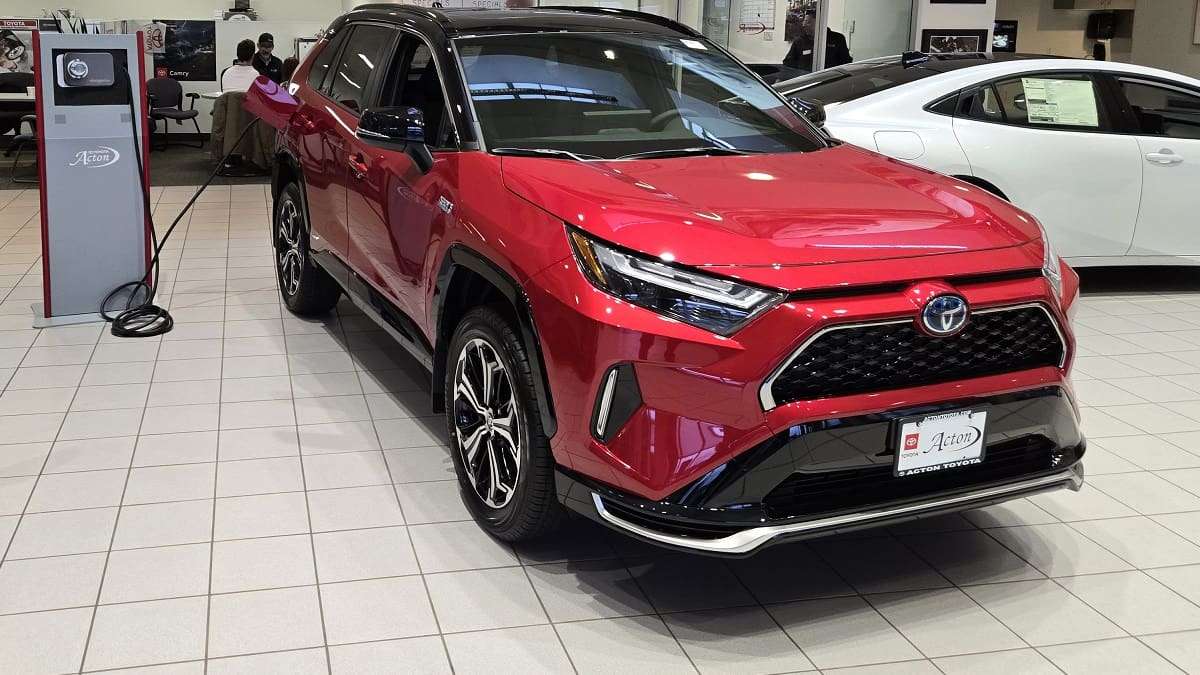
Toyota’s RAV4 Plug-In, formerly known as the RAV4 Prime, earns a 77/100 reliability score from Consumer Reports. That’s quite good. The 2024 RAV4 Prime, as it was formerly known, earned a 79/100 score. Even better. Across the showroom floor from the RAV4 Plug-in is the Prius Plug-in, a.k.a the Prius Prime. The 2024 Prius Prime earned a 72/100 score, and the Prius Prime had a model year that touched 79/100. All pretty decent scores.
Hyundai and Kia also make plug-in hybrid models. The 2025 Kia Sorento earned a 74/100 reliability score from Consumer Reports. Most PHEVs from these two sister brands score in the mid-range, around 50/100.
Our Theory - PHEVs as a Whole Just Got a Lot More Reliable
The fact that four of the worst PHEVs for reliability and a fifth with the same technology were just eliminated from the segment leads us to conclude that the overall reliability for all PHEVs must have improved. How could it not? After all, with scores like the Pacifica Plug-in Hybrid’s 20/100, these extremely low-reliability models were hurting the group's average score.
What Does Consumer Reports Say?
Torque News is fortunate to count the Consumer Reports team among our friendly, cooperative colleagues, so we reached out. Steven Elek is CR’s Program Leader, Auto Data Analytics. He works on the reliability reports that end up in print. We spoke with Mr. Elek and ran our theory past him. He understood where we were coming from immediately and told us that he, too, had formed this same theory after hearing that most of the models CR ranked lowest had been culled shortly after CR’s report. However, Mr. Elek is not in the theory business.
Consumer Reports has the respect of our industry for many reasons, but paramount among them is that CR reports data-driven facts. Thank goodness someone does! Mr. Elek was very hesitant to agree that my theory is flat-out reality. Rather, he said, “Given a bit of time, I’d like to run the numbers and see what the data say now that many of the worst-ranked PHEVs for reliability are no longer in the mix.” Our respect only grows the more we interact with Consumer Reports.
Mr. Elek pointed out that poorly-ranked models from Mazda and Volvo are still being sold, despite their small numbers. Also, there are some PHEV models from European brands not mentioned here whose reliability is nothing to brag about. We hope he does find the time to analyze the data with the lowest-ranked models now deleted, and that CR will let the world know if the PHEVs as a whole now have a higher reliability than battery-electric vehicles, which had been tied with PHEVs before the bad apples were taken out of the bushel.
For now, the very similar hybrid-electrics remain the kings of reliability. With a score of 15% better on average than ICE vehicles, it’s clear that the simpler hybrid tech in modern hybrids has eliminated many of the common ICE trouble spots. Take the RAV4 Plug-in, for example. It has no starter motor, no alternator, no accessory belt, serpentine belt or timing belt. Its transmission uses gears and motors, not a drum and pulley, as many CVTs do. It has no front-to-rear driveshaft, despite being all-wheel drive. Toyota didn't add complexity when it created its modern hybrid fleet, but rather looked for ways to drop the most likely causes of trouble. That approach, coupled with Toyota’s legendary focus on continuous improvement, has resulted in vehicles that are more reliable than conventional ICE vehicles.
What’s your take? Does it make sense that if the most unreliable PHEVs are cancelled, the segment would have a higher reliability score? Tell us in the comments below.
John Goreham is the Vice President of the New England Motor Press Association and an expert vehicle tester. John completed an engineering program with a focus on electric vehicles, followed by two decades of work in high-tech, biopharma, and the automotive supply chain before becoming a news contributor. He is a member of the Society of Automotive Engineers (SAE int). In addition to his fourteen years of work at Torque News, John has published thousands of articles and reviews at American news outlets. He is known for offering unfiltered opinions on vehicle topics. You can connect with John on LinkedIn and follow his work on his personal X channel or on our X channel. John employs grammar and punctuation software when proofreading, and he sometimes uses image generation tools.
Top of page image by John Goreham.
Set Torque News as Preferred Source on Google
Follow us today...



Comments
In other words, american car…
Permalink
In other words, american car makers have no idea how to make reliable PHEVs
The Escape cancelation it…
Permalink
It was announced long ago that 2025 was going to be the last model year for the Escape and Corsair. The cancelation was to repurpose the plant for the new low cost EV. Later they gave it a 3 month stay of execution to produce some 2026 models. So production was scheduled to end well before the list was released. Stelantis likely wasn't influenced by the story either since the only reason they existed was to avoid buying credits and paying fines that currently don't exist.
I do agree that removing the Stelantis models will eventually lead to PHEVs to be more reliable overall than EV's.
One vehicle that is…
Permalink
One vehicle that is consistently left out of reporting on PHEVs is the Mitsubishi Outlander. PHEVs are a significant part of the overall sales at Mitsu, and worldwide they have sold over 400,000 units which makes them #2 worldwide, all-time! I have owned a 2021 Outlander since new. Other than a warranty-replaced touchscreen, it has been flawless through 90,000 kilometers of Canadian driving. We have a home Level II charger, and the local electric range is more than adequate for daily errands. It is baffling to me that you would report on low-volume brands like Mazda and Volvo and ignore one of the segment leaders.
Hi Brian. I'm so glad you…
Permalink
In reply to One vehicle that is… by Brian DePoe (not verified)
Hi Brian. I'm so glad you added this comment. I'm a big fan of the Outlander and the PHEV. I've tested all the generations and like them all, and loved the most recent one. I drove one on a long road trip and used almost all gas because the destination had a charger. It ended up being a 50-50 split, if I remember correctly, over days of driving. They sell very few in the U.S., but I think Nissan will likely leverage the partnership to make a similar Rogue PHEV. Thanks for reminding us about the Outlander. It's a great vehicle in all its forms.