
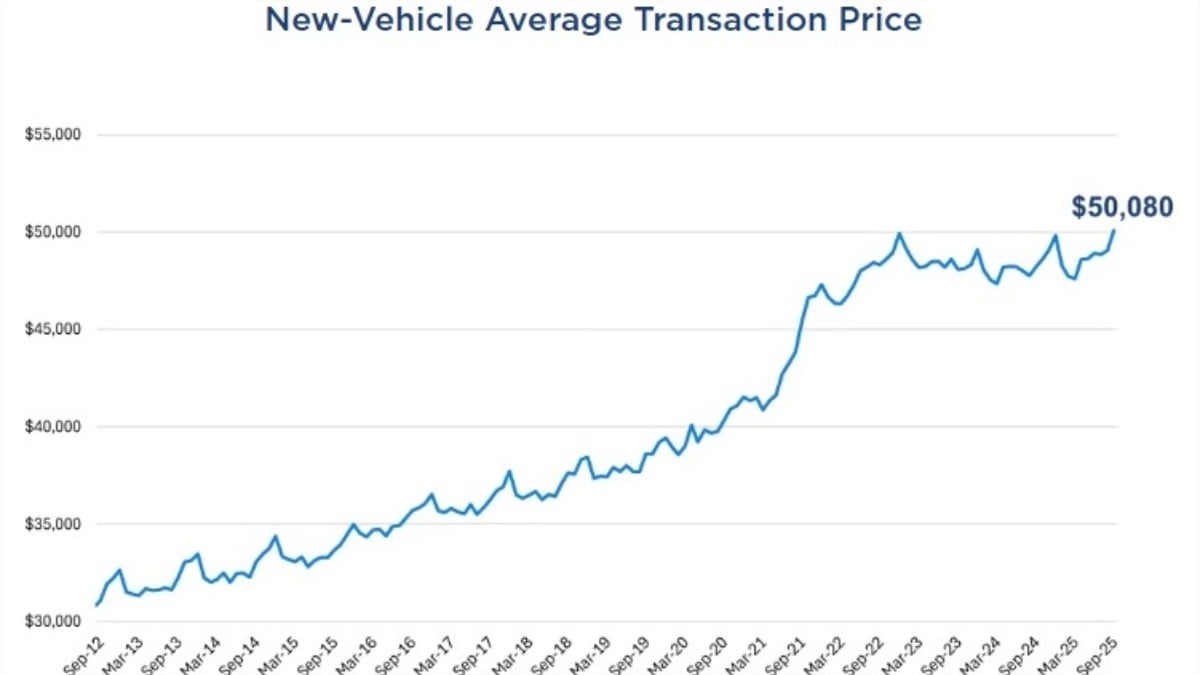
Almost uniformly, the media pumped out story after story in early 2025, telling consumers that President Trump’s tariffs would result in severe price shocks to automobile consumers. With the Q3 data now available, it's obvious that vehicle prices have remained virtually unchanged since President Trump took office. In fact, in many cases, the cost of a new vehicle is now lower than it was during December 2024, President Biden’s last full month of autopen duties. Compact and midsized cars are now less expensive. The overall average transaction price has changed less than 1%. If you’re a stickler for details, it is a 0.68% change, primarily due to price bumps for high-end fancy-pants SUVs and EVs. We have all the data clearly linked at the bottom of our story so that you can do your own fact-checking.
These stories are what the industry refers to as FUD, for Fear, Uncertainty, and Doubt. The media love these stories because they are not fact-based, making them hard to challenge at the time of their writing. They predict what might happen, citing so-called experts who are eager to see their names in print. What these stories are not reporting are facts. In this case, the reports are not saying that “Prices have risen.” Rather, they are trying to say, “Be very afraid, because something bad might happen to prices.” They are also happy to point the finger at the country’s President as the cause of the possible future mishap.
The Timing of False Price Changes Was “Now”
CNN’s report in January was handy because it told readers when prices would rise. Just days after President Trump took office, CNN wrote, “Trump’s tariffs could raise car prices at dealerships — very quickly.” As the chart below shows, prices went down, but not to fear, in March, CNN’s same writer doubled down after prices didn’t budge, saying, “Car prices will surge by thousands of dollars because of Trump’s tariffs. It’ll happen before you expect it.” Well, didn’t we expect it to have already happened, based on CNN’s prior reporting? Later in the same story, the CNN team wrote, “Those additional costs will rapidly lift car prices...” Despite these repeated warnings from CNN, prices for many vehicle segments have remained virtually unchanged since December 2024.
Also published in March was a Reuters story that had an expert who claimed, “The 25% tariff on autos and parts will create immediate price increases and wreak havoc on supply chains."
The CATO Group published its forecast, saying, “Automotive industry experts have warned that the tariffs would quickly 'add a minimum of thousands of dollars' to the price of a new car in all three countries." It's been eight months since this warning of quick price increases.
USA Today went even further in an opinion story it published, written by a staff writer, which included the writer pretending he had already paid a higher price for a car. The quote was “Because at the moment, it seems my best-case scenario is driving a car I bought at a jacked-up price to a store to purchase food at a jacked-up price while the tariff-loving president who promised me a new Golden Age ‘couldn’t care less.”’
Thousands, Many Thousands, Tens of Thousands Of Price Increases (Not)
CNN’s experts warned that changes coming soon would “...raise the cost to car buyers by $6,000 to $7,000 per car…” The same story also said, “Prices will rise for manufacturers and customers. Estimates about the impact of tariffs on production costs range between $3,500 to $12,000 or more per vehicle…”
Michauto News said “...the effects will start to get quite profound even for vehicles that are assembled in the U.S.” Tesla makes the most American-made vehicles. Tesla's average transaction price has declined since December 2024. Dropping from $55,258 to $54,138.
Reuters said in March, “...once the impact of delayed tariffs on imported parts is taken into account, it could add $10,000 to $20,000 to vehicle prices.”
Cars.Com echoed the big numbers that Reuters happily printed, saying, “The new tariffs could increase new-car prices anywhere from $2,500 to over $20,000, according to an Anderson Economic Group analysis that factored in all of the tariffs announced April 2.”
USA Today’s expert said ominously, “...the president’s 25% auto tariffs will increase vehicle prices “by 13.5% on average, the equivalent of an additional $6,400 to the price of an average new 2024 car.” We are so glad that they used that term, “average,” because average transaction price is exactly how we track car prices.
CarEdge went on the record, publishing its FUD story saying “Analysts expect U.S. car prices to rise by $3,000 due to tariffs on Mexico, Canada, and China.” The publication went further and said that GM might be among the hardest hit. In fact, Chevrolet’s average transaction prices have changed about 1%, or about $500, since December of 2024.
You can dig through the ATP reports yourself, but one example of a change in vehicle prices is the average cost of a compact car, now considered to be the most affordable new vehicle option for buyers. In December of 2024, it averaged $27,061. Fast forward to last month, September 2025, and the cost had declined to $26,947. Midsized cars were also down.
The haters hope that if enough of them tell the same half-truths, untruths, and offer identical dire false predictions, Americans will think these things have actually occurred. While creating these FUD stories, they are crossing their fingers that they are right and Americans will suffer.
What say you, readers? If “respected” outlets all spew the same false narrative, does it make it true? Tell us in the comments below why you think the prices of vehicles today are almost identical to those during President Biden's last month in office.
Source Links
1) December 2024 Average Transaction Prices From Cox Automotive
2) September 2025 Average Transaction Prices From Cox Automotive
John Goreham is the Vice President of the New England Motor Press Association and an expert vehicle tester. John completed an engineering program with a focus on electric vehicles, followed by two decades of work in high-tech, biopharma, and the automotive supply chain before becoming a news contributor. He is a member of the Society of Automotive Engineers (SAE int). In addition to his fourteen years of work at Torque News, John has published thousands of articles and reviews at American news outlets. He is known for offering unfiltered opinions on vehicle topics. You can connect with John on LinkedIn and follow his work on his personal X channel or on our X channel. Please note that stories carrying John's by-line are never AI-generated, but he does employ grammar and punctuation software when proofreading and he also uses image generation tools.
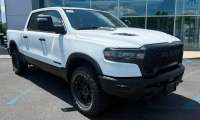
Top of page image by John Goreham. Average transaction prices of vehicles chart courtesy of Cox Automotive.
Set Torque News as Preferred Source on Google
Follow us today...