
Since the conflict in the Middle East began, EV proponents have been widely crowing that higher energy prices would boost shopper interest in EVs. While shoppers may indeed have considered EVs, the available data shows that they actually purchased hybrids.
Hybrids added market share in America in Q1, growing to 15% of the market overall, while EVs saw a year-over-year decline in market share to 6%. This is data from NADA, and we will update our story with further details as Cox Automotive and other sources add clarity to the individual brands and models that did well or poorly in a quarter where gas prices surged more than a dollar to be above $4 per gallon in March.
Details From NADA - Hybrids See Solid Gains In Q1
Breaking down the market share more closely, hybrid-electric powertrains accounted for 13.9% in Q1. That is up from 12.1 in Q1 2025. Plug-in hybrid electric vehicles also contributed 1% share in Q1, so the total market share of all hybrids was 14.9%. These numbers are not pinpoint accurate, so let’s call it 15% market share and drop the fractional market share percentages.
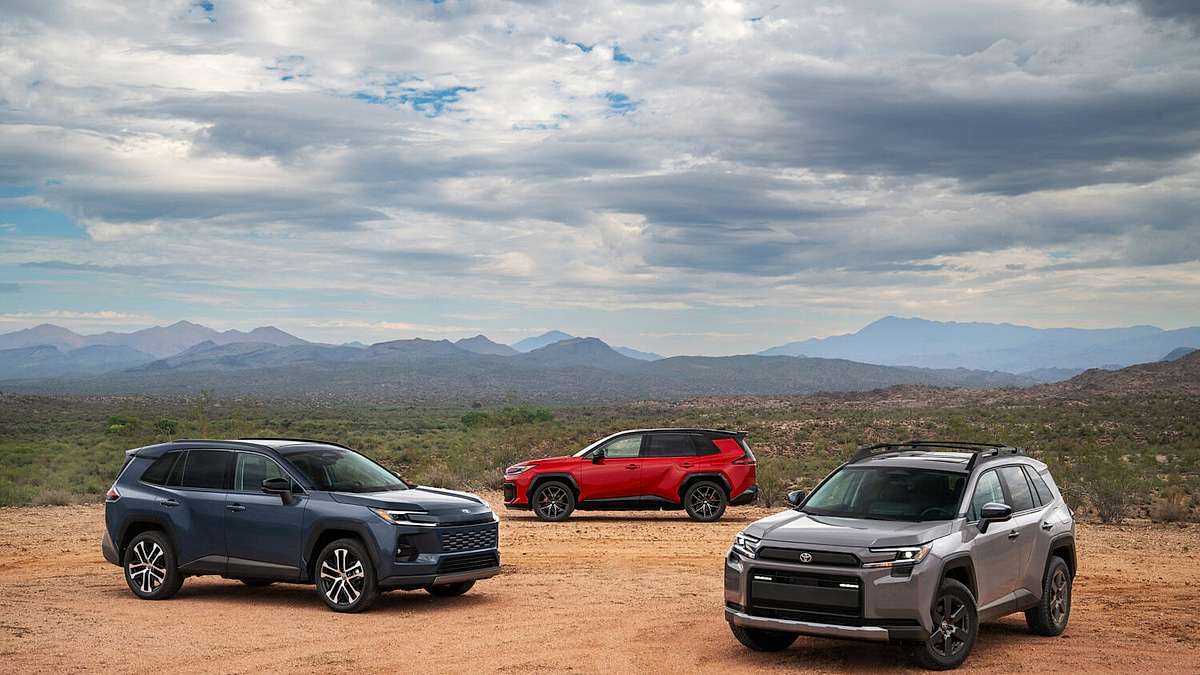
This marks a solid gain for hybrids, particularly in light of the fact that the top-selling Toyota RAV4 was caught flat-footed in a rare generation changeover during Q1. Last year, a hybrid powertrain was optional in the RAV4. This year, all RAV4 trims are hybrids. Toyota was able to deliver about 39,000 RAV4 Hybrids in Q1 2026 vs. about 56,000 in Q1 0f 2026. However, the production ramp-up showed a very interesting trend in March. In just that month, Toyota’s RAV4 hybrid trims jumped from 17,000 units in March 2025 to a bit over 21,000 units this March. We suspect that during Q2 and Q3, Toyota’s RAV4 is going to return to its best-selling status in the country. Demand is not the limiting factor. The model has one of the shortest days on the lot numbers of any model.
Toyota had eleven hybrid models with gains in Q1, notably the Grand Highlander Hybrid, adding 10,000 units and up 86%. Highlander classic was also up by about 6,000 units and up 81%. Camry Hybrid added 8,000 units, up by double digits. These do not include Lexus hybrid gains, which totaled about 6,000 units and were up by 6%.
Hyundai & Kia Sees Huge Gains In Hybrids
“Hybrid‑electric total sales jump 50% in March; 61% for Q1.” That is the summary of Hyundai’s Q1 deliveries posted by the company. This included Sonata HEV (+150%), Elantra HEV (+92%), and Santa Fe HEV (+31%). Kia’s hybrid models saw a 73 percent increase, for the highest quarterly hybrid sales total in company history. Both brands had EVs with small gains of around 1,000 units, and both also had EV models with declines of about that many.
NADA Details- EVs See Meaningful Drops In Market Share In Q1 YOY, About Even With Q4
Battery-electric vehicle market share in America dropped YOY in Q1 2026. According to NADA, BEV market share totaled 6.3% in Q1 2026, down 1.4 percentage points from the same period last year. This is roughly the same market share EVs had in Q4 2025. NADA pegged EV market share at 5.9% in December, and 7.7 for the full year of 2025. To provide some historical perspective, EV market share has dropped back to late 2022 levels.
The poor EV market share data is despite the energy crisis and increases in gas prices following the start of the conflict on February 28. Gas prices increased by about 25% by late March, and EV advocates began their celebration a bit early, given the data we have. Perhaps if the prices continue to rise, EV share will climb and approach prior highs. EVs sustained 8% share in 2024 and early 2025, and had a single month in 2025 of over 10%. Presently, EV market share is nowhere near those levels.
Tesla Market Share TBD, But Tesla Up In Q1
We will have a better sense of how much EV market share Tesla accounted for in Q1 soon when Cox Automotive releases its detailed estimates, but at last count, Tesla's piece of the EV pie had been in the 50% to 60% range. Factually, just two individual EVs models make up roughly half of the U.S. EV market, the Model Y and Model 3. No other U.S. market EV model has achieved “mainstream” delivery volumes. All are at a run rate of under 4,000 units per month, a level that would cause them to be canceled if they were not being kept for reasons other than profitability.
We do know that Tesla’s global delivery volume went up YOY, because Tesla reports its total global delivery volume quarterly. Tesla’s Q1 2025 deliveries were 336,681 units, and its Q1 2026 deliveries were 358,023. Both numbers are smaller than its Q4 2025 delivery volume, which was 418,227. Again, this is global, not the U.S. market. We’ll report Tesla’s estimated U.S. delivery info after Cox Automotive releases its estimates.
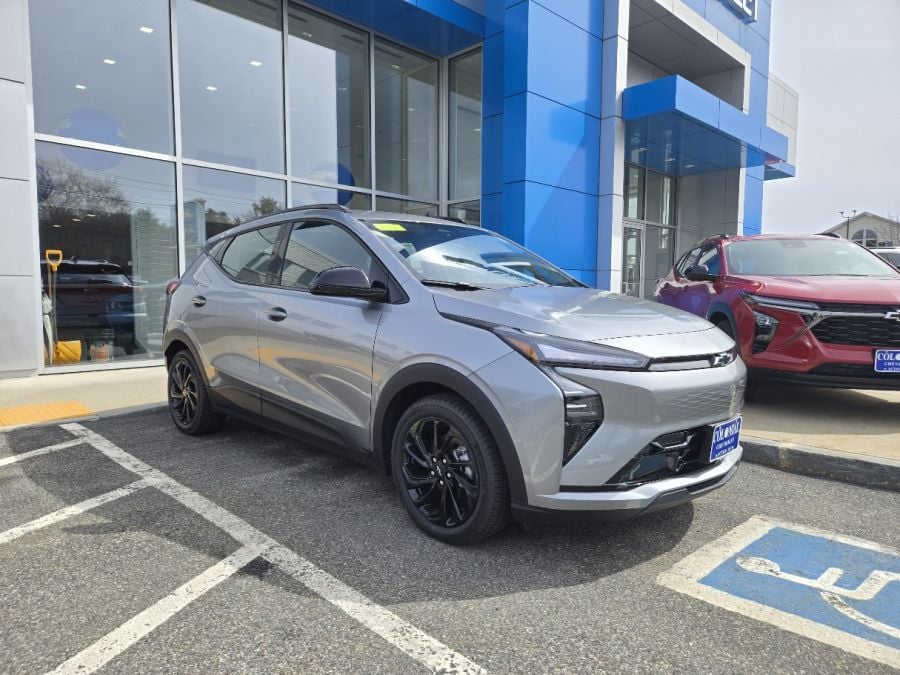
Nissan Leaf, Chevy Bolt and Equinox, Ford Mustang Mach-E
Some individual models and brands did see upticks in EV delivery volumes. For example, Toyota had a big increase in EVs in Q1. However, the more affordable end of the U.S. EV market is in shambles. The Leaf and Bolt barely sold at all in Q1. Both models were new, significantly improved, positively reviewed, and available every business day throughout Q1. Either American consumers don’t want affordable EVs, or the brands don't want to sell them in volume because they lose money on each sale. There is no other logical conclusion.
Ford’s EV sales in Q1 were a disaster. The now-canceled F-150 Lightning went down 71%, and the Mustang Mach-E dropped 60%. Chevy’s Equinox EV also lost ground, dropping 7.2%.
Watch for an update in the coming week, where we will detail the share of EVs more closely and perhaps have some indication of whether there was a meaningful ramp in the month of March, which is when gas prices were rising. Based on the data we have so far, there is no indication that rising gas prices have led to meaningful changes in American shopping habits.
Were these the results you expected, given the many media reports that rising prices “have shoppers considering EVs?” Tell us in the comments below.
You can (and should) see NADA's report written by Chief Economist Patrick Manzi at this link.
Please note that delivery volume estimates do not appear anywhere in this story. All of the delivery numbers presented are directly from individual manufacturer delivery reports available on media sites.
John Goreham is a 14-year veteran of Torque News. An accomplished writer and a long-time expert in vehicle testing, Goreham also serves as the Vice President of the New England Motor Press Association and has a growing social media presence. He’s also a 10-year staff writer and community moderator for Car Talk. Goreham holds a B.S. in Mechanical Engineering and an undergraduate Certificate in Marketing. In addition to vehicle and tire content, he offers deep dives into market trends and opinion pieces. You can follow John Goreham on X and TikTok, and connect with him on LinkedIn.
Top of page image courtesy of Toyota. Chevy Bolt image by John Goreham.
Set Torque News as Preferred Source on Google
Follow us today...