
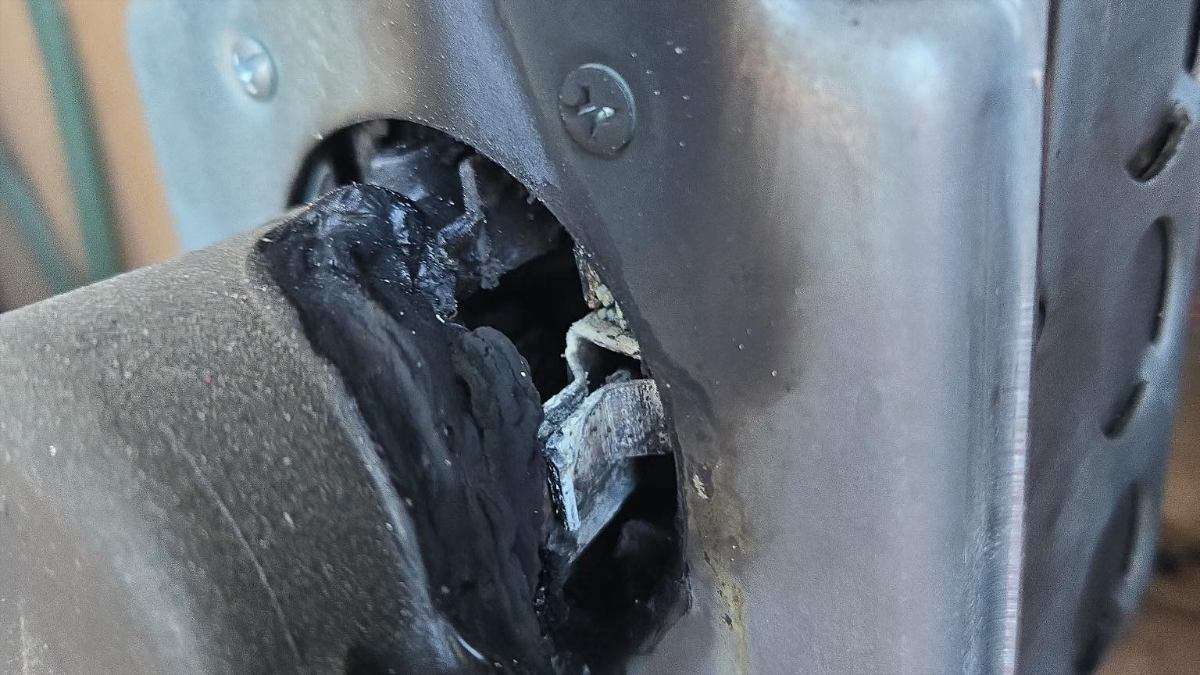

A recent question posted by Chevrolet Bolt owner K.E.G. highlights just how scary home EV charging can be. Her image is shown with permission at the top of our page. What you see is a Level 2 charger plugged into a NEMA 14-50 socket. As you can clearly discern from the image, the socket shows burn marks on its cover. The charger itself (EVSE for my fellow word Karens) is damaged from overheating and has melted. Looking inside the junction box, we can see what appears to be either corrosion or signs of burning. Perhaps both are shown. This owner reached out to ask for help so that she can more safely charge her battery-electric vehicle. Here is what K.E.G. has asked:
Charging my bolt last night. Woke up to this! Car engine light is on. Obviously, I won’t use my home charger, but do you think I need to have the dealer look at the vehicle, or will it charge if I take it somewhere else? I didn’t know if there was a safety feature that stops the charging if this happens. Any advice??
There is a lot to unpack from K.E.G.’s inquiry. Let’s focus first on what could be done to reduce the chances of an overheating situation and reduce the chances of a fire occurring in this home while charging the EV.
Here is a larger image showing the damage from the melting and a possible small fire.
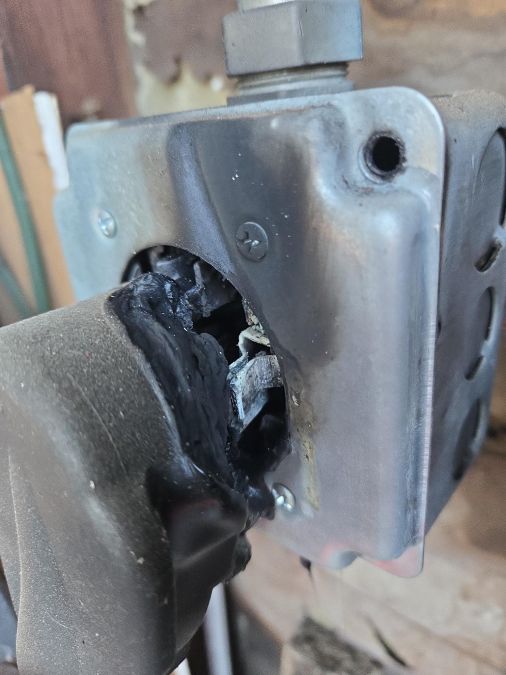
The first and most obvious change going forward for this owner is to call an electrician. She will need a new way to supply power to her EV. This will dovetail to another change she should make. She should change her electric vehicle supply equipment (EVSE) to a different style. She had been using what is known as a “mobile charger.” Perhaps one that came with her Bolt. Mobile chargers plug in. My expert recommendation as an engineer who has tested dozens of chargers with virtually all makes and models of EVs is that she should move to a hardwired wall-mounted EV charger. Many of her colleagues agree. Here are some comments concurring with my recommendation.
A.C. - “Simple. Hardwire it.”
J.J. - “Better to hardwire it!”
There were many, many more comments saying basically this. “Just hardwire a new charger.” I agree with this suggestion, but there is more to the issue. Sure, it could be that a cheap outlet was the problem, but the Chevy Bolt clubs have dozens of posts showing melted chargers. Were they all caused only by a poor quality outlet? We know this is not true. For example, one of K.E.G.’s colleagues posted a comment saying, “I fixed my incorrect wiring sizes.” In that owner’s case, the problem was not the receptacle itself.
The comment we liked best was a bit long, so we’ll break it out. One owner posted:
You absolutely MUST have a licensed electrician (not a handyman) look at it from the electrical panel to the charger. There's a problem in there somewhere. Maybe a bad outlet, or not enough amps in the circuit, or another appliance on the circuit (shouldn't be), or possibly a defect in the charger. Hard to say without examining it with the right testing equipment. That's why you need a professional electrician to take a look. But you should be OK once they get that bug out.
This is the best summary of what needs to be done. A licensed and experienced electrician who has a business that includes installing outlets, new circuits, and EVSEs needs to look this over from the panel to the connection with the charger. Everything from the panel’s capacity, the breaker size, manufacturer, and type, as well as the wiring, needs to be reviewed to ensure it is all done properly and to code. Simply “hardwiring” a new controller without these steps is simply irresponsible and could result in another overheating situation.
Always Hardwire an EV Charger - Unless It’s Not Possible
Among my many posts about the best practices of installing a home EV charger is one that focuses on hardwiring the charger, rather than using a plug and socket arrangement. It’s simply safer, and everyone is in agreement that this is true. However, in my own home, I cannot use a hard-wired charger because I have an NACS charger and a J-Plug charger side-by-side for charging different model EVs. Also, I have a test panel set up to evaluate and review new chargers over and over. Hard-wiring them all would be impractical. So I have a high-quality, properly installed socket. And I had it inspected by the town’s electrical inspector, which is a step every homeowner is crazy to skip. So, my advice is “Don’t do what I had to do, hard-wire whenever possible.”
If You Can’t Hardwire an EV Charger - Do This
If your circumstances preclude hardwiring, definitely buy a very high-quality NEMA 14-50 outlet. Your electrician can help source it for you. Hubbell is a respected brand. Don’t try to save a few bucks on the hardware. It’s a tiny part of the overall cost of a charging system.
Reasons to use an outlet are varied, and they are actually quite rare. They usually start with "I already have the…” Stop right there! Don't default to a mobile charger you already own. Instead, buy a UL-listed, highly-rated wall-mount charger. Emporia is a brand that is quite popular, and makes it to the lists of Best Home Chargers. There are others. Car Talk has a good list, and Tom Moloughney’s YouTube channel State Of Charge has endless reviews you can watch.
Install a Smoke Detector - Buy a Fire Extinguisher
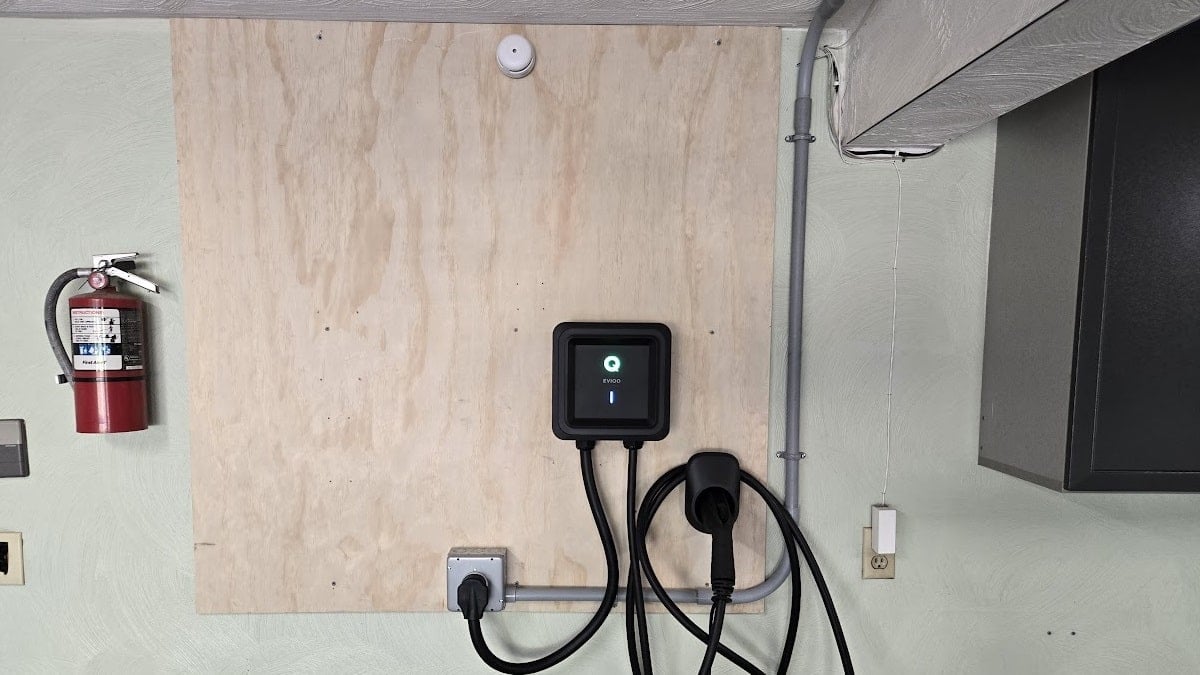
I also strongly recommend that you install a smoke detector directly above your charger that can communicate with other smoke detectors inside the living space. This can give you a warning before a fire is out of control if you are home. You can even have your home security system add a smoke detector that will call for fire department assistance if your car is charging and you are not home. Finally, get a proper fire extinguisher for the charging area. It’s not to put out an EV battery fire. That is impossible by yourself. It’s in case you need to knock back a small fire in your charger or your panel.
Always Let Your Dealer Know If Your Car Has Charger Issues
K.E.G. asked many more questions related to her specific car. Would it be OK? The single best way to answer any question of that sort is to visit your dealer. It’s only prudent to report any charging overloads and to let the dealer inspect the car following an incident like this.
What Have I Forgotten
I’m not perfect. Surely, I’ve left out a good suggestion to help K.E.G. What did I forget, or what would you add to this discussion? Please tell us in the comments below. We can always learn more about electric vehicle charging topics.
Images of the melted EV charger used with permission. Other images by John Goreham.
John Goreham is the Vice President of the New England Motor Press Association and an expert vehicle tester. John completed an engineering program with a focus on electric vehicles, followed by two decades of work in high-tech, biopharma, and the automotive supply chain before becoming a news contributor. He is a member of the Society of Automotive Engineers (SAE int). In addition to his fourteen years of work at Torque News, John has published thousands of articles and reviews at American news outlets. He is known for offering unfiltered opinions on vehicle topics. You can connect with John on LinkedIn and follow his work on his personal X channel or on our X channel. John employs grammar and punctuation software when proofreading, and he sometimes uses image generation tools.
Set Torque News as Preferred Source on Google
Follow us today...



Comments
Most electricians don't even…
Permalink
Most electricians don't even know that EVs require a special outlet. A standard 240 outlet is not designed for the continuous heat build up caused by many hours needed for charging. They were designed for short use like compressors or dryers which do not stay on continuously. Leviton makes a popular unit. A green EV symbol is usually on the face of certified outlets. 50-Amp-125-250-Volt-EV-Power-Outlet-Receptacle-NEMA-14-50R-Black-1450R-1-Pack-R10-1450R-0B0
Mike, thank you for this…
Permalink
In reply to Most electricians don't even… by Mike Bytes (not verified)
Mike, thank you for this comment and for the part numbers. Great comment!
Mike, thank you for this…
Permalink
In reply to Most electricians don't even… by Mike Bytes (not verified)
Mike, thank you for this comment and for the part numbers. Great comment!
I was going to say the same…
Permalink
In reply to Most electricians don't even… by Mike Bytes (not verified)
I was going to say the same thing.... Article does not mention this however. I read it somewhere,.perhaps from you commenting in another article.
I've used mobile charger…
Permalink
I've used mobile charger only on two electric cars I've owned. Never had a problem using a mobile charger if your wiring is done correctly
EV’s are not the answer More…
Permalink
EV’s are not the answer
More problems and more breakdowns than gasoline vehicles.
Simpler is better