
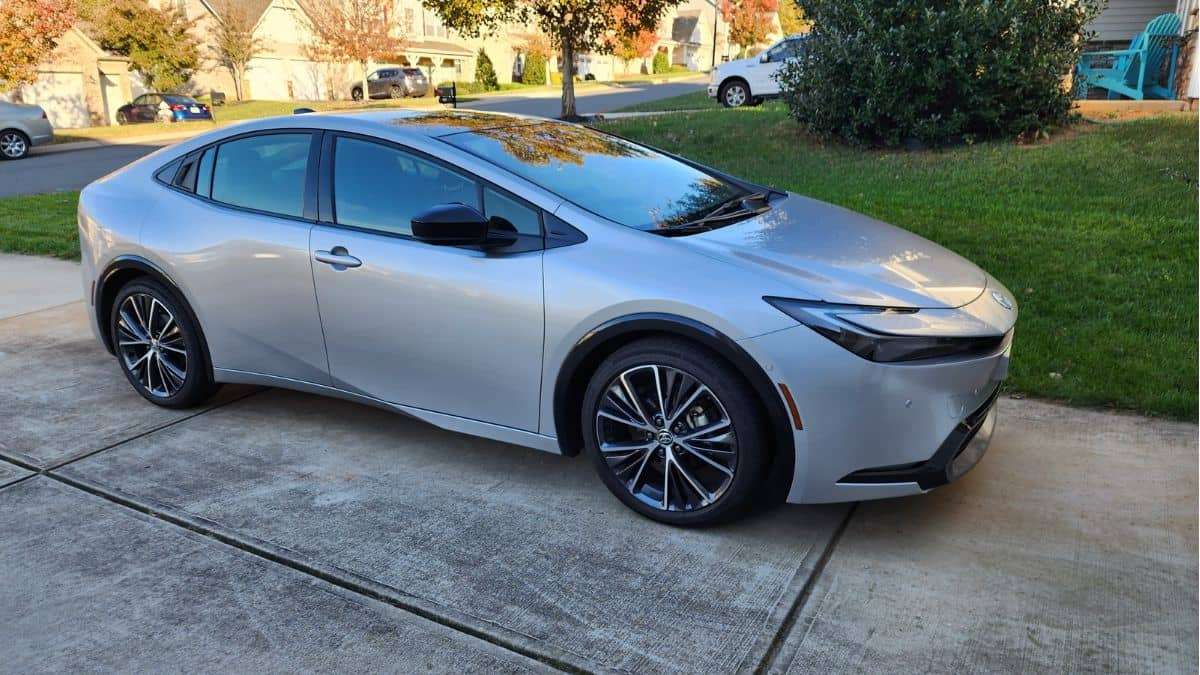

Every once in a while, a reader comment lands under one of our stories that feels less like a reaction and more like a doorway into a much bigger conversation. Every follow-up story starts somewhere, and in this case it came from a reader commenting under our earlier winter-weather report on Toyota’s plug-in hybrid. If you missed that story, you can find it here: After a Year, a 2024 Prius Prime Owner Says Its “Sports-Car Acceleration” Can’t Make Winter. What looked like a simple comment turned into a revealing look at shifting consumer sentiment inside Toyota showrooms, including feedback from salespeople who actually own the current Prius.
One of those readers, Caroline Yong, shared a thoughtful breakdown of what happened when she went to buy a new Prius after her long-time 2008 model was totaled. Not only did she end up purchasing the 2026 Camry Hybrid, but she says she was swayed in part by two Toyota employees who owned the 2024 Prius and told her they personally planned to trade theirs in for the Camry Hybrid as soon as possible.
If you haven’t read that piece yet, it’s worth it for context. And if you’re cross-shopping the 2026 Toyota Camry Hybrid and the 2025–2026 Toyota Prius, or if you’ve ever owned one of Toyota’s early hybrids, Caroline’s perspective might resonate more than you expect.
Caroline's Story in Full
Before diving into the analysis, here is Caroline’s comment exactly as she posted it, because it deserves to be read in her own words:
“My 2008 Prius, which I loved dearly, was totaled in an accident in November 2025. I wanted to buy the 2025 or 2026 new Prius, but the 2 salespeople at 2 Toyota car dealerships both had purchased the 2024 Prius and wanted to trade them in for the 2026 Camry Hybrid. The hybrid Camry is a roomier car and trunk, 52 miles per gallon vs Prius's 57 (comparable). Plus, the hybrid Toyota Camry has safer features, ie, sturdier exterior, slightly cheaper price, beautiful metallic silver color, etc. I bought the 2026 Camry Hybrid and I love it!”
That’s a complete story in just a few sentences, and it raises questions that get right to the heart of Toyota’s hybrid identity in 2025 and 2026.
When Two Salespeople Want Out of Their Own Prius, Buyers Listen
I’ve been covering Toyota for more than a decade, and I can tell you:
It’s not common to walk into two unrelated Toyota dealerships and hear that two different salespeople, who sell these cars every day, had bought 2024 Prius models and now want to trade them in for the new 2026 Camry Hybrid.
That’s not gossip. That’s a signal.
And it immediately reminded me of some of the feedback we’ve published over the past two years from Prius owners who experienced unexpected downsides in the latest redesign. For example, in this real-world durability report about weak paint and easy dents on the 2024 Prius Prime XSE, owners described concerns that feel very un-Toyota-like.
Even back in 2023, in this detailed pros-and-cons breakdown of the 2023 Prius Prime, owners were already calling attention to design choices that favored looks over practicality.
These are the kinds of patterns salespeople feel early because they live with the cars, park them on crowded lots, and put daily miles on them. Their experiences form the frontline impression customers rarely hear unless someone like Caroline happens to ask the right question.
Why the Camry Hybrid Suddenly Looks Like the Safer, Easier, More Familiar Toyota
Caroline mentioned several reasons she ultimately chose the 2026 Camry Hybrid over the Prius. And every one of them aligns with feedback we’ve heard from other Toyota owners this year.
Room and Practicality Matter More Than MPG on Paper
The Camry Hybrid offers more cabin space, a more usable trunk, and a seating position familiar to drivers coming from older hybrids like Caroline’s 2008 Prius. And when you compare the 57-mpg Prius against the 52-mpg Camry Hybrid, yes, the Prius wins, but in real-world driving, that margin shrinks.
We saw this clearly in stories like this report about swapping from a Prius to a 2025 Camry Hybrid after real-world frustrations, including heat-related performance issues.
This is also why some Prius owners chase efficiency through wheel modifications, like the driver in this story who ditched heavy 19-inch wheels for lighter 16-inch ones and instantly saw 59–65 mpg.
For many buyers, especially those coming from older, simpler Prius generations, the Camry Hybrid’s straightforward practicality feels more comforting than the Prius’ sleek, coupe-like approach.
Safety Perception Is Real: even when crash scores are similar
Caroline highlighted the Camry Hybrid’s “sturdier exterior” and safer feel. She’s not alone. In test drives and owner reports, the Camry’s traditional sedan stance, thicker door structures, better outward visibility, and solid ride quality simply register as safe, even if the Prius performs extremely well on crash tests.
And speaking of safety and daily livability, I recently published a week-long-long review of the 2025 Toyota Camry Hybrid, which focuses heavily on the car’s composed handling, road stability, and predictable hybrid behavior. These are qualities many buyers prioritize over ultimate MPG.

Price Differences Between The Prius Prime and The Hybrid Camry Are Closer Than People Think
Inventory affects pricing. The Prius has been scarce and in demand since its redesign. The Camry Hybrid has been easier to find and often easier to negotiate.
That leads to scenarios like Caroline’s, where the Camry Hybrid ends up slightly cheaper than the Prius, despite being larger, roomier, and equipped with Toyota’s newest hybrid system.
Emotional Attachment: When You Lose a 2008 Prius, You Lose a Legend
Another important part of Caroline’s comment is the emotional weight of losing her 2008 Prius. The second-generation Prius (2004–2009) wasn’t just a car - it was an era. These cars ran forever, sipped fuel, had unmatched visibility, and felt like the most reliable machines Toyota ever built.
Replacing a legend is never easy.
The 2025–2026 Prius doesn’t try to be that old-school hybrid. Toyota intentionally pushed it into a new personality: sporty, stylish, modern, and tech-heavy. Meanwhile, the Camry Hybrid feels like a spiritual continuation of the older Prius philosophy: calm, predictable, durable, comfortable, and simple to live with.
Caroline didn’t just choose between two hybrids. She chose the car that most closely resembled the traits she loved in her Gen-2 Prius.
And she walked away happy.
Why Were The Toyota Salespeople Trading Out of Their Priuses?
Let’s break down what might be happening behind the scenes, based on patterns we’ve seen:
- The Camry Hybrid is more practical for daily dealership use.
Sales staff are constantly driving with customers and equipment. - The Prius’ gorgeous design comes with compromises.
Lower roofline, tighter trunk opening, thinner panels. - The Camry Hybrid rides smoother.
This aligns with owner feedback found in pieces like “6 Months In, I Love My 2025 Toyota Camry, But 5 Things Drive Me Crazy”, where shoppers praised the car’s comfortable ride despite noting quirks. - Durability concerns are bubbling up.
Prius owners frequently report easy dents and thin paint. Again, these are not typical “Toyota problems.” - Perceived safety plays a major role.
And Caroline’s comment shows that perception matters enough to sway decisions.
When the people selling the cars are quietly shifting out of one model and into another, shoppers like Caroline naturally follow their lead.
Toyota’s Hybrid Lineup Is Splitting into Two Philosophies
Caroline’s decision is part of a larger pattern forming across Toyota dealerships:
Prius = Tech-Forward, Stylish, High-MPG, EV-Like Hybrid
A design statement with sports-car acceleration and futuristic styling.
Camry Hybrid = Traditional Toyota Reliability, Space, Comfort, Familiarity
A calmer, sturdier, easier-to-live-with daily driver for families, commuters, and long-distance travelers.
Both are fantastic cars. Both deserve their loyal followings.
But the real winner is whichever one matches your lifestyle.
Caroline’s lifestyle, and the advice she heard from two sales professionals, pushed her toward the Camry Hybrid. And based on everything she wrote, it was the right choice for her.
How 2026 Camry Hybrid Pricing and Incentives Compare to the 2025–2026 Prius Lineup
One of the biggest untold parts of Caroline’s story is how pricing behaves differently between the two models once you walk into a dealership. While the Prius often commands strong demand and limited allocations, pushing some buyers into paying sticker price or even small market adjustments, many Toyota dealers tend to receive more Camry Hybrid inventory due to higher production volumes and mainstream appeal. That difference leads to more flexible pricing, easier negotiations, and sometimes better APR incentives or loyalty rebates on the Camry than the Prius. It’s one thing to compare MSRP on paper; it’s another thing entirely to compare what people are actually paying once they sit down with the finance person.
This matters because hybrid shoppers usually cross-shop with a long-term mindset: total ownership cost, fuel savings, and maintenance patterns. When the Camry Hybrid regularly comes in a few thousand dollars cheaper out the door, despite offering comparable MPG and more space, many buyers suddenly find their “Prius-or-nothing” mindset shifting. And in a period when interest rates remain stubbornly high for many borrowers, the ability to negotiate even a slightly better price or APR on the Camry Hybrid can end up making a much larger long-term difference than the Prius’s slight MPG advantage.
Real-World MPG Differences: Why 52 vs. 57 MPG Doesn’t Tell the Whole Story
On paper, many Prius defenders point to the EPA numbers. And yes, the Prius wins. But Caroline’s experience mirrors what we hear repeatedly from owners who compare these two hybrids in actual traffic, actual weather, and actual commuting patterns. The Prius’s aerodynamic shape gives it outstanding highway efficiency, but once drivers factor in cold weather performance, tire choices, hills, cargo, and passenger load, many owners report real-world numbers not far from the Camry Hybrid. And since the Camry has a bigger gas tank, drivers often report longer intervals between fill-ups even with slightly lower MPG.
We’ve seen patterns like this in reader stories ranging from extreme-temperature reports to tire-swap MPG improvements, and they often point to a simple conclusion: real-world hybrid MPG is more about how and where you drive than the five-digit number on the window sticker. For buyers like Caroline who don’t want to worry about MPG fluctuation between seasons, or who commute with multiple passengers or lots of cargo, the Camry Hybrid’s consistency can become more valuable than the Prius’s advantage under ideal conditions.
Visibility, Seating Position, and Daily Comfort: A Hybrid Buyer’s Blind Spots (Literally)
Something Caroline hinted at, without explicitly saying, is that the Camry Hybrid simply feels easier to live with day to day. One of the most consistent complaints we hear about the new Prius is its rear visibility and low seating position. Its sporty roofline looks great from the outside, but it sacrifices some of the classic Prius visibility that long-time owners were used to. Meanwhile, the Camry Hybrid retains its traditional upright seating position with a long windshield, wider rear glass, and a less compressed cabin. For many drivers, especially those coming from older Toyota hybrids, the Camry instantly feels more natural and less fatiguing in traffic.
Daily comfort also plays a bigger role in the hybrid decision process than people admit. If you’re driving 12,000–18,000 miles a year, a softer suspension, quieter cabin, and less road noise make a major difference. This is where the Camry Hybrid quietly, and consistently - earns loyalty. It’s the hybrid you don’t have to “adapt” yourself to. You sit down, everything is familiar, and you drive. And as several Prius owners pointed out in discussions about road noise, ride firmness, or wheel-related MPG changes, the Prius requires more compromises to achieve its sporty look and performance feel. For buyers like Caroline who want a modern hybrid that still behaves like the classic Toyotas they trusted for two decades, the Camry Hybrid hits closer to home.
Caroline’s Story Reflects a Real Turning Point
Her experience captures a reality that numbers, specs, and product sheets sometimes miss. People don’t buy cars in spreadsheets - they buy them emotionally, practically, and based on trust.
In the Prius vs. Camry Hybrid debate, trust and familiarity still matter. Perceived safety still matters. Real-world room and comfort still matter. And when two Toyota salespeople independently say they want out of their 2024 Priuses and into the 2026 Camry Hybrid... that’s something shoppers notice.
Your Turn: What’s Your Take?
If you were coming out of a beloved older Prius like Caroline’s 2008 model, would you go for the sleek new Prius or the familiar comfort of the 2026 Camry Hybrid?
And if you've recently test-driven or purchased either model, did your experience line up with what Caroline described?
Armen Hareyan is the founder and Editor-in-Chief of Torque News. He founded TorqueNews.com in 2010, which since then has been publishing expert news and analysis about the automotive industry. He can be reached at Torque News Twitter, Linkedin, and Youtube. He has more than a decade of expertise in the automotive industry with a special interest in Tesla and electric vehicles.
Images by Armen Hareyan.
Set Torque News as Preferred Source on Google
Follow us today...







Comments
I still like the Prius…
Permalink
I still like the Prius better. I test drove the 25 Camry last year, didn’t like it. Too much technology, a lot of that I will never use. That’s why I will stick with my 2014 Prius V.
Couldn't agree more. Drove…
Permalink
In reply to I still like the Prius… by Bentley Steward (not verified)
Couldn't agree more. Drove both, the Prius was the winner for us.
I really don't like the…
Permalink
I really don't like the style or smaller interior space of the new one. Happy with my gen 4. Daughter just got a used gen 2.
Gen 5 Toyota Prius has a market, but it isn't with me.
I have a Gen 4. I sat in a…
Permalink
I have a Gen 4. I sat in a Gen 5 while mine was being serviced a few weeks ago.
I hit my head as I got in the Gen 5 it’s so low. And I actually like having all the info in the center of the dash.
The Gen 5 felt a bit claustrophobic for me.
I bought a 2007 Prius new,…
Permalink
I bought a 2007 Prius new, and loved it every second I had it. It unfortunately died a very expensive death a couple of years ago, so needing transportation, I bought the only hybrid on the lot, a 2023 RAV4. Had it for about a year and a half, but REALLY really missed having a Prius. So in mid January, before the prices of cars went up, I traded the RAV4 in on a 2024 Prius Prime. Nothing against the RAV4, it was just too big for me, and well, it wasn't a Prius. Have had absolutely NO complaints with it, and have really enjoyed only having to fill it up once in June since I got it. I did run into the dead aux battery issue for the first time yesterday, so time will tell if the jumpstart I got from AAA and the recharge that it did will keep it going, or if I'll have to have a warranty replacement on it. But so far, after just under a year, I am LOVING my Prius Prime, have never looked back after trading in the RAV4.
It is a generational thing. …
Permalink
It is a generational thing. In 15 years, Toyota will sell them each a Lexus that will get about the same mileage. Some Prius owners only bought because the Camry didn't come in a hybrid.
Went from Gen 1 Prius sedan,…
Permalink
Went from Gen 1 Prius sedan, to a 2016 Prius C. Hope it never dies. Test drove a 2025 Prius Plugin and was surprised to find I didn't care for it. It is is a totally different kind of car. I am leaning toward a Bolt or Leaf, after almost 40 years of owning Toyotas. Toyota needs a electric hatchback. And don’t get me started on how hideous the Camry and Corolla Cross look with the massive front grills.
Toyota Camrys are Made in…
Permalink
Toyota Camrys are Made in Kentucky while the Prius are Made in Japan.