
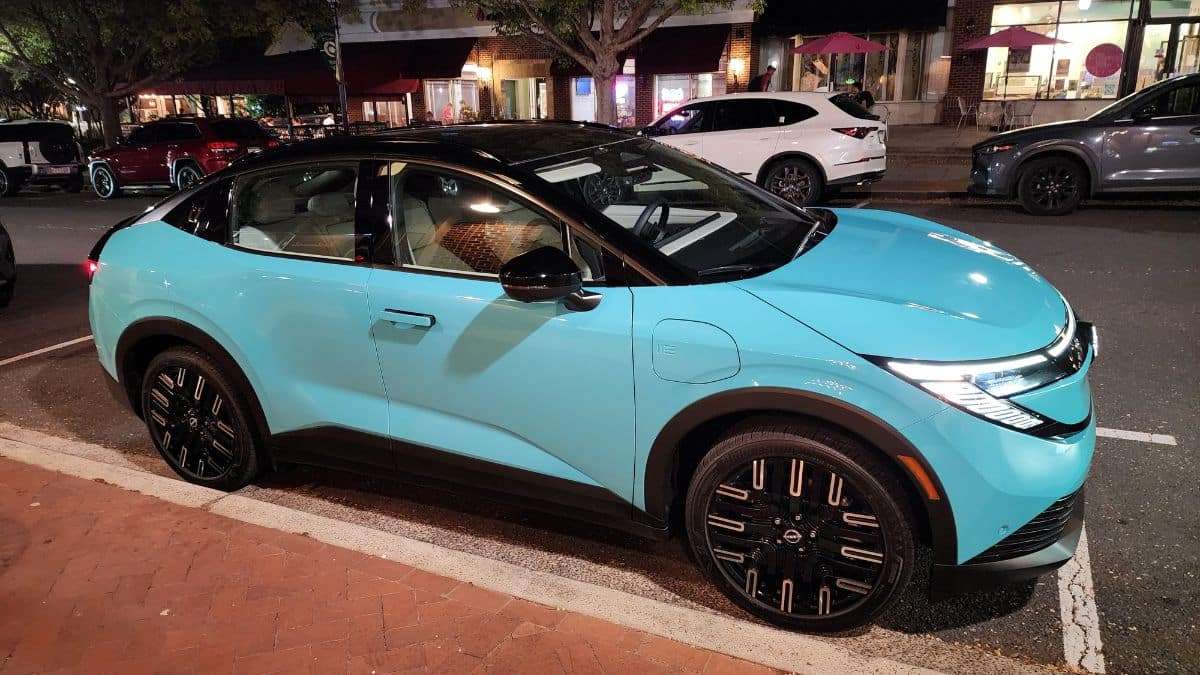

When I climbed into the 2026 Nissan LEAF Platinum+ for two weeks of real-world driving around Charlotte, it felt like reconnecting with a long-time friend who had gone away, come back re-imagined, and arrived ready to compete. The original LEAF laid groundwork, but this version says loudly: Nissan is shifting gears, and the LEAF is no longer the quirky hatchback EV it once was. It’s now a fully modern compact EV ready for prime time.
First Impressions of The 2026 Nissan LEAF Styling Shift
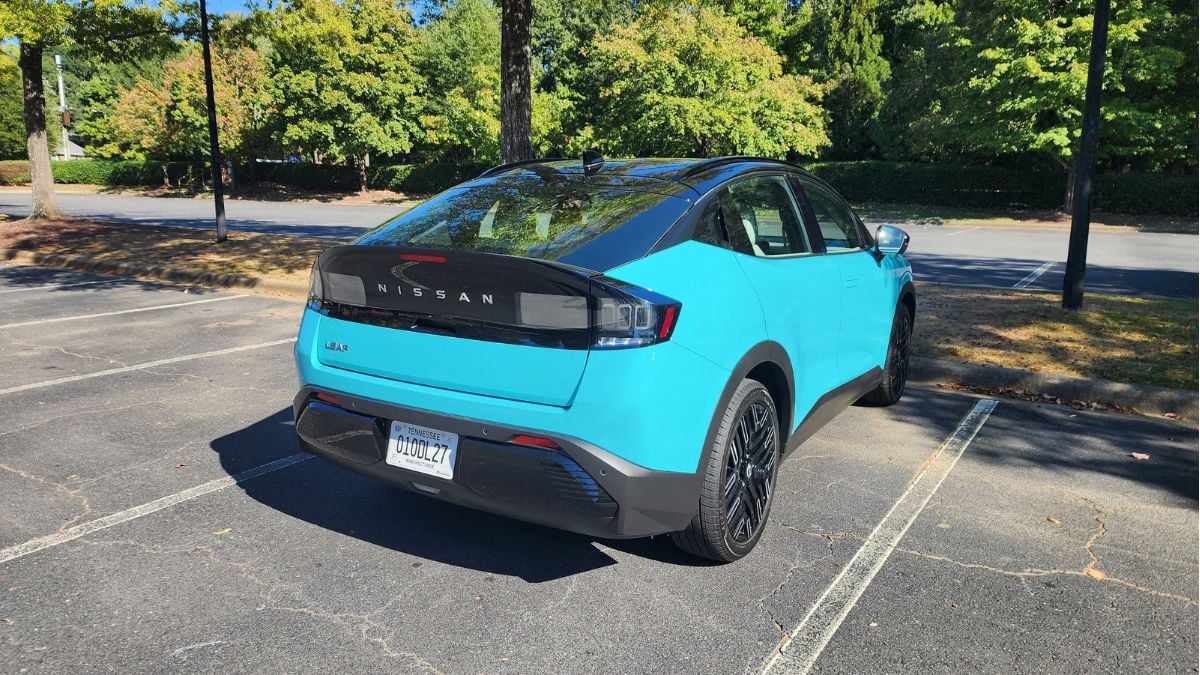
From the first moment, the transformation is obvious. Gone are the short-hatch proportions of earlier LEAFs, replaced by a sleeker, fastback-crossover silhouette, sharper lines, and a presence that turns heads. In parking lots where I used to field questions like “Is that the new LEAF?” I instead got double-takes from folks who assumed it was a premium EV cameo.
This isn’t just lipstick on a hatch. It’s a repositioning. As we noted in our story on how the LEAF “finally felt future”, this one fully crosses that threshold.
(See our earlier take: Nissan LEAF finally feels future.)
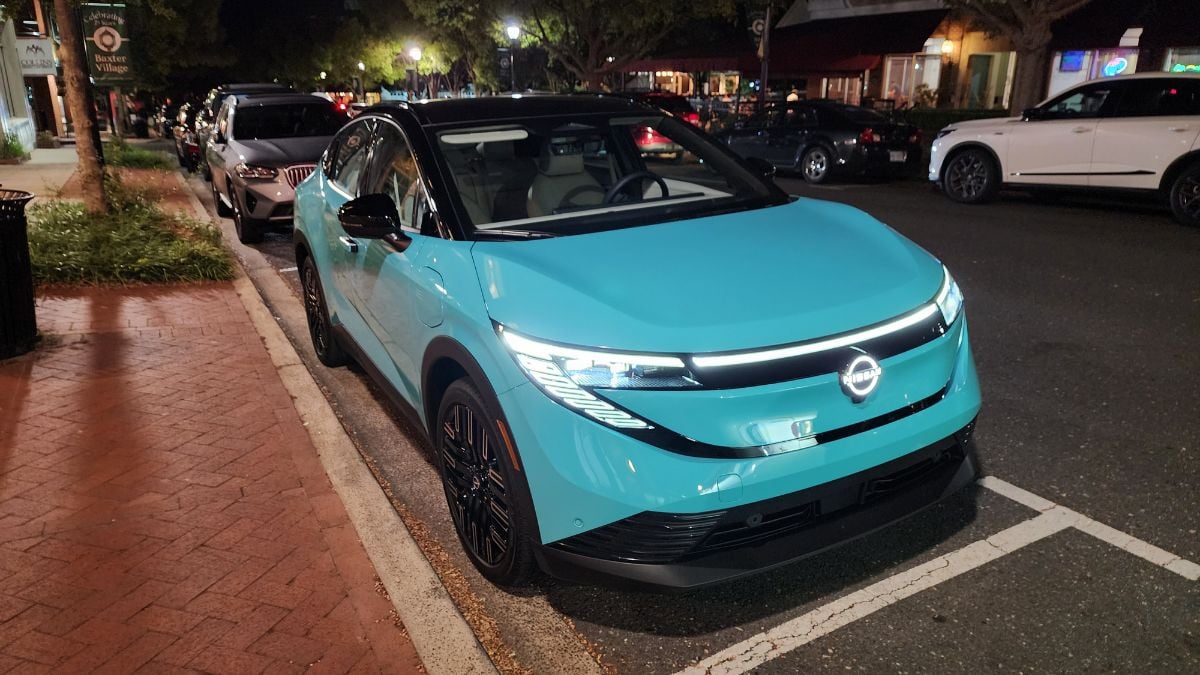
The design shift matters because EV buyers in 2026 expect more than functional; they demand form that signals tech, range, confidence. Nissan heard that.
Powertrain, Range and Charging Realities
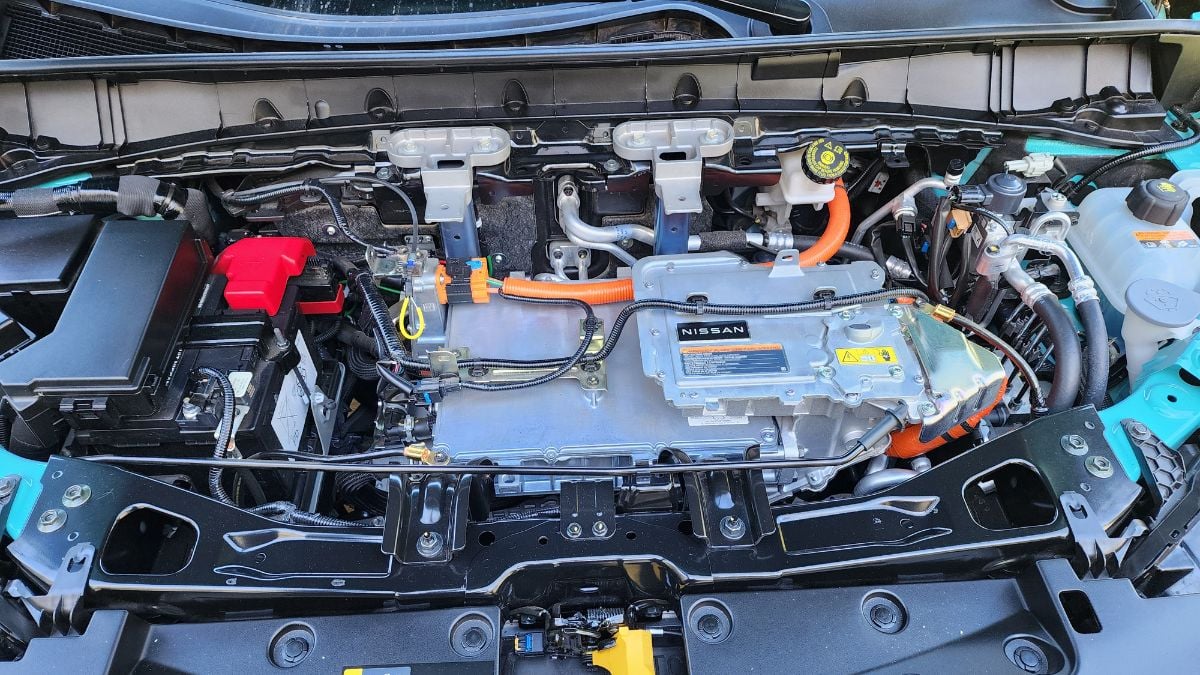
Under the skin, the LEAF Platinum+ packs the stronger 75 kWh liquid-cooled battery, paired with a 214-hp/approximately 261-lb-ft motor. Nissan’s claimed range lands in the ~250-300 mile band depending on configuration - and over my two-week test I consistently saw high-240s in mixed highway/city driving - excellent for this segment.
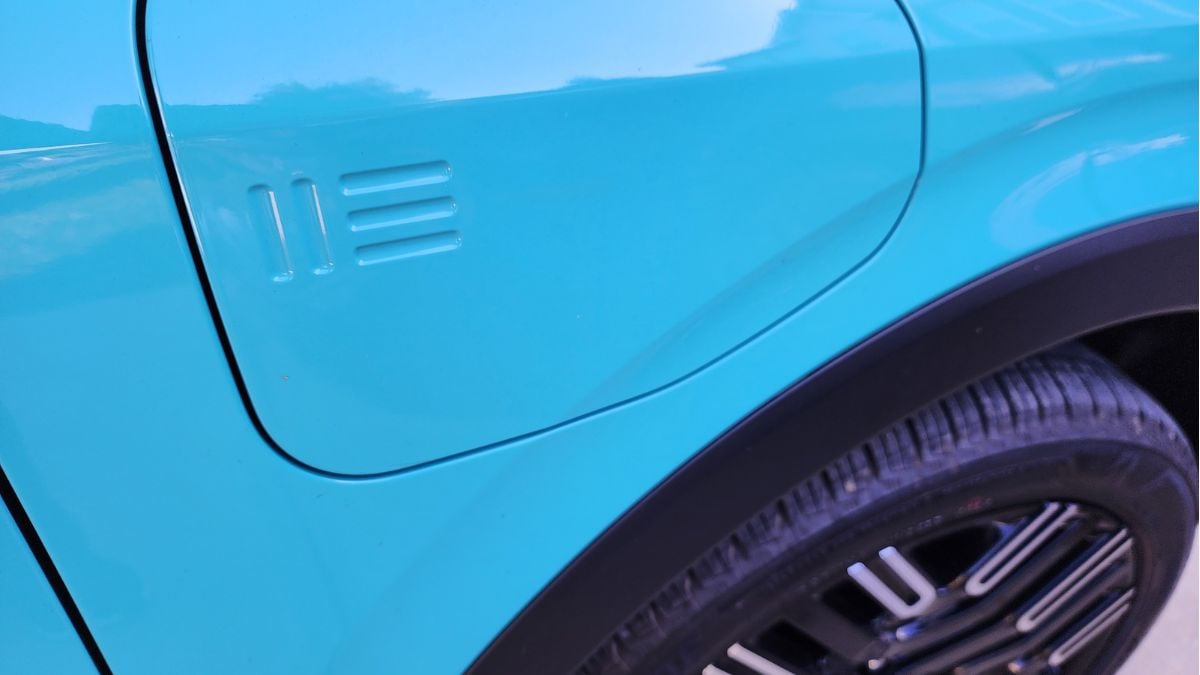
Arguably more important: charging. The Platinum+ supports up to ~150 kW DC fast charging via the NACS port on the passenger side. At one highway stop I loaded from ~10% to ~80% in about 36 minutes: practical, no drama. The dual-port layout (J1772 AC on driver side, NACS DC on the other) gives flexibility. Previous LEAFs struggled with charging standards; this one addresses it head-on.
(See also our spotting of NACS/CCS adapter detail: I Spotted The New Nissan LEAF in Colorado….)
If you’re shopping EVs today, the charging standard and accessible fast rate matter just as much as range, and on this score the new LEAF steps up.
Interior and Technology Present Premium Moves
Inside the Platinum+ trim, which I was test-driving last week, the changes feel real. Soft-touch materials, nicely stitched surfaces, a big panoramic glass roof and a well-executed ambient lighting setup give the cabin a near-premium feel. The dual 14.5-inch displays (instrument cluster + infotainment) are crisp, responsive. Google built-in and wireless phone charging are standard in this trim; the Bose 10-speaker system makes it feel more upscale than you’d expect at this price point.
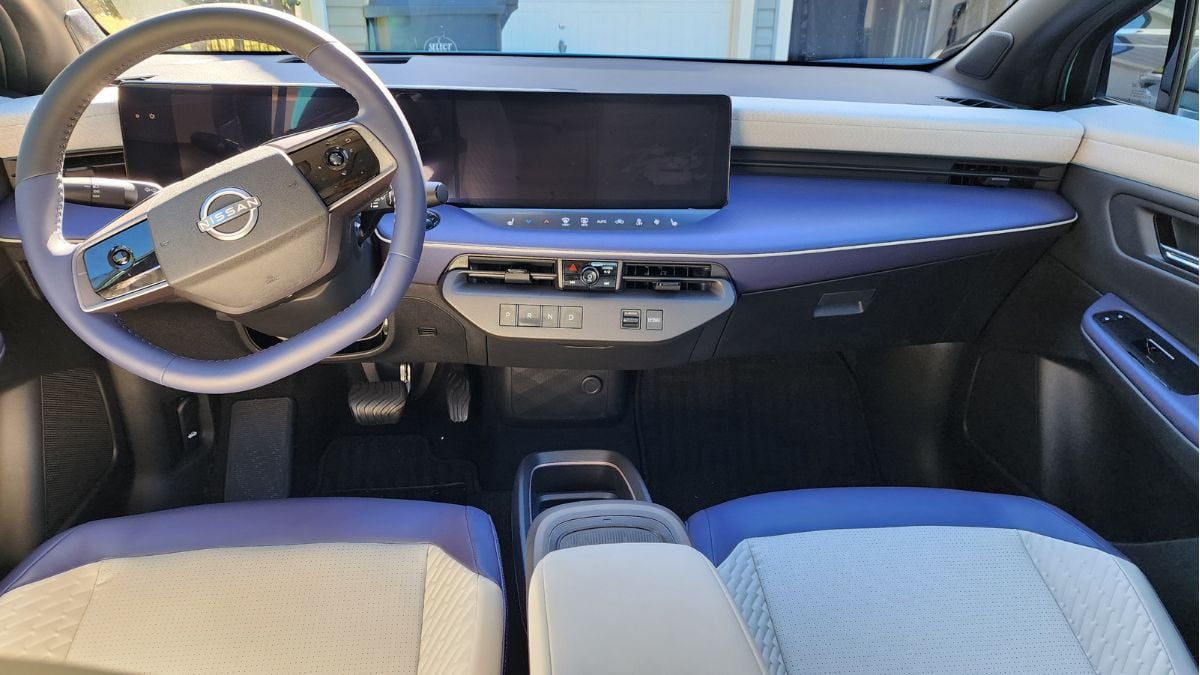
During a rainy-morning commute, I noticed how quiet the cabin was, road and rain noise were held at bay. My back-seat passengers remarked how comfortable it felt, which matters for an EV you’ll spend hours in.
The back seat of the 2026 Nissan Leaf Platinum+ is surprisingly spacious for what is now a sleek coupe-style crossover, offering generous legroom and improved head clearance thanks to a slightly stretched roofline that doesn’t compromise comfort. The rear bench comfortably accommodates two adults or three children, with supportive cushioning and available rear climate vents that make longer drives more pleasant.
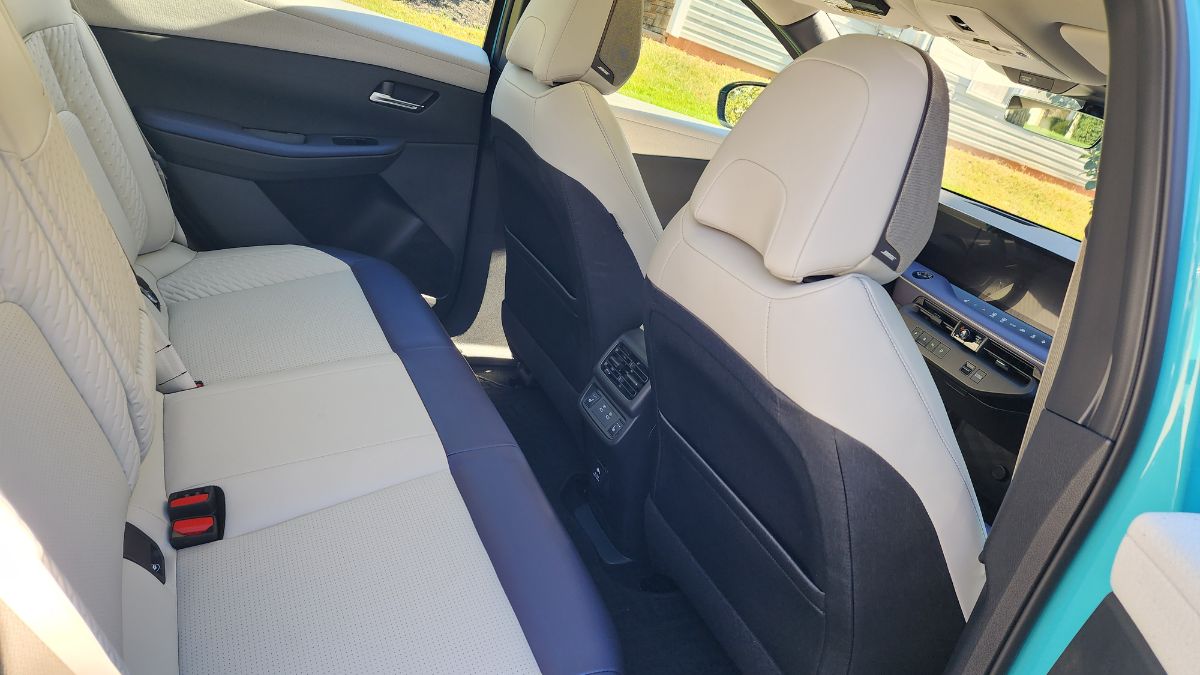
The cabin materials feel more upscale than before, with soft-touch surfaces extending to the door panels and stitched seatbacks adding a premium touch.
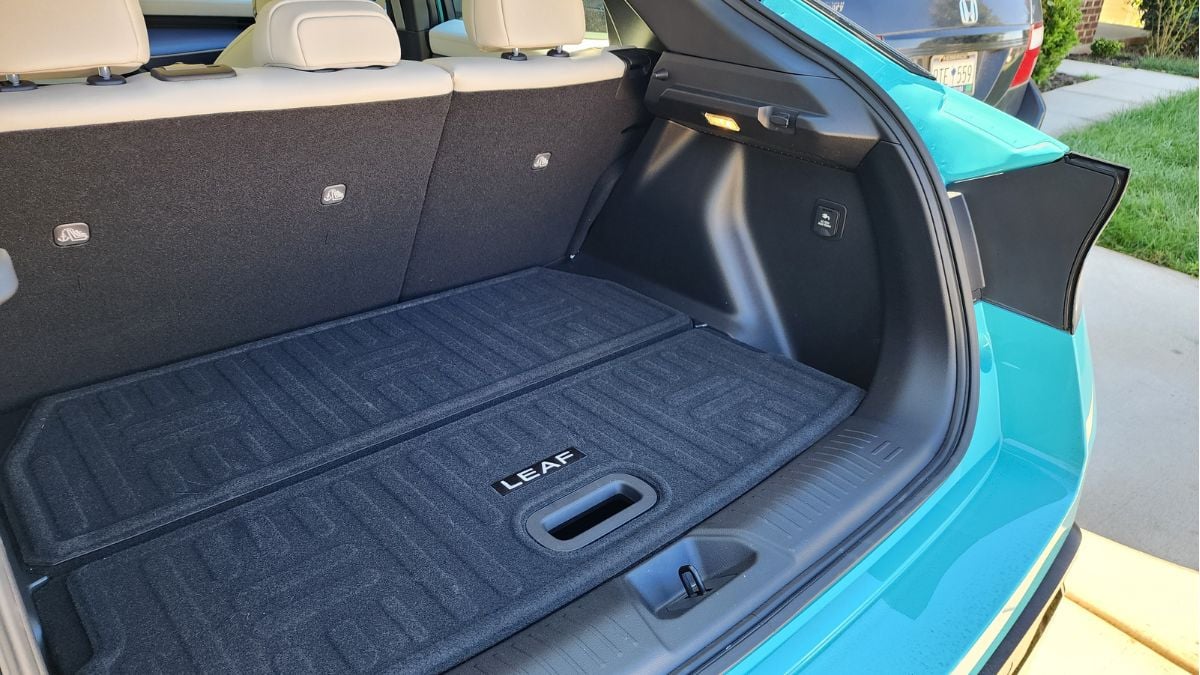
Cargo space also benefits from the Leaf’s new proportions. Its wider rear opening and lower load floor make it easier to fit bulkier items like strollers or camping gear. Fold the rear seats flat, and you reveal a surprisingly deep and square cargo area that rivals compact SUVs, turning the Leaf into a practical daily driver that doesn’t sacrifice utility for style.
Driving Experience: Composed, Comfortable, With Boundaries
On the road the LEAF Platinum+ hits the key marks: brisk off the line, smooth in everyday driving, and refined for longer trips. The 0-60 in around 6.9 seconds is not hypercar territory, but in daily life it delivers enough push to satisfy. The electric torque gives you that satisfying “instant” feeling you expect from EVs.
That said, if you're looking for sharp handling and sporty fun, be aware of the trade-offs. The suspension is tuned for comfort and composure: not corner-carving aggression. You’ll feel body roll in harder turns and the front-wheel-drive layout means you’ll miss the traction feel of an AWD setup. For daily commuting and long highway stretches it shines; for enthusiast driving it plays safe.
On highways I appreciated the smoothness and stability. In city stop-and-go, the regen braking was intuitive, one-pedal mode engaged naturally after a couple of days of adaptation. There was one morning I navigated school-zone traffic and wet pavement - verything was calm, the car delivered.
This gives you a clear buyer-signal: if you want a refined, tech-rich EV for commuting, errands and relaxed trips, the new LEAF is a great fit; if you want sporty dynamics or AWD capability, you may want to explore further.
Ownership and Value: Real World Impacts
From a value perspective, the 2026 LEAF Platinum+ presents a strong package. Considering the battery size, fast-charging capability, tech and build quality, it punches above its class. Nissan’s 8-year/100,000 mile battery warranty adds confidence for long-term ownership.
Because of the dual-port charging and NACS compatibility, road-trip usability is better than past LEAFs. One evening I charged at a Supercharger using the NACS port; the ease was notable.
On the flip side, if you need AWD, more aggressive handling, or maximum cargo utility, you’ll encounter trade-offs. Also, check dealer support for NACS fast-charging in your region. Availability still varies.
A practical anecdote: at a weekend run I loaded a full trunk of gear plus two adults in the back. While the cabin still felt roomy, I realized the sloping roof cut clearance just enough that taller items sat slightly lower. It worked—and looked great—but flagged a small compromise.
Why This LEAF Matters (and What It Competes With)
This 2026 LEAF update matters because it rewrites what the LEAF can be. Historically the LEAF was an EV pioneer, but often seen as dated in form, range or tech. This version changes that narrative. In our view, it fills the sweet spot between budget EV and premium expectation: refined, practical, modern.
Its arrival also sharpens competition. For instance, the return of the Chevrolet Bolt in its 2027 model year - aiming at sub-$30K pricing - sets the stage for an interesting EV duel. (See: Chevy is bringing back its once top-selling Bolt for 2027.) Buyers now have strong choices when it comes to long-range affordable EVs.
If you’re in the market for an EV in 2026-27, this LEAF should be firmly on your list - not just for what it is, but for what it signals: Nissan has brought the LEAF nameplate into the modern era.
Who Should Buy The 2026 LEAF, Who Might Wait?
The Good:
- Long realistic range and strong fast charging.
- Refined interior and tech-rich cabin (especially Platinum+).
- Value strong for what you get - modern EV ability without ultra-luxury price.
- Charging convenience with both home AC port and NACS fast port.
Trade-Offs:
- No AWD option (front-motor only).
- Handling is comfortable, not sporty.
- Fastback roof slightly limits tall-cargo clearance.
Ideal Buyer:
You commute daily, do moderate highway driving, want a comfortable, tech-savvy EV that doesn’t look like every other hatch, and you care about long-term ease of ownership. You value modern charging and are realistic about handling.
Might Want to Wait or Look Elsewhere If:
You need AWD, you haul tall cargo routinely, you want sharp performance or engage in spirited driving often.
How the 2026 Nissan Leaf’s NACS Charging Port Future-Proofs It for the Next Decade
One of the most significant changes in the 2026 Nissan Leaf is its adoption of the North American Charging Standard (NACS) - the same plug design used by Tesla. This is more than a convenience update; it’s a complete shift in how the Leaf fits into the evolving EV ecosystem. Nissan’s decision to include a hidden CCS adapter, as previously spotted on test vehicles in Colorado, means owners can seamlessly charge at both Tesla Supercharger stations and traditional CCS fast chargers. That flexibility removes one of the biggest limitations the old Leaf faced - limited access to reliable DC fast charging. For EV buyers comparing the Leaf to the Chevy Bolt’s 2027 return or even the Hyundai Kona Electric, this dual compatibility could be a decisive factor.
From a long-term ownership perspective, the inclusion of NACS also future-proofs the 2026 Leaf in ways few EVs in its price range currently match. As Tesla’s Supercharger network becomes more accessible to non-Tesla brands, early Leaf adopters will find themselves in an enviable position. Range anxiety is dramatically reduced when drivers know they can access thousands of reliable fast chargers across North America. This move also hints at Nissan’s larger EV strategy: a company once criticized for falling behind is now aligning itself with the infrastructure leaders. For drivers looking for the most convenient EV charging experience under $40,000, the 2026 Leaf sets a new standard in its class.
Comparing the 2026 Nissan Leaf’s Driving Dynamics to the 2025 Ariya and the Hyundai Ioniq 5
The redesigned 2026 Nissan Leaf finally feels like a modern EV in terms of performance and handling. Built on a revised platform shared with the Ariya, it replaces the previous Leaf’s soft, commuter-oriented suspension with a more planted setup that brings it closer to vehicles like the Hyundai Ioniq 5 and Kia EV6. Steering feedback is sharper, and the regenerative braking system has been refined to feel smoother in stop-and-go traffic. Nissan engineers clearly prioritized balance over brute power - the Leaf isn’t the quickest in its segment, but it feels composed and confident on back roads. That makes it an appealing everyday EV for drivers who value refinement and predictability over outright speed.
Comparing it to the larger Nissan Ariya, the 2026 Leaf feels more nimble and driver-focused. The lower center of gravity and reduced overall weight contribute to a lightness in cornering that even some luxury EVs struggle to achieve. Yet, Nissan still preserved the comfort-oriented ride that long-time Leaf owners love. The result is an EV that blends maturity with fun, appealing both to first-time buyers and returning customers. In short, this generation marks a shift from the Leaf being “the affordable EV” to being the affordable EV you actually want to drive.
How the 2026 Nissan Leaf Redefines Practical Electric Mobility for Suburban Drivers
The 2026 Nissan Leaf may have traded its classic hatchback silhouette for a sleeker coupe SUV body style, but it still carries Nissan’s pragmatic DNA at its core. The slightly raised stance and wider cargo area make it more versatile for suburban families who need space for groceries, sports gear, or weekend trips. Inside, the new cabin offers improved insulation, higher-quality materials, and Nissan’s updated ProPILOT Assist 2.0 - an advanced driver assistance suite that makes daily commutes less stressful. For buyers cross-shopping between the 2025 Tesla Model 3, 2024 Hyundai Kona Electric, or even plug-in hybrids like the Toyota RAV4 Prime, the new Leaf offers a uniquely balanced equation of cost, comfort, and capability.
Nissan’s approach here reflects a larger trend in EV design: electric vehicles that are not just eco-friendly but also fit easily into normal family life. The Leaf now provides enough driving range - up to around 280 miles - to make weekend getaways realistic without heavy planning. Add in the fact that Nissan’s battery thermal management system is now liquid-cooled, solving one of the most criticized weaknesses of past Leafs, and you have a genuinely compelling ownership experience. The Leaf’s transformation represents something larger: Nissan reclaiming its role as a leader in affordable, intelligent electric mobility that actually works for American households.
After two weeks behind the wheel of the 2026 Nissan LEAF Platinum+, my verdict is this: Nissan didn’t just update the LEAF. It reinvented it. The old story of “charming but compromised” is over. This one delivers in ways that matter for everyday EV life - range, charging, tech, comfort. If you’re selecting your next EV and the Platinum+ falls within your budget, give it serious consideration. I left the test drive confident that the LEAF name is back in the fight, and for many buyers, that’s a big deal.
Armen Hareyan is the founder and Editor-in-Chief of Torque News. He founded TorqueNews.com in 2010, which since then has been publishing expert news and analysis about the automotive industry. He can be reached at Torque News Twitter, Linkedin, and Youtube. He has more than a decade of expertise in the automotive industry with a special interest in Tesla and electric vehicles.
Set Torque News as Preferred Source on Google
Follow us today...






Comments
When will Nissan provide the…
Permalink
When will Nissan provide the fix for fast charging existing Leafs?
We test drove the new Leaf…
Permalink
We test drove the new Leaf yesterday. We have a 2023 SV Plus Leaf and are looking for just a little more range. We enjoyed our test drive but are not yet convinced it represents the next step for our needs.
The jury is still out there…
Permalink
The jury is still out there whether the new Leaf is a deserving follow-up on the original.
I love the original for its mechanical simplicity and reliability (battery issues notwithstanding), and yet very nice equipment (amongst much more expensive 2025 models there are still plenty that don’t have heat pumps, yet sport hydronic heaters that Leaf ditched in 2013).
I like the new one, and hope it retains the old formula. Not a big fan of a sportback, but I guess for smaller households and mainly for commuting it’s fine…