
Increasing costs are further fueling a growing movement to live off grid. Folks who make the leap to live off grid often choose smaller homes. Living off grid appeals to people who crave freedom, simplicity, and a more intentional way of life. It offers a break from rising utility bills, and crowded neighborhoods. Many find deep satisfaction in producing their own energy, collecting their own water, and using their own hands to contribute to daily needs.
Tiny homes tap into that same mindset. Their compact size encourages thoughtful living, with less space to fill and more time to focus on what truly matters. Together, off-grid living and tiny homes create a lifestyle that feels lighter, quieter, and less distracted.
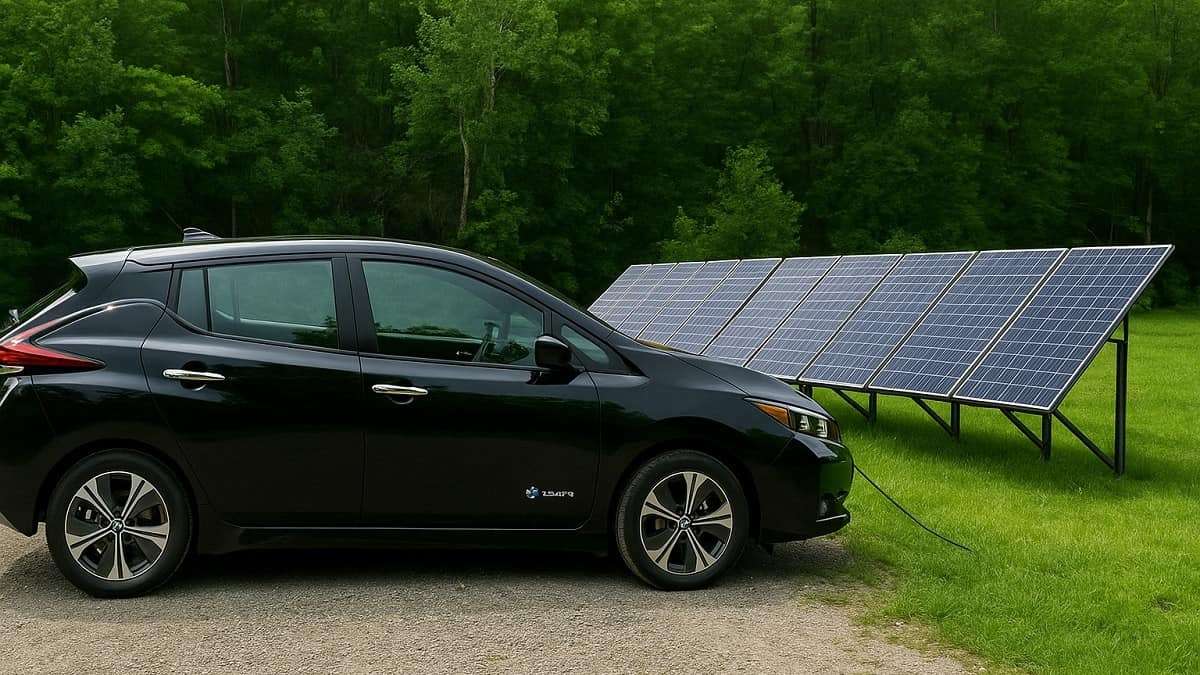
With this mindset, adding an electric vehicle to the mix makes perfect sense. EVs can be charged using solar energy, allowing owners to stay mobile without relying on gas stations and rising fuel prices. That independence is powerful for people who already generate their own electricity and track every watt. EVs are also low maintenance, with fewer moving parts and no oil changes, which aligns with the minimalism and reduced upkeep that tiny home dwellers often prioritize.
This has led to a lot of interesting social media discussion about the many different ways to charge and live with EVs off grid. Here’s a long, interesting thread on Reddit with a post by Brilliant_Advance454.
“I charge my car off grid for less than $1,000 of gear. I bought three large panels off Amazon and feed them into a solar panel controller. From there it’s connected directly to an inverter and large battery. I’m able to set the Tesla for 5 amps and use the regular 120 plug that came with the car. Charging rate is about 1% every 30 minutes. Yes, it takes a while to charge but it’s free and from the sun!”
maddslacker added:
“Assuming you arrive home on "empty" let's say you then need to put 50kWh back into the car battery.
Thirty five 400 watt panels would generate 14kW in ideal conditions. Let's suppose you get an average 10kW
Thus it would take 5 hours of full sun to fully charge a Nissan LEAF with a large (60 kWh) battery .”
Over on Facebook, Jeff Droz's, a solar off grid veteran made this interesting comment:
Advertising
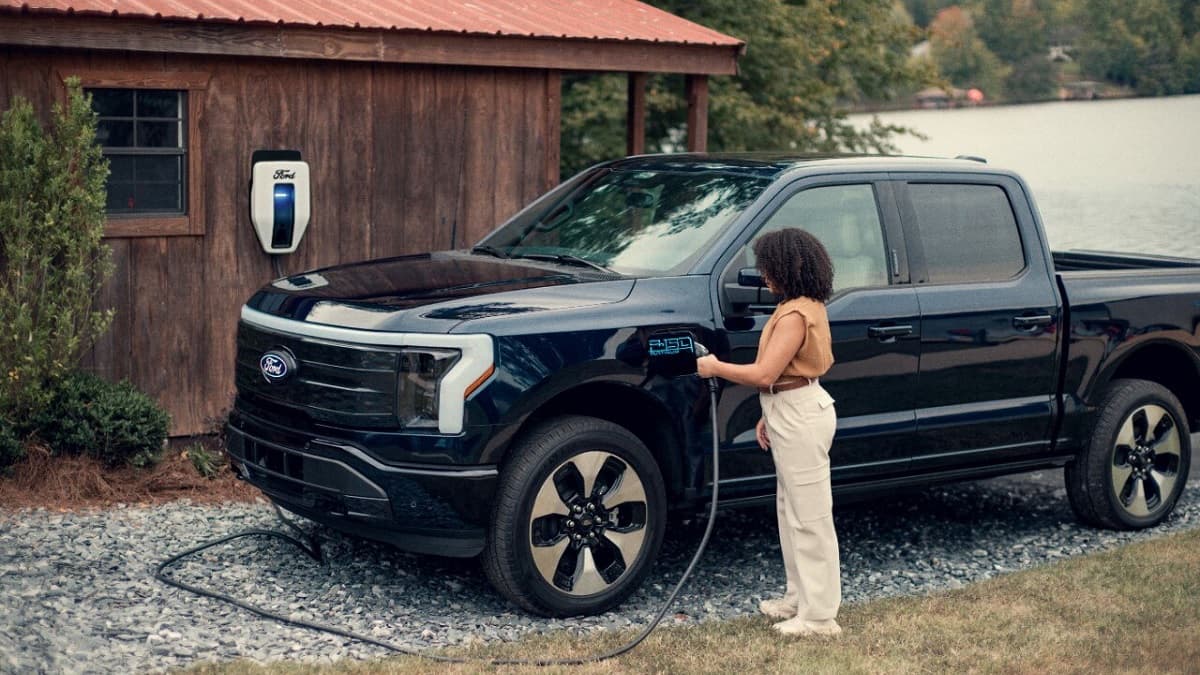
“There are a lot of opinions about electric vehicles here, and I’ll give mine. I’ve got 50k on a Ford F-150 Lightning EV. I’ve put over 200k on several other EV cars. Having the ability to fuel this with sunshine, run power tools, charge my off-grid home batteries up, and having all the tools for my daily work is incredible. It works for many applications. I can’t make gas. I can capture electrons and store them in this giant rolling battery bank that is about the same price as just the batteries. I’ll never buy a drop of gasoline again. That’s security. That’s comfort...
No one mandated I buy this. No one is mandating that you buy this. But if you have the means, it’s one of the most utilitarian pieces of equipment one can own.”
Teri Page has been living off grid with an EV in central Vermont for about five years. Here’s how she describes the experience.
Choosing the Nissan LEAF and Embracing the Off-Grid Challenge
The decision to lease a 2020 Nissan LEAF was guided by personal recommendations, affordability, and a desire to shift away from the growing costs of maintaining an aging gas-powered vehicle. The timing was bold. Just as the lease began, the move to an off-grid homestead was underway. With few online references for off-grid EV charging, it required a leap of faith and a willingness to figure things out firsthand.
Charging at Home with Limited Resources
Living off-grid in Central Vermont means working with a modest solar setup that includes nine 310-watt panels and two 48-volt batteries. Charging the Nissan LEAF using a Level 1 outlet connected to the solar system is slow but possible, yielding about six miles of range per hour. During sunnier months from March through October, home charging is simple and often completely free. Winter brings less daylight and more energy competition between the home’s power needs and charging the LEAF, which makes consistent charging a challenge and sometimes requires running a generator.
Using A Little Public Charging During the Dark Months
When home solar is not enough, the local network of public charging stations becomes essential. Most of the chargers in her area are Level 2, with one Level 3 station offering a faster, though more expensive, solution. Apps like PlugShare, ChargePoint, EVgo, SemaConnect, and Electrify America help track availability and locations. Weekly errands or appointments pair well with charging stops, transforming energy management into part of the lifestyle. Although this approach requires planning, it proves workable with the right mindset and keeps the costs down.
Road Trips and Planning for the Unexpected
A family road trip to a destination 4.5 hours away requires detailed planning to extend the range and reduce charging stops. Using PlugShare, stops are mapped out at locations that also offer food or shopping, adding value to the wait. The trip stretches to 6.5 hours, but the experience feels like an adventure rather than a compromise. With no long waits and consistent charger availability, the trip proves that off-grid EV ownership can extend well beyond her home.
Is an EV a Good Fit for Off-Grid Life?
For grid-connected drivers with modest travel needs, leasing or owning an EV is an easy recommendation. The driving experience is smooth, quiet, and low maintenance. For off-grid drivers, the answer depends on variables like solar capacity, local climate, driving distance, and flexibility. Those willing to plan their trips and adjust their routines can make it work. Charging from the sun feels deeply satisfying, especially when it supports a broader lifestyle of energy independence and cost conscious living.
The Bottom Line
Living off-grid with an electric vehicle requires adaptability, curiosity, and thoughtful design. It is not always simple, especially in the winter or in remote areas, but it remains achievable with the right tools and patience. When the systems align, charging from home solar becomes more than a convenience. It can feel really rewarding and adds to the sense of security that comes from not worrying less about costs.
Please Drop Your Thoughts in the Comments Below
If you already live off grid, would you consider switching to an electric vehicle?
Do you think EVs make more or less sense when you’re living in a remote area?
Chris Johnston is the author of SAE’s comprehensive book on electric vehicles, "The Arrival of The Electric Car." His coverage on Torque News focuses on electric vehicles. Chris has decades of product management experience in telematics, mobile computing, and wireless communications. Chris has a B.S. in electrical engineering from Purdue University and an MBA. He lives in Seattle. When not working, Chris enjoys restoring classic wooden boats, open water swimming, cycling and flying (as a private pilot). You can connect with Chris on LinkedIn and follow his work on X at ChrisJohnstonEV.
Image source: AI, Ford media kit
Set Torque News as Preferred Source on Google
Follow us today...