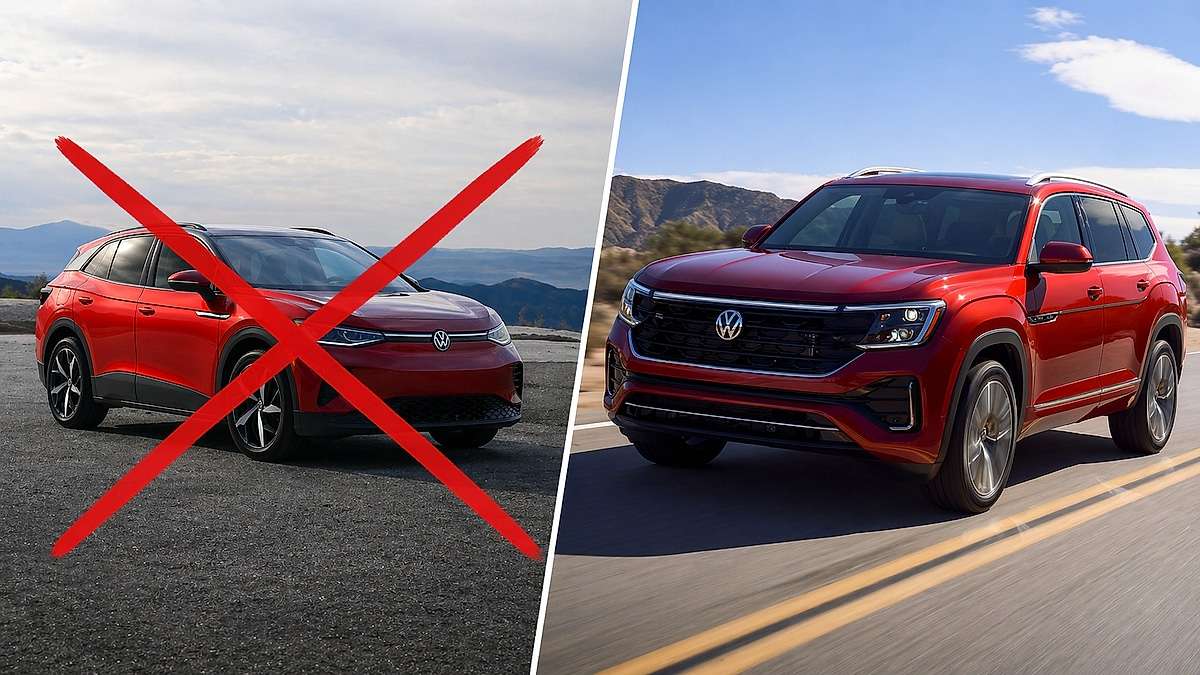

Volkswagen has now given its clearest explanation yet for why the ID.4 is no longer being built in Chattanooga, and the answer says a great deal about what the company believes that the Tennessee plant needs to do right now.
After TorqueNews asked about the production change, Volkswagen said it was “aligning our production in Chattanooga with market demand” and that “prioritizing high-volume models like the Atlas and Atlas Cross Sport promotes the long-term health and competitiveness of the plant.” Volkswagen also said it “remains committed to electrification and providing EV options to our customers,” adding that the ID.4 will still be available through current inventory and that the ID. Buzz remains in the lineup.
That statement is careful, but it is still revealing. Volkswagen is not describing this as a brief interruption or a temporary production adjustment. It describes the move as a choice about what Chattanooga should prioritize. In that choice, the Atlas and Atlas Cross Sport came first.
Volkswagen’s own recent sales releases help explain why.
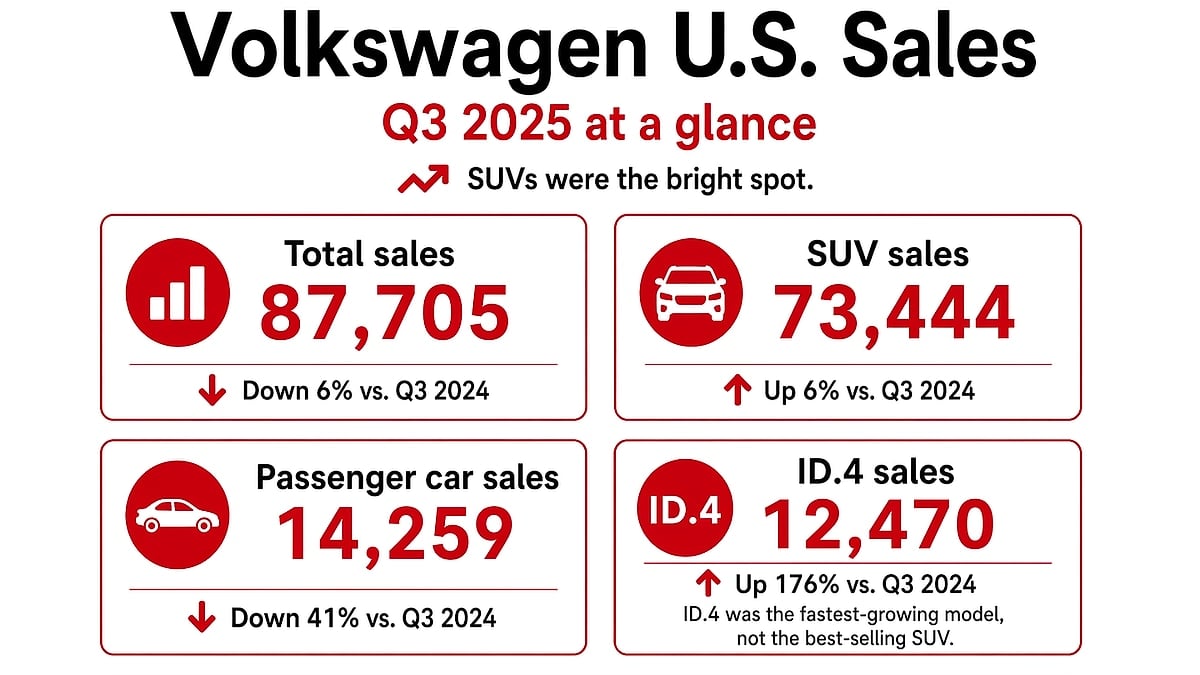
In its Q3 2025 U.S. sales report, Volkswagen said overall brand sales were down 6 percent year over year in a “challenging environment,” but SUV sales rose 6 percent, helped by “strong ID.4 sales.” The ID.4 posted 12,470 U.S. sales in that quarter, up 176 percent year over year. At that point, the model still looked like a real contributor to Volkswagen’s U.S. SUV business, and Chattanooga was still described as building the Atlas, Atlas Cross Sport, and ID.4.
The reversal came quickly.
In Volkswagen’s Q4 and full-year 2025 sales release, the company said total U.S. sales were down 19.8 percent year over year in the quarter and down 13 percent for the full year. The ID.4 fell to just 248 sales in Q4, down 61.6 percent from the same quarter a year earlier. The model still finished the full year up 31.4 percent, which shows how much its earlier strength had mattered, but by then the quarterly trend had already turned sharply lower. Chattanooga was still listed in that release as assembling the Atlas, Atlas Cross Sport, and ID.4.
Then came Q1 2026.
Volkswagen reported total U.S. sales down 16.1 percent year over year. ID.4 sales fell to 338 units, down 95.6 percent from the same quarter a year earlier. The Chattanooga description changed, too. In that Q1 release, Volkswagen described the Tennessee plant as assembling the Atlas and Atlas Cross Sport, with no mention of the ID.4.
That sequence matters because it shows three things happening at once. First, the ID.4 went from being one of Volkswagen’s brighter U.S. spots in late 2025 to becoming a very small-volume product by early 2026. Second, Chattanooga’s role in Volkswagen’s corporate language shifted with it. Third, when asked why the company made the move, Volkswagen emphasized demand, volume, and plant competitiveness rather than any temporary operational explanation.
The cleanest way to read that is also the simplest. When Volkswagen decided what Chattanooga needed to protect, it chose the Atlas family.
That does not mean Volkswagen is walking away from EVs in America. The company was careful to say the opposite, and the ID.4 remains available through existing inventory. The ID. Buzz also remains part of Volkswagen’s U.S. EV offering. But there is a difference between staying in the EV market and deciding that one particular U.S. plant should no longer spend its capacity on a specific EV model.
That distinction is the heart of the story.
For years, Chattanooga has carried symbolic weight for Volkswagen. It was more than a factory. It was part of a larger narrative about how the company would build a broader American future, first around SUVs like the Atlas, then around a locally assembled EV crossover that was supposed to help give Volkswagen a mainstream place in the U.S. electric market. The ID.4 fits that story neatly. It was practical, familiar in size, and built in Tennessee. It looked like the sort of EV that could move beyond early adopters.
Volkswagen’s recent sales trend suggests that the promise weakened fast.
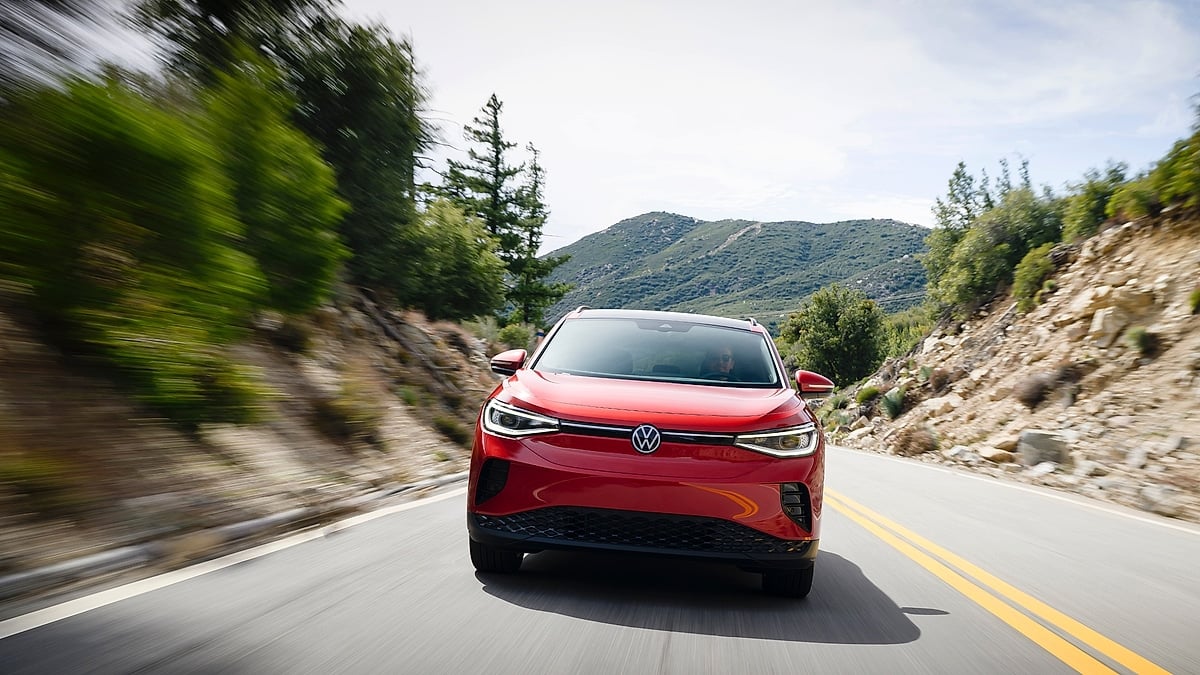
The Q3 2025 report showed the ID.4 still playing a meaningful role in Volkswagen’s SUV performance. By Q4, that was no longer true. By Q1 2026, the ID.4 was barely registering next to Volkswagen’s volume products. That kind of collapse does not just change one line in a sales chart. It changes the argument for what a factory should build.
Volkswagen’s own response reflects that change in tone. The company did not frame Chattanooga’s shift as a pause until EV demand returns. It framed the change around “market demand” and the “long-term health and competitiveness” of the plant. That is the language of allocation. It suggests Volkswagen is thinking about Chattanooga not as a place that must preserve a symbolic EV role at all costs, but as a plant whose first job is to protect volume and stability.
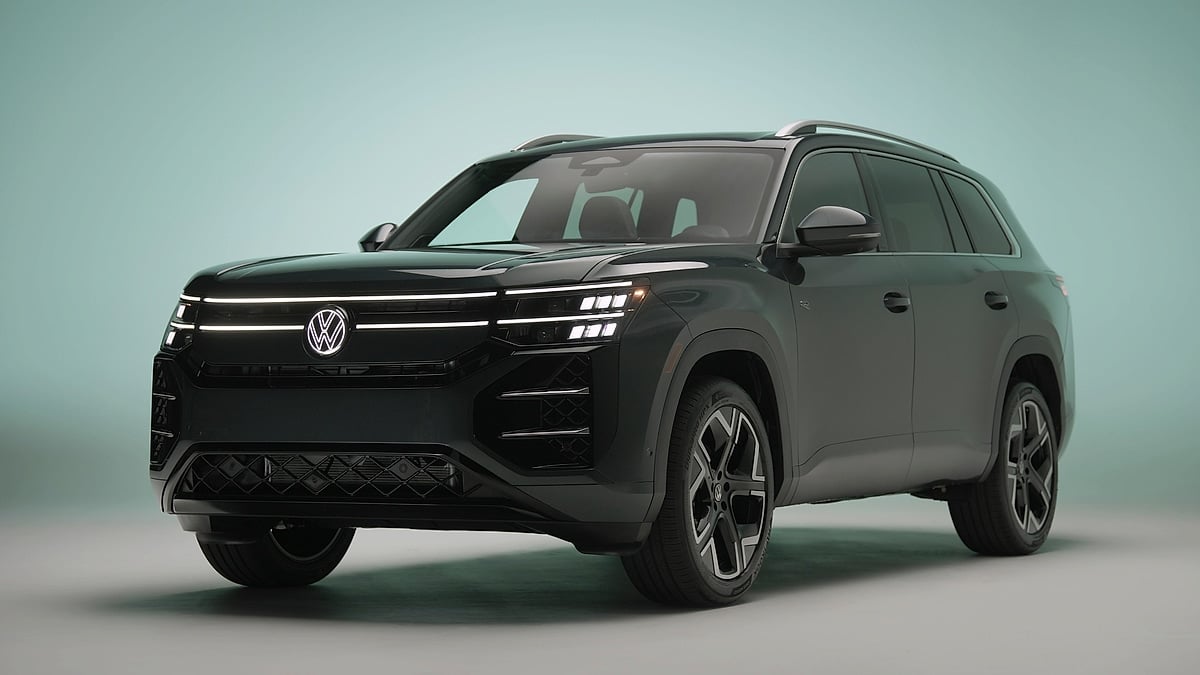
The Atlas and Atlas Cross Sport fit that mission much better right now.
There is another important point here. Volkswagen’s response was narrower than some outside interpretations might be. The company did not say that the end of the federal EV tax credit alone drove the move. It did not say Chattanooga could never build an EV successfully. It did not say the ID.4 failed because Americans no longer want electric crossovers. Those claims go beyond what Volkswagen actually said, and the company’s response does not support making them.
What the company did do was give a rationale that can be tested against its own documents. On that standard, the answer holds up. The ID.4 was strong in Q3 2025. It then fell to 248 sales in Q4 and 338 in Q1 2026. At the same time, the Chattanooga plant description in Volkswagen’s own releases dropped the ID.4 and narrowed back to the Atlas models.
Sometimes the clearest sign of a strategic shift is not a dramatic announcement. Sometimes it is a pattern that shows up across a quote, a product roster, and a sales curve.
That is what happened here.
Volkswagen’s response to TorqueNews provided the company’s reasoning in plain terms. The Atlas and Atlas Cross Sport are the higher-volume models, and prioritizing them is what Volkswagen believes best supports Chattanooga’s long-term health. The company’s own reports show why that argument became easier to make. The ID.4 did not just slow down. It lost enough momentum that Volkswagen no longer treated it as central to Chattanooga’s role.
That is the real significance of the decision. Chattanooga is still important to Volkswagen’s U.S. future. But for now, that future looks a lot more like Atlas than ID.4.
Image Sources: Volkswagen Media Center
About The Author
Noah Washington is an automotive journalist based in Atlanta, Georgia, covering sports cars, luxury vehicles, and performance culture. His reporting focuses on explaining the engineering, design philosophy, and real-world ownership experience behind modern vehicles.
Noah has been immersed in the automotive world since his early teens, attending industry events and following the enthusiast communities that shape how cars are built and driven today. His work blends industry insight with enthusiastic storytelling, helping readers understand not just what a car is, but why it matters.
Noah is also a member of the Southeast Automotive Media Association (SAMA), a professional organization for automotive journalists and industry media in the Southeast.
His coverage regularly explores sports cars, luxury vehicles, and performance-driven segments of the automotive industry, including the evolving culture surrounding Formula Drift and enthusiast builds.
Read more of Noah's work on his author profile page.
You can also follow Noah here:
Set Torque News as Preferred Source on Google
Follow us today...