
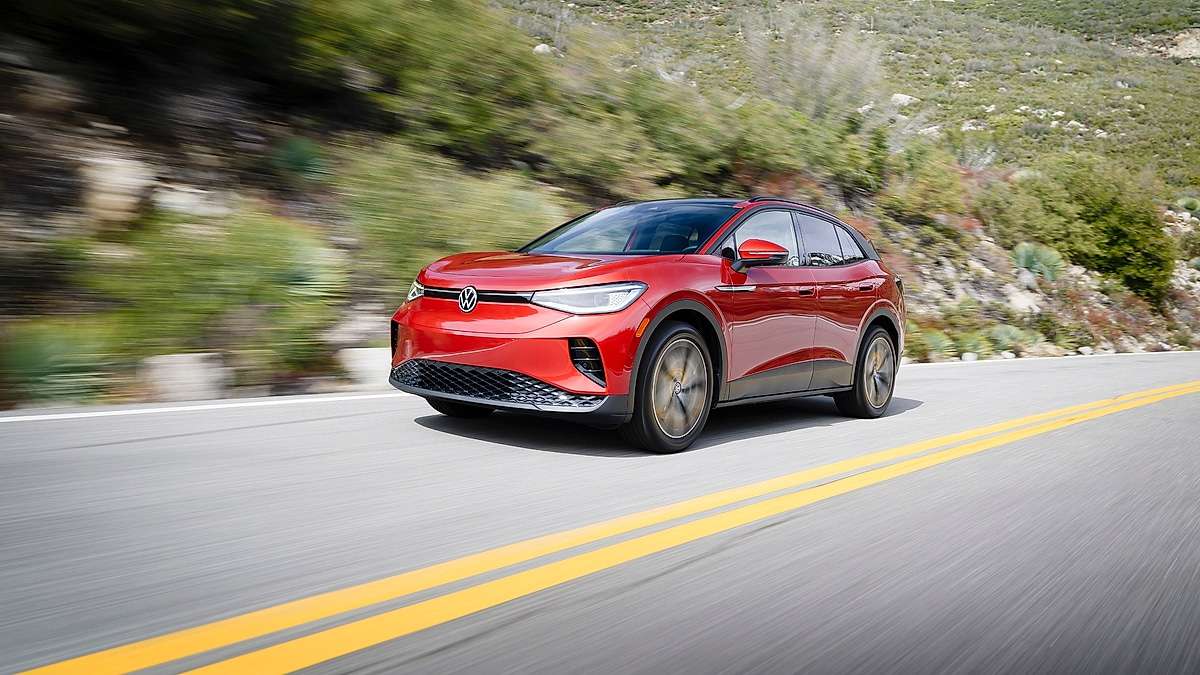

When u/Pablos_Mum bought their 2023 Volkswagen ID.4 ProS, they did what every first-time EV buyer does: they ran the numbers, test-drove the competition, and wrote the check. The sticker came to roughly $50,000. Three years later, they opened their phone to a headline that made them question every part of that decision.
Volkswagen brand CEO Thomas Schäfer, speaking to Auto Express and other media at a Hamburg press event in April 2026, had just publicly disowned the car.
"It was clear to me that we were actually losing our core," Schäfer said. "We lost that special Volkswagen feel." He went further: everything from the naming to the exterior and interior design of the ID.3 and ID.4 was, in his words, "not true Volkswagens."
Pablos_Mum's response, posted to r/VWiD4Owners, was part vent, part plea: "Does that mean I get my $50K back from this guy? It's hella insulting to the 1M of us who bought these cars." The post drew 52 upvotes and 78 comments, not a viral explosion, but a tightly wound conversation among people who had real money on the line and were now watching their own CEO rewrite the narrative of the cars in their driveways.
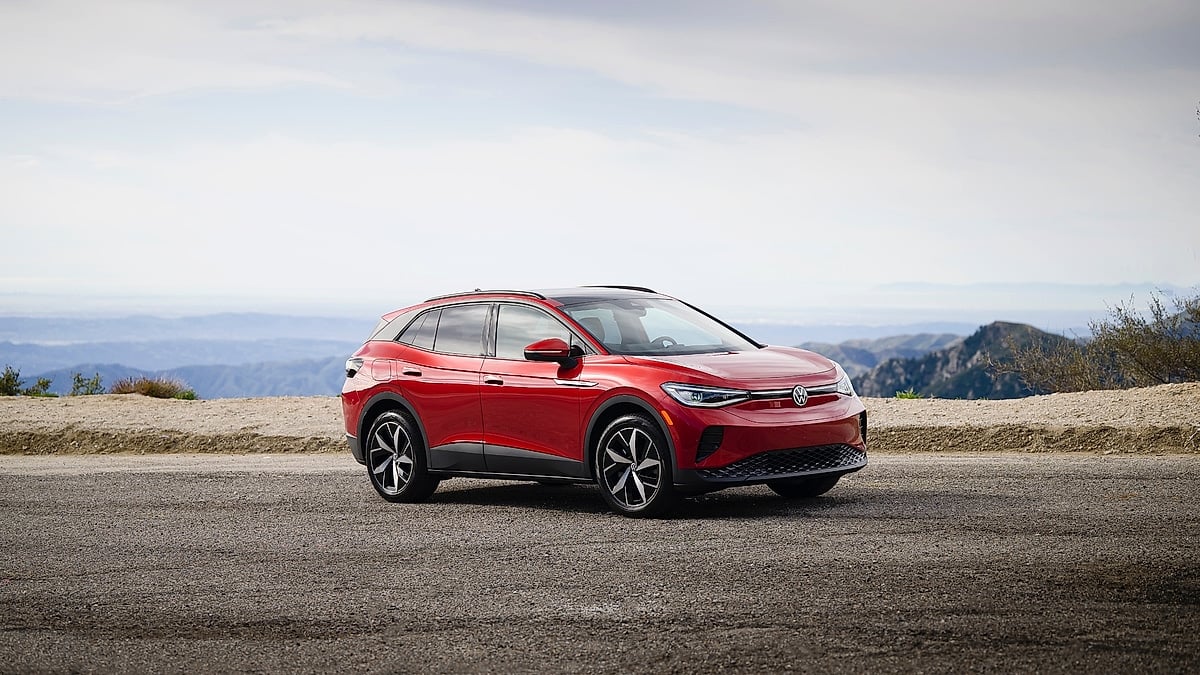
The MSN and Electrek stories reported Schäfer's quotes and moved on. The Reddit thread shows owners who love their cars and are now wondering what happens when the company that built them stops defending them.
What the CEO Actually Said, and Why It Landed Now
Schäfer's comments were not a gaffe. They were a deliberate strategic signal, delivered at a media event designed to preview Volkswagen's next-generation EV lineup. The refreshed ID.3 Neo was set to debut the following week. The ID.4 is being completely redesigned for the 2026 model year, with spy shots showing a squarer, more traditional SUV profile that looks less like the current blobby hatchback-crossover hybrid and more like the gas-powered Tiguan.
In fact, VW is reportedly dropping the "ID.4" name entirely and rebranding the model as the ID. Tiguan, a name that carries 16 years of established market recognition.
"We'll redo the ID.4 completely inside and out. It will be a completely different car, a huge step up," Schäfer told Autocar in a separate interview. "We've decided we're not going to throw away the traditional, successful names that have carried us for so long, that we've invested in for so long, like Golf and Tiguan. Why would you let them go?"
Translated: the current ID.4 is a dead end. And Schäfer has been telegraphing this for years.
Since at least 2022, the CEO has been publicly apologizing for Volkswagen's touch-control experiment. In a LinkedIn post that October, he promised to bring back "the push-button steering wheel." In a 2023 Autocar interview, he admitted the touch-heavy interiors "definitely did a lot of damage" among loyal customers. By March 2026, he was telling Top Gear that "I don't understand why anybody would have [touch-sensitive] sliders" and that door handles and physical buttons were "absolutely non-negotiable" for him.
Schäfer has been walking back ID design decisions since 2022. This time, he went after the cars' identity, not just the touch controls.
The Owner Reaction: Love, Confusion, and Dark Humor
The thread Pablos_Mum started drew 78 comments from owners who have lived with these cars for years. Most were not piling on; they were trying to figure out what the CEO's words meant for their wallets.
The first and most obvious concern is resale value. Pablos_Mum himself raised it immediately: "Well, it will likely affect resale, which definitely bothers my wallet."
He is not wrong to worry. According to Kelley Blue Book data, a 2023 Volkswagen ID.4 has depreciated approximately 63% in three years, dropping from a typical transaction price near $50,000 to a current resale value of roughly $17,950 and a trade-in value of just $16,250. CareEdge data paints a similarly bleak picture: a five-year-old ID.4 retains only about 40% of its original value, leaving a resale value of $19,540. For context, mainstream gas-powered compact SUVs typically lose 55–60% of their value over the same period, or retain roughly 40–45%.
The depreciation has accelerated recently. Used EV pricing tracker Recharged reported that average used ID.4 prices fell from roughly $23,300 in September 2025 to $21,900 by January 2026, a 6.2% drop in four months, even as the broader used-EV market ticked slightly upward on Tesla price gains.
Some commenters tried to talk Pablos_Mum down. u/runnyyolkpigeon, the top responder with 51 upvotes, pointed out that "all EVs face heavy depreciation" and that whatever the CEO says about an outgoing model "is not going to be the reason why you're underwater on your car loan." u/somewhatboxes added a dose of pragmatism: "nothing the CEO of a car company says about a car 8-36 months after launch... will have any meaningful effect on the resale value of the car."
But u/Elementary_drWattson pushed back with a sharper point: "While I agree with what you're saying, a CEO can definitely further tank an already heavily depreciated asset." And u/eyeap went further, connecting the CEO's words to something harder to quantify than resale: trust. "It definitely affects whether you trust the company, whether you feel good about your HUGELY IMPORTANT FINANCIAL DECISION to buy the car in the first place, and whether you'll buy another VW in the future."
Owners Love the Car Because It's "Not a True VW"
Pablos_Mum felt insulted. But a significant portion of the thread argued the exact opposite: the ID.4 is the best Volkswagen they have ever owned, and they do not want it to become more like a traditional VW.
u/whippersnap_415, who has owned more than five Volkswagens, called the ID.4 "definitely the best one I've had." u/SocialSuicideSquad, on their fourth VW with 75,000 miles on a 2023, agreed. u/Linda_Newton-John, on their ninth VW, simply wrote "agree." u/r33c3d put it more enthusiastically: "I absolutely love my 2021 Pro S. It's the nicest car I've ever owned and the most fun to drive. The constant complaints about the ID.4 confuse me."
u/rbetterkids, whose first VW was the ID.4, offered a perspective that cuts to the heart of Schäfer's strategic dilemma: "The ID4 is on another level. My 1st VW is the ID4, and I thought all VW's were like this. Turns out, no... Heck, I've met ICE Mercedes and ICE BMW owners getting jealous at my ID4, and VW isn't even a luxury brand."
u/TurtleCrusher went further: "They say the styling isn't VW, but in my opinion, the ID.4 is the best looking VW ever made. That's why I bought one and never bought a VW when it was an option before."
These owners are not VW loyalists in the traditional sense. They are ID.4, loyalists. Many of them explicitly say they would not have bought a gas-powered Tiguan or Golf. The ID.4 won them over precisely because it was different, smoother, quieter, more minimalist, more modern. Schäfer's quest to make the next generation feel more "true Volkswagen" may win back the Golf crowd, but it risks alienating the very buyers the ID.4 successfully recruited from outside the brand.
There was even dark humor about what a "true Volkswagen" actually means. u/llort_tsoper quipped: "Real VWs consume a quart of motor oil between oil changes." u/Kiwi_Apart added: "My real VW Golf TDI polluted as much in 3 years as every other car my spouse and I ever had or ever will drive." The jokes land because they are rooted in real Volkswagen history, the EA888 oil consumption issues, the TDI emissions scandal, and the decades of "German engineering" that sometimes meant expensive repairs. For these owners, "not a true Volkswagen" is not necessarily an insult.
The Naming Erasure
The thread also surfaced a naming change that has gotten less attention. Multiple commenters noted that the ID.4 is expected to be renamed the ID. Tiguan, while the ID.3 will become the ID.Neo. u/New-Week-1426 explained the strategy: "It is mostly a branding thing. VW alienated much of their core customer base with the ID line's very distinct design style... It is expected that the ID4 will evolve into the electrified version of the Tiguan."
For the current ID.4 owners, this creates a subtle but real problem: their cars are about to become orphaned nameplates. In five years, when a buyer searches for a used "ID.4," they may find nothing but discontinued inventory. The name that was marketed as the future of Volkswagen, remember the "ID" stands for "Intelligent Design" and was meant to define the brand's electric era, is being retired after a single generation.
u/ajc506 captured the whiplash: "That's very strange. The marketing I got from my dealer was that it was going to be the next VW iconic car, Beetle, Van, Golf, ID4."
The Numbers Behind the Betrayal Narrative
The numbers show why owners feel stung.
Volkswagen has sold over 1.35 million ID vehicles globally since launching the family in 2019. The ID.4/ID.5 twins were the Group's best-selling EVs in 2024 with 182,000 units worldwide. In Europe, the ID.4 alone moved 72,977 units in 2025, making it the sixth best-selling EV on the continent. The brand is the top EV seller in Germany.
But the U.S. picture is grim. In 2025, Volkswagen sold just 22,373 ID.4s in America, a fraction of the Tesla Model Y's 357,528 and even behind the Hyundai Ioniq 5 (47,039) and Ford Mustang Mach-E (51,620). U.S. sales for the broader VW Group dropped 13.6% in 2025. Globally, the Group's operating profit fell 53%, dragged down by tariffs, Porsche strategy adjustments, and brutal competition from Chinese EV makers.
Schäfer's "not true Volkswagen" comment is, in this light, a Hail Mary. He is trying to stanch the bleeding by returning to what he believes are the brand's roots, physical buttons, familiar nameplates, and traditional design language, while essentially writing off the cars that existing owners are still making payments on.
The technical improvements coming to the "ID.Tiguan" are real: MEB+ platform, LFP battery options, a targeted range of over 435 miles on the WLTP cycle, faster charging, and proper door handles. But for someone who bought a 2023 ProS at $50,000, those upgrades are abstract. What is concrete is the 63% depreciation, the CEO's public dismissal, and the creeping sense that their car's identity is being retroactively unmade.
What This Means for the 1 Million, and the Used Market
The thread's most practical insight came from u/adambkaplan, who cut through the emotion with a sharp observation: "Silver lining is that all the cited issues with the ID.4 have nothing to do with the EV drivetrain. VW isn't abandoning EVs; they are pivoting the marketing and styling to make the brand cohesive."
He is right. The MEB platform that underpins the ID.4 is not being scrapped; it is being upgraded to MEB+. The EV powertrain, the motor, the battery, and the thermal management are not what Schäfer is apologizing for. He is apologizing for the window switches, the touch sliders, the naming convention, and the exterior styling. For a used buyer in 2026, that distinction matters. A 2023 ID.4 with low miles and a clean battery history may be a screaming deal at $20,000, CEO's opinion notwithstanding.
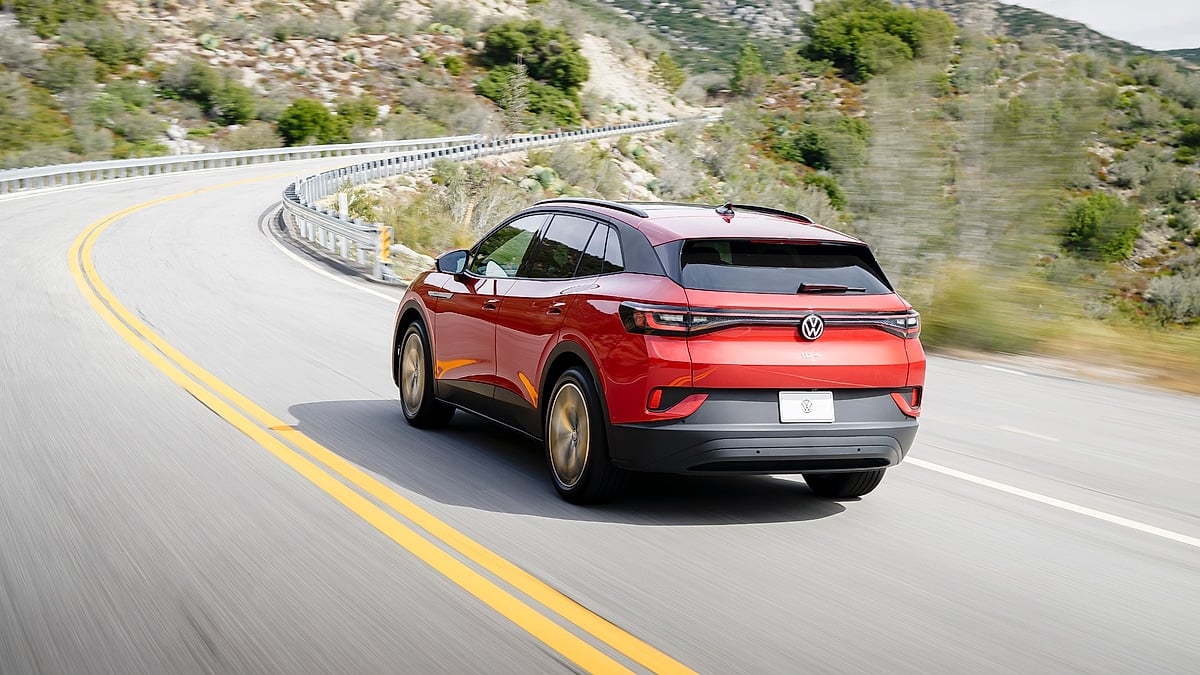
But for the original buyers, the psychological damage is harder to discount. u/MaxQuev offered a cynical but not unreasonable read: "Truth is we were sold prototypes, the ID is market research paid by the customer for future models, it's their riskiest gamble to this day."
Whether that is fair depends on where you sit. A 2023 ProS buyer who watched their $50,000 car lose two-thirds of its value while the CEO called it a design mistake might call it a prototype. A used-car shopper in 2026 eyeing a low-mile lease return for $20,000 would call it a bargain.
Same car. Two completely different experiences. And Schäfer's quote sits right in the middle, a CEO rewriting the story of a vehicle that 1.35 million people already bought.
Those buyers now have to decide if they trust Volkswagen enough to do it again.
Image Sources: Volkswagen Media Center
About The Author
Noah Washington is an automotive journalist based in Atlanta, Georgia, covering sports cars, luxury vehicles, and performance culture. His reporting focuses on explaining the engineering, design philosophy, and real-world ownership experience behind modern vehicles.
Noah has been immersed in the automotive world since his early teens, attending industry events and following the enthusiast communities that shape how cars are built and driven today. His work blends industry insight with enthusiastic storytelling, helping readers understand not just what a car is, but why it matters.
Noah is also a member of the Southeast Automotive Media Association (SAMA), a professional organization for automotive journalists and industry media in the Southeast.
His coverage regularly explores sports cars, luxury vehicles, and performance-driven segments of the automotive industry, including the evolving culture surrounding Formula Drift and enthusiast builds.
Read more of Noah's work on his author profile page.
You can also follow Noah here:
Set Torque News as Preferred Source on Google
Follow us today...






