
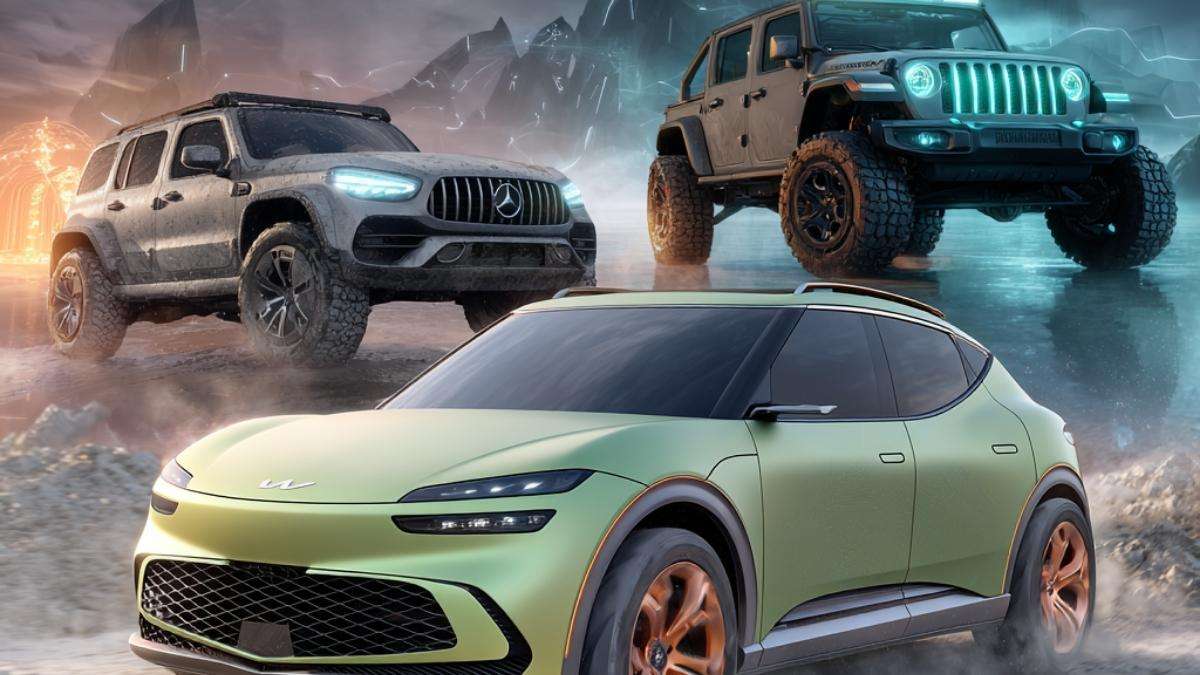

For the past several years, the electric vehicle market has been defined by a handful of pioneering models and a steady stream of ambitious promises. Now, as we look toward 2025 and 2026, the promises are crystallizing into production models, and the trickle of new EVs is about to become a flood. A comprehensive look at the upcoming slate of electric vehicles reveals a market that is not just growing, but diversifying at a breathtaking pace. From affordable compacts and rugged off-roaders to mind-bending supercars, the sheer volume and variety of new EVs signals an industry that has moved past the point of no return. This isn't an experiment anymore; it's a full-scale transformation.
The Mainstream Gets Electrified (and More Affordable)
Perhaps the most significant shift in the upcoming EV landscape is the arrival of more attainable models designed for the mass market. For years, the high price of entry has been a major barrier to widespread EV adoption. Automakers have heard this feedback loud and clear. Chevrolet is set to reintroduce the beloved Bolt nameplate; this time built on its advanced Ultium platform. The new Bolt is expected to leverage GM's scale to deliver a compelling and, crucially, affordable electric option for the masses.
Joining the push for affordability is Kia with its stylish and compact EV3 SUV. Expected to arrive in the U.S. as a 2026 model, the EV3 aims to package the brand's award-winning design and technology into a smaller, more budget-friendly footprint, with a target starting price around $35,000. Not to be outdone, its corporate sibling Hyundai is also planning a new electric crossover to slot below the Kona Electric, further expanding choices for buyers who don't need a large, long-range family hauler. This new focus on the sub-$40,000 segment is critical; it’s the battleground where the EV revolution will truly be won or lost, and the next two years will see the deployment of some serious contenders.
American Icons and Workhorses Go Electric The Future EVs Coming Next Year Are Starting To Look Amazing
If the first wave of EVs was about creating new identities, the next is about electrifying existing ones. Legacy automakers are now confidently infusing their most iconic and profitable nameplates with electric power. Jeep, a brand synonymous with rugged adventure, is preparing to launch the Recon, an all-electric SUV that promises to deliver the legendary off-road capability its customers expect, including removable doors and a powered top. It’s a clear statement that electrification doesn't mean sacrificing brand identity.
In the hyper-competitive world of pickup trucks, Ram is entering the fray with the 1500 REV. Following the success of the Ford F-150 Lightning, the REV aims to win over truck loyalists with impressive range, capability, and innovative features. Meanwhile, Honda's luxury division is reviving a celebrated name from its past with the 2026 Acura RSX. This time, however, the RSX returns not as a sporty coupe but as a sleek, performance-oriented electric crossover built on a new dedicated EV platform. By electrifying these beloved nameplates, automakers are not just selling a new car; they are selling an electric version of a trusted identity, a powerful strategy for converting hesitant buyers.
The Luxury and Performance Frontier Pushes Forward
At the high end of the market, the pace of innovation continues to be relentless. This is where automakers showcase their technological prowess, with features that will eventually trickle down to more mainstream models. Mercedes-Benz is set to unleash a production version of its jaw-dropping AMG GT XX Concept, a four-door supercar boasting over 1,300 horsepower and next-generation battery technology capable of incredibly fast charging.
BMW is preparing for a monumental shift with its Neue Klasse (New Class) architecture, which will underpin its next generation of EVs. The upcoming iX3 and an all-electric successor to the legendary 3-Series sedan will be the first to feature this new platform, promising major advancements in efficiency, range, and digital integration. Luxury EV startup Lucid isn't standing still either, with plans to introduce a more accessible mid-size SUV, currently codenamed "Earth," to compete in a broader segment of the premium market. These vehicles are more than just status symbols; they are the testbeds for the battery, software, and performance technologies that will define the electric future for everyone.
Wrapping Up
The sheer breadth of electric vehicles slated for launch in 2025 and 2026 is a powerful testament to the auto industry's unwavering commitment to an electric future. The narrative is no longer confined to a single type of vehicle or a specific price point. Instead, we are witnessing the emergence of a mature, diverse, and highly competitive market. From the practical and affordable to the rugged and outrageously fast, there will soon be a compelling electric option for nearly every taste, need, and budget.
Disclosure: Image rendered by Gemini
Rob Enderle is a technology analyst at Torque News who covers automotive technology and battery developments. You can learn more about Rob on Wikipedia and follow his articles on Forbes, X, and LinkedIn.
Set Torque News as Preferred Source on Google
Follow us today...



Comments
I haven't made the…
Permalink
I haven't made the transition yet. When I bought my Alfa I wanted B2TW performance AND great styling. The only EV that could deliver was the Porsche Taycan and it wasn't that pretty. And expensive AF.
I went with the Audi E-Tron…
Permalink
In reply to I haven't made the… by Marcello Salup (not verified)
I went with the Audi E-Tron GT myself, buying a 2022 model for around $ 58,000 with 21,000 miles, which is about half off after two years (I bought it last year). I really love the look of the car, and it is a lot of fun to drive.
V2L is an absolute requisite…
Permalink
V2L is an absolute requisite for my next EV. I got tired of hacking the 12V battery!
V2L is a great feature, I…
Permalink
In reply to V2L is an absolute requisite… by Denis M (not verified)
V2L is a great feature, I have 3 Tesla batteries hooked up to my house, but the extra headroom the car could provide would give me extra piece of mind.
I'm curious for EVs, are the…
Permalink
I'm curious for EVs, are the batteries supplied for use in off road vehicles fitted differently?
What I mean are they protected more and cushioned more to limit the effects of impacts, knocks and shocks to the pack?
We know EV battery packs are at risk of thermal runaway when subjected to impacts, shocks, and knocks, particularly if the impacts are severe enough to damage the battery's internal components. Such damage can lead to short circuits, which are a primary trigger for thermal runaway. So what steps are taken to mitigate it?
Typical battery packs on all…
Permalink
In reply to I'm curious for EVs, are the… by Ian McKinlay (not verified)
Typical battery packs on all EVs are armored, but thermal runaway can burn through containment. The real solution will be to switch to safer formulations. Lithium-ion was a kind of Hail Mary back in the 90s for portable devices, but we should have migrated away from it far more quickly than we are. This isn't a problem that containment can address (I once got into a long argument with a laptop CEO on this topic; he didn't believe me, then another one of his products almost took down a commercial jet, and he became a believer).
Been using my Genesis GV60SP…
Permalink
Been using my Genesis GV60SP's V2L to power my home (in a V2G setup despite the EV not offering this functionality) and add significantly to my home battery setup for almost 2 years now. Game changing solutions in the pipeline. Watch this space.
How did you get that to work…
Permalink
In reply to Been using my Genesis GV60SP… by Dougie Blair (not verified)
How did you get that to work? Some aftermarket kit?