
The Modern Reliability Crisis
As the automotive landscape shifts toward complex electronic interfaces and high-gear-count transmissions, a significant rift is forming between modern vehicle capability and long-term mechanical trust. This investigative report analyzes the "Reliability Regression" currently affecting the 2019-2024 Chevrolet Silverado 1500 platform, specifically the 8L90 8-speed automatic transmission.
Based on a $28,000 trade-in valuation and owner testimony, we explore why the 20-year-old GMT800 platform (2003-2004 Tahoe/Suburban) is increasingly viewed by enthusiasts as a superior financial and mechanical hedge. Our findings indicate that while modern "learning" software is often cited by dealerships as a fix for shifting irregularities, physical fluid degradation, and torque converter clutch (TCC) slip remain the primary culprits for the "shudder" and "clunk" symptoms reported by the community.
The $28,000 Question: Why New Tech is Losing to 20-Year-Old Iron
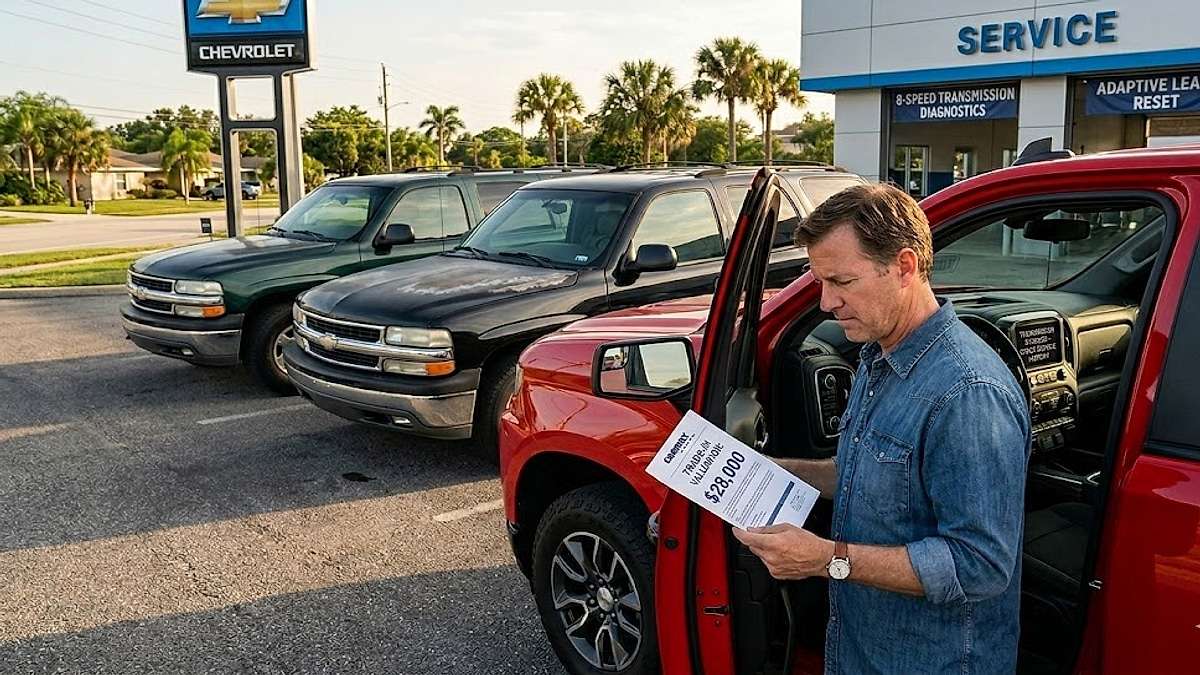
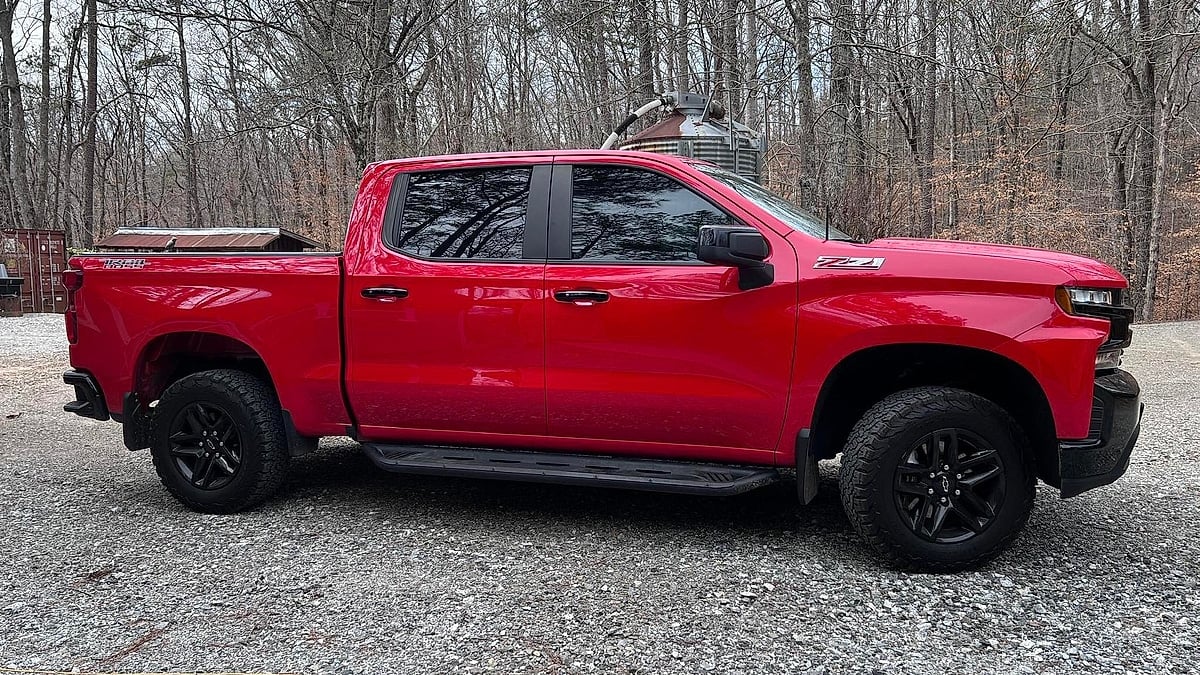
Alan Hobbs just received a $28,000 reality check that should make every modern truck owner pause. Despite owning a 2019 Chevy Silverado Trail Boss with only 63,000 miles and a perfect dealer service history, the dreaded 8-speed "shudder" and low-speed clunks have him ready to retreat to the bulletproof reliability of his 2003 Suburban and 2004 Tahoe. I have seen this scenario play out countless times in my 30 years covering the industry. You buy the modern dream, only to find that the vehicle's mechanical soul feels fragile compared to the trucks we were driving two decades ago.
Hobbs shared his frustration on the 2019 - 2026 Chevy Silverado & GMC Sierra Owners Facebook page, noting that his recent used purchase has him so spooked by online complaints and his own "vibration on deceleration" that he is ready to dump the truck. CarMax offered him $28,000, and for a man with a reliable 2004 Tahoe in the driveway, that check is looking more like a get-out-of-jail-free card than a lowball offer.
We are seeing a massive event here because it highlights the exact moment a consumer loses faith in the "Learning Computer" narrative. When Alan stopped at his local dealership service department to report the "clunk" coming to a stop, the advisor told him to drive it for a couple of weeks so the computer could learn his habits. I have heard this script before, and quite frankly, it is a band-aid for a deeper mechanical or hydraulic issue. In the 2026 market, where every dollar counts, the idea that a $30,000 truck needs to "learn" how not to clunk while a 2003 Suburban with 200,000 miles shifts like butter is a hard pill to swallow. I want to dig deep into why this specific 2019 Trail Boss is causing such a stir and what it means for your wallet.

The Mechanical Ghost in the 8L90 Transmission
The issue Alan is describing, that slight shudder and the vibration on deceleration, is not just a "habit." It is a documented phenomenon with the GM 8-speed units. Industry experts have pointed out that the original factory-fill transmission fluid was hydroscopic, meaning it absorbed moisture, which led to the torque converter clutch slipping and creating that "rumble strip" sensation.
As noted in a detailed technical breakdown by the transmission specialists at Transmission Digest, the fix often involves a full fluid exchange to Mobil 1 Synthetic LV ATF HP, a process that has become a standard survival tactic for 8L90 owners, which you can investigate in their professional technical archive. When Alan contacted the original owner, he was told a fluid flush had "fixed" a previous shudder. My concern, and what I would tell Alan over a cup of coffee, is that a flush often masks the wear already sustained by the torque converter.
If the vibration returns during deceleration, we are likely looking at a pressure-regulation issue or a torque converter that is beginning to fail physically. We must look at the data from independent reliability trackers. For instance, the experts at CarComplaints have documented hundreds of similar instances where the 2019 Silverado's 8-speed transmission was the primary source of owner dissatisfaction, often leading to total unit replacement just outside of warranty, as detailed in their comprehensive model-year breakdown. These reports substantiate Alan’s fear. It isn't just "internet noise" when the data shows a clear spike in transmission-related failures for this specific generation.
Field Observations from Owner Communities
The "clunk" Alan experienced when coming to a stop is another classic GMT600 (the platform for the 2019+ trucks) quirk that drives people crazy. In a recent technical discussion on r/Silverado, several owners noted that the low-speed downshift clunk is often attributed to the "bump from behind" sensation caused by the driveline taking up slack or the transmission downshifting aggressively into first gear. Based on my 30 years of experience, this aligns with how sensitive GM's modern electronic shift solenoids are to line pressure fluctuations, as you can read in the full discussion here.
The reason users feel so unsettled by this is that the older GMT800 trucks (Alan’s 2003/2004 models) used the 4L60E or 4L80E transmissions. Those were "dumb" transmissions by comparison, but they had predictable, mechanical shift points that didn't rely on complex "fuzzy logic" to save 0.5 miles per gallon.
Another owner in the community highlighted a different vulnerability that Alan should monitor, mentioning, "The 8-speed thermal bypass valve is a known weak point... if it's not opening correctly, the fluid overheats and destroys the clutches," found in this Reddit thread.
This is vital because the "shudder" Alan feels could be exacerbated by heat. My 30 years in the pits have taught me that if a dealership tells you a clunking transmission needs to "learn your habits," they are often just waiting for the vehicle to clear the 60,000-mile powertrain warranty threshold. I find it suspicious that Alan’s truck is sitting right at 63,000 miles. He is officially in the "out of pocket" zone, which explains why that $28,000 CarMax offer looks so enticing.
The Case for the 2004 Tahoe and 2003 Suburban Let’s talk about the "Reliability Gold Standard." Alan mentions his 2004 Tahoe and 2003 Suburban. We call these the GMT800 platform. These vehicles represent a high-water mark for General Motors. They were built with a level of over-engineering in the drivetrain that we simply don't see today. The 5.3L Vortec engines in those trucks are legendary for reaching 300,000 miles with little more than oil changes and the occasional water pump replacement. When Alan says he wants to keep driving them, he isn't just being nostalgic. He is making a calculated financial decision. If the 2019 Silverado requires a $5,000 transmission replacement and a $2,000 lifter failure repair (another common 5.3L L84 engine issue due to Dynamic Fuel Management), the total cost of ownership skyrockets.
The 2003 and 2004 models lack the "Direct Injection" and "Cylinder Deactivation" that plague modern trucks. My advice to Alan is simple: If you don't need the towing capacity or the Apple CarPlay of the 2019, that 2004 Tahoe is actually the more "advanced" vehicle in terms of predictable uptime. We have reached a point where "new" no longer means "better." It often just means "more complicated." The fact that Alan’s dealer told him to just "monitor it" is the ultimate red flag. A healthy transmission does not need to be monitored for clunks. It should just work.

Is the 10-Speed Transmission Any Better?
The logical next question for any Chevy owner looking at Alan’s situation is: "If the 8-speed is a disaster, should I trade up to a newer model with the 10-speed Allison-branded transmission?" The answer is nuanced. While the 10L80 (the 10-speed found in newer Silverados) was co-developed with Ford and is generally considered a much smoother, more reliable unit than the 8-speed, it is not without its own electronic gremlins. However, the "shudder" issue that defines the 8-speed has been largely engineered out of the 10-speed. If Alan were to trade his 2019 for a 2022 or newer model, he would likely find the driving experience much closer to the "reliable" feeling of his old Tahoe, but he would also be taking on a much larger car payment in a high-interest 2026 market.
My Advice for Alan and Every Silverado Owner
If you find yourself in Alan's shoes, I recommend a three-step investigation before you sign that title over to CarMax. First, demand a "Blackstone Labs" oil and transmission fluid analysis. This will tell you if there is actual metal or excessive clutch material in the fluid. Second, check the "Thermal Bypass Valve" to ensure your transmission is staying cool. Third, if the dealer continues the "learning habits" narrative, ask them to perform a "Service Fast Learn" procedure using their scan tool. If the clunk remains after a reset, the issue is mechanical, not software-based. I have spent 30 years watching manufacturers deflect these issues, and your best weapon is data. Alan’s gut feeling is usually right. If the truck feels "off," it probably is.
The Final Verdict
In the 2019 Trail Boss Dilemma, modern truck ownership has become a game of risk management, with the stakes measured in thousands of dollars for post-warranty repairs. Alan Hobbs' story is a perfect microcosm of the tension between the desire for modern features and the fundamental need for a vehicle that starts and shifts every single morning correctly. While the 2019 Silverado Trail Boss is a beautiful, capable machine on paper, the mechanical reality of the 8L90 transmission continues to haunt its reputation. For those who still have a 20-year-old Tahoe in the driveway, the choice is becoming clearer by the day: simplicity is a luxury that modern technology has yet to replicate.
How About You? Would you take the $28,000 and run back to a 20-year-old Tahoe, or would you trust the dealer's "learning" software and keep the 2019 Silverado? It’s your turn to weigh in. Tell us what you think in the comments below! Please leave a comment in the red Add new comment link below.
About The Author
Denis Flierl is a 14-year Senior Reporter at Torque News and a member of the Rocky Mountain Automotive Press (RMAP) with 30+ years of industry experience. Based in Parker, Colorado, Denis leverages the Rockies' high-altitude terrain as a rigorous testing ground to provide "boots-on-the-ground" analysis for readers across the Rocky Mountain region, California EV corridors, the Northeast, Texas truck markets, and Midwest agricultural zones. A former professional test driver and consultant for Ford, GM, Ram, Toyota, and Tesla, he delivers data-backed insights on reliability and market shifts. Denis cuts through the noise to provide national audiences with the real-world reporting today’s landscape demands. Connect with Denis: Find him on LinkedIn, X @DenisFlierl, @WorldsCoolestRides, Facebook, and Instagram.
Photo credit: Denis Flierl via Alan Hobbs
Set Torque News as Preferred Source on Google
Follow us today...