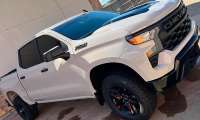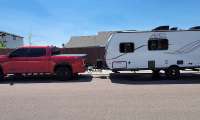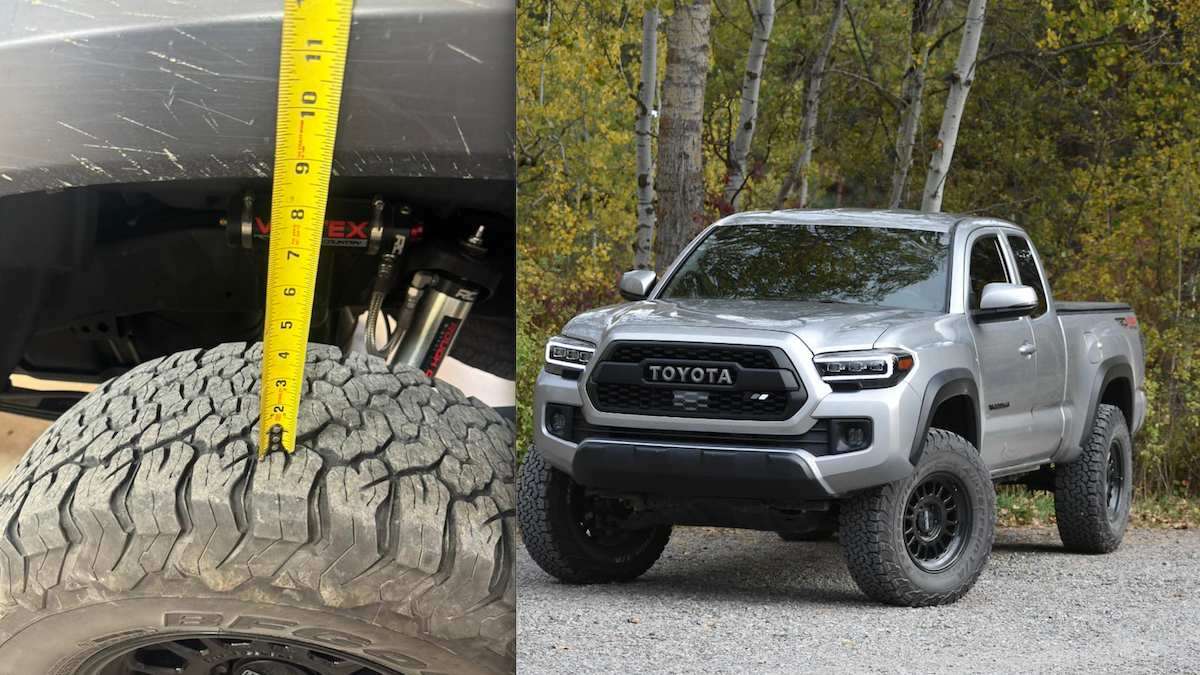

Is a brand-new suspension upgrade the cause of Carter Kroll's "super goofy" sagging Toyota Tacoma, or is something else making his truck lean nearly 1.5 inches to one side?
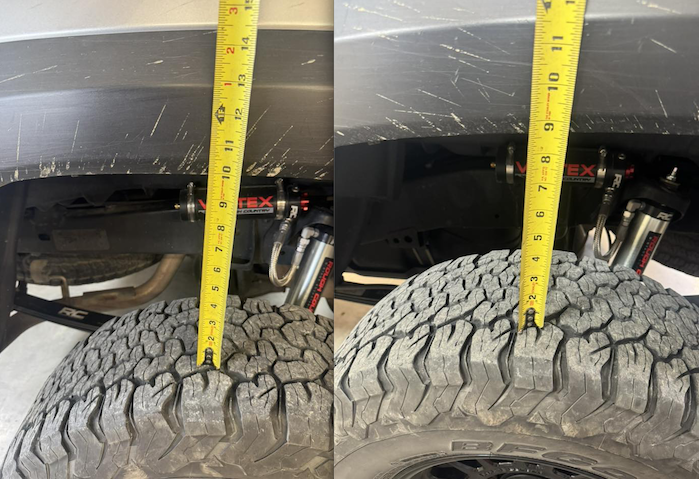
Imagine Carter investing time and money installing Rough Country Vertex shocks and leaf springs on his 2023 Toyota Tacoma, only to find the driver's side sitting a conspicuous 1.5 inches lower than the passenger side. The asymmetrical stance looks "super goofy." Is he staring at the classic "Tacoma Lean"—a common, frustrating sight for new suspension owners?
Carter Kroll on the Taco Nation Facebook page says,
"My 2023 Toyota Tacoma driver's side rides almost an inch and a half lower than my passenger side, and it looks super goofy. I just put on Rough Country Vertex and Leaf springs. Is it a leaf spring issue, or do I now have the dreaded ‘Taco Lean’?”
Carter's frustration over that "super goofy" 1.5-inch lean on his 2023 Tacoma is justified. He invested time and money in a quality suspension upgrade—the Rough Country Vertex and new leaf springs—and the result is a conspicuous sag on the driver's side.
As a Senior Reporter for Torque News who has covered Toyota Tacoma issues for years, let me pull back the curtain on what's likely going on here. This is a classic case of what the community affectionately calls "Taco Lean."
The Dreaded "Taco Lean":
First, let's address your question: "Is it a leaf spring issue?" The answer is yes and no, but mostly no—it's an engineering reality of the Tacoma platform that the Rough Country springs likely didn't fully account for, or perhaps accentuated with their lift.
This lean is a deeply ingrained characteristic of the Toyota Tacoma's weight distribution challenges. Look at the core components of your truck:
- The Battery: Located on the driver's side.
- The Fuel Tank: Primarily situated on the driver's side.
- The Steering Column and associated hardware: Driver's side.
- The Driver: An always-present weight on the driver's side.
Collectively, this consistent, static weight means the driver's side of the truck is inherently heavier than the passenger side. On an un-lifted truck, this often results in a subtle 1/4-inch to 1/2-inch lean—barely noticeable. However, when you introduce an aftermarket lift kit, especially one designed to provide uniform lift on both sides, this weight imbalance often magnifies into the kind of 1.5-inch difference he's seeing.
The fact that you installed the Rough Country leaf springs and still have this severe lean in the rear suggests one of two things:
The Leaf Springs are Uniform: The replacement leaf springs are identical on both sides (which is standard practice), and they are not designed with a specific weight bias to counteract the well-known Tacoma lean.
The New Suspension Accentuated the Front Lean: While the rear leaf springs might be contributing, the lean is often a combination of both front and rear, and sometimes the front lean correction (or lack thereof) can appear as a severe rear lean. The Rough Country Vertex coilovers in the front should be adjustable, which is where a key part of your solution lies.
So, What's the Solution?
The good news is that this is a widely recognized problem with established, effective, and surprisingly simple fixes. The goal is to introduce a compensatory measure, typically on the front driver's side, to "push up" the whole driver's side of the vehicle and level out the stance.
1. Adjust Your Front Coilover
Since you have the Rough Country Vertex coilovers, this is your most immediate and best option.
The Action: Adjust the preload collar on the driver's side Vertex coilover to raise that corner. You'll want to add roughly 1/4-inch to 3/8-inch of added preload to the driver's side coil spring compared to the passenger side.
The Takeaway: Because of the suspension geometry (the lower control arm multiplies the lift), a small increase in coil spring preload translates to a larger increase in overall ride height. It's recommended to start with a 1/4-inch adjustment and measure your height again. For a 1.5-inch lean, you might need slightly more, but start small and creep up. Always consult the Rough Country installation manual for safe adjustment limits. You need to correct the notorious Toyota Tacoma driver's side suspension sag at the source!
2. Install a Front Top-Plate Spacer
If adjusting the coilovers isn't possible or doesn't fully fix it, an inexpensive spacer is the industry-standard workaround.
The Action: Purchase a 1/4-inch-thick top-plate spacer specifically for the driver's side coilover assembly.
The Takeaway: A 1/4-inch spacer on top of the coilover provides approximately 1/2-inch of actual lift at the wheel. For a severe 1.5-inch lean, you may need a thicker spacer, but often a 1/4-inch (yielding 1/2-inch lift) is enough to correct the lean once the rest of the suspension has settled. This is a crucial element in achieving perfect wheel well measurements on a modified Tacoma.
3. Address the Rear (If Needed)
Once you fix the front, the rear may self-correct. If not, the issue could be with the new Rough Country leaf springs themselves.
The Action: Check for manufacturer-specific "Taco Lean" parts. Some aftermarket companies, like Old Man Emu, include an extra leaf spring to add to the driver's side leaf pack to compensate for this factory lean.
The Takeaway: If the new Rough Country leaf springs don't have an extra-stiff driver's side or a specific shim, a small, tapered leaf spring shim can be used between the leaf pack and the axle, though this is less common for height correction and more for correcting driveline angles post-lift.
What the Community is Saying
Carter's experience is not unique. The "Taco Lean" is arguably the most common issue facing modified 3rd Generation Toyota Tacoma owners.
- "Embrace the 'Taco lean' or swap the struts and leafs," says a member on Reddit's r/ToyotaTacoma.
- Another commenter notes: "The constant weight of the gas tank and the driver seems to pull the driver's side down. You can get a 1/4 inch spacer to install above the left front strut. That'll provide 1/2 inches of lift on that side. Usually, that'll get you very close."
- And one more on the fix: "My OME lift kit came with an add a leaf to correct the taco lean. I added it to the leaf pack that came with the kit and never noticed a lean again."
The consensus is clear: this is a known phenomenon—it's not your installation error and not a defective part, but rather a design idiosyncrasy that requires a fine-tuning correction to the lift. For anyone researching how to fix an uneven Toyota Tacoma after lift kit installation, the answer is almost always a driver-side correction spacer or coilover adjustment.
Conclusion:
Carter's 2023 Tacoma now suffers from a "super goofy" 1.5-inch drop on the driver's side after installing Rough Country Vertex shocks and new leaf springs. While it's possibly a manifestation of the classic "Taco Lean"—caused by the inherent left-side weight of the truck's components and the driver—the extreme degree strongly suggests an issue with the fresh installation.
Question For Tacoma Owners
What's your take on this lift challenge? Could this noticeable lean be a classic case of "Tacoma lean" amplified by the new suspension, or does it sound more like a potential installation error or a leaf spring defect? Share your theories and experiences. Let us know in the comments below!
Check out my Toyota Tacoma story: I Hate My 2023 Toyota Tacoma, It’s Underpowered, Uncomfortable, the Transmission is Awful, and the AC Isn’t Cold Above 80, I’m Buying A Tundra
I'm Denis Flierl, a Senior Torque News Reporter since 2012, bringing over 30 years of automotive expertise to every story. My career began with a consulting role for every major car brand, followed by years as a freelance journalist test-driving new vehicles—equipping me with a wealth of insider knowledge. I specialize in delivering the latest auto news, sharing compelling owner stories, and providing expert, up-to-date analysis to keep you fully informed.
Follow me on X @DenisFlierl, @WorldsCoolestRides, Facebook, and Instagram
Photo credit: Denis Flierl via Carter Kroll
Set Torque News as Preferred Source on Google
Follow us today...