
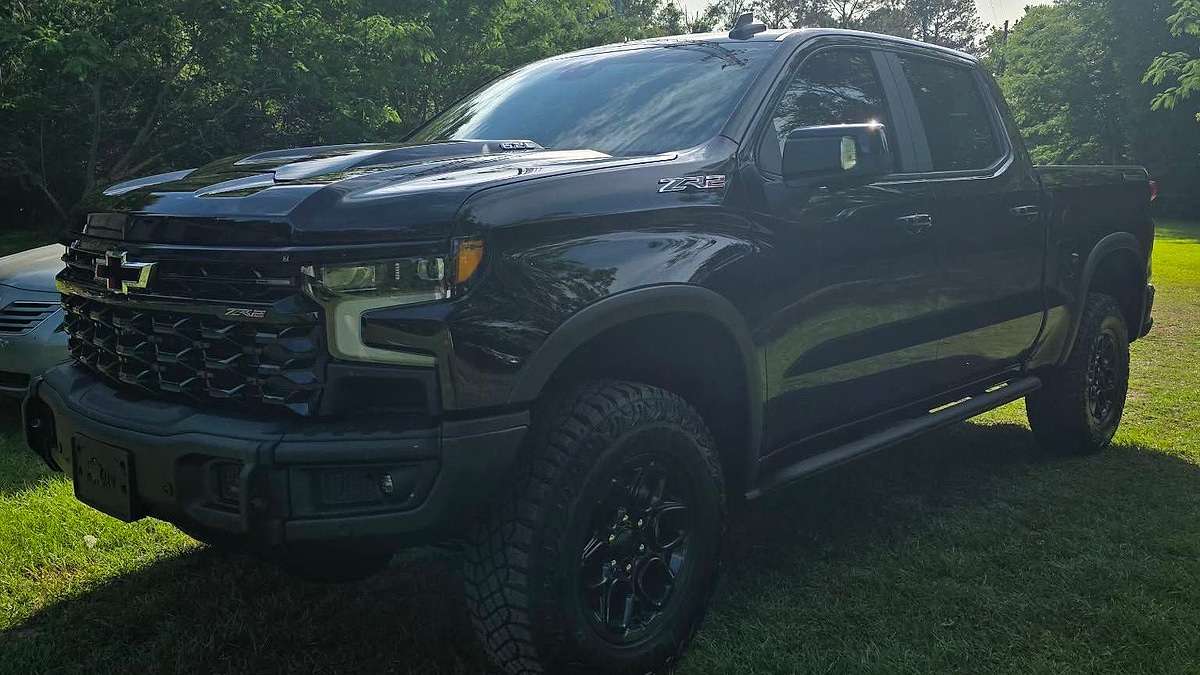

The 2026 Silverado ZR2 Power Gap
The 2026 Chevrolet Silverado ZR2 is arguably the most capable off-road factory pickup GM has ever produced, yet a growing number of owners are reporting a frustrating paradox: the high-output 6.2L V8 feels "sluggish" during highway maneuvers. This technical investigation reveals that the perceived lack of performance isn't a mechanical failure, but a series of deliberate electronic constraints. Primary among these is a 97-mph speed governor required by the Goodyear Wrangler Territory MT tires. When compared against the Ram 1500’s 5.7L Hemi or the newer Hurricane I6, the ZR2’s aggressive 3.23 axle ratio and heavy rotating mass create a "lazy" throttle response that leaves owners feeling "dusted" in real-world passing situations.
I have learned, it is that a spec sheet rarely tells the whole story. On paper, the 2026 Chevy Silverado ZR2 is a brute, packing a 6.2L EcoTec3 V8 that pumps out 420 horsepower and 460 lb-ft of torque. But for Kris Pierce, a new owner from Bogalusa, Louisiana, the reality on the asphalt is a bit different. Kris recently took to the 2019-2026 Chevy Silverado & GMC Sierra Owners Facebook page to voice a concern that is becoming a common refrain among the ZR2 faithful.
“So I just bought a new 2026 Chevy Silverado ZR2 with the 6.2L engine. It’s my first new Chevy since 2006. However, it feels a bit sluggish. I was dusted by a Ram 1500 5.7L Hemi. What needs to be done to unleash the potential, open up the 6.2L, and bypass the 97 mph governor?”
We have to look at the "why" behind this. Why does a $75,000 off-road flagship feel slow when a decade-old Ram pulls away? After three decades of testing these trucks, I can tell you that Kris isn't imagining things. The 6.2L engine is a masterpiece of engineering, but in the ZR2, it is wearing a digital straightjacket. The most immediate culprit is the 97 mph electronic governor. While a Ram 1500 might be allowed to breathe a bit deeper into the triple digits, GM has hard-coded a ceiling into the ZR2.
Why 420 Horsepower Hits a Wall
The reason for this "sluggish" sensation often boils down to a conflict between marketing and physics. The ZR2 is optimized for crawling over rocks and soaking up desert jumps, not for drag racing on the interstate. According to technical reports from Car and Driver, the ZR2’s hardware is a specific off-road evolution that utilizes electronic lockers and upgraded half-shafts to manage extreme loads. "The knobby 33-inch Goodyear Wrangler Territory mud-terrain tires have been wrapped around the standard 18-inch wheels," as noted by Car and Driver in their detailed ZR2 technical review.
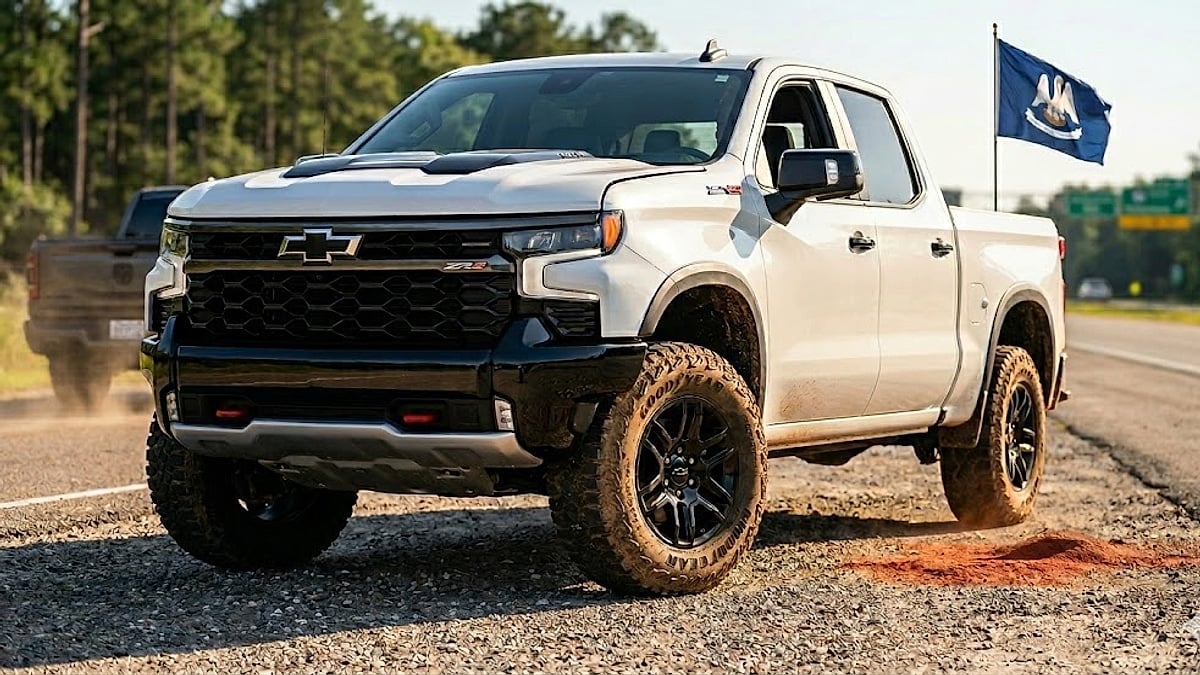
These tires are the "smoking gun." The 97-mph governor exists because those Goodyear MT tires have a specific speed rating. If you exceed that rating for a sustained period, the centrifugal force can literally tear the tread from the carcass. GM isn't trying to ruin your fun; they are keeping the truck from a catastrophic tire failure. When Kris mentions feeling "dusted" by a Ram, he is likely hitting that electronic wall just as the Ram’s Hemi is entering its sweet spot.
Furthermore, the 6.2L in the ZR2 is paired with a 10-speed automatic transmission and a 3.23 rear axle ratio. While this setup is great for fuel economy and low-end torque, it can feel "long-legged" and lazy during a 60-to-80 mph passing maneuver. In my experience, when you combine the heavy rotating mass of those 33-inch mud tires with a taller gear ratio, the engine has to work significantly harder to overcome inertia than a street-tuned Ram 1500 with a 3.92 gear set.
Technical Observations from Owner Communities
We aren't just looking at one isolated case in Louisiana. The enthusiast community is actively dissecting these performance plateaus. In a recent technical discussion on r/Silverado, several owners noted that the perceived "lag" in the 6.2L engine is often exacerbated by the truck's torque-management software. Based on my 30 years of experience, this aligns with how sensitive GM's Powertrain Control Modules are to driver inputs; the computer often "smooths out" power delivery to protect the drivetrain, which can feel like a delay to the driver. You can read more about these owner experiences in the full r/Silverado discussion.
Another owner highlighted the new design's vulnerability and how the electronic architecture affects perceived performance, noting, "The ride quality is great, but the air suspension fears or general electronic quirks make people hesitant to push these trucks," in this Reddit thread about the Silverado vs. Ram debate.

My Analysis: When I look at these quotes, it becomes clear that Kris’s "sluggish" feeling is a combination of two things: the 10-speed transmission’s desire to jump to the highest gear possible for efficiency and the aggressive "nanny" software that limits throttle opening until the vehicle is perfectly stable. In 2026, the software is as much a part of the engine as the pistons are. If the computer senses any wheel slip or high heat from those MT tires, it pulls timing and reduces power, leaving you in the dust of a simpler, more direct competitor like the Ram.
How to Unleash the 6.2L Potential Without Voiding the Warranty
If you are like Kris and want to "open up" the 6.2L, you have to be careful. In the 2026 model year, GM’s Global B electronic architecture makes "bypassing" the governor a nightmare. Most traditional tuners won't touch the speed limiter because it requires a "handshake" with the tire pressure monitoring system and the stability control module.
However, there are actionable steps. First, ensure you are running 93-octane premium fuel. The 6.2L V8 has a high compression ratio. If you run 87 or 89 octane, the knock sensors will retard the timing, and you will lose up to 20 horsepower and a significant amount of midrange "snap". I have seen countless owners complain of a sluggish truck only to find they were trying to save five dollars at the pump.
Second, consider the "Throttle Controller" route. These devices don't add horsepower, but they intercept the signal from your gas pedal and route it to the computer. They remove the built-in delay that GM programs for "smoothness," making the truck feel much more alive and responsive. It won't beat the 97-mph governor, but it will make the truck feel like a ZR2 should in daily driving.

Will Aftermarket Support Fix the Speed Ceiling?
The very next logical question is: Can I just swap the tires and delete the governor? The answer is complicated. While you can certainly buy V-rated tires that are safe at 149 mph, the 2026 Silverado’s ECU is encrypted. To "bypass" that 97 mph limit, you would likely need to send your PCM (Powertrain Control Module) to a specialist for an "unlock" service. This will almost certainly flag your VIN and void your powertrain warranty. For a truck that is likely still under its first year of payments, that is a massive risk. We are seeing a trend where manufacturers are locking down these "digital nannies" more tightly than ever to meet 2026 safety and liability standards.
Navigating the 2026 Performance Landscape
The 2026 Chevy Silverado ZR2 is a world-class off-road machine, but it is not a high-speed cruiser. The "sluggish" feeling Kris Pierce experienced is a symptom of a truck being used outside its primary design envelope. If you want to dominate the dirt, the ZR2 is your weapon. If you want to dominate the highway, you are fighting against tire ratings, gear ratios, and a very strict digital governor. My advice is to embrace the ZR2 for its suspension and trail prowess while understanding that the 6.2L’s true potential is often hidden behind a wall of safety code.
How About You?
Have you felt your 2026 Silverado "hit the wall" at 97 mph, or do you think the 6.2L has plenty of pep for a truck its size? Tell us what you think in the comments below.
About The Author
Denis Flierl is a 14-year Senior Reporter at Torque News and a member of the Rocky Mountain Automotive Press (RMAP) with 30+ years of industry experience. Based in Parker, Colorado, Denis leverages the Rockies' high-altitude terrain as a rigorous testing ground to provide "boots-on-the-ground" analysis for readers across the Rocky Mountain region, California EV corridors, the Northeast, Texas truck markets, and Midwest agricultural zones. A former professional test driver and consultant for Ford, GM, Ram, Toyota, and Tesla, he delivers data-backed insights on reliability and market shifts. Denis cuts through the noise to provide national audiences with the real-world reporting today’s landscape demands. Connect with Denis: Find him on LinkedIn, X @DenisFlierl, @WorldsCoolestRides, Facebook, and Instagram.
Photo credit: Denis Flierl via Kris Pierce
Set Torque News as Preferred Source on Google
Follow us today...






