

Federal electric vehicle subsidies have now ended, and EVs have just had their best quarter, with market share for the quarter approaching 10%. Those battery-electric vehicle (BEV) shoppers who wanted a new EV in 2025 have already purchased one. Starting in October, we will see EV deliveries plummet, and EV share will start to trend down steadily until it reaches an approximate 5% market share, roughly that of 2021 and 2022. This is not just conjecture based on observed buying patterns, though that is definitely part of how this prediction can be made. Rather, it is also an observation of how automakers have pulled back on production and future EV models in the U.S. market. They cannot sell what they do not produce. Let’s start our analysis by looking at the EV models that automakers have outright canceled recently.
Ford EV Cancelation
Ford canceled a three-row electric SUV it had planned to build for the U.S. market and swallowed a massive loss on the failed model to prevent even worse losses if it had continued forward. This announcement came last fall. Ford’s announcement said in part,
Ford plans to leverage hybrid technologies for its next three-row SUVs. As a result of this
decision, the company will take a special non-cash charge of about $400 million for the writedown of certain product-specific manufacturing assets for the previously planned all-electric
three-row SUVs, which Ford will no longer produce.
“We’re committed to creating long-term value by building a competitive and profitable business, said John Lawler, Ford vice chair and chief financial officer. “With pricing and margin compression, we’ve made the decision to adjust our product and technology roadmap and industrial footprint to meet our goal of reaching positive EBIT within the first 12 months of launch for all new models.” Included in that roadmap is a low-cost small pickup truck that will be battery electric. Ford has not given up on EVs, but the company foresaw changes to the market in 2024 that meant big, pricey EVs could not be profitable for Ford.
Nissan EV Cancelation
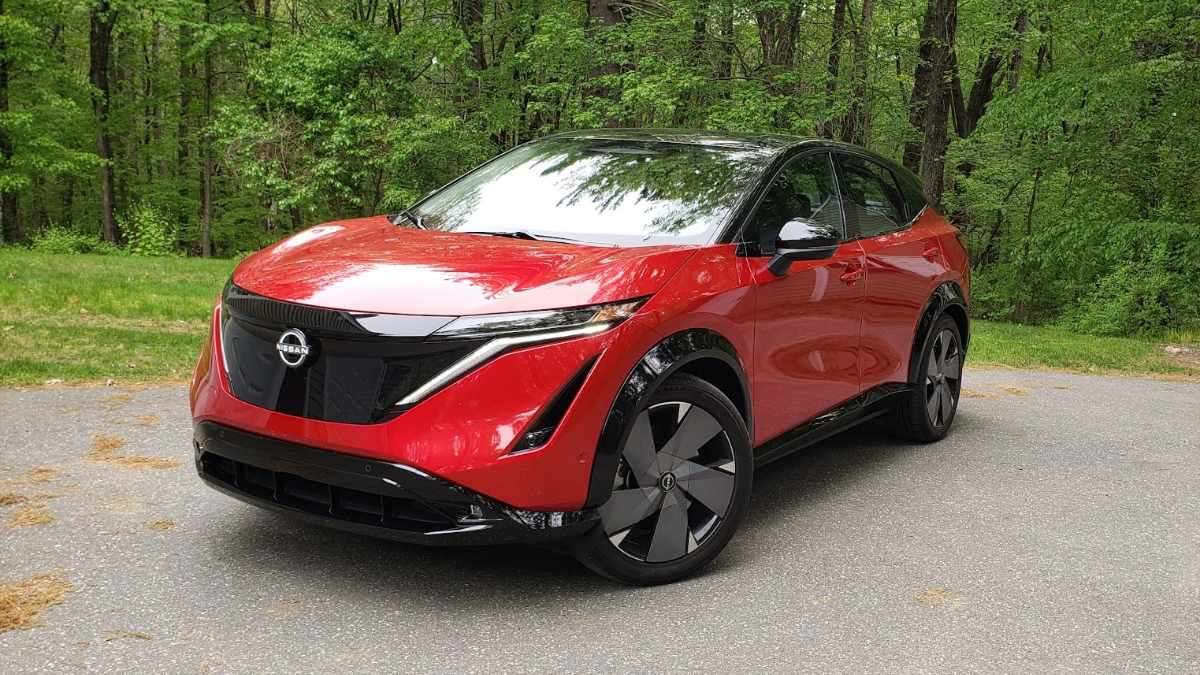
No automaker has more experience creating affordable EVs for the U.S. market than Nissan. It’s Leaf enters its third generation soon, and Nissan is continuing to price it at the bottom of the market. Unfortunately, its upscale Ariya has now been given the axe. Like almost all EV models sold in America, the Ariya struggled to maintain a 2,000-unit-per-month pace of deliveries. Only the halo car GT-R and the niche sports car Nissan Z were sold in lower volumes in Q2, unless you count the Leaf, which barely sells. We’ve heard conflicting reports as to how many Leafs Nissan plans to produce for the coming year. We’d be surprised if it is more than about 1,000 units per month.
Acura Cancels Its EV
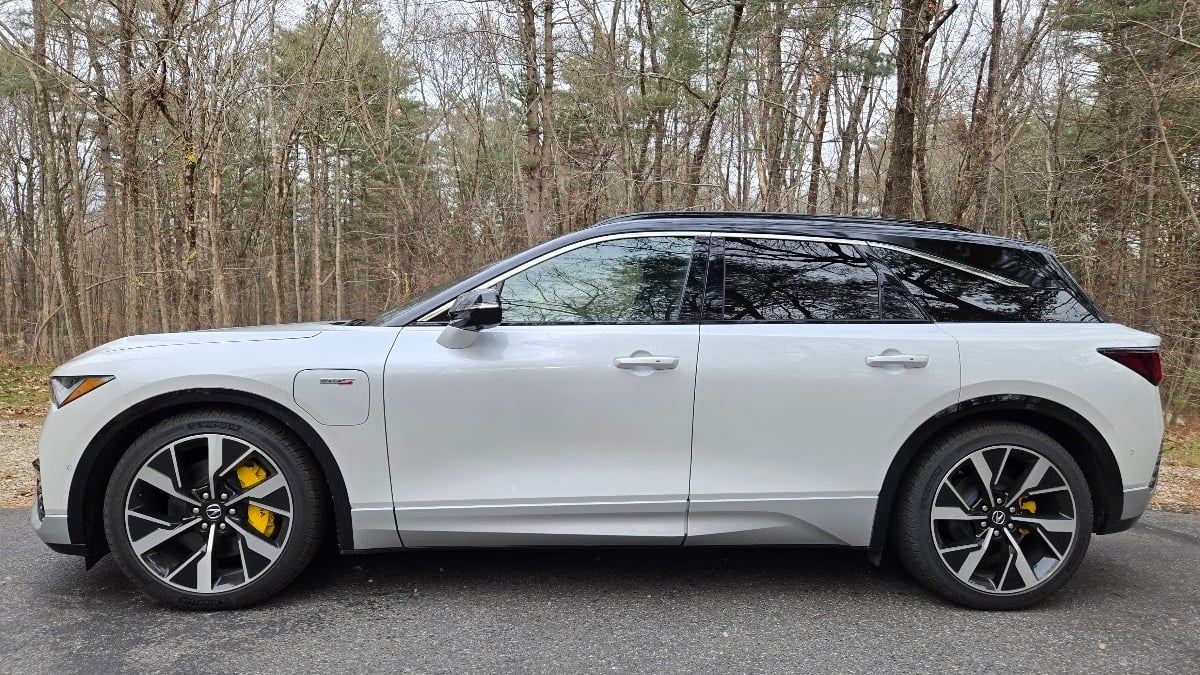
Acura has multiple relatively slow-moving vehicles in its lineup, but they share so much with the Honda line that it is easy to see how they make sense as upscale versions of similar Hondas. The ZDX was so much lower in delivery volume than Acura’s other models that it stuck out like a sore thumb. The ZDX was produced in partnership with GM, and it shared 90% of its parts with GM products. Acura axed the ZDX just as the subsidies ended. This one surprised nobody. Acura will continue on without an EV, now that the looming government EV mandates have been set aside for at least three more years.
Ram Cancels Its BEV Truck
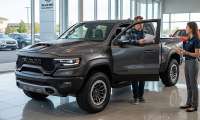
Stellantis had been making a strong push toward EVs in its various brands. We tested the Dodge Charger Daytona and found a lot to like. However, it has not done well. Ram was the first brand in the Stellantis group to outright cancel an EV, ditching plans to build a BEV called the Rev. It will instead be hybrid and gas-powered, at least as of the last news we heard. Ram was wise to ditch the battery-only Rev. EV trucks are an abject failure in America, with no manufacturer having any meaningful deliveries.
Bentley Cancels Its EV Models
Who knew Bentley had an EV? I honestly would not know a Bentley if it ran over my toe, but apparently, the company had an EV program. Bentley is part of the VW group, and the local reporting we’ve read says that VW killed the support for the high-end EV Bentley EV.
EV Models We Suspect Will Fade Away
Despite earning a lot of great reviews, including ones I myself have written, EVs are a failure in the marketplace. This does not mean they are not fast, efficient, satisfying, or even thrilling to drive. Many extremely low-volume EVs, like Rivian’s R1T, for example, earn extremely high owner satisfaction scores. The problem is that there are just not many buyers interested in owning them.
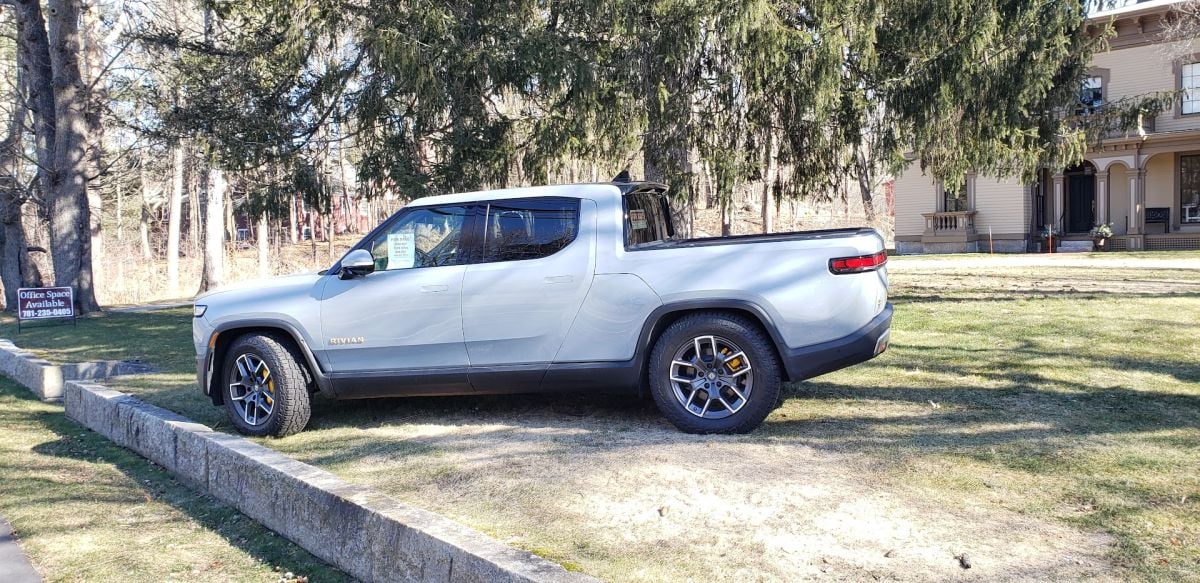
We’d watch for the EV trucks now marketed in America to go away first. Delivery volumes are so low that, short of outright government mandates, there is simply no reason to burn through cash to support vehicles that consumers don't want to buy. GM, Rivian, and Ford can’t keep selling a handful of EV trucks per month forever. Once the bean counters are given their turn to speak, we suspect that most, if not all, the EV pickup trucks will leave the U.S. market. As it is, they are niche, super-pricey toys being used primarily by wealthy buyers and a handful of municipalities in areas where fleets will pick up EVs to satisfy the local government’s wishes. Neither of these scenarios justifies their existence.
Following the trucks, watch for the car-like EVs to start to drop out. The Model 3 is so darn good that there is little sense in trying to compete with it. The jelly-bean crossovers on long wheelbases will hang on the longest, and manufacturers will start to consolidate their EV budgets of dollars, factory space, and manpower on a single EV model or two.
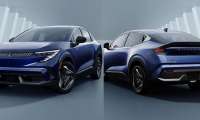
Companies like GM and the Genesis/Kia/Hyundai group will likely hang in for the long haul, since they can spread out one platform across multiple brands and even multiple body shapes. Toyota and Subaru were reluctant players in the U.S. EV market, and they have just launched their next generation of BEVs together. Those won't be immediately canceled, but we suspect the combination of both brands’ use of the shared platform will settle in at about 3,000 units per month.
Feel free to tell us we are wrong and that our mothers dress us funny in the comments section below. We welcome an expansion of this topic and would love to hear what our readers think will happen with U.S. EV models in 2026 and beyond.
John Goreham is the Vice President of the New England Motor Press Association and an expert vehicle tester. John completed an engineering program with a focus on electric vehicles, followed by two decades of work in high-tech, biopharma, and the automotive supply chain before becoming a news contributor. He is a member of the Society of Automotive Engineers (SAE int). In addition to his eleven years of work at Torque News, John has published thousands of articles and reviews at American news outlets. He is known for offering unfiltered opinions on vehicle topics. You can connect with John on LinkedIn and follow his work on his personal X channel or on our X channel. Please note that stories carrying John's by-line are never AI-generated, but he does employ grammar and punctuation software when proofreading and he also uses image generation tools.
All images by John Goreham
Set Torque News as Preferred Source on Google
Follow us today...



Comments
This was entirely…
Permalink
This was entirely predictable and now it's starting to happen. Too many legacy auto makers decided to jump into the EV bandwagon without fully considering what the market could bear and what users really wanted. The truth is that when it comes to owning an EV, Tesla has the experience and support network to make the ownership experience satisfying enough for people to want to own an EV to begin with. Something legacy car makers just can't fully compete with.
Sadly EVs would have needed…
Permalink
Sadly EVs would have needed much more real world testing to be solid dependable modes of transportation that their high price tags commend. Probably prioritizing super expensive models over the common car not a brilliant idea either. Some sort of standard would have been great as there is now no way to service these vehicles outside of some specialty shops/ and limited dealerships.
You meant ZDX. The incorrect…
Permalink
You meant ZDX. The incorrect Acura news states ADX.
I think you mean ZDX, not…
Permalink
I think you mean ZDX, not ADX?
Acura canceled the ZDX, not…
Permalink
Acura canceled the ZDX, not the ADX as it was labeled throughout the article.
What an odd take on the…
Permalink
What an odd take on the Model 3 and competition in general... The model 3 is soo good there is no point in competing with it... So the thought is just close up shop, admit that only Tesla can make an EV and never even try to make one? Crazy take on that to me.
There are plenty of EVs…
Permalink
There are plenty of EVs doing quite well. Mach E sales are up 20%. It more about range and design Some of these companies phoned it in and now they paying the price.
I think your spot on. BEV's…
Permalink
I think your spot on. BEV's aren't where they need to be to make sense for most consumers. Price and battery life need huge improvements before any average person would consider them an option. Most people that need a truck aren't interested in a BEV, they are looking for a Power Stroke or Cummings. Im sure some city folks will try and say different, but as a city boy whos been in the country for the last 12 years, I dont see many Ford Lightnigs or CyberTrucks pulling horse trailers down dirt roads. So long EV's you had a nice 5 year run.
This obviously is telling…
Permalink
This obviously is telling. The remainder of people interested in EV'S have mostly bought. Not because of the 7,500 dollars rebate, but because of the prices and the fact of losing more worth driving off from the buy and the depreciation just 2 or 3 years later. BINGO!
Rage baiting news at it's…
Permalink
Rage baiting news at it's finest...
EVs are failing to catch on…
Permalink
EVs are failing to catch on with main stream American drivers. What a "shock".
Not that any of us are surprised, the failure of EVs has been long expected. The problems remain the same which have plagued EVs since they were first introduced in 1889. They're expensive, the range sucks and it takes too long to charge.
In order for EVs to supplant ICE vehicles, they first need to provide peer performance: comparable range, comparable price and comparable refueling convenience. But rather than recognizing this need, environmentalist pushed government to create regulations purposefully designed to force the elimination of ICE to soothe their existential crisis over climate change. Manufacturing jumped on the bandwagon and for 10 straight years dumped trillions into advertising budgets to convince the motoring public that EVs are the future.
Unfortunately for the cadre that created the tableaux, the motoring public remained skeptical and unconvinced. Sure, EVs are fast and offer some gee whiz technology, but that was not enough to sway us into ditching our ICEs.
Now that government subsides have ended, the bottom will fall out of the EV market, relegating them back into being a novelty reserved for tech bros and tree huggers. The rest of us never cared and didn't want to be forced into driving one.
Just like NEVI, the rebates…
Permalink
Just like NEVI, the rebates will return, just rebranded as "Trump's" or the "GOP's" rebates
.....aaand Teslas 'checkmate…
Permalink
.....aaand Teslas 'checkmate' is begining. Their lineup will soon dominate the entry level market, their new pickup (replace Cybertruck) will eat into legacy truck sales. This all while Teslas Auto Division will soon be dwarfed by Robotics, Battery Storage, & Tech licencing Divisions. FSD has already proven to make lidar obsolete. In the history of the stock market, there has never been such a compelling investment case than Tesla
You may be right in the near…
Permalink
You may be right in the near term. However, as battery technology improves, mileage range will increase, and the costs to produce these batteries will drop.
These factors will make future electric vehicles cost competitive with internal combustion engines.
When you factor in the lower costs to operate electric vehicles, they become even more competitive in the marketplace.
You may be right in the near…
Permalink
You may be right in the near term. However, as battery technology improves, mileage range will increase, and the costs to produce these batteries will drop.
These factors will make future electric vehicles cost competitive with internal combustion engines.
When you factor in the lower costs to operate electric vehicles, they become even more competitive in the marketplace.
You may be right in the near…
Permalink
You may be right in the near term. However, as battery technology improves, mileage range will increase, and the costs to produce these batteries will drop.
These factors will make future electric vehicles cost competitive with internal combustion engines.
When you factor in the lower costs to operate electric vehicles, they become even more competitive in the marketplace.
Simple, 3 things. Economics…
Permalink
Simple, 3 things. Economics first..... Very expensive and practically 100 percent depreciation after 8 years, cost of battery. Second....range, figure in real world about half of what's advertised. Third.... finding chargers, if it works and charge time. Me...I drive 20 to 25 year old durable and simple vehicles. Regular door handles, simple push rod engines that make low end torque, no touch screens or ota bull. Just simple and the work. Just like me 😂.
John, The benefits of EV…
Permalink
John,
The benefits of EV appeal more to low end buyers. Low cost of operation, minimal services. Every manufacturer went after the upper end of the market first. If a few manufacturers pivot and insert EV at the lower end I believe they will thrive. Transportation, not aspirational cars. Battery tech improvements are announced weekly and that won't stop as alternative energy continues to grow and drive the R&D. A big concern globally is how to avoid handing the segment over to China. I'm an auto enthusiast with a collection of great cars, but I happily run errands in a Kia EV6.
John, The benefits of EV…
Permalink
John,
The benefits of EV appeal more to low end buyers. Low cost of operation, minimal services. Every manufacturer went after the upper end of the market first. If a few manufacturers pivot and insert EV at the lower end I believe they will thrive. Transportation, not aspirational cars. Battery tech improvements are announced weekly and that won't stop as alternative energy continues to grow and drive the R&D. A big concern globally is how to avoid handing the segment over to China. I'm an auto enthusiast with a collection of great cars, but I happily run errands in a Kia EV6.
I disagree. There are lots…
Permalink
I disagree. There are lots of people who want to own an EV and drive one, especially young people. But they don't live in a place where there is a charger readily available, an apartment building, condo unit, etc. This is especially true in the big cities. Supercharger locations are mainly along highways but it's not in their building or near their building. Superchargers aren't at malls, very many stores or movie theaters or places where people spend a larger amount of time. I
think this article is short-sighted.
I don't disagree with the…
Permalink
I don't disagree with the general direction of this editorial. But the author is missing a big factor when he asks what the point is in trying to compete with Tesla since the Model 3 is so good. That factor, of course, is the Elon factor. Many of us EV-leaning customers, myself included, simply won't touch the T brand any longer. So that opens up a fairly wide lane for other OEMs.
Dealerships have destroyed…
Permalink
Dealerships have destroyed the EV market. I’ve financed numerous dealership all across the country and they make ALL their profit in the service departments. EV’s will create $-0- service dept. revenues. So how else have them killed EV, by marking them since they have so few. Not only did they think they were suppose to get $7500 EV tax credit, by marking them up, they won’t negotiate at all.
I own a Chevy Bolt. I just…
Permalink
I own a Chevy Bolt. I just charged it this morning and achieved a range of 295 miles. The energy I put in the car cost me nothing because I have solar panels on the roof and a 240 volt charger in my garage. My electric bill $19.58 every month. I would never, never, never buy an ICE car again. Trump and his oily colleagues can do what they will to kill electric cars but I'm sure there are enough people like myself to never let them die.
It was stupid of everyone to…
Permalink
It was unwise of everyone to think all automakers can sell high-priced 5 and 6 digit EVs.
Tesla 3 is garbage and overrated on an old 400V platform. GM need to wake up to hoice and support AA/CP, there is a clear winner here and that is the Kia/Hyundai/Genesis trio built on 800V platform. They have options from low to high prices and if the Idiots in DC would pull their heads out of trying to live in the past, humanity can move forward.
Yes EV Sales will slow down but not go away, the future is EV ove living i the Boomer past of ICE.
The manufacturers are to…
Permalink
The manufacturers are to blame here. They produced a bunch of over priced vehicles that simply were not worth the asking price. If they were all 20% cheaper, I think they would sell much better. People are hesitant to try something put of the norm like an EV. Most people are not goong to spend top dollar for something that they are uneasy about. Folks would take give it a shot of it at least made financial sense.
As for subsidies.... No product should ever get them. If people wont buy a product without being bribed into doing so, then that is a problem.
Purchase price of EV is too…
Permalink
Purchase price of EV is too high for gas savings to recover initial outlay.
Model 3 $52k. Camry hybrid $35k.
$17k difference in purchase price could buy 3962 gals of gas at CA price of $4.29/gal. Camry would go 178k miles at 45 miles/gal
I believe you are mostly…
Permalink
I believe you are mostly correct. BEVs are very expensive second cars. City cars for the rich in the correct environment.
Read name, do you want…
Permalink
Read name, do you want instructions?
Read name, do you want…
Permalink
Read name, do you want instructions?
Total nonsense. EV's are 50%…
Permalink
Total nonsense. EV's are 50% in China and 95% in Norway. EV's are quickly taking over markets around the world. The US has the new improved 2026 Chevy Bolt EV coming and the Equinox SUV EV is very popular. If Trump hadn't ended the tax credit EV's would be much more popular. Electric cars are cheaper to operate and the prices are continuing to go down so they have a bright future.