


A Connecticut green vehicle fan made the step up to a battery-electric vehicle and is now giving fellow shoppers this advice:
"If you can’t charge at home, don’t buy or lease an EV."
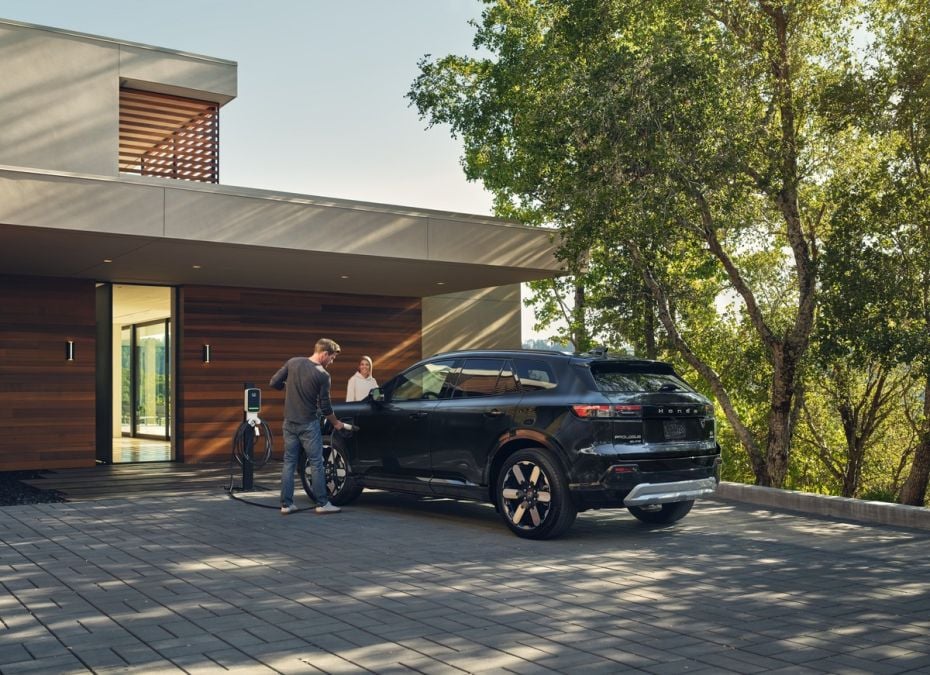
Willy R. is a longtime green vehicle owner. He has a 2024 Honda Accord Hybrid EX-L that he says he “loves very much.” Taking the next logical step down the green Honda pathway, he opted to lease a Prologue battery-electric vehicle (BEV). That decision turned out to be a bad one for Willy. You see, he doesn’t have the ability to charge at home. His plan was to use public charging. It did not go well.

Willy’s main complaint with the EV he leased was that charging it was “inconvenient and annoying.” He posted, “We hate this vehicle so much we bought a (gas only) Lexus RX350 to replace it.” Willy explained in his post, “Charging takes forever, and $60+ for fast charging here in CT.” Clarifying the situation further, Willy said the EV has, “... Terrible range. 310 miles advertised, MAYBE 210 in real life.”
To be clear, Willy is a fan of green Honda automobiles. He went so far as to say, “If the car were a hybrid, it would be amazing.” Having tested many fantastic Honda hybrids, we agree. Honda makes some of the most impressive green vehicles in America today. Honda’s hybrids are virtually EVs powered by liquid fuels. The powertrain operates 99% of the time without ever driving the wheels via the engine. The motors do all the work, and they can regenerate power, as all hybrids do.
Many of Willy’s fellow EV owners agreed that the idea of owning an EV without a home charger is a bad idea. This is a reality well known to the green vehicle community. A recent S&P Global study found that 63% of EV owners have a home-level 2 charger. Others use Level 1 charging at home. According to Energy.Gov, L1 and L2 charging is expected to handle 80% of all EV charging duties by 2030. That means that far less than 20% of charging will occur in public on DC chargers. Energy.Gov says that, “In rural and suburban areas, L1 and L2 chargers in single-family homes are expected to meet the majority of EV electricity needs (82% and 64%, respectively.”
The problem with the plan Energy.Gov outlines is that only about half of the housing in America is single-family. Far less housing is single-family owned by the occupant. High-density apartments and condos, and multifamily homes rented by the occupant will be far more difficult to equip with chargers for all occupants. Even if the tenant wishes for it to be thus equipped, many property owners will not be interested in spending thousands to upgrade old electrical systems and add a Level 2-capable circuit. In EV-friendly Massachusetts, a 230-unit apartment complex being built in an affluent town in Metro West Boston met its local “stretch Code” by providing only 4 EV charging points for over 400 parking spaces. It comes online this summer.
The Other Side of the Story
I’m well aware that there are vehicle owners who do not have a home charger, live in a challenging urban area with winters, and who still make EVs work. I sought out such an example, found it, and I did a multi-part series on Kia Niro EV owner Andy Piltser-Cowan’s positive EV ownership experience with just such a scenario. For some, owning an EV without a home charger can be workable. However, others struggle if they can’t get past the ease of spending under two minutes to fully refuel a hybrid at any corner gas station.
Public Charging Is Expensive and Intimidating
S&P Global summed up the public charging experience well in its report, saying:
Interoperability is another annoyance. Even where chargers exist, the user experience can remain a tangle. Drivers juggle apps, RFID cards, and memberships, and pricing is opaque. Early adopters may tolerate this; the mass market will not. Gas pumps do not require accounts and software updates before refueling.
Another reality is that public DC charging is the most expensive way to power a green vehicle. With DC charging rates typically around $0.55/kWh, a hybrid is far less expensive to power. Tesla has the best network, and frequent users can and do find lower rates with certain convenience restrictions. None is as affordable or as convenient as powering up at home.
Related Story: EVs Lose Value So Fast They Offset Gas Savings as Hybrids Come Out Ahead
Special EV Charging Rates Only Used by 12% of Owners, Only 7% Of Homes Have Solar
One common misconception is that new EV owners will find low-cost electricity at home. That is not the case where I reside. My home charging costs are about $0.33/kWh, despite opting into low-cost supplier programs. Our hybrid is less expensive to power with gas compared to charging at home, even when gas prices are high
I’m not alone in finding home charging to be no bargain. J.D. Power’s recent 2026 EV ownership overview found that only 12% of current EV owners participate in utility-provided low-cost charging programs. Most EV owners who charge at home pay their full rate when they charge.
EV owners with solar may have the very best case scenario, but only about 7% of U.S. homes have rooftop solar. Among those, not every solar owner has enough excess capacity to power their vehicles. This is the case with one Bolt owner Torque News recently spoke with, who told us that he only has enough solar capacity after running the household to meet about half his charging needs. The balance comes from the grid.
EVs Are Being Canceled and Discounted By Automakers
One indication that mainstream American shoppers are unwilling or unable to adapt to EVs is the concerning number of EVs that have been canceled in the past year. Ford’s F-150 Lightning was discontinued; two Tesla models have been axed; Kia and Hyundai have dropped many trims of their EV hatchbacks; Nissan canceled the Ariya just a few years after it was launched; VW just stopped making ID.4s, and the Buzz is on pause.
More automakers are slashing prices to draw in reluctant shoppers. The Prologue is now being discounted by $7,500, and Polestar is reportedly offering a staggering $21,000 off the price of the Polestar 3. Automakers are having to pile cash on the dash to move unpopular models.
Post-Publication Update:
Following this story's publication, one very pro-EV reader and longtime EV owner made a comment that we felt helped to clarify the story in one sentence. Tom M wrote in a Facebook comment:
It doesn't take Einstein to figure an EV may not be for you if you don't have access to chargers at work or elsewhere.
EVs are a great second-vehicle choice and a good option for wealthier Americans who own their homes and can charge at home. For those who drive an average of 12,000 to 15,000 miles annually, using only public sources is, at best, challenging and, at worst, nearly impossible, as Willy found. EV proponents want to tell us that we’re really just missing some single obvious truth, but perhaps the problem is that vehicles like the Honda Prologue are just not as easy to live with as the very green Accord Hybrid is. There are other green vehicle options besides EVs, and they don’t require the sacrifices and lifestyle adjustments that battery-only vehicles do.
What is your take on Willy’s unhappiness with his battery-electric vehicle? Is there a side to this story we have not explored? Tell us in the comments below.
John Goreham is a 14-year veteran of Torque News. An accomplished writer and a long-time expert in vehicle testing, Goreham also serves as the Vice President of the New England Motor Press Association and has a growing social media presence. He’s also a 10-year staff writer and community moderator for Car Talk. Goreham holds a B.S. in Mechanical Engineering and an undergraduate Certificate in Marketing. In addition to vehicle and tire content, he offers deep dives into market trends and opinion pieces. You can follow John Goreham on X and TikTok, and connect with him on LinkedIn.
Images of Honda Prologue courtesy of Honda Media Support. Facebook image post courtesy of Will and Facebook.
Set Torque News as Preferred Source on Google
Follow us today...







Comments
Willy's story is a perfect…
Permalink
Willy's story is a perfect illustration of why the EV conversation needs to shift from range to charging fit.
The question most buyers ask is "does this car have enough range?" that's the wrong question.
The right question is: "How much I drive, and how much can I recover enough miles per week, given my actual parking and charging situation, to keep up with my EV... That internal conversation happens with everyone at some point after they bought an EV... and for anyone with a home L2 charger, that question doesnt pop up becuase 95% of the time the answer is almost always yes. For someone like Willy relying entirely on public DC fast charging, the math gets painful fast, and the inconvenience compounds daily.
So here at EV Readiness Check, we built a free tool specifically for this: evreadinesscheck.com, a 60-second quiz that pressure-tests charging fit before someone signs a lease. It factors in weekly miles, parking situation, charging access, and local infrastructure to tell you whether EV ownership actually works for your life.