
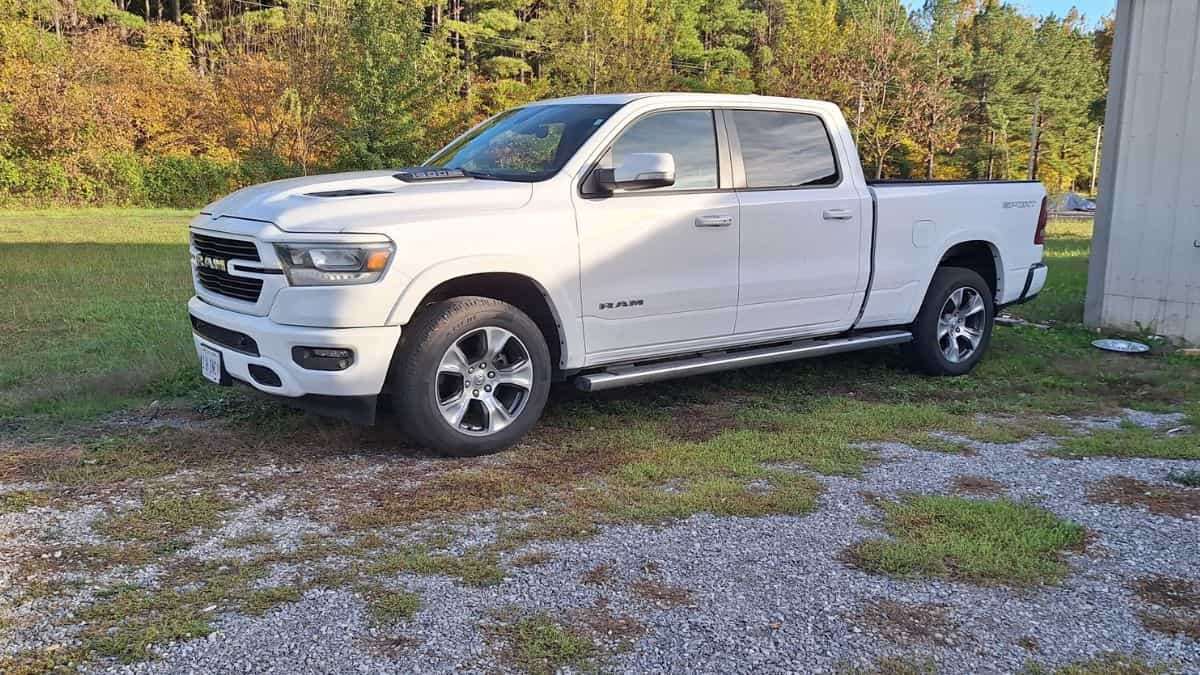

Modern pickup trucks are no longer defined solely by engines, frames, and towing capacity. Today’s half‑ton trucks are complex digital platforms, built around interconnected modules, software, and screens that control everything from safety systems to whether the vehicle even believes it is ready to drive. When all of that technology works in harmony, it delivers a refined, confident ownership experience. But when one critical component fails, the entire truck can quickly go from dependable daily driver to something far more frustrating.
That uncomfortable reality is becoming more common as trucks evolve, and it is exactly what one longtime Ram owner is now facing with his brand‑new 2025 Ram 1500. Ron Frailey shared his experience in the “6th Gen Ram 1500’s (2024+)” Facebook group after his new truck began experiencing serious electrical problems almost right away. Ron did not dress up his frustration or soften his words. He laid out exactly what happened and why the situation has shaken his confidence in a brand he has supported for decades.
As Ron wrote: “This may be my last Mopar after a lifetime of loyalty… So after the dead batteries, the crazy gauges, not going into drive, thinking the hood’s up, the dealership was able to take a look at my new Ram this morning, and they have concluded that it needs a new gauge cluster. Sadly, there are none available. So, they said that my truck could sit out back for months or longer until a gauge cluster becomes available. They also said that even if they replace the gauge cluster, they’re not 100% sure that will cure the issues. Meanwhile, I’m still supposed to pay those payments. So, they gave me this white 2024 Ram loaner until parts become available. I’ve only made 2 payments so far. I’d like to walk away because this really sucks. To buy a brand-new truck and not even get 3,000 miles out of it before it’s paperweight.”
Ron’s experience is not centered on a single warning light or a minor annoyance. Dead batteries, malfunctioning gauges, and a refusal to shift into drive are foundational failures that prevent normal operation. These are not the kinds of issues most buyers expect to face within the first few thousand miles, especially on a truck positioned as a premium daily driver and workhorse.
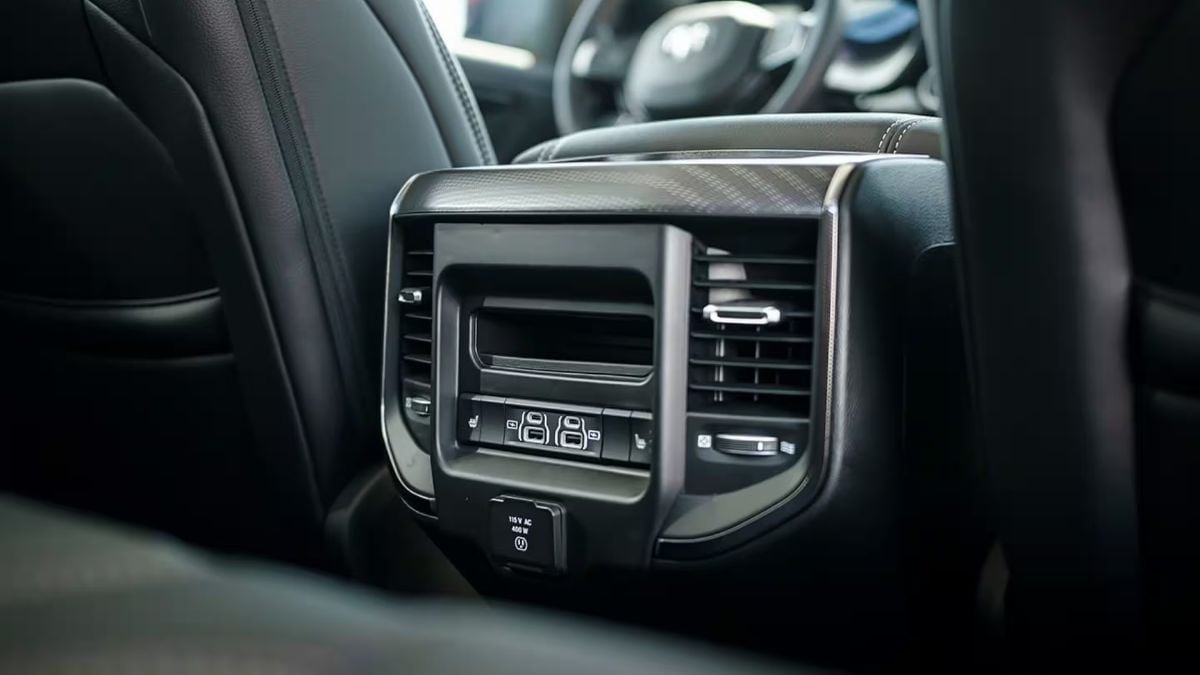
The Gauge Cluster Is No Longer Just a Screen
In older trucks, a failed gauge cluster might have been inconvenient but rarely catastrophic. In modern vehicles like the 2025 Ram 1500, the cluster plays a much larger role. It acts as a central communication point between systems, relaying information about safety status, drivetrain readiness, and faulty conditions.
When the cluster malfunctions, the truck may believe something is wrong even when it is not. False warnings, locked‑out gear selection, and contradictory system messages can all stem from a single electronic failure. That is why issues like Ron’s often leave owners feeling stuck, watching a mechanically sound vehicle refuse to cooperate.
Ron later expanded on this same situation in a follow-up account where he elaborated further on the ongoing electrical problems, adding more detail about how the electrical faults continued to stack up and reinforce his concern that the gauge cluster failure was part of a deeper issue rather than an isolated glitch.
Parts Availability Can Turn a Repair Into a Long‑Term Problem
What elevates Ron’s situation from frustrating to infuriating is the lack of replacement parts. Being told that a brand‑new truck could sit for months waiting for a gauge cluster is not something most buyers factor into their purchase decision. Even more concerning is the admission that replacing the cluster may not fully resolve the issue.
While supply chains have improved since the worst shortages of recent years, electronic components remain a weak point. Modules and clusters are often model‑specific, software‑linked, and difficult to substitute. When inventory runs dry, even straightforward warranty repairs can stretch into long‑term delays.
This is especially hard to accept when payments continue regardless of whether the truck is drivable. A loaner may cover transportation needs, but it does little to ease the frustration of paying for a vehicle that is parked behind a dealership with no clear timeline.
Brand Loyalty Is Tested When Problems Come Early
Ron describes himself as a lifelong Mopar loyalist, which makes his reaction especially telling. Loyalty is built on trust, and trust is often reinforced during moments when something goes wrong. Early failures test that relationship more than issues that arise years down the road.
Some Ram owners continue to report excellent experiences with newer models, including those who traded a 2021 Ram 1500 Limited for a 2026 Limited and felt the newer truck made the old one feel like a dinosaur, a contrast that shows how dramatically Ram has refined ride quality, interior comfort, and technology in recent years.
Others remain positive even after early dealership visits, such as drivers who say they absolutely love their 2025 Ram 1500 Bighorn despite multiple trips to address transmission concerns, suggesting that for some owners, the overall driving experience still outweighs the inconvenience of early service visits.
At the same time, contrasting stories like Ron’s create uncertainty for buyers trying to understand how widespread these problems really are. When experiences vary this widely, trust becomes harder to maintain.
Other Owners Say Ron’s Experience Sounds Familiar
The comments under Ron’s post quickly filled with similar stories. Doris Parker shared her own frustrations, writing:
“Well let me tell you about my Ram. At 3,800 miles, it had 2 mechanical failures. They didn’t believe me, so I asked for a loaner, and of course they didn’t have one so we rented at their promise of reimbursement. What a joke. Now our lights don’t work properly, the radio flickers and continues to play after we leave the vehicle and we are not believed. You better make your payment though! I can’t trade it in so we are screwed.”
Doris’s experience highlights how damaging it can be when owners feel dismissed while still being held financially responsible. Mechanical and electrical problems are one thing, but feeling unheard often turns frustration into resentment.
Alex Jerebie raised a question many readers likely share, asking, “How is it even possible that they don’t have replacement parts available? In your case, the cluster… I heard of the new alternators not being available, but clusters?”
Alex's comment reflects a broader disbelief that core components on brand‑new models could be unavailable.
Jeffrey Scholl shared his own experience, writing: “I had the same damn problem! I was able to get Chrysler to buy mine back! They bought it back, but I still had to buy a pickup from them! I got the new one and have not had any troubles with it so far.”
Jeffrey’s comment shows that escalation can sometimes lead to a resolution, but it also highlights how rarely those outcomes are clean or truly final. Even when a buyback happens, owners often remain tied to the same manufacturer simply because they still need a truck, a pattern that mirrors how longtime loyalty to GM can eventually reach a breaking point and push buyers to take a chance on something new, as seen in leaving nearly two decades of GM loyalty behind for a Ram 1500 RHO.
Resolution Is Not Always Straightforward When Electronics Fail
One of the hardest parts of situations like Ron’s is that electronic failures do not follow the same logic owners are used to with mechanical problems. A bad alternator, a failed starter, or even a transmission issue usually comes with a clear diagnostic path and a tangible fix. Digital components like gauge clusters and control modules are different. They are software-dependent, tightly integrated, and often communicate with multiple systems at once.
In cases where repairs take months or fixes remain uncertain, buybacks and lemon law claims start to enter the conversation. As Jeffrey Scholl’s experience shows, manufacturers will sometimes step in, but those resolutions are rarely simple. Even when a vehicle is bought back, owners still need transportation, often leaving them back at the same dealership they just exited.
Brand Loyalty Versus Modern Truck Reality
This is where the story becomes more than just a repair complaint. It highlights a broader tension between brand loyalty and modern vehicle ownership. Many buyers stick with a brand because past vehicles earned their trust over years of dependable service. But today’s trucks are fundamentally different machines.
For some, the transition has been positive. There are owners who traded older Ram models for newer ones and feel the latest generation makes their previous truck feel outdated, especially in terms of comfort, technology, and refinement. But stories like Ron’s sit on the other side of that spectrum. They show what happens when early failures overshadow the benefits, turning excitement into doubt before the first oil change.
I think stories like Ron’s highlight how the definition of reliability is changing right in front of us. We still talk about engines and transmissions, but in modern trucks, reliability also depends on software stability, parts logistics, and how quickly manufacturers can support complex electronics. A truck can be mechanically capable and still feel unreliable if a single digital component sidelines it indefinitely.
What stands out to me is how much ownership now depends on the support ecosystem behind the vehicle. Buyers are not just purchasing a truck. They are buying into a network of software updates and dealer responsiveness. When that system works, the experience can be excellent. When it doesn’t, even long-term loyalty can start to crack.
Key Takeaways for Truck Buyers and Owners
• Early electrical failures: Problems with electronics can be just as disruptive as major mechanical failures, especially when they interfere with basic drivability.
• Gauge cluster dependence: Digital gauge clusters are no longer cosmetic displays, but critical operating components that can affect whether a truck will function at all.
• Parts availability: Real-world reliability increasingly depends on whether manufacturers can supply replacement electronic components in a timely manner.
• Brand loyalty: Trust in a brand is tested most when serious issues appear early in ownership, before the vehicle has proven itself.
• Loaner limitations: Loaner vehicles help keep owners mobile, but they do not replace the experience or peace of mind of driving the truck you are still paying for.
What Do You Think?
Have you experienced unexpected electronic issues in a brand-new vehicle that left it sidelined longer than you expected?
And if you are a long-time loyalist, what would it take for you to walk away after an experience like this?
Don't hesitate to share your thoughts in the comments below.
Aram Krajekian is a young automotive journalist bringing a fresh perspective to his coverage of the evolving automotive landscape. Follow Aram on X and LinkedIn for daily news coverage about cars.
Image Sources: The “6th Gen Ram 1500's (2024+)” public Facebook group and Ram’s gallery, respectively.
Set Torque News as Preferred Source on Google
Follow us today...




Comments
I’m a generation Ram buyer…
Permalink
I’m a generation Ram buyer also. Since 1993, Ram only owner. Sometimes it is the car maker issue, but sometimes you are dealing with incompetence at the dealership. In Florida, our lemon law would cover this situation when escalated. Take a deep breath and make sure you identify the at fault party correctly. I believe in the brand and just bought a 2026.
New vehicles are absolute…
Permalink
New vehicles are absolute garbage these days, and not manufactured to be serviceable, reliable, or long-lasting. Thanks to the recent trend of "private equity firms" buying up and turning everything into a purely profit racket, auto manufacturers have become more like the big-business of healthcare these days; they make more money by keeping you dependent on their dealerships/service shops than they do by building a dependable vehicle that can last 10+ years of trouble free ownership coupled with relatively easy repairs that can be done by the average Joe with a socket set, and easily available replacement parts.
These companies no longer have pride in the automobiles that they build, it's all about cheap parts, cheap labor, and screw the customer as long as they can increase their already exorbitant profit margins.
Hey Vittu I totally…
Permalink
In reply to New vehicles are absolute… by Vittu Kiina (not verified)
Hey Vittu I totally understand the frustration.
Modern vehicles are far more complex and software-dependent, which makes them harder to service and more vulnerable when something fails early. When a core component like a gauge cluster dies before 3,000 miles, it’s hard not to question long-term reliability and ownership costs. That loss of trust is exactly why stories like this resonate with so many owners today.
Rams are junk when will…
Permalink
Rams are junk when will people wake up.
I bought a brand new 2012…
Permalink
I bought a brand new 2012 1500 Longhorn and the ABS light came on in 2022 with 68000 miles on it. Took it to the dealer to get it fixed and was told that there was 1 component needed to repaired the truck.
I was then told that the part needed was unavailable-it was considered OBSOLETE!
Obsolete in 10 years!! They must not have much confidence in their products if they go obsolete in 10 years or less. I have been a Mopar user for the past 30 years but just as the other gentleman, I have to wonder if I will ever purchase another Mopar either.
Hey Walter that’s incredibly…
Permalink
In reply to I bought a brand new 2012… by Walter Smith (not verified)
Hey Walter that’s incredibly frustrating, and you’re not alone in feeling that way.
A safety-related ABS component being labeled obsolete after just 10 years and 68,000 miles is hard to justify, especially for a truck that should have plenty of life left. Situations like that understandably shake long-term brand loyalty, particularly for owners who’ve stuck with Mopar for decades. When parts support disappears that quickly, it makes people seriously question whether buying new is worth the risk anymore.
Ok...My Personal Homework…
Permalink
Ok...My Personal Homework And Studies On Ram Trucks...Always Go With Ram 2500 Series 6.4 Hemi...Way Too Many Problems With Ram 1500 Series....Ron..Find A Way To Trade Up...When The Gauge Cluster Parts Are Repaired On Your Ram 1500....
Unfortunately this is an…
Permalink
Sadly, this is a potential issue with any vehicle nowadays. There's too much electrical in these vehicles. One of my coworkers bought a brand new Tacoma a couple years ago, and only having it for a couple months when it suddenly shut down while driving into work. It got towed to the dealer, where it took them almost 3 months to repair, and they never told him any more detail on what's wrong other than "electrical issues". I dread the day I have to buy a new vehicle.... you can write this article singling out one particular vehicle, but the entire auto industry is this way now.
Hey Chris that’s a fair…
Permalink
In reply to Unfortunately this is an… by Chris G (not verified)
Hey Chris that’s a fair point, and you’re right.
This isn’t just a Mopar problem. Increasing electrical complexity across the industry has made failures harder to diagnose, harder to fix, and much more disruptive when they happen. The goal of the article isn’t to single out one brand, but to show how quickly modern vehicles can become unusable when something electronic goes wrong. The Tacoma example is exactly why so many buyers are uneasy about newer vehicles today.
Webster dictionary defines …
Permalink
Webster dictionary defines “Dodge” as “to avoid “….
I bought a 2022 Ram 1500 in…
Permalink
I bought a 2022 Ram 1500 in 2023, specifically because buying a new model year is a fools errand. I like to let the bugs get worked out before I commit. I have had Dodge trucks all my life and have never been left stranded. However, all the technology complicates things for sure. In short everything we buy now is plug and play and not meant to be repaired, but replaced. Ram needs to step up NOW, or loose many loyal fans, myself included.
I had a 2017 Ram 1500 for 8…
Permalink
I had a 2017 Ram 1500 for 8 years. It was just as reliable as a Toyota. The only maintenence required was regular oil changes and one set of brakes.
It was my third Dodge/Ram truck. Great designs and great performers.
Unfortunately, all the automakers are going crazy with digital dashboards and computers. Ram is not the only culprit.
I test drove a 2025 Ford Maverick which was a fantastic truck but I would not buy it due to the horrible low quality digital dash that replaced the nice analog look dash they had in 2024....
Are any automotive engineers listening to feedback from consumers?