
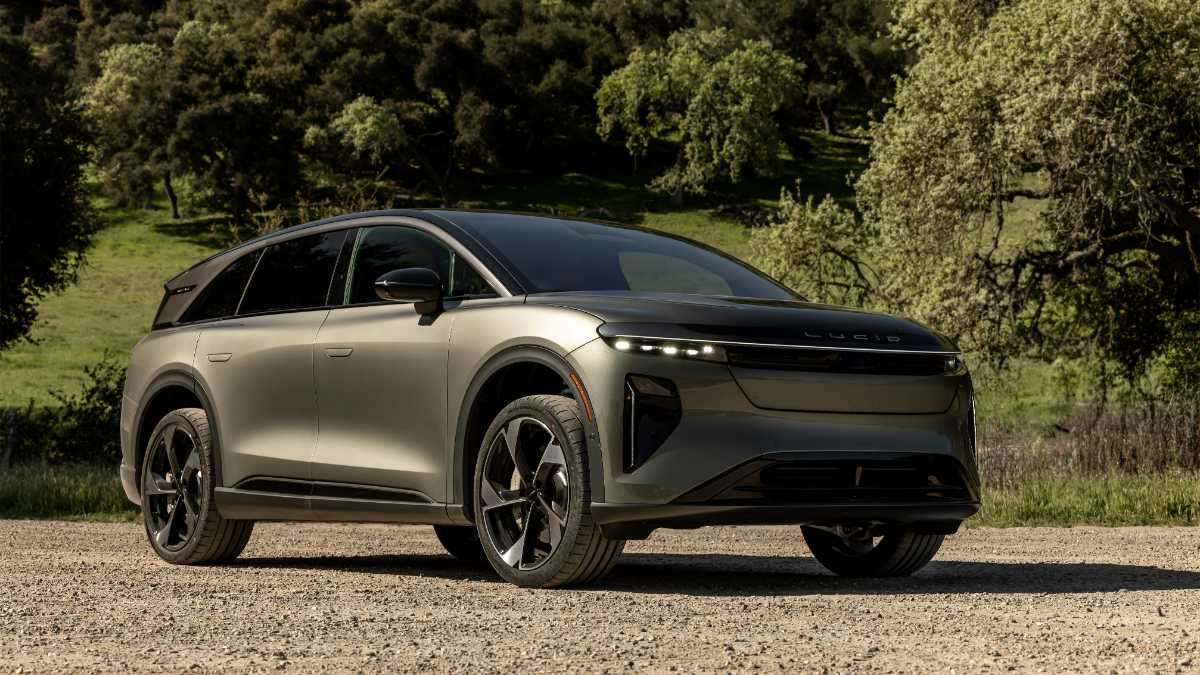

It always starts the same way: a moment that feels more like a coronation than a car delivery. The flatbed pulls up. Cameras come out. You pace around the vehicle like a proud architect surveying their magnum opus.
In this case, the chariot is the Lucid Gravity, Lucid Motors’ ambitious follow-up to the Air, now packing electric SUV credentials, 22-inch wheels, and a silhouette that looks more like a spacecraft than a suburban hauler.
Reddit user Modok_pgh experienced that ritual first-hand. He traded in his Hyundai Palisade and joined the Lucid revolution, only to discover that the future sometimes arrives with a few loose screws in the digital dashboard.
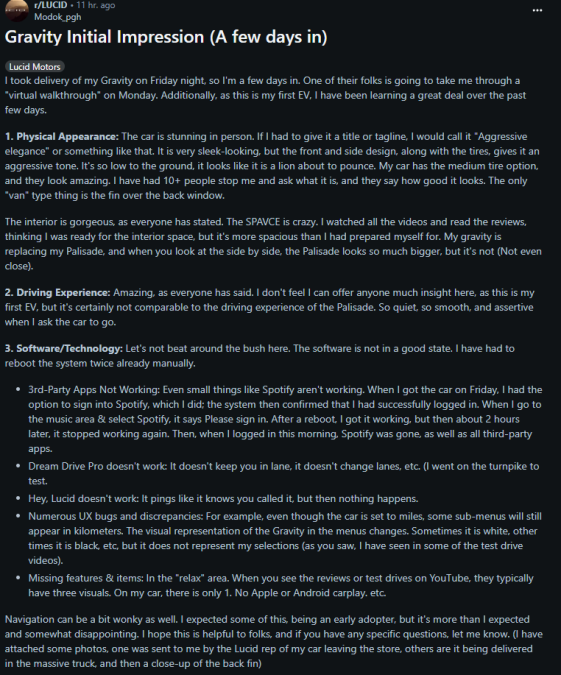
“I took delivery of my Gravity on Friday night, so I'm a few days in. One of their folks is going to take me through a "virtual walkthrough" on Monday. Additionally, as this is my first EV, I have been learning a great deal over the past few days.
1. Physical Appearance: The car is stunning in person. If I had to give it a title or tagline, I would call it "Aggressive elegance" or something like that. It is very sleek-looking, but the front and side design, along with the tires, gives it an aggressive tone. It's so low to the ground, it looks like it is a lion about to pounce. My car has the medium tire option, and they look amazing. I have had 10+ people stop me and ask what it is, and they say how good it looks. The only "van" type thing is the fin over the back window.
The interior is gorgeous, as everyone has stated. The SPAVCE is crazy. I watched all the videos and read the reviews, thinking I was ready for the interior space, but it's more spacious than I had prepared myself for. My gravity is replacing my Palisade, and when you look at the side by side, the Palisade looks so much bigger, but it's not (Not even close).
2. Driving Experience: Amazing, as everyone has said. I don't feel I can offer anyone much insight here, as this is my first EV, but it's certainly not comparable to the driving experience of the Palisade. So quiet, so smooth, and assertive when I ask the car to go.
3. Software/Technology: Let's not beat around the bush here. The software is not in a good state. I have had to reboot the system twice already manually.
3rd-Party Apps Not Working: Even small things like Spotify aren't working. When I got the car on Friday, I had the option to sign into Spotify, which I did; the system then confirmed that I had successfully logged in. When I go to the music area & select Spotify, it says Please sign in. After a reboot, I got it working, but then about 2 hours later, it stopped working again. Then, when I logged in this morning, Spotify was gone, as well as all third-party apps.
Dream Drive Pro doesn't work: It doesn't keep you in lane, it doesn't change lanes, etc. (I went on the turnpike to test.
Hey, Lucid doesn't work: It pings like it knows you called it, but then nothing happens.
Advertising
Numerous UX bugs and discrepancies: For example, even though the car is set to miles, some sub-menus will still appear in kilometers. The visual representation of the Gravity in the menus changes. Sometimes it is white, other times it is black, etc, but it does not represent my selections (as you saw, I have seen in some of the test drive videos).
Missing features & items: In the "relax" area. When you see the reviews or test drives on YouTube, they typically have three visuals. On my car, there is only 1. No Apple or Android CarPlay. etc.
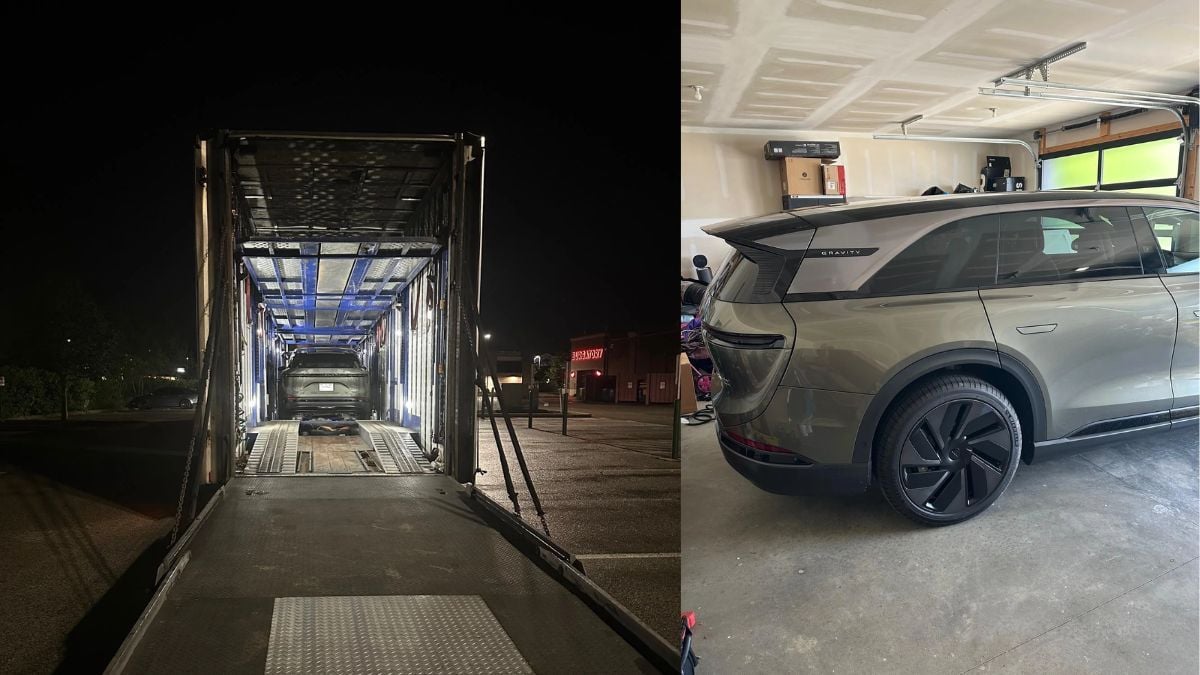
Navigation can be a bit wonky as well. I expected some of this, being an early adopter, but it's more than I expected and somewhat disappointing. I hope this is helpful to folks, and if you have any specific questions, let me know. (I have attached some photos, one was sent to me by the Lucid rep of my car leaving the store, others are it being delivered in the massive truck, and then a close-up of the back fin)”
What follows is a testament to the duality of modern automotive enthusiasm: Modok_pgh is mesmerized by the Gravity’s physicality, its "aggressive elegance," the way it squats on its tires like a lion poised to strike, the cavernous interior that outspaces his outgoing Palisade.
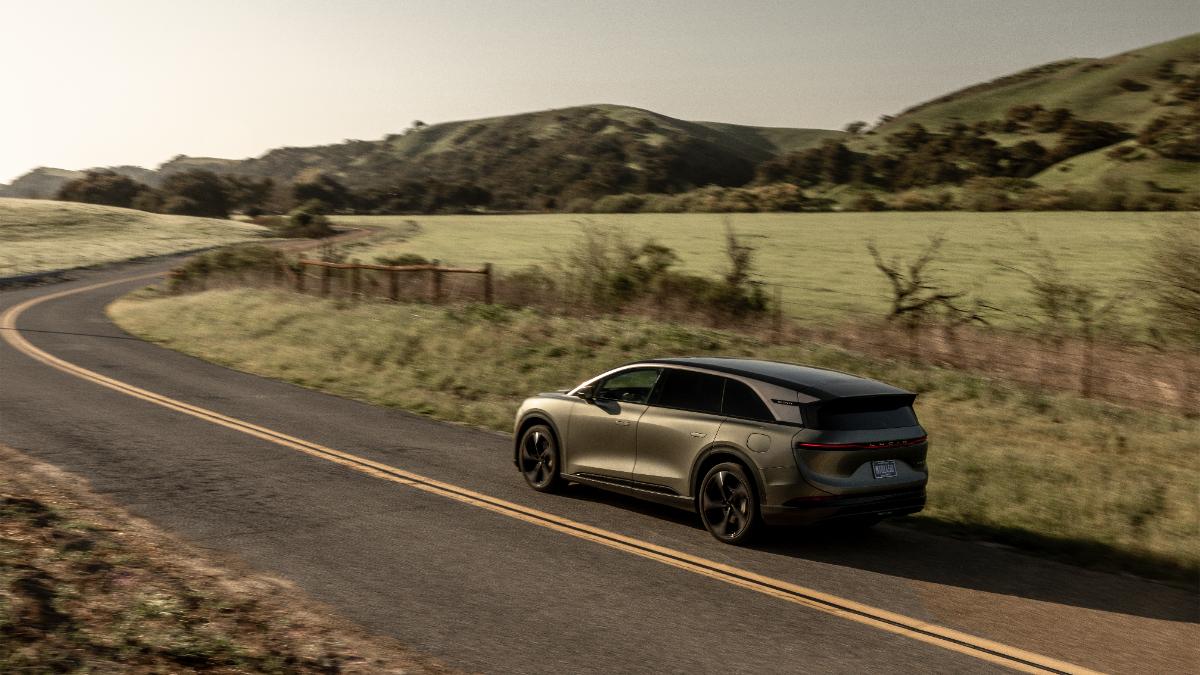
The EV driving experience itself? “So quiet, so smooth, and assertive when I ask the car to go.” And yet, in the very next breath, the dream begins to flicker. Spotify won’t stay logged in. The vehicle forgets user settings. Lucid’s own Dream Drive Pro, a cornerstone feature, doesn’t function as advertised. Voice commands echo into silence. And the software, the digital nervous system of this $100,000+ rolling supercomputer, requires manual reboots just days after delivery.
Lucid Gravity Early Reviews & Owner Feedback: Praise, Critiques & Quirks
- Outlets like InsideEVs, Jalopnik, Road & Track, and Car and Driver have lauded the Gravity as “the most impressive all‑around electric vehicle I’ve ever experienced” and “even better than advertised,” notably applauding its 0‑60 mph of ~3.4 s, long range (~450 miles EPA), swift charging, and nimble handling despite its size
- Critics highlight a premium, spacious cabin that seats up to seven with high-end materials and clever packaging
- However, some note that the heavy reliance on touchscreens and evolving software, like early infotainment oddities and incomplete ADAS features, can affect user experience.
- Early demo car feedback on Reddit indicates strong admiration: “Clean, attractive…and every material in sight is top notch and feels high end,” with surprise at its spaciousness and comfort, especially seats and interior details
- Small fit-and-finish quirks (e.g., alignment or stitching) have been spotted, but are considered minor by many early buyers. Despite enthusiasm for the vehicle, customers report less-than-ideal service support. Some test drive experiences included undertrained staff and logistical bumps, and past Air owners warn that Lucid’s after-sales infrastructure may struggle to keep up with growing demand
Lucid didn't bungle the Gravity’s fundamentals. Quite the opposite. The thing is a triumph of design and dynamics. As multiple owners have reported, including on lucidowners.com, the Gravity handles with uncanny precision for its size. It’s not just an EV; it’s an electric athlete disguised as a family car. One forum user even said it felt more nimble than the Air, despite being the larger vehicle. This isn't a chassis problem or a powertrain problem. This is a software problem, and it's the sort of thing that makes modern car ownership feel like you're beta testing your own transportation.
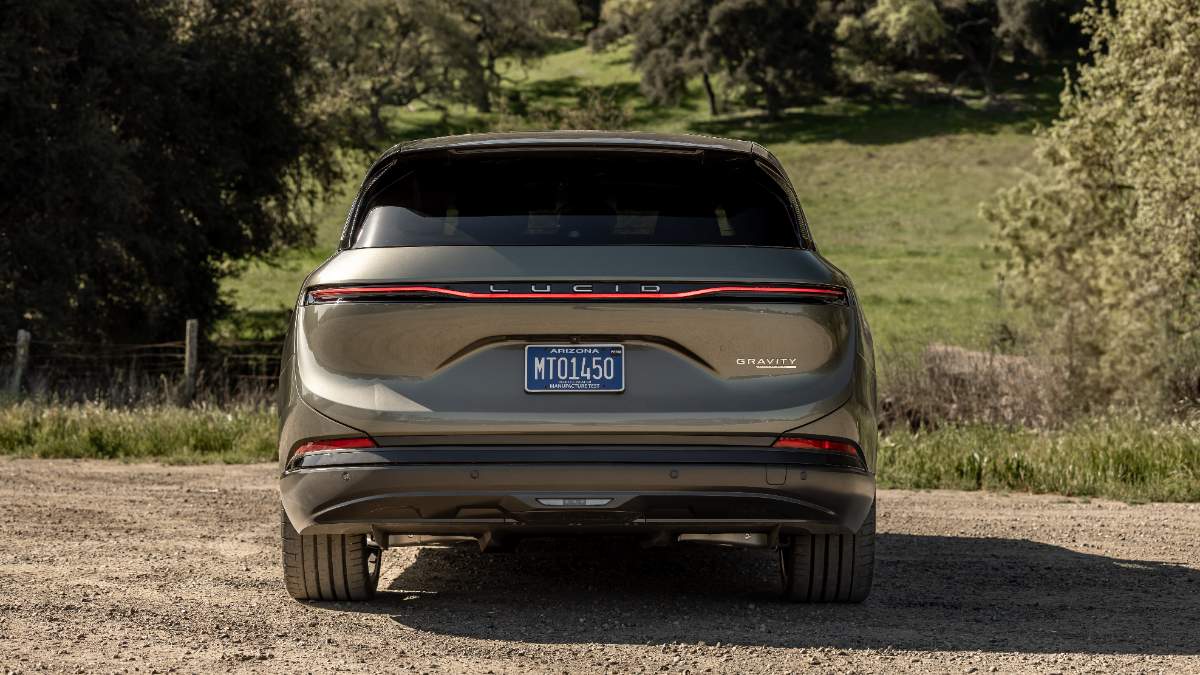
And that's where the romance begins to fade. Lucid, for all its brilliance in metal and electrons, seems to be struggling with what should be the easy stuff: basic interface logic, consistent user experience, and seamless media integration.
Lucid Gravity Software Struggles: Early Adopter Frustrations and OTA Fixes
As tkhan456 lamented in the Reddit thread,
“Yeah, but man, they’ve been at this for so many years now… I thought they’d have the software nailed for the Gravity because of how bad the rollout of the Air was due to the software.”
The sentiment is as familiar in Silicon Valley as it is in Detroit: if you’re going to charge six figures, the product needs to work, not eventually, but now.
To Lucid’s credit, many of these glitches are solvable via over-the-air (OTA) updates. As thyname11 calmly reminded other commenters: “The software... can be fixed. Especially since it can be done OTA. Hang in there.” And that’s true. The shift to software-centric vehicles has created a new type of reliability, one that can evolve and improve over time. No wrenches needed, just Wi-Fi. But there’s a catch: when basic functions break in a luxury car, no amount of eventuality justifies the experience in the moment. Rebooting your center stack shouldn’t be part of your commute.
Lucid Gravity Grand Touring Specs: Dimensions, Power, Range & Pricing
- Measuring just shy of 200 inches in length with a ~123-inch wheelbase, the Gravity offers spacious legroom that rivals, or exceeds, that of rivals like the Hyundai Palisade; it also delivers over 20 cubic feet of cargo space behind the third row
- The range‑topping Grand Touring features dual motors delivering a combined 828 hp and 909 lb‑ft torque, rocketing from 0–60 mph in about 3.4 seconds, a true performance SUV
- Equipped with about a 113 kWh pack on a 900 V architecture, the Gravity targets around 440–450 miles of EPA‑rated range and supports ultra‑fast DC charging (adding ~200 miles in ~11–15 minutes at 350 kW stations)
- Initially offered in the Grand Touring trim at around $94,900 (with more affordable Touring versions from ~$79,900 launching later). They started accepting orders beginning at the end of 2024 after the first production vehicles rolled off the line in Late May
More importantly, the software experience is now a core part of what defines a premium vehicle. It’s not garnish, it’s the main course. Features like Dream Drive Pro, voice assistants, and app integrations aren’t nice-to-haves; they’re pillars of the ownership experience. That’s why Seanocono22’s comment hits hard:
“This is still the last thing Tesla does better than everyone. Rivian is catching up quick, too.”
Lucid may be ahead in design and ride quality, but until the bits and bytes match the brushed aluminum and glass, the Gravity’s promise remains only half-fulfilled.
There’s something refreshing about Modok_pgh’s tone through it all, hopeful, measured, and understanding, rather than enraged. He expected some hiccups. He didn’t expect to feel like a quality control engineer during his first weekend of ownership. And that speaks to the broader challenge facing every EV manufacturer: early adopters may be forgiving, but they also have limits. Gravity’s interior space, stunning lines, and driving silence are seductive, but so is a Spotify playlist that actually plays.
The Lucid Gravity is a landmark effort. It’s stunning to look at, exhilarating to drive, and forward-thinking in ways that should worry every legacy automaker. But it also reminds us that a vehicle today is no longer just an engineering marvel; it’s a rolling software stack. And sometimes, that stack crashes. What happens next, whether Lucid doubles down on polish and reliability, will determine whether the Gravity becomes a touchstone or a cautionary tale. For now, it’s both.
Image Sources: Lucid Media Center
Noah Washington is an automotive journalist based in Atlanta, Georgia. He enjoys covering the latest news in the automotive industry and conducting reviews on the latest cars. He has been in the automotive industry since 15 years old and has been featured in prominent automotive news sites. You can reach him on X and LinkedIn for tips and to follow his automotive coverage.
Set Torque News as Preferred Source on Google
Follow us today...






Comments
It's cost is $40,000 more…
Permalink
It's cost is $40,000 more than a palisade. It better fit everything.
By traded, do you mean that…
Permalink
By traded, do you mean that Lucid now has a trade-in program? That would be good news. I looked at Gravity Dream edition a while back and Lucid referred me to KBB to sell my existing GT independent of Lucid.
Mine has been almost…
Permalink
In reply to By traded, do you mean that… by Kyle Federico (not verified)
Mine has been almost flawless, just had a Spotify issue but reset the software no now working great. Best car I ever bought! I wouldn’t base the experience on one user.