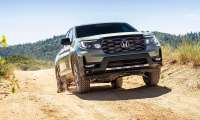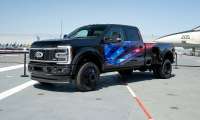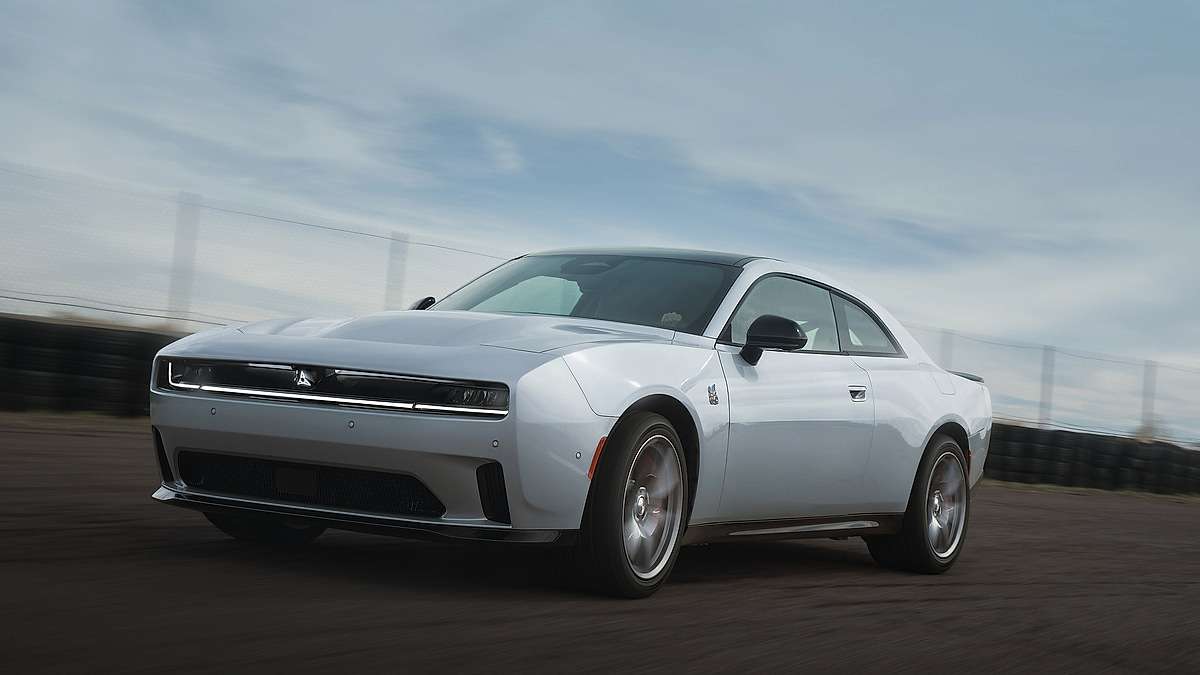

Dodge told Torque News that customer feedback is shaping the new Charger around driver choice, rear-drive fun, sound, and the kind of emotional performance buyers still expect from the brand. That matters because the next Dodge muscle car has a hard job: it has to earn trust from people who loved the HEMI era while selling gas inline-six and electric versions beside the V8-powered Durango.
I asked Dodge how much its renewed performance push reflects customers who still want traditional cues, V8 attitude, rear-drive character, and driver involvement. Dodge did not dodge the premise.
“Dodge’s focus is squarely set on performance,” the brand told Torque News, pointing to the 710-horsepower Dodge Durango SRT Hellcat, the new 475-horsepower Durango R/T 392, the 670-horsepower Dodge Charger Daytona, the 550-horsepower Charger Scat Pack, and the 420-horsepower Dodge Charger R/T.
Dodge is trying to stretch muscle across three different emotional languages: old-school V8 utility, gas-powered SIXPACK muscle, and electric acceleration. I think that is the right strategy, but it is also a dangerous one. Muscle-car buyers do not only buy numbers. They buy rituals, cold starts, burnouts, a rear axle doing something irresponsible, and the sense that the car is in on the joke.
What Torque News Checked
- Exclusive Dodge/Stellantis statements: Dodge's answers to Torque News on Durango V8 demand, Charger customer feedback, owner loyalty, and what the next muscle car must deliver, received before publication.
- Official Dodge specs: Dodge/PRNewswire and Dodge’s website materials for the 2026 Charger R/T, Charger Scat Pack, Charger Daytona Scat Pack, Durango SRT Hellcat, and 2026 Durango R/T 392 Launch Edition.
- Dodge told Torque News that Durango had its best sales in 20 years last year, boosted by a full HEMI V8-powered lineup. The brand called the lineup “unmatched in the three-row SUV space” and said it proves “there is a strong appetite for V8-powered performance that delivers both everyday utility and extreme capability.”
That is the part Dodge should not overthink.
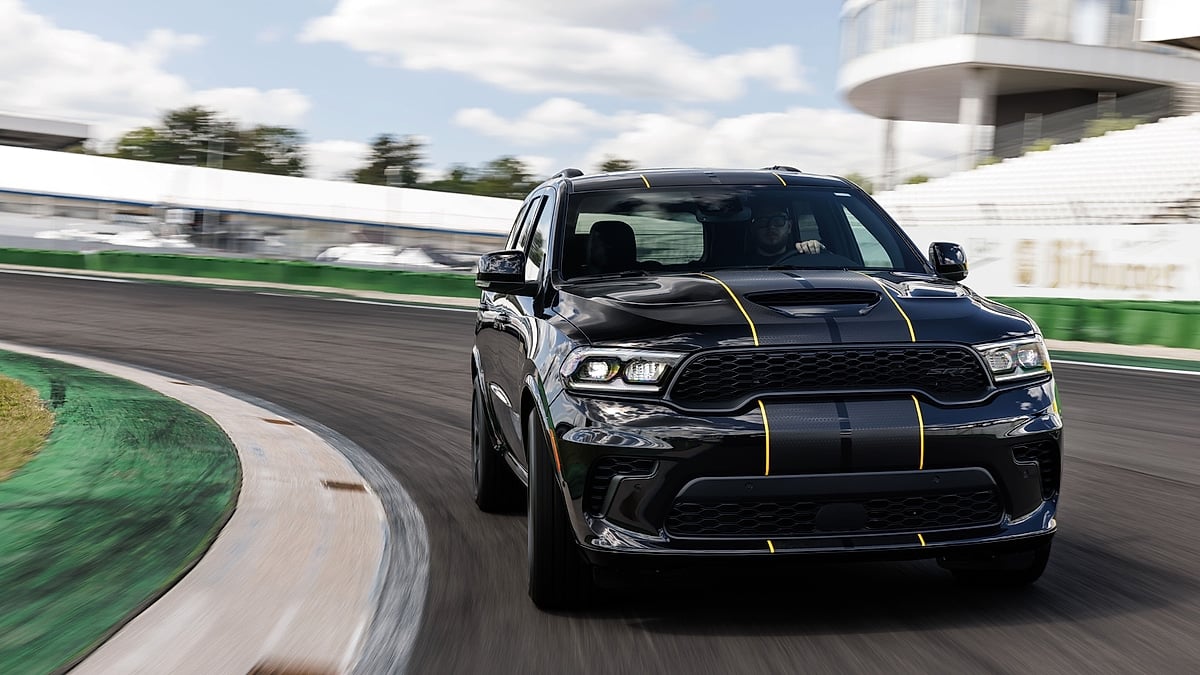
The Durango is old by normal industry standards, but that may be the point. The market keeps telling automakers that some buyers still want simple, emotional, overpowered machines. Dodge’s 2026 Durango R/T 392 Launch Edition makes that argument loudly: 475 horsepower, 470 lb-ft of torque, a 4.4-second 0-60 mph time, an NHRA-certified 12.9-second quarter-mile, and 8,700 pounds of towing capacity at a starting MSRP of $49,995 before fees.
That is not subtle. Good.
The 710-hp Durango SRT Hellcat sits at the other end of the same thought process. A three-row SUV with Hellcat power is ridiculous in the best Dodge way. It is not the most rational answer to family transportation, but Dodge’s entire brand gets weaker when it tries too hard to be rational.
Durango also gives Dodge something the Charger does not yet have in this new era: recent proof that customers still reward the brand when it gives them a loud, simple answer. Plenty of brands talk about emotion. Dodge and Jeep can point to a three-row SUV with a supercharged V8 and say buyers showed up. Enthusiast circles often confuse noise with evidence. Comment sections can make it sound like everyone wants a V8. Sales are the hardest receipt.
The missing layer is that Durango's success does not automatically prove the new Charger strategy will work. It proves the appetite is still there. It does not prove buyers will transfer that trust from HEMI hardware to a twin-turbo inline-six or an electric muscle car. Dodge knows that, which is why its answers kept circling back to feel rather than just horsepower.
The Charger Has To Solve a Different Problem
The new Charger has a harder assignment than the Durango. Durango can still wave the HEMI flag. Charger has to convince people that the Dodge muscle can survive without every version having a V8.
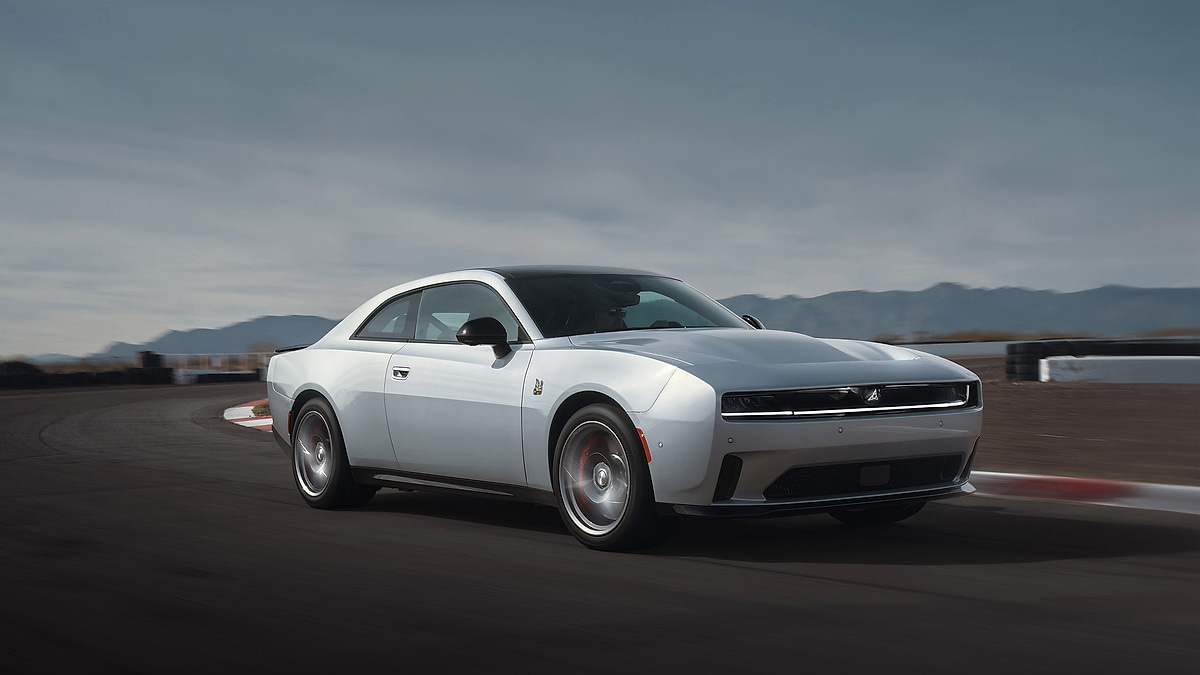
Dodge told Torque News that customer feedback is shaping the evolution of the Charger lineup, with “performance at the core” and an emphasis on “driver choice, rear-wheel-drive fun and engagement.” The gas-powered 2026 Dodge Charger R/T uses a 3.0-liter twin-turbo SIXPACK inline-six with 420 horsepower and 468 lb-ft of torque. The Charger Scat Pack gets the high-output SIXPACK with 550 horsepower and 531 lb-ft of torque. Both use standard all-wheel drive, but Dodge says the system can send 100% of torque to the rear wheels for smoky burnouts at the push of a button.
That last detail matters more than the spec sheet makes it sound.
AWD makes the car faster and more usable. Rear-drive behavior makes it feel like it belongs in the Dodge family. Line Lock, Launch Control, selectable drive modes, and a burnout-friendly torque strategy are not gimmicks here. They are trust tools. Dodge is telling buyers: yes, the architecture changed, but the bad habits are still available.
This is where I think Dodge has a better read on the market than it gets credit for. A lot of Charger criticism starts with "no V8" and stops there. I understand the complaint, but the actual ownership question is more specific: will the car still let people do Dodge things? If the answer is yes, some buyers will come around. If the answer is no, the spec sheet will not save it.
That is why the all-wheel-drive system is so important. On paper, standard AWD sounds like a move toward year-round traction and broader usability. In Dodge language, it has to mean something else, too. It has to mean you can put power down when you want grip, then turn the car loose when you want theater. A muscle car that only chases lap-time cleanliness misses the point. Dodge buyers are not shopping for sterile.
Then there is the electric Charger Daytona Scat Pack. Dodge calls the 670-hp version the quickest and most powerful muscle car, with a 3.3-second 0-60 mph time and an 11.5-second quarter-mile. I have mixed feelings about electric muscle, but I respect one thing: Dodge knows silence would be fatal. That is why the Fratzonic Chambered Exhaust exists. Whether buyers love it or roast it, Dodge at least understands that muscle cannot become a spreadsheet.
The Daytona is the highest-risk version because it asks buyers to accept the biggest emotional rewrite. Instant torque is easy to understand. Quiet speed is easy to demonstrate. But a muscle car has never been only about being quick. It is also about anticipation: the start-up, the idle, the vibration, the little sense that the car is wasting fuel just to make a point. Electric performance removes much of that by default. Dodge is trying to put some of the drama back in.
Dodge Is Selling Choice, But It Is Also Buying Time
The phrase Dodge used with Torque News was "performance, without compromise, across the entire brand lineup." I would not write it that cleanly if I were saying it over coffee, but the business idea underneath it is sharp. Dodge is not betting the whole brand on one answer. It is giving buyers a V8 SUV, a gas Charger, and an electric Charger at the same time.
If the Daytona struggles with traditionalists, the SIXPACK Charger can keep gas buyers in the showroom. If the SIXPACK faces "not a real muscle car" noise, the Durango's HEMI lineup keeps Dodge connected to the old religion. If younger buyers or performance-tech shoppers want the quickest car, the Daytona gives Dodge something that does not look like a museum piece.
Dodge is not only reacting to customer feedback. It is staging a controlled argument with its own audience: you can be a Dodge person in more than one way now. For a brand built on HEMI identity, that is a serious cultural shift.
The 19,000-Mile Challenger Story Explains the Brand Better Than a Deck
I also asked Dodge about Keith Sinclair, the 2016 Challenger Scat Pack owner behind @sinclairs_search, who drove roughly 19,000 miles through 18 countries, with coverage from Top Gear, DodgeGarage, and other outlets.
Dodge’s answer was simple: “We love to see the passion our owners have for Dodge performance; it’s integral to the brand.”
That is the most important sentence in the whole exchange.
Sinclair’s trip is not just a cute owner story. It is proof that Dodge loyalty can become a passport. DodgeGarage described his Plum Crazy Challenger crossing 18 countries and three continents, with “Love Everyone” written on the rear glass in the languages of the countries he visited. Top Gear reported that Sinclair drove from Le Havre, France, to Almaty, Kazakhstan, on the way toward a much bigger global journey.
No marketing department can fake that kind of owner behavior. You can sponsor events. You can sell merch. You can build a social campaign. But you cannot easily manufacture someone choosing a 2016 Challenger as a cultural ambassador across Europe and Central Asia.
That is why Dodge’s future muscle car has to feel authentic. Not just fast. Authentic.
It also explains why the "looks like a Dodge, drives like a Dodge, sounds like a Dodge, and feels like a Dodge" quote matters. That sentence is not elegant corporate poetry. It is a checklist. If the new Charger fails one item, owners will notice immediately.
Looks like a Dodge means more than retro lighting and a familiar stance. It means the car has to look slightly defiantly parked next to cleaner, quieter, more anonymous EVs and crossovers. Drives like a Dodge means the chassis cannot feel like a generic fast AWD coupe with a badge on it. Sounds like a Dodge is the hardest piece now, because the sound has to be convincing without feeling like a bad impersonation. Feels like a Dodge is the whole exam.
I keep coming back to Sinclair's Challenger because it shows what real brand loyalty looks like when nobody is forcing it. He did not need to take that car across that many borders. He chose to. The next Charger does not need every buyer to do something that dramatic, but it does need owners to feel like the car could be part of a story bigger than a monthly payment.
Why This Matters
Dodge told Torque News its customers expect a muscle car that “looks like a Dodge, drives like a Dodge, sounds like a Dodge, and feels like a Dodge.” That is the right test. The numbers are already strong: 420 hp, 550 hp, 670 hp, 3.3 seconds to 60 mph, and 11.5 seconds in the quarter-mile. The harder question is whether the car creates the same emotional permission slip that the old Charger and Challenger gave buyers.
The right question is not only "does it have a V8?" It is "Does it make me want to take the long way home?" That sounds subjective because it is. Muscle cars have always been subjective. The whole category depends on people making an emotional decision and then finding enough numbers to justify it afterward.
For Dodge, the consequence is even sharper. The company can survive some skepticism if owners climb out of the car smiling. It cannot survive a Charger that feels like a compromise wearing a famous name. The brand has given itself three ways to win. Now each version has to prove it belongs.
If you are waiting for the next Dodge muscle car, do not judge it only by engine layout. Drive the gas SIXPACK and the electric Daytona back to back. Use the rear-drive mode. Try Launch Control and Line Lock if you can. Listen to the sound. Check whether the car makes you laugh. If it only feels fast, Dodge missed. If it feels a little wrong in the way a Dodge should, the brand may have threaded the needle.
What would make the new Charger feel legitimate to you: a V8, rear-drive behavior, sound, burnout features, manual control, or something else entirely?
Comment your thoughts down below.
About The Author
Noah Washington is an automotive journalist based in Atlanta, Georgia, covering sports cars, luxury vehicles, and performance culture. His reporting focuses on explaining the engineering, design philosophy, and real-world ownership experience behind modern vehicles.
Noah has been immersed in the automotive world since his early teens, attending industry events and following the enthusiast communities that shape how cars are built and driven today. His work blends industry insight with enthusiastic storytelling, helping readers understand not just what a car is, but why it matters.
Noah is also a member of the Southeast Automotive Media Association (SAMA), a professional organization for automotive journalists and industry media in the Southeast.
His coverage regularly explores sports cars, luxury vehicles, and performance-driven segments of the automotive industry, including the evolving culture surrounding Formula Drift and enthusiast builds.
Read more of Noah's work on his author profile page.
You can also follow Noah here:
Set Torque News as Preferred Source on Google
Follow us today...