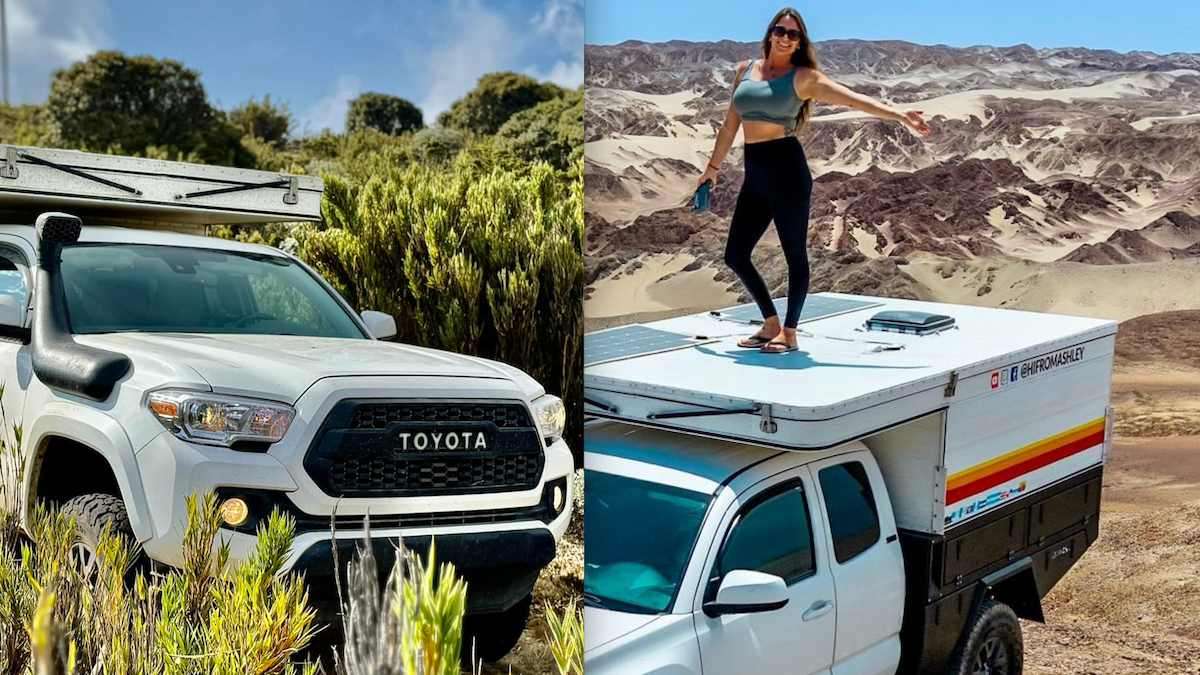

If you've ever thought about the open road, trading in four walls and a lawnmower for endless horizons, this story is for you. It's cheaper and easier than you think!
A story by CNBC is about a 36-year-old woman who travels full-time in her Toyota Tacoma. Here are excerpts and tips on how you can do what Ashley Kaye did.
Ashley says,
"After meeting someone on a trip, He told me he wished he had decided to travel full-time sooner because it's so much easier and cheaper than you think. That changed everything for me," Kaye tells CNBC Make It. "I went home and worked more and more until I quit the next year."
"Once I got into my rhythm of traveling and growing my confidence through that experience, I've never looked back and don't have a single regret about leaving."
Ashley purchased a 2023 Toyota Tacoma truck for $42,934 and invested over $50,000 in renovations to make it livable.
CNBC report says the costs included purchasing a camper, adding solar power, replacing the truck bed, upgrading the suspension, new tires, customizing a bumper, and installing an electric cooler.
"It's really an incredible way to travel because you get to set your own pace and if you find somewhere that's beautiful and peaceful, you can stay as long as you want," Ashley says.
On average, Kaye estimates she spends $556 a month on gas, $453 on food, $96 on her cellphone, and $200 on her Starlink internet.
"I'm 36, single, I get to travel full time, and my life is so amazing. I only have one regret: That I didn't do it sooner," she concludes.
Are you ready to pull the trigger on full-time truck living?
It's the ultimate dream of freedom—a concept I like exploring. I recently saw a CNBC story about Ashley Kaye, a 36-year-old who made the leap into full-time truck living, and her journey holds critical, actionable data for anyone looking to follow suit.
Ashley's story confirms what we've long suspected: while the travel itself is liberating, the preparation requires serious expertise and financial planning. She says someone told her they wished they had decided to travel sooner because it's "easier and cheaper than you think."
The $100,000 Dream:
We'll review her investment, analyze her monthly spending, and provide the practical takeaways you need to make the right call. The first step in budgeting and saving money for full-time vehicle travel is understanding the upfront cost—and it's more than just the price of a vehicle.
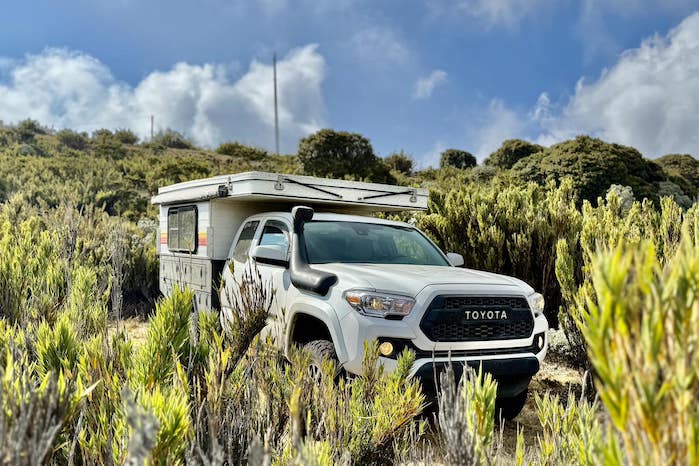
Choosing the Right Rig Is Paramount
Ashley Kaye started with a 2023 Toyota Tacoma, purchasing it for $42,934. This choice is key, and it's why I recommend the Tacoma to readers exploring the nomadic lifestyle (see my previous report on the Tacoma's longevity and resale value here).
The Tacoma's legendary reliability and proven performance in harsh, off-road conditions make it the perfect platform. When you are living in your vehicle 24/7, reliability is not a feature; it's a necessity. Breakdowns are not just inconveniences; they are existential threats to your home.
My first recommendation is simple: start with a proven, durable chassis. This decision directly impacts your safety and long-term operating expenses. If you're wrestling with how to choose the right truck for overland travel, the Tacoma or a similar mid-size, body-on-frame truck (like the Ranger or Frontier) is the gold standard.
See my related report: Denis Flierl, Torque News, 6 Must-Know Overlanding Tips From Experienced Vehicle Owners
The Investment: $100,000 Build
Ashley invested over $50,000 in renovations, pushing her total initial investment close to $100,000. This is the part that surprises most aspiring nomads. You don't just buy a truck and go; you are building a small, self-sustaining off-grid home on wheels.
Her costs included a camper shell, upgraded suspension, new tires, a custom bumper, and, crucially, a solar power setup and an electric cooler. This significant investment is what separates weekend campers from full-time dwellers. If you're looking for lessons learned from a $100,000 full-time truck build, this is it: The money goes into infrastructure.
A major focus must be on the suspension and tires. Adding a camper, water, gear, and supplies easily adds 1,000+ pounds to the vehicle's curb weight. The stock suspension on any truck, even the Tacoma, is not designed for that sustained load. Ashley's upgrade was non-negotiable for safety and drivability.
The solar installation is equally critical.
For reliable, essential off-grid power systems for vehicle dwelling, you need redundancy. Ashley's electric cooler is far superior to propane or ice-based systems, but it requires a constant draw. A proper solar-battery bank system means you can stay in those beautiful, peaceful spots indefinitely, setting your own pace without scrambling for shore power.
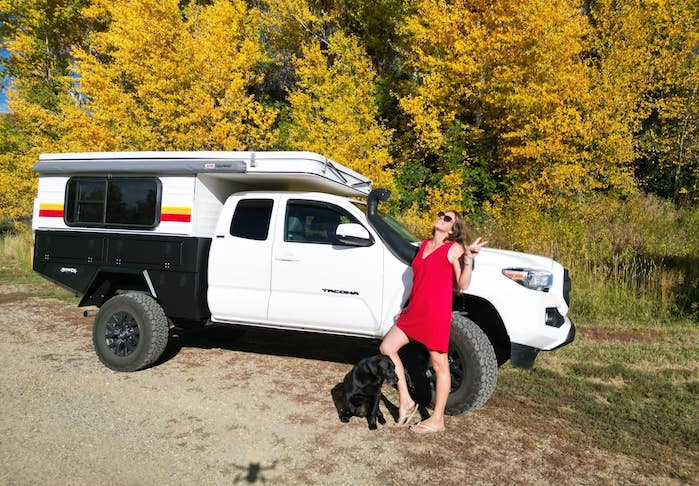
Breaking Down the Monthly Costs:
The most significant value in Ashley's story is her transparency about costs. She provides the raw data on her monthly expenses, and as your Overlanding analyst, I'm here to give you the realistic context for her totals: $556 for gas, $453 for food, $96 for a cellphone, and $200 for Starlink internet.
Her total estimated monthly spend is $1,305. This is an incredibly lean budget, and it provides a strong baseline for anyone interested in the ultimate guide to full-time truck camper living costs.
- Fuel ($556): This is higher than a stationary budget but lower than a frantic, destination-hopping travel style. This budget indicates a moderate pace, allowing for extended stays, as she mentioned.
- Actionable Recommendation: To save fuel, minimize highway speeds (a truck camper creates massive drag), and utilize trip planning apps that favor slow, scenic routes over fast, fuel-intensive interstate travel.
- Food ($453): This is remarkably low for an adult, suggesting Ashley is cooking most of her meals. The significant investment in the electric cooler allows for bulk buying and healthy, cost-effective meal prep.
- Starlink ($200): This is a luxury, but in the current remote-work landscape, it's now a non-negotiable utility for those who can work remotely.
Wait, There's More
If you are serious about breaking down the cost of a full-time nomadic lifestyle, remember that $1,305 is just the operational cost. It does not account for maintenance on the Tacoma (and the $50k build will need repairs). There's also truck and health insurance, and possibly medical expenses.
Always budget an additional 15% for those unexpected automotive and life costs.
See my related report: Denis Flierl, Torque News, "The 7 Best SUVs For Camping and Overlanding"
What the Community is Saying
The community consensus across forums and social media mirrors Ashley's experience—the initial investment is the biggest hurdle, but the payoff is worth it.
- @OverlandDad42: "$50k on the build is low for what she got. My F-150 camper setup cost me closer to $65k once I factored in the high-capacity alternator and the water filtration system. No regrets, but new nomads need to see that sticker shock coming."
- @DirtRoadWanderer: "Starlink is the game-changer. My wife and I use a similar system, and it's the only reason we can stay employed while living in our rig. Worth every penny."
- @TacoTinker: "Good to see her using the Tacoma. I've seen too many people try to save money by using a smaller SUV, only to find they don't have the payload for a permanent build. Toyota Tacoma vs. other vehicles for full-time travel conversion—the Taco wins for a reason."
Conclusion:
Ashley Kaye's story is a powerful, real-world blueprint. Her success comes from a willingness to make a high, six-figure investment in her freedom. She put her faith in a reliable vehicle—the Toyota Tacoma—and built a rugged, self-sufficient system that lets her focus on the joy of the experience.
Practical Takeaways: Freedom is Expensive, But Worth It
- Investment: Budget $90,000 to $110,000 for a quality truck and a professional-grade, full-time build. Don't skimp on suspension or tires.
- Reliability: The Tacoma is an ideal choice due to its proven track record. Your home's foundation must be dependable.
- Connectivity: View the $200/month Starlink fee as a utility, replacing a costly, fixed-address internet bill and enabling sustained remote income.
Ashley notes she doesn't "have a single regret about leaving," and that confidence is what comes from being adequately prepared.
How About You?
My final question to you is this: Ashley Kaye took a chance after a single conversation, quit her job, and never looked back. What's the biggest "someday" adventure you've always dreamed of, and what's the one thing holding you back from making it your "today"? Let me know what you think in the comments!
I'm Denis Flierl, a Senior Torque News Reporter since 2012, bringing over 30 years of automotive expertise to every story. My career began with a consulting role for every major car brand, followed by years as a freelance journalist test-driving new vehicles—equipping me with a wealth of insider knowledge. I specialize in delivering the latest auto news, sharing compelling owner stories, and providing expert, up-to-date analysis to keep you fully informed.
Follow me on X @DenisFlierl, @WorldsCoolestRides, Facebook, and Instagram
Photo credit: Denis Flierl via Ashley Kaye
Set Torque News as Preferred Source on Google
Follow us today...