
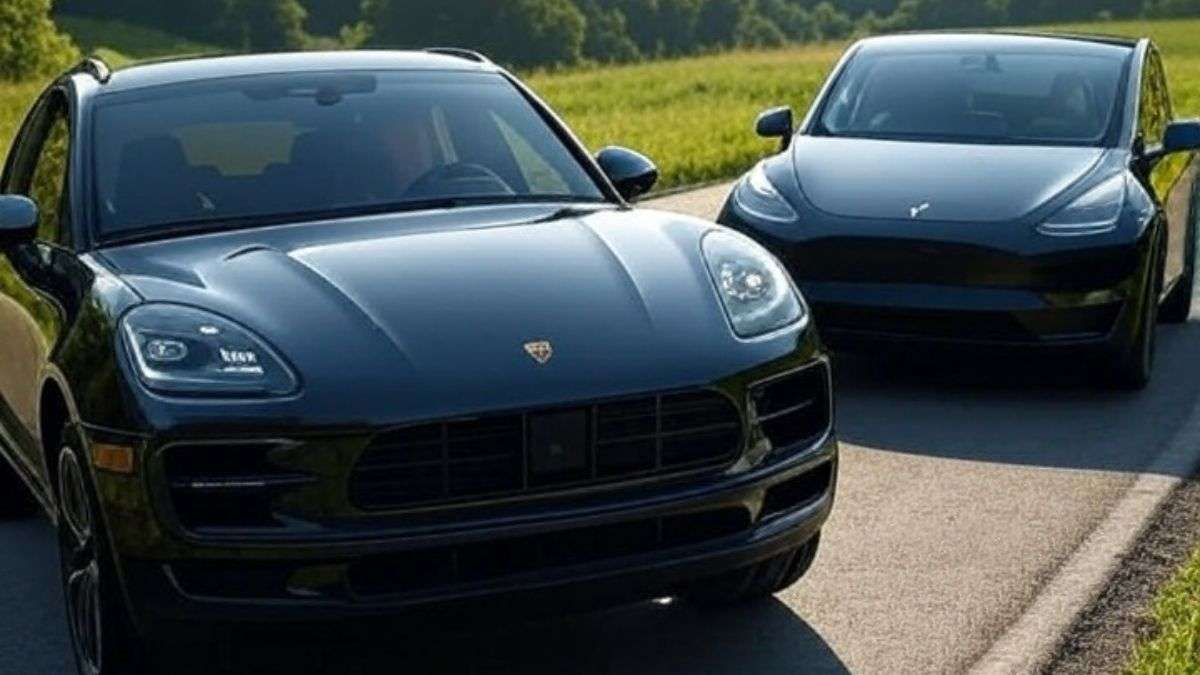

In response to Torque News senior reporter John Goreham’s recent article, where a Tesla Model Y owner named ME shared a long list of complaints after selling his Model Y Performance just one year into ownership, another voice has now entered the conversation. This time, it is a reader named Jay. And what Jay shared is not just a polite disagreement, it is a complete counter-narrative.
Jay owns not one, but two Tesla Model Y Performance vehicles — a 2021 and a 2022. And instead of echoing the disappointments described by ME, Jay offers a strikingly different view.
“I can’t understand why our experience is totally different,” Jay writes. “The build quality is excellent. We have had zero problems with either car. They are fast. They handle exceptionally well for an SUV. Lots of room. No maintenance. Comfortable. And on and on.”
Jay even compares the Model Y’s handling to his $90,000 Porsche Macan S with air suspension. And surprisingly, the Tesla comes out on top.
“The ride could be smoother, but it is not bad, especially when you consider how well it handles. Our Porsche 911s don’t ride any better. The Macan rides better, but the handling isn’t even close to that of the Model Y, and performance isn’t close either.”
That last sentence may surprise traditional automotive enthusiasts. How can a family EV with a minimalist interior, a smartphone app for a key, and no engine under the hood outperform a finely tuned German crossover that costs nearly double?
Let’s unpack what’s really going on here. Because this isn’t just about Tesla or Porsche. This is about how we measure performance, comfort, and value in modern vehicles.
The Myth of Price Equals Quality
Jay’s comment challenges a very common belief. That a car with a six-figure price tag automatically delivers a better driving experience. But the truth is, value in the EV era is shifting. And it is not necessarily aligned with the price tag anymore.
Electric vehicles like the Model Y have redefined what everyday performance looks like. Instant torque. Low center of gravity. All-wheel drive. Regenerative braking. These are characteristics built into the architecture of the EV platform. They are not aftermarket upgrades. They are not optional features. They are standard.
This is where the automotive industry is quietly shifting. When an EV with mass-market pricing can outperform a performance-branded gas SUV, the conversation around value changes.
And here is where Jay’s comment becomes more than a personal opinion. It becomes a lens through which we can question the way vehicles are evaluated.
Are We Chasing Prestige, or Performance?
Jay seems to suggest that performance is not about badge engineering. It is about how the vehicle feels when you are driving it. And in this regard, the Model Y impressed him more than the Porsche Macan.
This might not sit well with purists. After all, Porsche has a legacy of mechanical excellence. Decades of precision tuning. A motorsports lineage. Tesla, by comparison, is barely two decades old and has no combustion engine experience at all.
Yet this is exactly what makes Jay’s experience so significant.
His evaluation isn’t clouded by marketing. He owns both cars. He has lived with both. He is not comparing YouTube reviews. He is comparing his garage.
The Role of Simplicity
One trend that aligns with Jay’s experience is the idea that simplicity is now a form of luxury.
A product doesn’t have to be wrapped in leather or loaded with chrome accents to feel premium. If it performs better, costs less to maintain, saves time on fueling, and fits the daily needs of its owner, then the value becomes self-evident.
This same philosophy is being applied outside the auto world. Consider the growing market for modular, minimalistic home office products. A standing desk with clean lines, no RGB lights, no distractions. Just a product that works exactly as needed, every time, with fewer moving parts to break. That kind of product resonates with the same logic Jay applies to his Model Y.
We want things that are simple. And we want things that work. Tesla's minimalist approach to UI, drivetrain, and even ownership structure delivers exactly that, especially when compared to the traditional dealership model, which often introduces complexity rather than clarity.
Why People See Tesla Differently
It is important to recognize that ME and Jay are both right, in their own context. One had a disappointing year-long experience. The other, a flawless multi-year one.
This variance is exactly what makes Tesla such a polarizing brand. Some owners get a near-perfect product. Others struggle with quality control, service backlogs, or panel gaps that don’t belong on a car at any price point.
But what Jay’s comment surfaces is that the upside, when Tesla gets it right, is big. Bigger than people outside the EV community often expect.
Tesla’s cars are fast. They are quiet. They have storage space in the front and the back. They do not need oil changes. They can get over-the-air performance upgrades while sitting in your driveway. That is not science fiction. That is real-world product evolution.
Is Commercialization Shaping Expectations?
Now here is the critical question. Are we measuring car quality through meaningful experiences, or just the weight of commercial reputation?
The luxury car market has spent decades conditioning buyers to equate price with satisfaction. $90,000 should equal better quality, better features, better performance. But what happens when a $55,000 vehicle outperforms it in the metrics that matter to you?
Commercialization in the luxury car space has leaned heavily on aspirational branding. The Porsche crest. The grille styling. The exhaust note. But these cues do not always translate to superiority, especially when the core engineering equation has changed. EVs do not need to sound fast to be fast.
This puts legacy brands in a tough spot. They cannot just rely on styling or price tags anymore. They must compete on how the vehicle actually drives, and whether the experience truly matches the promise.
1. How Wheel and Tire Choices Impact Ride Quality and Handling in EVs
One of the key points Jay mentions is the Model Y’s impressive handling despite a slightly firm ride. That balance between grip and comfort often comes down to one overlooked area: wheel and tire selection. Most Model Y Performance models come with 21-inch wheels wrapped in low-profile tires. They look aggressive and give excellent responsiveness in turns, but they also transmit more road imperfections into the cabin.
If you're a buyer comparing EVs or performance crossovers, here’s a tip: don't assume bigger wheels equal better performance for your lifestyle. If you drive in cities with cracked asphalt or plan to road-trip often, switching to 19 or 20-inch wheels with taller tire sidewalls can offer a smoother ride without a dramatic loss in handling. Many Model Y owners report improved comfort and noise insulation after making this change, and it’s often cheaper in the long run since smaller tires wear more evenly and are less prone to curb damage.
Think of it this way: your tires are the only part of the car touching the ground. In an EV, where weight is already higher due to the battery pack, finding the right tire and wheel combo is not just a preference - it’s an optimization.
2. Why Handling Feels Different in EVs vs Gas-Powered Cars
Jay’s surprise that his $90,000 Macan didn’t handle as well as the Model Y isn’t just subjective opinion - it reflects a real shift in how vehicle dynamics work in EVs. The difference is largely due to weight distribution and center of gravity. The Model Y, like most EVs, has its heaviest component - the battery - mounted flat under the cabin floor. This creates a low center of gravity, reducing body roll and improving grip during cornering.
Gas-powered SUVs often have engines placed high and forward, leading to weight shifts that reduce stability under aggressive driving. Even with advanced suspension systems, they still fight physics. In contrast, EVs like the Model Y feel more “planted,” especially in fast corners or lane changes. This is part of why many first-time EV drivers feel surprised at how nimble these larger vehicles can feel.
If you're a performance-minded driver, this matters. You can feel confident carving a mountain road in a Model Y or Kia EV6 GT in a way that might feel less controlled in a similarly priced gas SUV. It is not just about horsepower anymore. It is about how the car makes you feel while using it fully.
And if you think the Model Y has already peaked, there’s something unusual happening with its next evolution. The upcoming 2026 Model Y Juniper has quietly made headlines for doing what many thought was unlikely - delivering real-world range numbers that actually match Tesla’s official estimates. One driver recently put 1,000 miles on a Juniper in mixed conditions and found that the range anxiety narrative may finally be outdated.
3. How to Evaluate a Vehicle Beyond the Brand Name
Jay’s comparison forces a question that every car buyer should ask themselves: Are you buying the badge, or the experience? There is nothing wrong with loving a Porsche, BMW, or Mercedes. But when buyers give too much weight to reputation and not enough to how a car actually performs in real-world use, disappointment follows.
Here’s a good practice: test drive with intent, not just curiosity. When you evaluate a vehicle, recreate your daily routine. Try parking it in a tight lot. Test visibility. Feel the ride over imperfect roads. Look at how fast you can access commonly used controls. Consider how you will charge it. Think about your second year of ownership, not just the first month.
For EVs especially, the brand perception is still catching up to the actual performance. Some legacy automakers still deliver inconsistent user experience with charging or infotainment systems. Meanwhile, brands like Tesla or Hyundai offer cars that feel simpler, quicker, and often more functional. Do not be afraid to question the status hierarchy in the auto world. It is changing faster than many buyers realize.
The Bottom Line
Jay’s comment is more than a defense of Tesla. It is a subtle but important invitation to reframe how we define a great car. Not by badge. Not by tradition. But by how well it serves the driver.
He is not wrong to say that his Model Y handled better than his Porsche Macan. Because at the end of the day, he is the one behind the wheel, living that comparison daily. Whether or not the numbers on a spec sheet agree, that real-world feedback is what car reviews should be built on.
The next time someone says an EV like the Model Y is just a tech bro status symbol, point them to Jay. He still drives Porsches. But he is not letting brand loyalty blind him to performance.
He found something better, and he is not afraid to say it out loud.
What’s even more unexpected is how newer versions of the same Model Y are quietly evolving. One Tesla owner recently upgraded from an older Model Y to a newer build and found the driving experience noticeably quieter and smoother, almost as if the same vehicle had grown up without any major redesign. This kind of silent improvement is unusual in the auto industry, where big leaps typically come with a new model year or facelift.
What about you? If you own a Tesla or a Porsche, or have driven both, what was your experience? Tell us what surprised you most.
Armen Hareyan is the founder and Editor-in-Chief of Torque News. He founded TorqueNews.com in 2010, which since then has been publishing expert news and analysis about the automotive industry. He can be reached at Torque News Twitter, Facebook, Linkedin, and Youtube. He has more than a decade of expertise in the automotive industry with a special interest in Tesla and electric vehicles.
Set Torque News as Preferred Source on Google
Follow us today...



Comments
I have a 24 Y Performance,…
Permalink
I have a 24 Y Performance, never drove it before purchase. Had never set foot in an electric before I picked it up 4 weeks later. Every car should be bought and paid for with your phone btw. I was blown away with how it handled, minutes into driving it home. Like the article mentions, the low center of gravity is key. Wide tires for a 4,600lb cute ute helps too. It's point and shoot, and feels great to drive, even though I probably look like an idiot driving down the road in a white jelly bean.