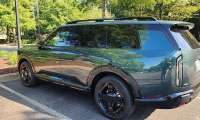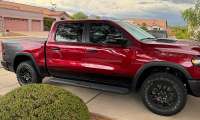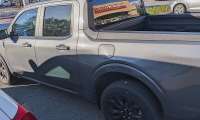

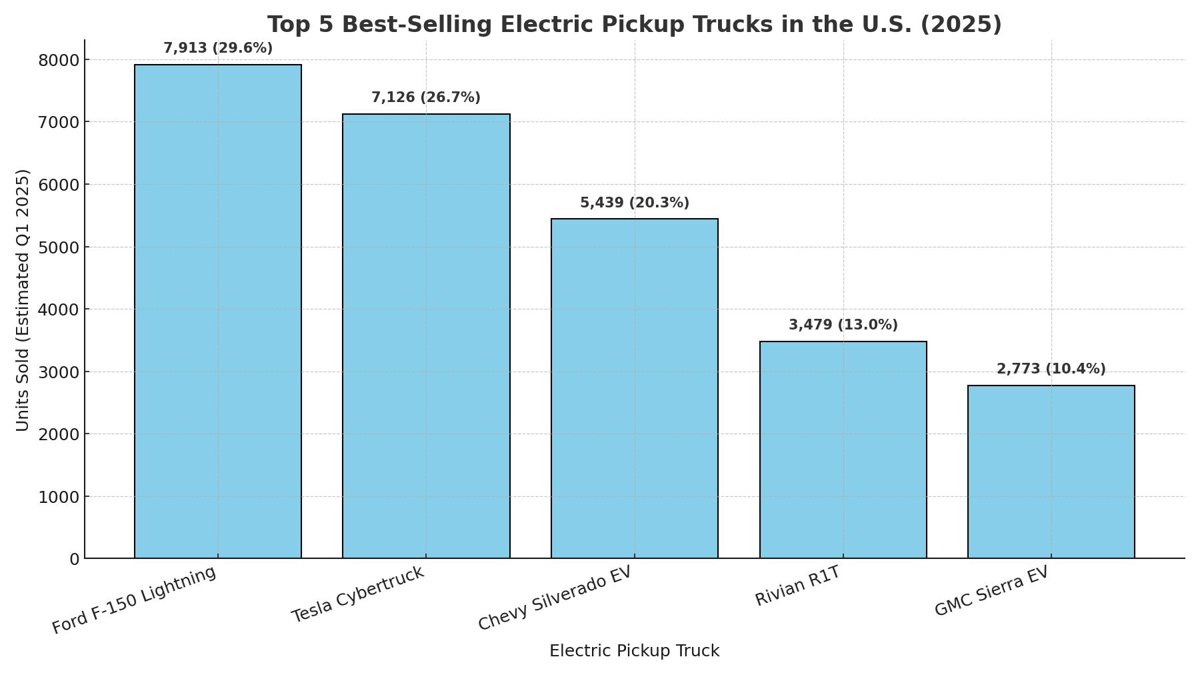
As the 2025 competition for the best-selling electric pickup truck in the U.S. starts to settle out, the Ford F-150 Lightning and the Tesla Cybertruck have become the two front runners. They account for about 60% of total unit sales. Rounding out the top five are the Chevrolet Silverado EV, Rivian R1T, and the GMC Sierra EV.
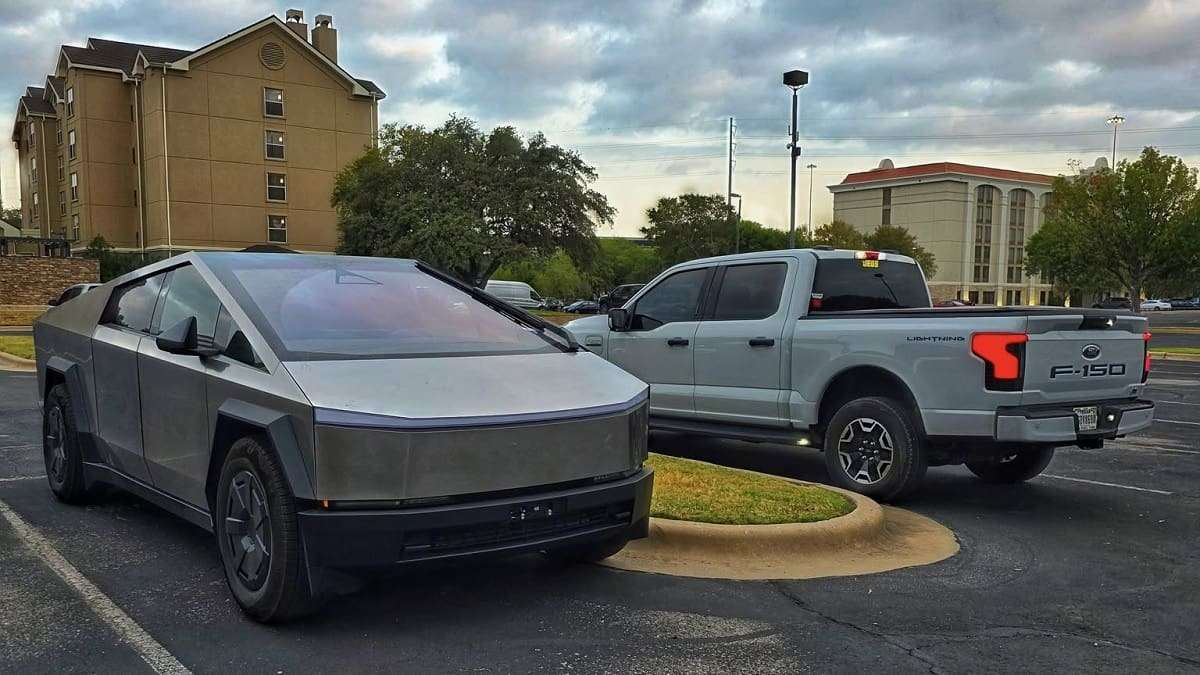
Social media has been active with strong opinions about the Ford Lighting versus the Cybertruck and which is better. One long thread on the Facebook Ford F-150 Owners group was started by Jeff Smith:
“I finally met and talked with the Cybertruck owner at work last Thursday. We were leaving around the same time. He told me that he considered a Lightning, test-drove a Pro and a Lariat (huge difference), but said that in the end, it sat too high for his liking. He said the Lightning made him not even consider a Silverado EV because he figured it sat just as high as the Ford.
He also came from a Model Y (gave it to his son), so I think he just has loyalty to the Tesla brand. To each their own. I found his take on the Lightning very interesting.”
Clay Chick compared the two:
“I own a Tesla and a lightning. The FSD (full self-driving) in the Tesla is unmatched by anything else. The Ford is more attractive and has better climate control.”
David Stratton also made a comparison:
“My wife drives a Model X and although the Cybertruck has a few major advantages over the Lightning (four-wheel steering, steer by wire, bed cover, FSD, air suspension), I just couldn’t buy it based solely on appearance.”
John McDowell added:
“The Cybertruck is an oversized car. The Ford Lightning is a standard classic F-150 pickup.”
Matt Westfall suggested a possible reason for the Cybertruck choice:
“He chose the Cybertruck because he’s already high.”
Digging further into many social media threads, we’ve summarized the main differences and preferences between the F-150 Lightning and the Cybertruck.
In the following, we compare an all-wheel drive Cybertruck with a list price of $79,999 with a Ford F-150 Lightning Lariat which lists around $79,000. However, dealers discount Lightnings, which improves effective cost and availability.
Off-Road Capability
Cybertruck wins off-road with adjustable air suspension, extra clearance, all-terrain tires, and locking differentials These are engaged through the "Off-Road Mode" on the touchscreen.
Driver Assist Systems
Although the F-150 Lightning delivers hand-free driving capability with BlueCruise, social media gives the Cybertruck another win with Full-Self Driving (FSD).
Exterior Design and Attention
The Lightning looks like a normal Ford F-150, which more social media posts prefer. Cybertruck attracts extreme attention on the road, which can feel overwhelming.
Power and Handling
Straight-line performance is a draw based on third-party testing. Cybertruck wins handling with four-wheel steering and steer-by-wire, which provide sharper turn-in and better cornering than the F-150 Lightning which can feel softer, and “floatier”.
Interior Comfort and Ride
The F-150 Lightning wins comfort. The cabin is quieter, the ride is smoother, and the seats feel softer on long trips. Family road trips favor the Lightning.
Powering a Home and Job-Site Power
Both trucks support Vehicle-to-Home (V2H). Tesla’s system can deliver more power and may cost less to set up, especially if Tesla Powerwalls already exist. The F-150 Lightning counters with more onboard outlets, which proved useful for real projects, although Cybertruck has a higher-amp 240-volt outlet.
The Tesla V2H system, called Tesla Powershare, allows a Cybertruck to use its battery to power a home during an outage or high-demand periods. The Cybertruck enables this with its bidirectional charging capabilities, which, for V2H, requires specific hardware like a Tesla Wall Connector, Tesla Gateway, or Powerwall system to connect the vehicle to a home's electrical panel. Once connected, the Cybertruck can supply up to 11.5 kW of power to the home.
The Ford V2H system, also known as Ford Intelligent Backup Power, allows the F-150 Lightning to act as a home backup generator by sending power from its battery to a house during an outage. The F-150 Lightning, when equipped with a Ford Charge Station Pro and a Home Integration System (installed by a partner like Sunrun), can automatically detect a power outage and supply electricity to a home. A fully charged, extended-range battery can power an average home for up to three days, or longer with rationing or solar power.
Payload and Towing
The Cybertruck wins on paper with higher payload and towing ratings. The F-150 Lightning offers helpful towing tech such as Pro Trailer Hitch Assist and onboard scales, which narrow the gap for users who value guidance features.
Glass Roofs and Sun Management
The F-150 Lightning wins with its standard power sunshade that reduces heat load. The Cybertruck has expansive glass but lacks an integrated shade and has sun visor coverage quirks.
Bed and Everyday Utility
The Cybertruck narrowly wins in the bed utility category. It fits full plywood sheets with the tailgate down and includes a standard powered tonneau. The F-150 Lightning competes with a powered tailgate, integrated step, and grab handle, which are useful conveniences.
Charging on the Road
The Cybertruck wins DC fast charging with higher peak power and shorter zero to 80% charge sessions. Results vary by Supercharger site and version, yet the advantage remains during road trips.
Charging at Home
The G-150 Lightning wins AC home charging with an 80-amp onboard charger that can accept around 19 kilowatts. Faster overnight replenishment matters because most miles are added at home.
Driving Range
The Cybertruck wins range with similar or better real-world results despite a smaller battery. Efficiency gains come from aerodynamics and lower weight compared to the F-150 Lightning.
Frunk and Enclosed Storage
The F-150 Lightning wins frunk capacity by a large margin. The Cybertruck frunk is long but shallow, which limits practical use for bulky items.
Software and Interface
The Cybertruck wins software polish and user interface cohesion. The F-150 Lightning’s system has improved over time, yet it still shows glitches and lacks some charging transparency that EV owners value.
Bottom Line
The Tesla Cybertruck leads with driver assist, handling, road-trip charging, range, and software usability. The F-150 Lightning excels at comfort, everyday practicality, home charging, frunk space, and cabin quietness. The better choice depends on priorities.
What Do You Think?
Do you prefer the stealth look of the Lightning or the attention that follows the Cybertruck?
Have you used V2H during an outage and how did it perform?
Chris Johnston is the author of SAE’s comprehensive book on electric vehicles, "The Arrival of The Electric Car." His coverage on Torque News focuses on electric vehicles. Chris has decades of product management experience in telematics, mobile computing, and wireless communications. Chris has a B.S. in electrical engineering from Purdue University and an MBA. He lives in Seattle. When not working, Chris enjoys restoring classic wooden boats, open water swimming, cycling and flying (as a private pilot). You can connect with Chris on LinkedIn and follow his work on X at ChrisJohnstonEV.
Photo credit: Jeff Smith (with permission)
Set Torque News as Preferred Source on Google
Follow us today...