
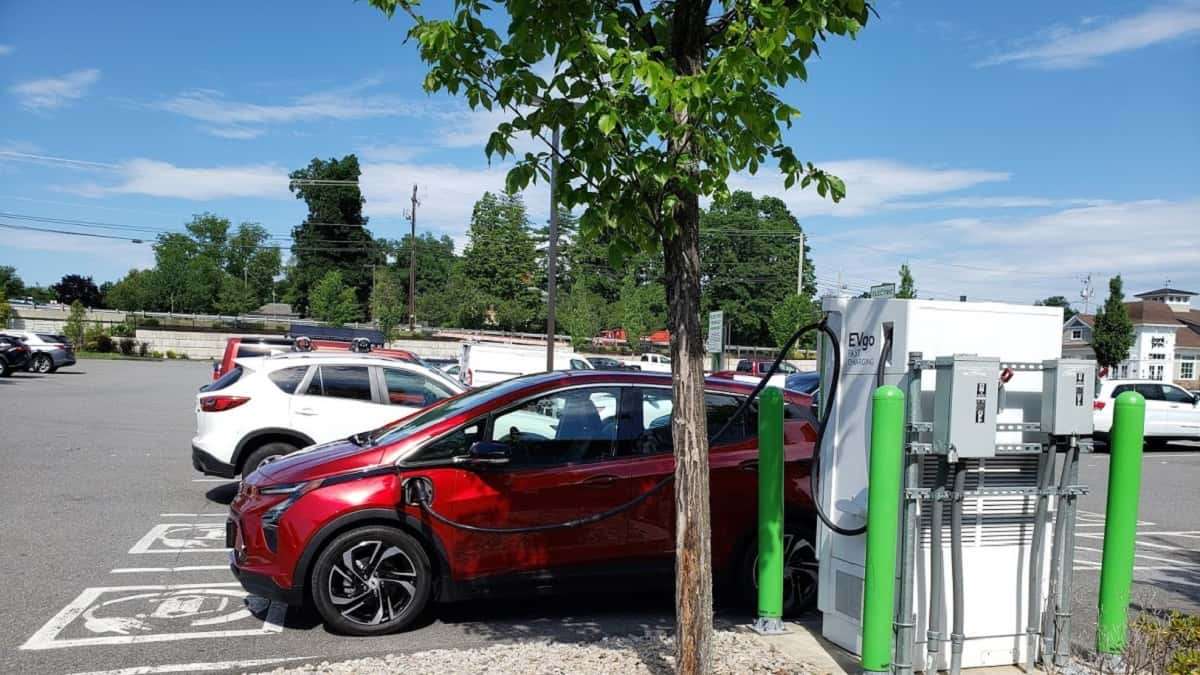

Charging an electric vehicle in public can range in price from free to very expensive. When we recently charged a new 2022 Chevrolet Bolt at an EVgo DC fast charger (DCFC) in Bedford, NH, we discover the pricey end of the spectrum can be more than it would cost to fuel a "gas-guzzling" V8-powered muscle car.
Related Stories:
Big Mistakes To Avoid When Charging an EV In Public
Many Public DC Fast Chargers For Electric Vehicles Are Slower Than You’d Think
Quick Stops At Level 2 Public Electric Vehicle Chargers Are Worthless
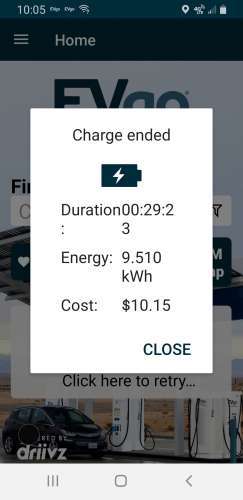
$10.15 To Add 34 Miles of EV Range
We charged up a Chevy Bolt using the EVgo DC fast charger, and the bill was $10.15. That amount of money added 34 miles of range to the Bolt. So, the cost per mile of energy was 30 cents per mile. Let’s compare that to a 2021 Dodge performance car we tested the prior week.
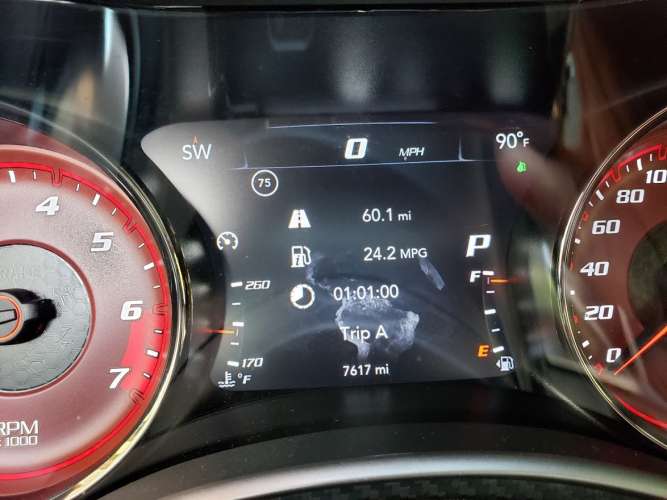
The Dodge had 797 hp, and it returned a combined fuel mileage of 24 MPG in our use on the same route we tested the Bolt. We paid $2.90 per gallon for the gasoline it uses. Doing some “goes in’tahs,” the cost per mile for energy in the muscle car turns out to be 12 cents. Thus, the cost per mile to energize the Bolt was roughly triple what the V8 gas-powered car cost us.
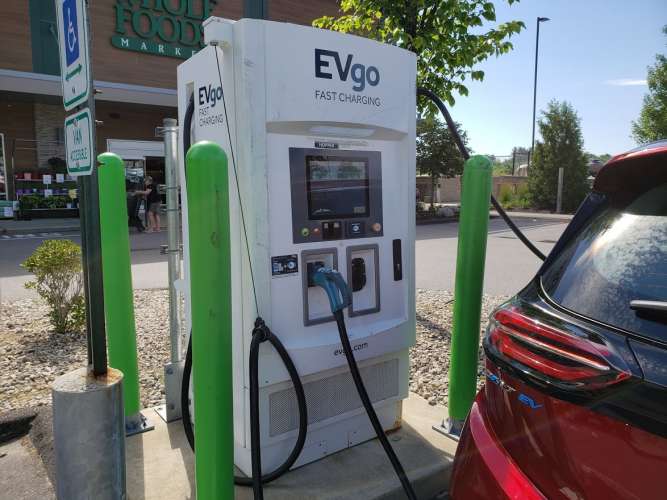
Charging Etiquette
When charging in public one is supposed to quit charging when one’s EV reaches 80% state of charge. The reasons for this are two-fold. First, the rate at which charge can be added to an EV battery is more rapid below 80% and much more time-consuming as the battery reaches full. Second, EV chargers are in very short supply. We need to ration them.
On my route from the metro Boston area to the lakes region of New Hampshire, there are exactly zero public DC fast chargers. In order to charge at a DCFC, I took a slightly longer by time route to swing by one of only two DCFC charging spots in that area. Google “Henniker NH DC Fast Chargers” if you want to see what I mean about no chargers. I needed to top-off in order to complete the 200+-mile route I was making. So, I broke charger etiquette, and I charged to full.
I also charged at the DCFC because I wanted to test my EVgo membership RFID card and account and see how long the DCFC took to add back miles. Both were successful tests.
Charging For Free
Coincidental to my test, GM was running a free-to-charge promotion day during the week I had the Bolt. I think free anything is great, but I always wonder, what’s the hidden agenda? If charging up an EV is very affordable anyway, why does there need to be a promotion to make it “free?” If Dodge offered free gas to muscle car owners, I suppose folks would jump at the chance for a free fillup. But why make EV charging free?
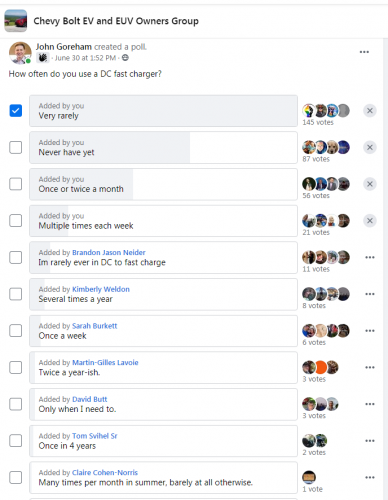
The answer is to get EV owners to the chargers and have them try out the experience. You see, when we poll owners of EVs, most report that they only charge at home, and almost none report using DC fast chargers.
When I plugged into the EVgo DC fast charger, I hadn’t thought about the cost. After all, we constantly hear how affordable EVs are to power up. I have done the math at my own home, and I know that the cost is typically about five to seven cents per mile of range I add back on my home charger using my relatively pricey Boston-area electricity. $10.15 for just 34 miles was a “shock.” Get it, shock. Bet you never heard that in an EV story before.
Related Story: New Hampshire Innkeepers Demonstrate EV-Driving Guest Best Practices
Feel free to tell us in the comments below what you typically pay to charge in public at a DC fast charger and how that cost compares to your cost at home.
John Goreham is a long-time New England Motor Press Association member and recovering engineer. John's interest in EVs goes back to 1990 when he designed the thermal control system for an EV battery as part of an academic team. After earning his mechanical engineering degree, John completed a marketing program at Northeastern University and worked with automotive component manufacturers, in the semiconductor industry, and in biotech. In addition to Torque News, John's work has appeared in print in dozens of American newspapers and he provides reviews to many vehicle shopping sites. You can follow John on TikTok @ToknCars, on Twitter, and view his credentials at Linkedin
Set Torque News as Preferred Source on Google
Follow us today...




Comments
Your mistake was only adding
Permalink
Your mistake was only adding a few miles. Most public chargers charge a flat per-use fee on top of a per-kWh cost (usually about double the rate you'd get at home during off-peak hours). 34 miles is roughly 8.5 kWh (avg) so, doing some ga'zintas, it looks like you were charged about $8 flat fee and about $0.25/kWh. Those are both high end numbers, but your per mile cost would have averages lower if you charges from empty to full rather than "topping off". To be fair, I think the public chargers need to drop the per use fee. You don't see has stations charging you a flat fee just to start pumping.
Thanks, Daniel Curry. There
Permalink
In reply to Your mistake was only adding by Daniel Curry (not verified)
Thanks, Daniel Curry. There was no per-use fee for this EVgo stop. I agree entirely with your sentiment. There was also no mistake in adding a few miles. There was no choice. I topped off at the only DCFC on my route from Metro Boston to the lakes region of NH to which I was traveling. It came at the first part of the journey and I needed all the range I could squeeze in in order to use the vehicle the same way I use ICE cars every week.
I just charged up my Tesla
Permalink
I just charged up my Tesla Model S with 205 miles for $10. All the other companies like Blink, ChargePoint, EVgo are just ripping drivers off! It's shameful of them. BUY TESLA!!
This is why I drive a gas car
Permalink
This is why I drive a gas car. I don't want to waste time sitting at a charger, nor do I want to pay the fees. Here the non Tesla chargers charge .50 cent per kWh which is the same price as premium fuel, plus I need to waste 30 min at a charger, no thanks. Time is money and I'd be losing it sitting around, I'll stick with gas and get 450 miles or range in 3 min.
The problem was you weren't
Permalink
The problem was you weren't using the vehicle for what it's intends for, making the comparison between the Bolt and Dodge inaccurate. Fast charging at the top of the pack takes significantly longer (80%-100%) vs charging at the lower end. You would have added significantly more "miles" at the low end of the pack for the same cost. Miles is not a smart way to measure energy- it's like going to a gas station where you cant pump your own gas and telling the attendant to "give you 100mi of gas".
Matt M, you don't seriously
Permalink
In reply to The problem was you weren't by Matt M (not verified)
Matt M, you don't seriously think that this story was intended to compare a muscle car to a BEV, do you? The Dodge was just a handy comparison to highlight how expensive EV charging can be if you do a few things wrong. As to adding miles, I've been testing EVs for over a decade. All that matters is range miles. Anything else is just a mental exercise.
This article is flat out
Permalink
This article is flat out dishonest. The Bolt charges at over 50kW when below 50% like any sane person would be to use a charger where you pay by the minute ($.35/min) for the charger in question, but based on the bill the average charge rate was under 20kW which means the car was likely over 80% for a good part of the time. No sane person does this and it's the core of the article. It was nothing up a set up to make a dishonest argument.
Thanks Kurt, I've been
Permalink
In reply to This article is flat out by Kurt Hammons (not verified)
Thanks Kurt, I've been driving from the Boston area to the lakes region of NH regularly all my life (since I turned 16). This was the first BEV I trusted to get me there. To use the vehicle, I had to add range along the trip since the cabin is not yet set up for Level 2 charging. It's service panel is from 1970 and has to be replaced to add any new lines. The DCFC in Bedford was one of only two options. I opted for this one since the other had zero Google reviews and I have arrived at chargers without reviews in the past had found that they were inoperable or on private property (in gated company parking lots). There is no setup here. There is an entire paragraph that discussed the 80% state of charge issue in the story. I had to charge while above 80% to enable the use of the Bolt. I needed all the range I could get to use the vehicle. As the story says, Google "EV chargers in Henniker" to see what an EV charging desert looks like.
100% of my charging is at a
Permalink
100% of my charging is at a DC Fast Charger. You see, I live in an apartment in Boston and none of the EV parking spots are available. I'm on a waiting list.
So, I charge up at a Shell less than 1-mile away that is free and conveniently located at a market and Starbucks.
Like the OP said, going to NH or VT has some challenges, but I've found a couple of EVgos at supermarkets or cafes that provide a convenient stop a bit over halfway -- in range and destination distance, which means you can get back to it if you fail to find a destination charger.
The other major issue is that time-based charging will always overpay as no car reaches it's peak charging rate for very long. They all have curves -- yes, even Tesla -- that give averages much lower, yet the billing is rarely by the electricity used but rather some tiered rate based on peak output. Some states, though, have added regulations to make EV charging stations only bill for the electricity used, not the time. 10 kWh shouldn't be more than around $2-3 at a public charger in most states, regardless of how long it takes.
I know everyone is talking
Permalink
I know everyone is talking about Tesla, but even other cars have much more affordable charging through Electrify America. Even with a local charger still on the per-minute pricing you can add that same 34 miles of range to the Mach E for less than $2. That would match even a particularly efficient hybrid on price per mile with current gas prices.
It seems like you went out of your way to find the most expensive charging option in order to make a point that doesn't hold up if you take advantage of the better options.
I've owned, driven and both
Permalink
I've owned, driven and both publicly and privately recharged my Chevy Bolt for more than 5 years. I've never paid that amount unless I was fully recharging an almost empty battery.
Agendize much? Seems like your sample size is tiny (1 charge) and that you extrapolated an entire article. You must really be desperate for content huh?
Thanks, Mitch. The Bolt has
Permalink
In reply to I've owned, driven and both by Mitch (not verified)
Thanks, Mitch. The Bolt has been a goldmine of content. I've supplied reviews, photojournals, and focus stories about the Bolt to five publications this week. None of them got much attention, since the Bolt's new generation isn't really a hot topic. However, do a story that highlights how charging incorrectly can cost an EV owner money and the pageviews and comments simply pour in. I charge EVs of every brand pretty much constantly through a given test month. Normally, I charge at home on a Lectron level 3 charger. To use the Bolt for this trip I had no choice but to use this EVgo location.
If you simply take the cost
Permalink
If you simply take the cost of how long the battery's lifetime is and the replacement costs it's cheaper to drive a vehicle getting 15 mpg even if the electricity is free.
Bryan, up until GM started
Permalink
In reply to If you simply take the cost by Bryan (not verified)
Bryan, up until GM started buying back Bolts with batteries that it could not fix, I would have said your argument was unrealistic. Tesla, GM, and Nissan have all proven that there is no "battery replacement" in modern EVs. At least until this past month or two...
EV public charging has to be
Permalink
EV public charging has to be shopped. Some chargers charge a connect fee, which can be more than the actual electric cost. There maybe also idle time cost as well, which can be very punitive. As with all things , do some investigation for pricing/cost.
With a 2021 Tesla taking it
Permalink
With a 2021 Tesla taking it home was just around 500 miles Atl To New Orleans. The most we paid for a charge was $18 and totaled just under $40 for the entire trip.
We find that the chargers in New Orleans were much less for a 55 min charge $6.07 compared to $18 off the interstate in Georgia and Alabama.
We only used the superchargers.
That seems awfully high. Last
Permalink
That seems awfully high. Last time I used EVgo, it cost me $7 for 18.7kWh on a CCS connector; 4x more expensive than charging at home, but significantly cheaper than your experience. In San Diego, I only pay 9 cents / kWh from midnight to 6am on a EV-Tou-5 plan.
You charged at an average
Permalink
You charged at an average rate of only 19.42 kW (9.51 kWh / 0.4897 h). I would think the point of the story would be to warn users that charging near the top of your SOC can be expensive when paying by the minute. Instead, one gets the impression that public charging itself is unaffordable.
BTW, many states *require* EV chargers fees to be by the minute rather than by the kWh -- otherwise, they have to register as an "electric utility." We all need to work to change such ridiculously outdated laws.
This seems like yet another
Permalink
This seems like yet another article written by a journalist who hasn't invested even a minimal amount of time to understand EVs and charging best practices. Granted, most people don't need to "learn" how to use a gas vehicle, because we've all grown up with them. But there are several issues with this article.
First, according to Google Maps, the trip from Boston to Henniker is 82 miles, easily reachable--round trip even--in a Bolt. I do realize you said you stopped at an EVgo station to test out your membership, but there really was no reason to stop at all for this trip.
When you are searching for fast charging stations along your route, you don't just Google "DC fast charging" at your destination. You are looking for chargers along the whole route, not the destination. In fact, the destination is normally not where you would need fast charging anyway. You want to just plug into a regular outlet or L2 charger at your destination. Learn to use tools like plugshare and abetterrouteplanner to learn what stops are needed en route. In fact there are several DC fast chargers along the route that Google Maps suggests you take to your destination.
And very clearly, your experiment of stopping off at an EVgo station, while apparently at a high state of charge, is going to offer a worst-case example. Yes, you at least know that you should generally not DC fast charge past 80%. It's less of an etiquette thing than a common sense thing, and I think you learned the reason why. Yes, EVs charge very slowly when at high state of charge. And charging networks that charge by the minute (it's required in some states) will give you an extremely poor value for money, so etiquette aside, it simply doesn't make financial sense either. THIS is the reason your charge was so expensive. It would have been a much different story had you charged at a low state of charge when you actually needed the charge (although the Bolt is still a very slow charging vehicle compared to other EVs now out there).
I compare your experience to hailing a taxi cab that charges a meter fee plus a per minute fee to take you half a block to your destination. You would pay so much more for this than just simply walking or even renting that scooter to take you down the block. This is what EVgo is doing: they charge a fairly large connection fee, and then a per minute fee while your car is barely sipping electrons.
A more experienced EV driver would already know this and only charge using DC fast charging when it made sense to. DC fast charging is expensive compared to home charging (which is VERY cheap compared to gas), but you have to realize you are paying for convenience more than you are paying for electricity.
Lance, I'm sorry that was
Permalink
In reply to This seems like yet another by Lance (not verified)
Lance, I'm sorry that was your takeaway. During my engineering program in 1990 I was already investigating EVs. I designed and built a cooling system for an EV powertrain as my senior project. In my home, I have a Lectron Level 2 charger. I think it is factual that I have driven every brand of EV as a tester and I would imagine I have charged more EVs than any American, with the exception of about 100 individuals I work with. That 80% part you bring up is important and part of the story. It has its own paragraph. I've tested the Bolt many times, and usually in winter. a 200-mile radius was all I was able to achieve in prior testing, so my route to the lakes region of about 85 miles one-way during a heat wave required that I charge up. You see, when I arrived my only option was to use an extension cord. Our cabin was built in 1970 and its panel cannot accommodate any new circuits. We've been saving up to replace it and the L2 conduit is already roughed in. The location is important. As you can see, there are ZERO L2 public charger options. I chose Henniker because it is home to New England college. I can't even believe a college has zero public chargers, but I can't find any using Google or other methods. My EVgo account is a per-minute charge plan. Given that there are nearly no DCFC chargers near me, why pay an up-front deposit? Rural NH has almost no public EV charging infrastructure. That's why I mention the comparison to Metro Boston and its more reasonable options. Rent a scooter in rural NH? What are you kidding me? Most of the roads here are dirt once you are off Main street. Your closing two sentences are spot on.
Thank you. I hope everyone
Permalink
In reply to This seems like yet another by Lance (not verified)
Thank you. I hope everyone who needs to, reads this.
This is the nightmare
Permalink
This is the nightmare scenario ive been predicting for 10 years as the greedhead sharks start swimming in our pond and we need to fight back every way possible or theyre gonna undermine the whole thing
This is the nightmare
Permalink
This is the nightmare scenario ive been predicting for 10 years as the greedhead sharks start swimming in our pond and we need to fight back every way possible or theyre gonna undermine the whole thing
For all of you who suggest
Permalink
For all of you who suggest charging byvthe kilowatt ... you cannot resell electricity. Pnly charge for tge rime charging. Thats why they do it that way. Its called network fees
The reason it was so
Permalink
The reason it was so expensive is because EVgo still uses per minute billing. So if you're charging up to 100%, you're guaranteed to pay more than you otherwise would/should.
What you did is the
Permalink
What you did is the equivalent of buying gasoline in the middle of the desert at a station that charges $10/gallon or at the last gas station before an airport rental car return area. I generally pay 25c to 31c per kWh (5 to 6 cents per mile), but I have paid a lot more when when the charger has been in the right spot and I've wanted to top off before going into the mountains.
EVgo doesn't want you using their fast chargers to slowly top off, and they communicate that with a per-minute payment system.
Steve, you are right, and I
Permalink
In reply to What you did is the by Steve (not verified)
Steve, you are right, and I love that analogy. I'm going to do a story this week along the lines of 'Three mistakes to avoid when charging in public." I'm going to use your analogy and credit you.
You guys are basing it off
Permalink
You guys are basing it off just EV GO when there's also charge point as well which which at some stations of it a level 2 charger, its free to charge for a few hours. The station I go to here locally is a fast DC charger which charge $.20 per kwh. I spend at most $5 to charge up. Than I come home and charge the rest on my level 1 charger that came with the car. Also, factor in maintaince cost as well. No more oil changes and other things.
If I paid $10 at a
Permalink
If I paid $10 at a supercharger, I'd be adding at least 120 miles of range. At my local supercharger, it'd be closer to 180 miles since it's $0.22/kWh.
Tesla Superchargers are not
Permalink
In reply to If I paid $10 at a by Mike (not verified)
Tesla Superchargers are not public chargers, Mike. But thanks for the comparison pricing.