
Key Takeaways Before You Read:
- Dreame Technology, maker of premium robot vacuums and appliances, debuted the Nebula NEXT 01 JET Edition in San Francisco, claiming 0 to 60 mph in 0.9 seconds.
- The JET Edition adds dual solid-fuel rocket boosters to achieve 1,903 horsepower.
- Nebula NEXT 01 JET Edition achieves a 45,000 Nm/deg torsional stiffness, surpassing the Porsche Taycan’s structural rigidity.
- See Torque News walkaround video of the Nebula NEXT 01 JET Edition, or engage by commenting.
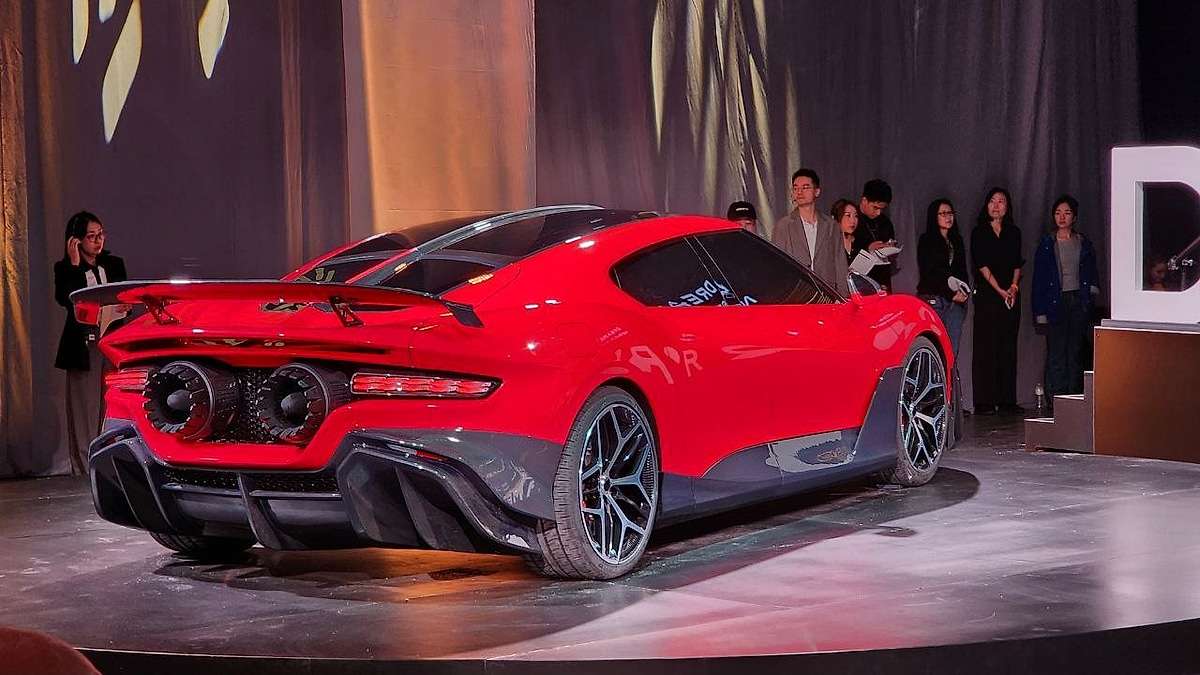
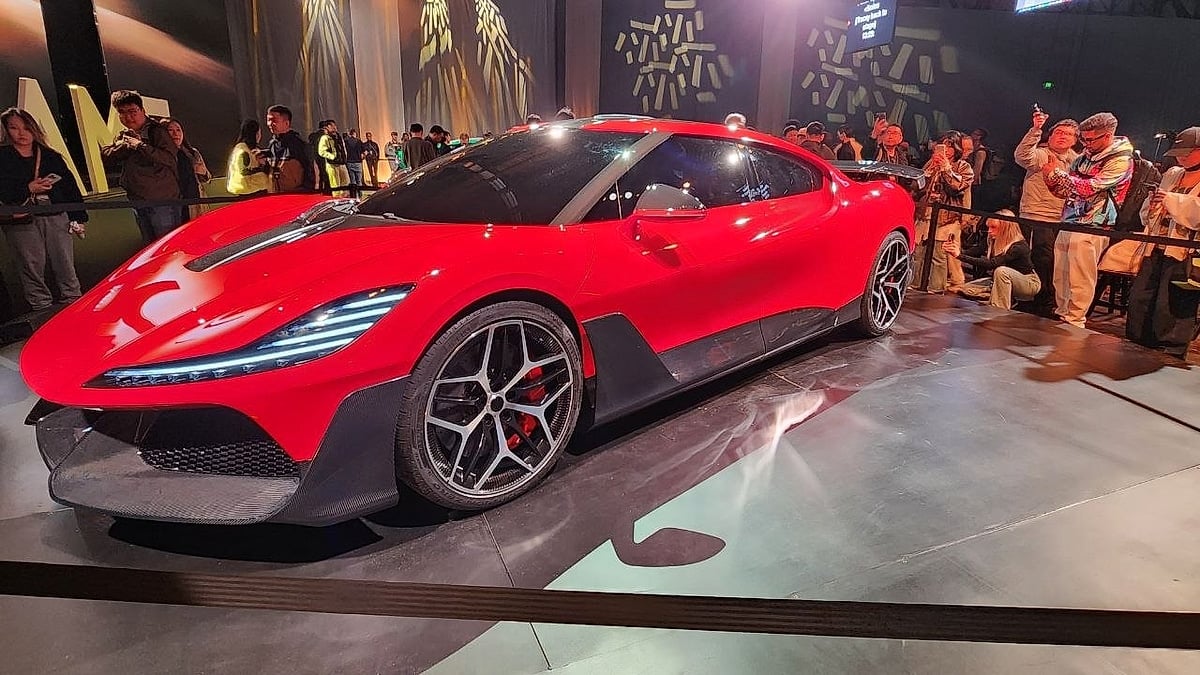
I was standing inside the Palace of Fine Arts in San Francisco today, April 27, 2026, surrounded by some of the sharpest tech minds in Silicon Valley. And the company presenting was the one that cleans your floors. Dreame Technology, the Chinese appliance maker behind some of the world's most advanced robot vacuums, just pulled the cover off the Nebula NEXT 01 JET Edition concept hypercar, a rocket-boosted, quad-motor machine that claims 0 to 60 mph in under one second. With 15 years of automotive journalism behind me, I have attended dozens of unveilings. This one stopped me cold. The Nebula NEXT 01 JET Edition does not just raise the performance bar. It moves the bar to a different planet.
Dreame itself described the concept in no uncertain terms. "This isn't just an EV. It's a quad-motor hypercar equipped with dual solid rocket boosters. We're talking 0 to 60 mph in UNDER 1 SECOND. (Yes, you read that right, 0.9s!) 1,900 Horsepower of pure electric and jet-propelled insanity. LiDAR-powered tech designed for the next era of autonomous driving. From one of the world's best robot vacuums to the world's fastest-accelerating car. Dreame is officially playing in a different league. Is this the coolest thing you've seen in 2026 so far, or is it too fast for comfort?"
From Suction to Thrust: How Dreame Made the Leap
Here is the problem most people face when they hear this story. They write it off. A vacuum company making a hypercar sounds like a publicity stunt. That is a reasonable instinct. But it misses something important. The engineering DNA behind Dreame's flagship robot vacuums involves ultra-high-speed brushless digital motors, precision sensor arrays, and real-time spatial mapping. Those same competencies, scaled up dramatically, underpin the Nebula platform. The leap from spinning a brush roll at maximum RPM to spinning a quad-motor powertrain producing 1,903 horsepower is enormous. But the engineering principles share a foundation. This is worth understanding, because Chinese EV companies are gaining a massive technological advantage that Western observers continue to underestimate.
Dreame's approach also matters because they are not building factories from scratch. They plan to use a contract manufacturing model for the Nebula. That raises a real question. Can a company targeting 2027 production actually deliver? Dyson tried this pivot and canceled its EV program before a single car shipped. The contract manufacturing model reduces capital risk but adds complexity. Dreame will need to find a manufacturer capable of handling rocket-boosted hypercars. That is a small list.
The Rocket Boosters: Not Theater, But Physics
Let's talk about the boosters, because that is what everyone wants to know. The dual solid-fuel rocket boosters on the JET Edition are not decorative. Dreame claims each booster responds in 150 milliseconds and delivers 100 kilonewtons of peak thrust. That is roughly the thrust output of two military jet engines firing simultaneously. The result, according to Dreame, is a 0 to 100 km/h sprint of 0.9 seconds. That number is faster than the Rimac Nevera's sub-two-second run, faster than the Bugatti Chiron's 2.5-second sprint, and faster than the most aggressive specifications leaked for the next Tesla Roadster.
But here is the real question automotive journalists need to ask. What does 0.9 seconds feel like to a human being? I know how it feels, as I was about to pass out when I tried the 0 to 60 in the 2022 AMG EQS, and it was only 3.8 seconds. A fighter pilot in a catapult launch experiences roughly 3 to 4 Gs. A sustained acceleration of that violence can cause a human to lose vision and consciousness. A car doing 0 to 60 in 0.9 seconds would subject occupants to forces that border on physiological danger. Dreame has not yet detailed any G-force mitigation systems for the JET Edition. Until they do, the honest answer is that the JET Edition is almost certainly a track-only technology demonstrator. The company has not confirmed otherwise.
There is also the question of sustainability. Solid-fuel rocket boosters are not electric. They are not refillable like a vacuum canister. They combust propellant and produce exhaust. How does Dreame reconcile that with an electric powertrain and aspirations toward a green automotive future? The company has not directly answered this. But it pairs the boosters with a CTP 4.0 battery integration and is developing all-solid-state cells. If you are interested in where solid-state battery technology actually stands, a recent reality check from Chinese academics suggests commercialization could still be years away.
The DHX1 LiDAR: Where the Real Story Lives
I want to be direct about something. The rocket boosters are the showstopper headline. But the technology with the most real-world relevance is the DHX1 LiDAR unit. Dreame says it moves from traditional "point-cloud" perception to what they call "ultra-high-definition image-level sensing." In practical terms, this means the system can identify small stones and potholes at distance, distinguishing fine surface details that current LiDAR units miss. The debate over LiDAR versus camera-only autonomous driving systems has been fierce in recent years. Waymo's sensor-fusion approach versus Tesla's vision-only system represents a philosophical divide in the industry, with serious safety implications on both sides.
Now here is the connection that makes Dreame's entry genuinely interesting. Their robot vacuums already solve a version of this problem. A premium robot vacuum maps a home in real time, identifies obstacles ranging from chair legs to pet toys to charging cables, and plots efficient paths around them. The DHX1 LiDAR, if it actually performs as claimed, represents a scaling of that same problem-solving architecture to road environments. The company's "World Model" architecture supporting L2++ and L3+ autonomous driving needs scrutiny from regulators and safety engineers. But the conceptual link between home mapping and road mapping is not far-fetched. It is actually coherent. Readers who have followed NIO's autonomous driving development and its heavy investment in LiDAR will recognize the trajectory.
The Chassis Numbers That Skeptics Should Read - Surpassing The Porsche Taycan’s Structural Rigidity
Here is a data point that matters beyond the rocket theater. The Nebula NEXT 01's chassis carries a torsional stiffness figure of 45,000 Nm per degree. For context, that number exceeds the torsional rigidity of a Porsche Taycan. Torsional stiffness determines how a vehicle handles lateral loads, how precisely it responds to steering inputs, and how well it protects occupants in a crash. A high torsional stiffness number at this level tells engineers that the underlying structure is serious, purpose-built work. Even if you never ignite the rocket boosters, even if the autonomous driving stack takes years to certify, the chassis of the Nebula NEXT 01 JET Edition represents world-class structural engineering. That is not a PR claim. That is a number you can benchmark.
This matters because Chinese automakers are no longer just competing on price. They are competing on engineering precision. The same story is playing out with Gotion's 7-minute solid-state battery and with BYD's dominance of global EV volume. Dreame is adding a new front: extreme performance engineering.
The Reaction To Nebula NEXT 01 JET Edition
I can tell you this from being there. The reaction among the technology and Silicon Valley audience was genuine fascination. Hundreds of people, reporters and bloggers from making videos and reels, taking pictures and reporting in English, Chinese and Spanish. The question I would like to raise is whether this is the next Xiaomi SU7 moment, where a tech-adjacent Chinese brand makes a credible leap into automotive, or whether the Nebula ends up a sophisticated concept that never reaches a road. The Xiaomi parallel is instructive. Xiaomi faced identical skepticism before the SU7 shipped. Today Xiaomi outsells the Tesla Model 3 in China. The lesson is: do not dismiss the pivot.
The Problem This Presents, and Its Solution
Here is the real pressing problem this story surfaces for car buyers and automotive investors. The global performance hypercar market is dominated by legacy brands that move slowly. Rimac moved fast and disrupted Croatia into relevance. Now Dreame moves even faster and disrupts from the appliance aisle. If you are an automotive executive watching from Stuttgart or Crewe or Detroit, the problem is not one Chinese startup with rockets. The problem is the pattern. Consumer electronics companies with advanced motor and sensor engineering keep discovering that building a car is the same problem they already solved, only bigger. The solution, for legacy automakers, is to accelerate their own sensor-fusion, solid-state battery, and software development timelines before the next Dreame shows up in their segment.
For car buyers, the solution is simpler. Stay curious. Ignore the brand and evaluate the engineering. A company that puts 45,000 Nm per degree torsional stiffness into a concept car is doing real work, not just rendering art.
What This Means for the Industry
The moral here is worth naming. Dreame's story challenges the comfortable idea that domain expertise locks you into one category forever. Dreame cleaned floors brilliantly, then asked what else their engineering could do. That question led to rockets. In life and in business, the people who ask that question and pursue the answer seriously are the ones who change the shape of things. Humility about your current domain, combined with confidence in your underlying skills, is a combination that produces this kind of leap. It is worth applying that thinking beyond automotive.
Events like the Dreame NEXT 2026 launch in San Francisco are exactly where the automotive future reveals itself first. The industry is watching. So should you. And if you want to understand how solid-state batteries could eventually power production versions of vehicles like the Nebula, that technology is already arriving in mass-market cars right now.
The Dreame Nebula NEXT 01 JET Edition just reset what a concept car announcement can mean in 2026. The boosters are dramatic. The chassis is serious. The LiDAR ambitions are technically coherent. Whether the 2027 production target holds is the only question that matters now.
Watch Torque News walkaround of the Nebula NEXT 01 JET Edition in San Francisco today.
What do you think: does a rocket-boosted concept from a vacuum company deserve serious automotive credibility, or does the production-readiness question disqualify it entirely? And if a car can genuinely hit 0 to 60 in under one second, should regulators step in to limit where it can be used, or should performance remain a personal choice? Let us know your thoughts in the comments section below.
About The Author
Armen Hareyan is the founder and Editor-in-Chief of Torque News and an automotive journalist with over 15 years of experience writing car reviews and industry news. Now based in the Charlotte region (Indian Land, SC, he founded Torque News in 2010, which since then has been publishing expert news and analysis about the automotive industry. He can be reached at Torque News on X, Linkedin, Facebook, and Youtube. Armen holds three Masters Degrees, including an MBA, and has become one of the known voices in the industry, specializing in the landscape of electric vehicles and real-world stories of actual car owners. Armen focuses on providing readers with transparent, data-backed analysis bridging the gap of complex engineering and car buyer practicality. Armen frequently participates in automotive events throughout the United States, national and local car reveals and personally test-drives new vehicles every week. Armen has also been published as an automotive expert in publications like the Transit Tomorrow, discussing how will autonomous vehicles reshape the supply chain, and emerging technologies in vehicle maintenance.
Set Torque News as Preferred Source on Google
Follow us today...