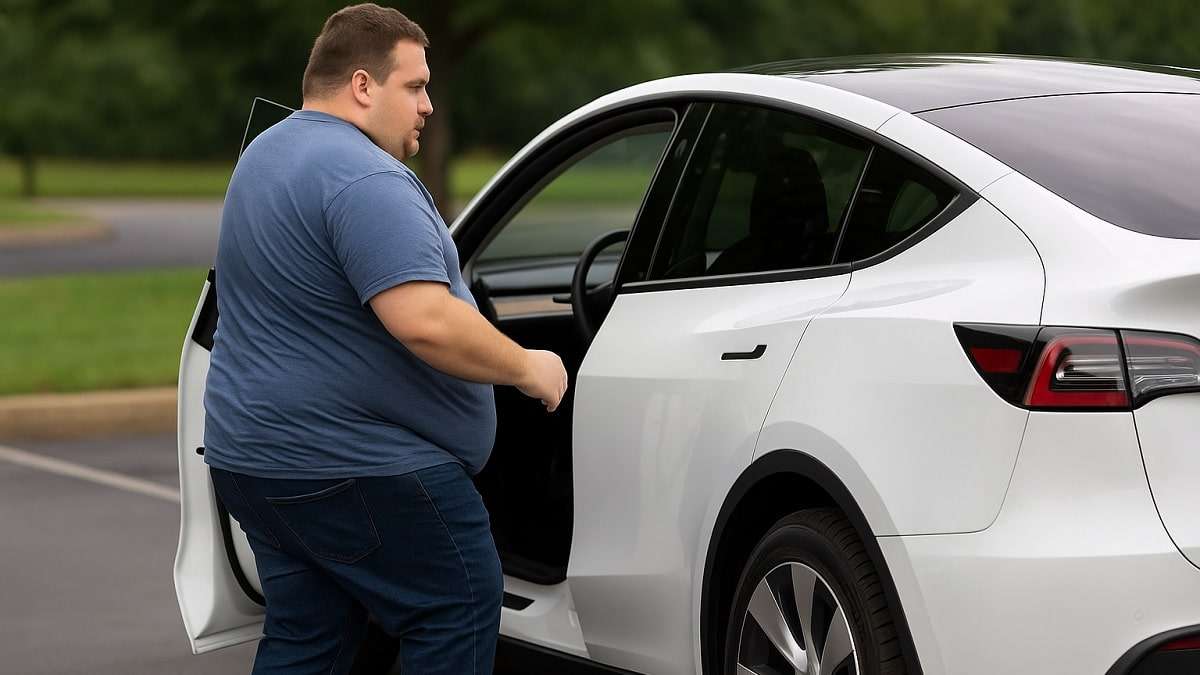

With all the information and misinformation about EVs floating around, it can be difficult for prospective EV buyers to make an informed decision. We’re diving into some of the crazy EV questions we’ve seen. The following dialog from the r/electricvehicles subreddit sums it up. Redditor this_isnt_clever started with this original post:
“I'm an overweight man who wants to buy an EV and I'm asking any overweight weight people that drive EVs if you think the extra weight is affecting your range. I know that over time my weight affects my suspension and tire wear, but I'm curious if anyone knows the effect of added weight? I’m 300 pounds just to give you a frame of reference.”
WizeAdz responded with a funny/reassuring comment:
“Unless you personally weigh more than an average American family, you’ll be fine when it comes to EV range.
I have a family of five and our Tesla Model Y long range is our main road trip vehicle.”
Hippfive contributed some technical details for added assurance:
“The curb weight of my Equinox EV is over 5,000 lbs. The difference between you and an average driver is probably no more than 100-125lbs, or about 2% - 2.5% of the weight of the car. It won't have a noticeable effect compared to the varying effects of temperature, topography, and how aggressive you are in driving.”
Iqisoverrated pulled out the physics text book and contributed the following:
“Weight doesn't impact EV range as much as it impacts ICE range because of regenerative braking. More weight means more energy needed to speed up, but more weight also means that you get more energy back when slowing down via regenerative braking (in ICE cars this part is lost via the friction brakes)
F= m*a works both ways.
While driving at speed extra weight has only negligible impact due to higher tire deformation”
Crazy EV Questions
That was a fun thread, and here are some other unusual questions we have heard about electric vehicles.
How Can EVs be “Green” with all the Mining Required to Make Their Batteries?
EVs require more materials to build, which means their environmental footprint is higher when they first leave the factory. The battery and additional weight contribute to that. Once driving begins, their lower emissions quickly make up for the early impact. After one to two years of normal driving, an EV becomes cleaner overall than a gas car. Over a full typical lifespan of about twelve years, EVs offer a much lower environmental footprint.
This includes emissions. Any proper study of EV emissions includes mining, manufacturing, and processing of materials such as lithium. EVs start out with higher embodied carbon costs but quickly become cleaner once driving. After a short period of use, the lifetime emissions advantage becomes clear.
Where Can I Get My EV Maintained Since Most Shops Work on Gas Cars?
EVs require very little maintenance compared to gasoline cars. There are no oil changes, timing belts, or spark plugs. Most visits involve software updates and routine checks, and the major electric systems often carry warranties of about 100,000 miles. Drivers still need to monitor brakes, tire wear, and wiper fluid, although overall service needs remain minimal.
Why Don’t We See Cool Chinese EVs in the U.S.?
China currently leads the world in EV production because of cheap labor and national policies that promote new technologies. The United States places high tariffs on Chinese EVs to protect its domestic auto industry. This is why American shoppers do not see inexpensive Chinese EVs in U.S. showrooms.
Why Don’t We Drive Hydrogen Cars Instead of EVs?
Hydrogen vehicles lose efficiency at multiple stages. Converting electricity into hydrogen wastes a large portion of the energy, then converting hydrogen back into electricity wastes more. A battery powered EV uses the electricity directly and loses far less energy. This is why hydrogen cars remain uncommon for passenger use.
My Phone Battery Only Lasts Two Years, Why Would I Buy an EV?
Most EV batteries are warranted to retain at least eighty percent of their original range after one hundred thousand miles. A vehicle that started with two hundred miles of range might have around one hundred sixty miles years later, which remains completely usable for everyday driving. In many cases, the battery outlasts the car itself.
Why Don’t EVs Have Solar Panels on Top to Charge Them?
Solar panels on a car cannot capture enough energy from the small surface area available. Even covering every exterior surface would not harvest enough power for most daily driving unless the car sat in full sun for several days.
Why Do EVs Sound Weird?
The characteristic whirring sound from an EV is produced by the motor itself, not an artificial speaker. EVs are quiet, although some additional pedestrian warning sounds may be added at low speeds for safety.
Can My EV Power My Home?
Some EVs can power homes during outages or send electricity back to the grid. These features can reduce strain on power systems and provide backup energy for households. More models are beginning to offer these capabilities as the technology spreads.
Why Do EVs Catch Fire so Often?
Lithium-ion batteries can catch fire when multiple safety systems fail, although this is rare. Gasoline vehicles experience more fires per mile driven. EV fires get more attention because the technology is newer and still unfamiliar to many people.
Can I Charge My EV as Fast as Pumping Gas?
Charging may never match the speed of filling a gas tank. High power charging is possible, although extremely fast charging causes higher costs for both equipment and electricity use. Liquid fuels simply move energy more quickly than electrical systems can.
Why Can’t I Wirelessly Charge My EV Like I Charge My Phone?
Wireless charging is possible, although it is currently more of a novelty. The vehicle must be positioned precisely over the charging coil, and the energy transfer is less efficient than plugging in. Most homes and public stations will continue to rely on cables.
What Happens to Batteries After the EV’s End of Life?
When an EV reaches the end of its life, the metal parts are recycled like any other car. The battery pack is removed and processed separately so materials like lithium, nickel, and cobalt can be reused in new batteries. Recycling systems continue to advance as more EVs reach retirement age.
When Will All Cars be Electric?
By the late 2030s, EVs are expected to dominate new car sales in the United States. Once drivers experience electric cars, many prefer them for the smoother performance, lower maintenance, and cleaner operation. Gasoline vehicles may remain only for specialized needs.
Why Don’t I See EV Chargers at Gas Stations?
Charging sessions take time, so drivers prefer to plug in at places where they can eat, relax, or shop. Fast food restaurants, convenience stores, and retail centers are usually better suited than traditional gas stations, which tend to be dirty, noisy, and designed for quick visits rather than extended stays.
Bottom Line
Electric vehicles introduce a very different approach to powering personal transportation. They offer smoother performance, lower maintenance, and much cleaner lifetime emissions once driving begins. Charging continues to evolve, new battery technologies are approaching the market, and adoption is steadily increasing. As the technology matures, EVs will become even more practical, affordable, and widely accepted across the United States.
What Do You Think?
What is the most bizarre or inaccurate EV myth you have heard in real life or online?
What piece of misinformation about EVs do you wish would finally disappear?
Chris Johnston is the author of SAE’s comprehensive book on electric vehicles, "The Arrival of The Electric Car." His coverage on Torque News focuses on electric vehicles. Chris has decades of product management experience in telematics, mobile computing, and wireless communications. Chris has a B.S. in electrical engineering from Purdue University and an MBA. He lives in Seattle. When not working, Chris enjoys restoring classic wooden boats, open water swimming, cycling and flying (as a private pilot). You can connect with Chris on LinkedIn and follow his work on X at ChrisJohnstonEV.
Photo credit: Provided by author
Set Torque News as Preferred Source on Google
Follow us today...