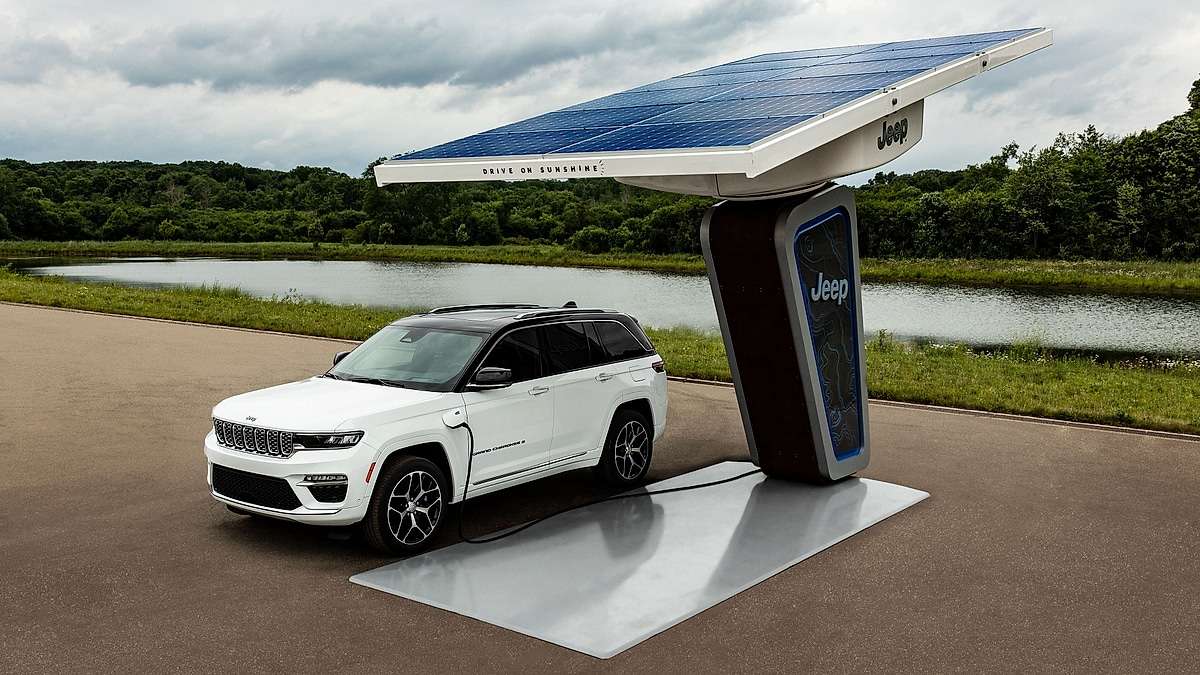

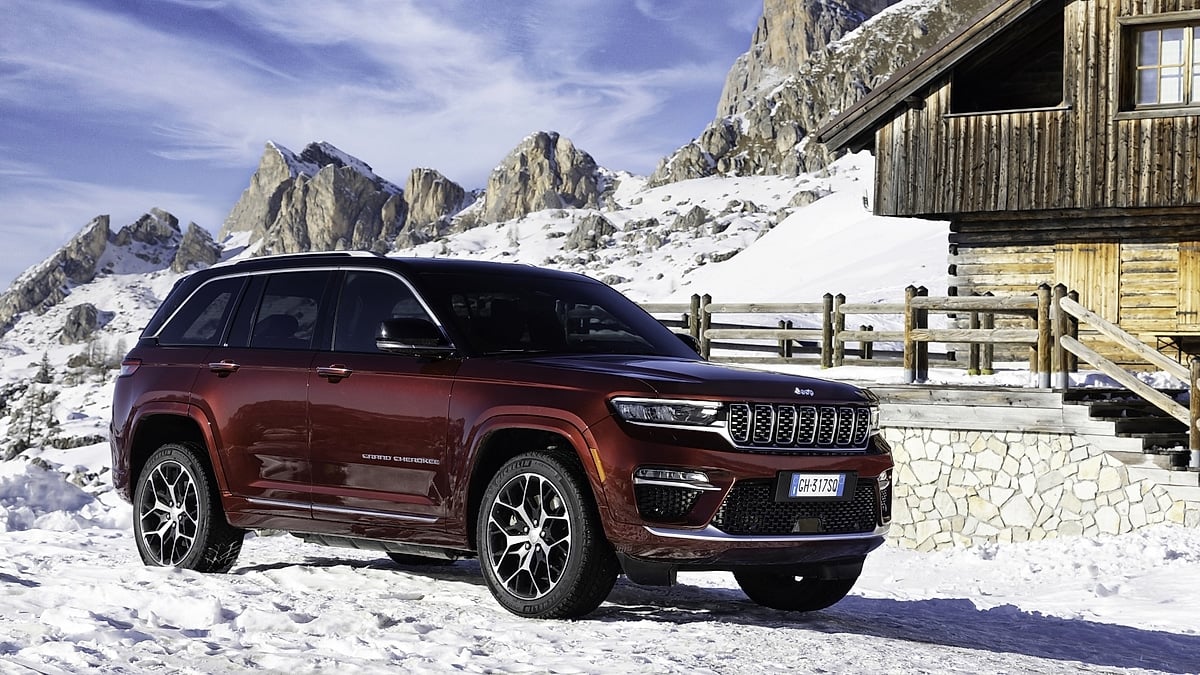
Keith Carter Pennington bought a 2024 Jeep Grand Cherokee 4xe with 27,000 miles on it. Two weeks later, it was dead in his driveway. He had it towed to the dealer, who had addressed the open recalls before he bought it. They replaced the auxiliary battery and gave it back. Three days later, it died again.
“I cannot believe that out of the three weeks I’ve had it, an entire third of that has been in the shop,” Pennington wrote in a Facebook post that has since circulated across owner forums. He’d done his research before buying. Nobody warned him. In the comments, other owners shared similar experiences. One said he’d asked his dealership what to buy next and was told specifically not to get the hybrid.

Pennington’s story is not unusual.
I reviewed NHTSA complaint data, three recall campaigns affecting more than 375,000 vehicles, technical service bulletins, owner forum reports, and publicly available corporate filings from Stellantis and battery supplier Samsung SDI. What TorqueNews found is a pattern of interconnected failures, spanning the 12V auxiliary battery system and the high-voltage battery pack, that has left many 4xe owners in a difficult position.
What Torque News Checked
Before we get to the full scope, here’s what we reviewed and how:
NHTSA complaint database. We searched the National Highway Traffic Safety Administration’s public complaint database for 2022-2024 Grand Cherokee 4xe and Wrangler 4xe entries. We found extensive complaints referencing 12V auxiliary battery drain, high-voltage battery failures, and sudden power loss while driving. We cross-referenced these against NHTSA’s three recall campaigns: 23V-787 (October 2023), 24V-720 (September 2024), and 25V-741 (October 2025).
Recall filings and technical service bulletins. We reviewed the Part 573 safety defect reports Stellantis filed with NHTSA, the chronology of the Samsung SDI battery investigation, and technical service bulletins TSB 08-004-25 and TSB 9100649, both addressing the 12V battery drain issue that Pennington experienced.
Stellantis corporate communications. We reviewed publicly available recall notification letters, the January 2026 announcement that Stellantis would phase out plug-in hybrid programs in North America, and the November 2025 letter from Jeep CEO Bob Broderdorf that accompanied $100 gift cards sent to affected owners.
Owner forums and published sources. We reviewed complaint threads on 4xeForums.com, Reddit r/4xe and r/GrandCherokee, JeepGarage.org, and JLWranglerForums.com. We also drew on published reporting from Consumer Reports, Edmunds, Kelley Blue Book, and the Detroit Free Press.
Five data points we confirmed: 1. More than 375,000 Jeep Wrangler and Grand Cherokee 4xe vehicles are under recall 25V-741 for high-voltage battery fire risk. 2. NHTSA records confirm 19 fires and 1 injury associated with the defect. 3. No permanent remedy is currently available. Stellantis has advised owners to park outside and away from structures and not to charge their vehicles until a fix is released. 4. Stellantis announced in January 2026 that it would discontinue plug-in hybrid programs in North America, including the 4xe line. 5. Stellantis sent $100 Mastercard gift cards to affected owners along with a letter from the Jeep CEO.
Three Weeks, Two Failures, One Pattern
Pennington’s Grand Cherokee 4xe didn’t fail because he misused it. Based on NHTSA filings and owner forum analysis, the failure he experienced appears connected to a known issue with the Integrated Dual Charging Module, the component that manages how the high-voltage battery charges the 12V auxiliary battery.
Here’s what the technical evidence suggests. When a 4xe is plugged into a Level 1 charger (standard wall outlet), the IDCM software can enter a condition where the DC-DC converter, which should charge the 12V battery from the HV pack, does not operate as intended. Meanwhile, various control modules may remain awake instead of entering sleep mode, creating a parasitic drain. The 12V battery can discharge in 8-12 hours even though the high-voltage battery is fully charged.
When the 12V voltage drops below the threshold needed to power the control systems, the vehicle shuts down entirely, even with 100% charge in the high-voltage pack.
TSB 08-004-25, issued in August 2025, acknowledged the IDCM-related battery drain. The prescribed remedy was a software update. However, multiple owner reports on 4xeForums and Reddit indicate that some vehicles experienced recurring drain issues after the update was applied. Because intermittent electrical faults often do not leave diagnostic trouble codes, dealers may not always be able to reproduce the issue during a service appointment.
That’s the context for what Pennington experienced: his dealer replaced the auxiliary battery, which appeared to be the fix, but the underlying software condition caused the same failure three days later. On owner forums, others have traced similar issues to specific components. One owner in Ontario measured his tailgate lock button drawing 8 amps, enough to kill the battery overnight. Others identified the rear HVAC module or the IDCM as sources of parasitic draw.
The common thread across these reports: the 4xe’s electrical system can fail to enter its intended low-power state, and identifying the specific cause requires time-consuming diagnostic work that dealer service departments may not always have the bandwidth to complete.
Three Recalls, Three Expansions, and a Discontinued Product Line
The 12V battery drain is the failure that owners encounter in daily driving. But the broader recall story involves the high-voltage battery pack, and how the scope of that recall has grown over two years.
The timeline:
October 2023: Recall 23V-787. Stellantis recalled 32,125 Wrangler 4xe vehicles for a high-voltage battery fire risk. The batteries were built by Samsung SDI. The remedy: a software update.
September 2024: Recall 24V-720. Stellantis expanded the recall to 154,032 vehicles, now including both Wrangler and Grand Cherokee 4xe models, for the same battery defect. The remedy: updated software with what NHTSA filings described as “improved diagnostic algorithms,” plus battery pack replacement if diagnostics indicated a problem. By this point, Samsung SDI had identified separator damage inside the battery cells as a contributing factor.
A separator is the membrane between a lithium-ion battery’s anode and cathode. Damage to it can allow an internal short, which generates heat. In a high-voltage battery pack, that heat can escalate to thermal runaway, a self-sustaining reaction that can result in fire.
Samsung SDI’s investigation, documented in NHTSA filings, found that manufacturing variability in the separator could create weak points. Software monitoring can detect some electrical signatures that may precede a short, but it cannot repair physical separator damage.
October 2025: Recall 25V-741. Stellantis expanded the recall again, this time to approximately 375,000 vehicles, and disclosed that nine fires had occurred in vehicles that had received the software update from the 2024 recall. Ten additional fires had occurred in vehicles outside the original recall scope. Stellantis stated that no remedy was currently available and that a fix was expected in Q2 2026. Owners were advised to park outside and away from structures and to refrain from charging their vehicles.
In January 2026, Stellantis announced that it would phase out plug-in hybrid programs in North America, citing shifting customer demand. The announcement did not reference the recall status or the absence of a permanent remedy.
What the Numbers Show
In November 2025, Jeep CEO Bob Broderdorf sent a letter to affected owners that included a $100 Mastercard gift card. The letter stated: “We sincerely apologize for the unsettling nature of this recall.”
The math, based on publicly available information:
320,000 owners × $100 = $32 million in goodwill payments.
The estimated cost of replacing all affected high-voltage battery packs, based on industry estimates of $10,000-$12,000 per pack in parts and labor, would be approximately $3.2 billion to $3.8 billion.
Other automakers have taken different approaches to battery recalls. Hyundai spent approximately $900 million replacing batteries in roughly 82,000 Kona EVs within 12 months of identifying the defect. BMW recalled approximately 26,700 PHEV vehicles and suspended deliveries while developing a remedy. Stellantis’s approach, three escalating recalls over 24 months, no currently available fix, and a phase-out of the product line, represents a different model of managing a battery defect at scale.
The financial impact on owners extends beyond the recall itself. Kelley Blue Book data indicates that the 2024 Grand Cherokee 4xe has depreciated approximately 58 percent over two years, a decline steeper than the approximately 38 percent depreciation of the non-hybrid Grand Cherokee over the same period. Several owners on 4xeForums and Reddit report that dealerships have declined to accept their vehicles in trade, citing the open recall.
A Supplier Issue That Crossed Brand Lines
The battery at the center of this recall was not exclusive to Jeep. Samsung SDI manufactured the same battery pack design for Ford, Volkswagen, and Audi. The separator defect triggered recalls totaling more than 180,000 vehicles across four automakers: approximately 155,000 for Stellantis, 20,000 for Ford, and 4,600 for VW/Audi.
Each manufacturer responded on its own timeline and with its own approach. Ford issued a “stop safely now” notice for affected Escape and Lincoln Corsair PHEVs. Audi offered proactive battery replacements for the Q5 and A7 PHEVs. Stellantis issued three escalating recalls and ultimately discontinued the product line.
Samsung SDI has not issued a public statement addressing the defect beyond what was included in NHTSA filings. The company’s stock price declined approximately 12 percent in the week following the October 2025 recall expansion.
The multi-brand scope of the recall matters for context: this was a supplier-level quality issue that affected multiple automakers, each of which managed its response independently.
What Happens to the Owners Now
With the 4xe line discontinued and no permanent recall remedy currently available, owners face practical questions about the long-term viability of their vehicles.
Parts availability. The 4xe shares its body, chassis, and many mechanical components with the standard Grand Cherokee, so those parts will remain available. However, hybrid-specific components, the battery pack, the IDCM, the hybrid control processor, and certain wiring harnesses, are unique to the 4xe. How long Stellantis and Samsung SDI will continue producing these parts is a question the company has not publicly addressed.
Service expertise. The 4xe is a plug-in hybrid that combines a high-voltage electrical system with an internal combustion powertrain. Servicing it requires technicians with high-voltage certification. Several owner forum posts indicate that not all dealership technicians have completed this training, and that diagnosis of intermittent electrical issues can require extended diagnostic time.
Lemon law options. Multiple lemon law firms have published information about 4xe-related buyback cases. One California owner documented a buyback approval after 120 days in the shop across multiple dealer visits. The buyback settled for the full purchase price plus state-mandated penalties. State lemon law criteria vary, but typically include a threshold of 30 days in the shop or four unsuccessful repair attempts within the first 12 to 24 months of ownership. Owners considering this path should consult an attorney licensed in their state.
What owners can do now. If you own a 2022-2025 Jeep Grand Cherokee 4xe or Wrangler 4xe, you can check your recall status at nhtsa.gov/recalls or contact Stellantis customer service at 1-800-853-1403. If your vehicle has experienced the 12V battery drain issue described in this article, document every dealer visit with dates, work orders, and outcomes. This record may be relevant if you pursue a lemon law claim.
The Context
Consumer Reports named the Wrangler 4xe the most unreliable midsize SUV in its 2025 annual survey and ranked Jeep last among all brands. Edmunds ran a one-year long-term test of a Grand Cherokee 4xe that required three tow truck calls. The editors concluded they would not buy the vehicle again.
Stellantis reported approximately $13.6 billion in warranty costs for 2025, up from approximately $7.2 billion the previous year. The company also took an approximately $25.8 billion impairment charge.
The 4xe was positioned as Stellantis’s entry into the plug-in hybrid market, a bridge between conventional internal combustion and full electrification. Its discontinuation, combined with the ongoing recall without a permanent remedy, leaves current owners in a position few vehicle buyers expect to face: owning a recently purchased, high-value vehicle whose manufacturer has stopped building the product line while a safety recall remains open.
For Pennington, the resolution was straightforward. He sold the Jeep and bought something else. Three weeks of ownership. Two dead batteries. Multiple dealer visits. And an experience that, based on the volume of similar reports across owner forums, he was not alone in having.
About The Author
Noah Washington is an automotive journalist based in Atlanta, Georgia, covering sports cars, luxury vehicles, and performance culture. His reporting focuses on explaining the engineering, design philosophy, and real-world ownership experience behind modern vehicles.
Noah has been immersed in the automotive world since his early teens, attending industry events and following the enthusiast communities that shape how cars are built and driven today. His work blends industry insight with enthusiastic storytelling, helping readers understand not just what a car is, but why it matters.
Noah is also a member of the Southeast Automotive Media Association (SAMA), a professional organization for automotive journalists and industry media in the Southeast.
His coverage regularly explores sports cars, luxury vehicles, and performance-driven segments of the automotive industry, including the evolving culture surrounding Formula Drift and enthusiast builds.
Read more of Noah's work on his author profile page.
You can also follow Noah here:
Set Torque News as Preferred Source on Google
Follow us today...