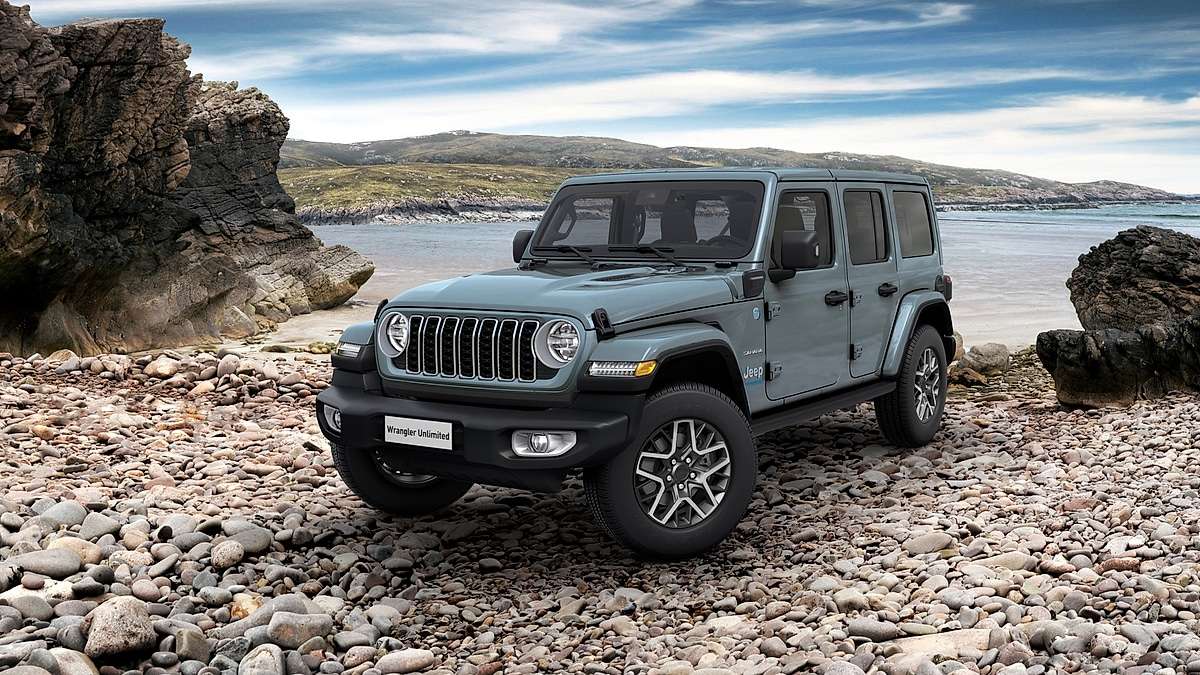

NHTSA says Chrysler recalled 320,065 Jeep Wrangler and Grand Cherokee 4xe plug-in hybrids after 19 battery-pack fires, including nine vehicles that had received the earlier remedy software. That does not prove all PHEVs are unsafe, but it does expose a hard question for shoppers: when a "middle-ground" powertrain fails, owners can inherit complexity from both sides.
The numbers are specific. NHTSA's November 2025 consumer alert lists 228,221 Wrangler 4xe and 91,844 Grand Cherokee 4xe vehicles. Chrysler was aware of 19 battery-pack fires, including nine vehicles that received the previous remedy. One injury was potentially related to the defect. The Part 573 filing identifies the likely defect as battery cells with separator damage, combined with other cell interactions, which may lead to fire.

The earlier recall is what makes this story sting. In 2024, Chrysler recalled 154,032 Jeep 4xe vehicles and told owners to park outside and avoid charging until repaired. The remedy at that time involved updating battery-pack control software and inspecting the high-voltage battery, with replacement if necessary. NHTSA's later filing says FCA determined that the prior remedy was ineffective at detecting certain abnormalities in the high-voltage battery that may lead to fire. The software was supposed to catch the problem. It did not catch in nine vehicles that later burned.
How They Were Marketed
This is where the trust problem begins. Plug-in hybrids are marketed as the sensible middle ground. You get electric range for commuting, gasoline range for road trips, and none of the charging anxiety that scares buyers away from full EVs. Stellantis leaned into that pitch hard. The Wrangler 4xe was America's best-selling plug-in hybrid in 2024, with the Grand Cherokee 4xe ranking third. Buyers chose the 4xe because it promised capability without compromise. The best-selling PHEV crown now sits next to a recall notice saying the earlier fix did not work for everyone.
The technical reality is more complicated than "PHEVs are dangerous." A PHEV combines combustion hardware, electric propulsion, battery systems, charging hardware, and control software. That creates more integration points than either a conventional hybrid or a full EV. More integration points mean more failure modes. When the failure mode is a battery separator tear, a software monitor is your first line of defense. FCA believed its 2024 software remedy could detect the abnormalities that precede a fire. The November 2025 recall says that the belief was wrong for certain conditions.
The remedy has evolved. NHTSA's December 18 Part 573 update describes the current fix as a software flash followed by high-voltage battery replacement if needed. That means some owners will get a software update. Others will get a new battery pack. Owners should check their VIN because the recall record has been updated with phased remedy notices. If your vehicle was previously repaired under the 2024 recall, it may still need additional work.
What should an owner do right now? NHTSA advises owners of affected vehicles to park outside and away from structures, and to avoid charging until the remedy is completed. If you see smoke, smell burning, or suspect a fire, move away from the vehicle and call emergency services. Do not attempt to fight a high-voltage battery fire yourself.
The used-market consequence is already visible. A 4xe buyer who purchased after the 2024 recall believed the remedy settled the risk. The expanded recall resets that confidence. Dealers who took 4xe trades based on the earlier fix now hold inventory with a refreshed liability. Auction prices for affected model years will reflect the uncertainty. A shopper browsing used Wrangler 4xe listings will find vehicles with two recall notices, one of which failed to prevent fires in nine confirmed cases.
What Reputations PHEVs Have
The broader question is whether PHEVs deserve their reputation as the low-anxiety bridge to electrification. The 4xe case does not answer that for every plug-in hybrid on the market. Toyota's RAV4 Prime, BMW's 330e, and Hyundai's Tucson PHEV use different battery suppliers, different thermal management strategies, and different software architectures. What the 4xe recall does prove is that the compromise carries its own risks. When a PHEV battery fails, the owner inherits complexity from both the electric and combustion sides. The software that is supposed to watch the battery can miss the failure mode. The remedy that is supposed to fix the problem can leave some vehicles unprotected.

I checked what the PHEV landscape looks like beyond Jeep. Stellantis told Automotive News it would phase out PHEV programs in North America starting with the 2026 model year to focus on conventional hybrids and range-extended vehicles. The Wrangler and Grand Cherokee 4xe were the top two-selling plug-in hybrids in the United States. The recall landed after the cancellation was public and the 2026 model-year plans were already set. Owners are holding vehicles that the manufacturer has already abandoned. A discontinued powertrain often means slower parts availability, shorter engineering attention, and lower resale value even after the defect is fixed.
The 4xe was pitched as the safe compromise: EV efficiency without range anxiety, gasoline backup without committing to a full battery-electric drivetrain. The second recall proves the compromise failed on its own terms. The first fix promised detection. The second recall confirms the detection never worked for the actual failure mode. Owners who bought the 4xe to avoid EV anxiety now face a worse version of it. Their vehicle might ignite whether parked or moving, charged or depleted. The bridge-to-electric narrative depended on trust in the middle ground. That middle ground is now a 320,000-vehicle parking ban.
Stellantis has not said how many of the 320,065 recalled vehicles will require battery replacement versus software flash only. That distinction matters for owners, for resale value, and for how long service departments will be backlogged. A software update takes an hour. A battery replacement takes days and requires parts availability that may not exist at every Jeep dealer.
If you own a 4xe, check your VIN at NHTSA or Jeep's recall site today. Do not charge the vehicle. Park outside and away from structures, including other vehicles. Contact your insurance provider to confirm coverage during an active fire-safety recall, and document every conversation in writing. Ask your dealer for a loaner if your daily routine requires charging or garage parking.
If you are shopping for a PHEV, the 4xe recall is a case study in what happens when the software detection layer fails. Every plug-in hybrid on the road is an engineering bet that software can manage the intersection of two powertrains reliably. The Jeep 4xe just proved that bet can fail catastrophically, silently, and twice.
About The Author
Noah Washington is an automotive journalist based in Atlanta, Georgia, covering sports cars, luxury vehicles, and performance culture. His reporting focuses on explaining the engineering, design philosophy, and real-world ownership experience behind modern vehicles.
Noah has been immersed in the automotive world since his early teens, attending industry events and following the enthusiast communities that shape how cars are built and driven today. His work blends industry insight with enthusiastic storytelling, helping readers understand not just what a car is, but why it matters.
Noah is also a member of the Southeast Automotive Media Association (SAMA), a professional organization for automotive journalists and industry media in the Southeast.
His coverage regularly explores sports cars, luxury vehicles, and performance-driven segments of the automotive industry, including the evolving culture surrounding Formula Drift and enthusiast builds.
Read more of Noah's work on his author profile page.
You can also follow Noah here:
Set Torque News as Preferred Source on Google
Follow us today...