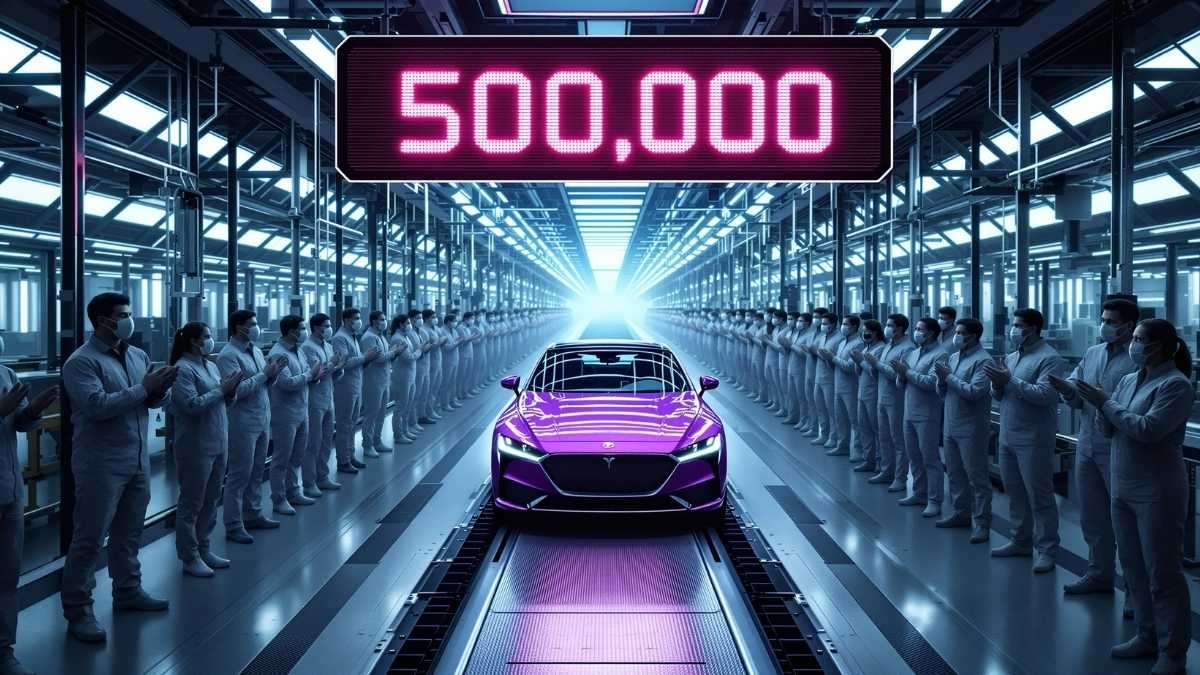

In the technology world, speed is often the difference between market dominance and irrelevance. If there is one lesson the automotive industry should have learned from Tesla, it is that moving slow is a death sentence. Yet, as I look at the latest numbers coming out of China, it appears that even Tesla might be looking in the rearview mirror with some trepidation. On November 20, 2025, Xiaomi—a company better known for smartphones and robot vacuums just a few years ago—produced its 500,000th electric vehicle.
They achieved this milestone in just one year and seven months. To put that in perspective, it took Tesla significantly longer to reach that scale, and legacy automakers are still struggling to ramp up EV production numbers that high without incurring massive losses. Xiaomi’s achievement is not just a manufacturing win; it is a wake-up call.
The Underreported Success of Chinese Vendors
There is a strange disconnect in how the Western press covers the Chinese automotive market. We hear endless stories about the "collapse" of the Chinese economy or the geopolitical tensions, but we rarely see deep dives into the sheer operational excellence of Chinese EV vendors. Companies like BYD and Xiaomi are not just surviving; they are thriving in a hyper-competitive market that makes the European and North American markets look like country clubs.
The success of these vendors has been massively underreported in the West, largely because it doesn't fit the prevailing narrative of Chinese industrial overcapacity and subsidy-driven "dumping." While subsidies played a role initially, what we are seeing now is the result of fierce Darwinian competition. Chinese consumers are incredibly tech-savvy and demanding. If your infotainment system lags or your autonomous driving features aren't cutting-edge, you are dead in the water.
Domestic Chinese brands have effectively pushed foreign legacy automakers into the margins. Volkswagen, GM, and others are seeing their market shares erode because they simply cannot match the speed of innovation coming from domestic players. This isn't just about price; it is about product-market fit and the ability to iterate software at the speed of a smartphone release, something Xiaomi knows intimately.
Xiaomi’s Meteoric Rise and the "Human x Car x Home" Ecosystem
Xiaomi’s success is particularly fascinating because they are the first true consumer electronics company to successfully transition into automotive manufacturing. Apple tried and failed (Project Titan). Sony is partnering with Honda but moving cautiously. Xiaomi went "all in," with founder Lei Jun calling it his final major entrepreneurial project.
The cause of their success is twofold: deep pockets and ecosystem integration. Xiaomi isn't just selling a car; they are selling a node in their "Human x Car x Home" ecosystem. If you own a Xiaomi phone and smart home devices, the car seamlessly integrates into that life. Your car knows your schedule, your home AC turns on when the car approaches, and the interface is as fluid as a high-end tablet because, effectively, it is one.
Financially, they are defying the odds. In Q3 2025, Xiaomi’s innovative businesses, which include EVs, posted their first quarterly profit. For a car company to turn a profit on EVs less than two years into production is unheard of in the modern era. They expect to deliver over 400,000 units in 2025 alone, a staggering ramp-up that suggests their supply chain mastery is second to none.
Europe and the Munich Design Center
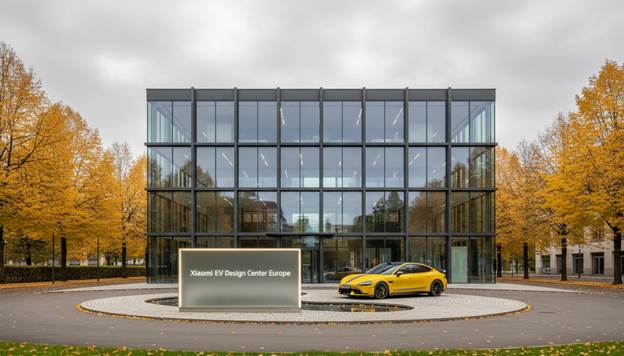
Perhaps the most strategic move Xiaomi has made recently is planting a flag in the heart of the European automotive establishment. In September 2025, Xiaomi opened a design and R&D center in Munich, Germany.
This is a brilliant, aggressive maneuver. By setting up shop in Munich, Xiaomi is signaling that they are not just exporting "Chinese cars" to Europe; they are designing cars for Europeans, using European talent, right in BMW and Audi’s backyard. This helps mitigate the stigma of "Made in China" by adding "Designed in Germany" to the pedigree. It allows them to tune their suspension and handling to European tastes—which are vastly different from Chinese preferences—and attract top-tier automotive talent that might be worried about the longevity of struggling German giants.
The Tariff Elephant in the Room
Of course, we cannot talk about Chinese EVs without addressing tariffs. Both the US and the EU have erected massive tariff walls to protect their domestic industries from Chinese imports.
Currently, these tariffs are the only thing holding back a flood of Xiaomi and BYD vehicles from dominating Western roads. If these tariffs were discontinued tomorrow, I believe we would see an extinction-level event for several legacy automakers. The value proposition of a Xiaomi EV—premium tech, high performance, and build quality that rivals luxury German brands, all at a mainstream price—is simply too good for consumers to ignore.
Tariffs are a double-edged sword. They buy time for Western automakers to catch up, but they also hurt consumers by artificially inflating prices and reducing pressure on domestic companies to innovate. If Ford or GM feels safe behind a 100% tariff wall, they might slow down their EV transition, leaving them even further behind globally. Xiaomi’s move to design in Europe and likely manufacture there eventually (to skirt tariffs) shows they are playing the long game. They intend to be a global player, tariffs or not.
The Cars: SU7, YU7, and the Ultra
Xiaomi’s product lineup is surgically targeted at the most profitable segments of the market.
- Xiaomi SU7: This was their debut, a sedan clearly aimed at the Tesla Model 3 and the Porsche Taycan. In China, the SU7 has already outsold the Model 3 in several months of late 2024 and 2025. It offers a better interior, better integration with local digital services, and range figures that often beat the Tesla.
- Xiaomi YU7: Launched in June 2025, this SUV targets the Tesla Model Y, the best-selling car in the world. Early numbers suggest it is cannibalizing Model Y sales in China due to its more premium feel and aggressive pricing.
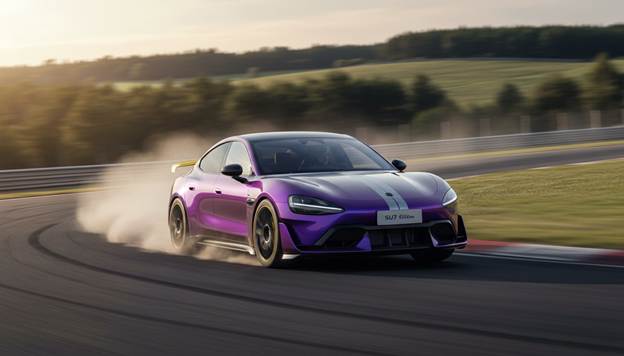
- Xiaomi SU7 Ultra: This is the halo car. Launched in early 2025, it is a track monster designed to humiliate supercars costing ten times as much. It serves the same purpose the original Tesla Roadster or the Model S Plaid did—it proves that EVs aren't just "green"; they are superior performance machines.
Comparing these to Western alternatives is sobering. A comparable Mercedes or Audi EV often costs 30-40% more while offering inferior software and slower charging speeds. The only Western car that truly competes on value and tech is the Tesla Model 3/Y, but Tesla’s design is aging, while Xiaomi’s is fresh and rapidly evolving.
Wrapping Up
Xiaomi’s production of 500,000 cars in under two years is a historic achievement that highlights the shifting center of gravity in the automotive world. They have combined the speed of a tech startup with the manufacturing discipline of a legacy giant. With a profitable EV division, a new design hub in Europe, and a product lineup that embarrasses much of the competition, Xiaomi is not just "doing well"—they are setting the pace. Western automakers need to stop lobbying for tariffs and start building better cars, or they will find themselves disrupted out of existence.
Set Torque News as Preferred Source on Google
Follow us today...