
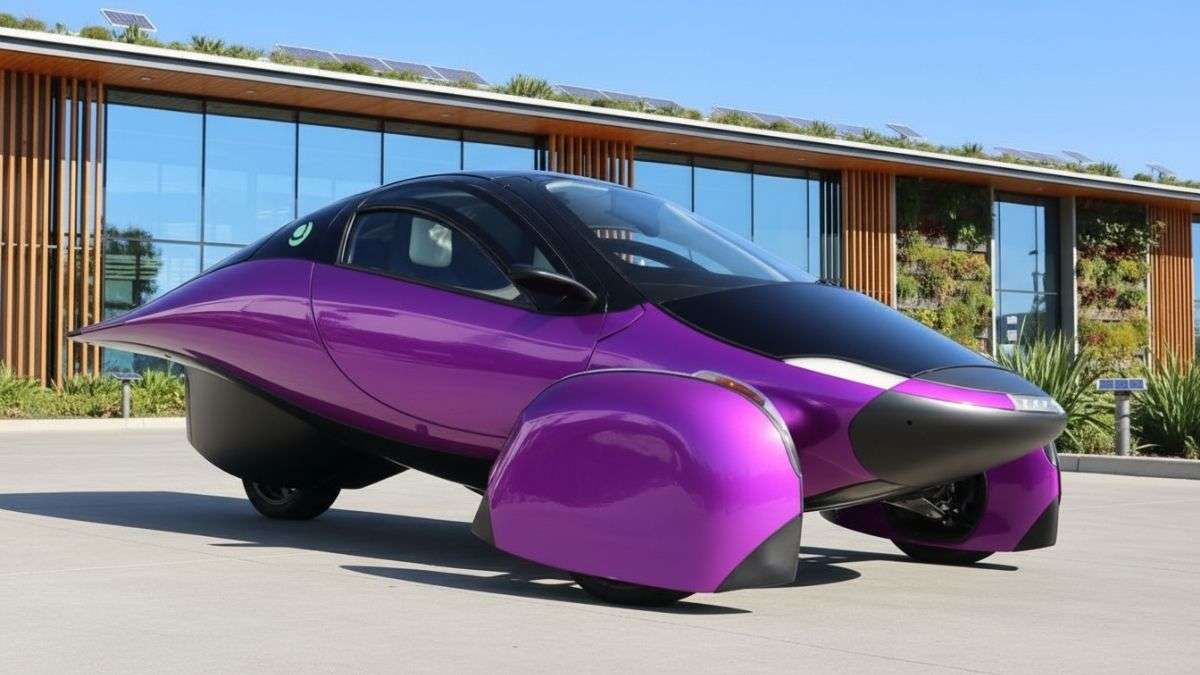

In the brutal, capital-intensive world of automotive startups, second chances are rare. Failures are common, comebacks are almost mythical. Yet, stirring in Carlsbad, California, a company that was a literal case study in failure is not only back, but is methodically moving toward producing one of the most radical vehicles ever conceived.
This is Aptera Motors, the company that promised a hyper-efficient, three-wheeled EV a decade before Tesla made EVs mainstream, and then spectacularly flamed out. As of this week, Aptera has officially begun building its validation vehicle assembly line, a critical step bridging the gap from prototype to production. The phoenix is not just rising; it's building a nest.
But this isn't just a story about a corporate rebound. It's a story about a concept—the "Never Charge" solar vehicle—that could fundamentally alter our relationship with electric cars, especially for the millions of drivers who can't charge at home.
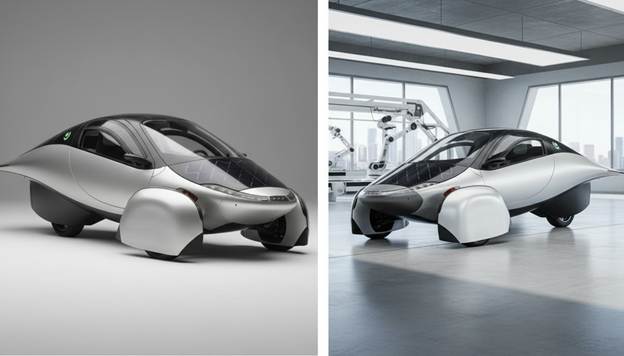
The Long Road Back
To understand where Aptera is, you have to understand where it was. Founded in 2006, the original Aptera Motors captured the imagination of the green-tech world. It had a futuristic, teardrop-shaped car that promised over 200 mpg-e. But it was too early. Public acceptance of EVs was nil, battery tech was nascent, and, in a fatal blow, Aptera’s three-wheel design disqualified it from the crucial Advanced Technology Vehicles Manufacturing (ATVM) loan from the Department of Energy—the very loan that saved Tesla. By 2011, Aptera was liquidated.
In 2019, original founders Chris Anthony and Steve Fambro reacquired the IP and resurrected the company. This time, the world was different. Tesla had proven the market. Battery technology was mature. Most importantly, two other things had changed:
- Solar Tech: Solar cells became vastly more efficient and affordable.
- Funding: The rise of equity crowdfunding allowed Aptera to bypass the fickle venture capital and government gatekeepers, raising tens of millions from a loyal base of over 17,000 small investors.
They also brought in manufacturing expert Sandy Munro to validate their design, shifting from a complex, hand-built "airplane fuselage" to a "Body in Carbon (BinC)" architecture that is strong, lightweight, and designed for scalable, automated assembly.
A Solar EV Game Changer?
Aptera’s most audacious claim is its "Never Charge" technology. This is, to be blunt, the holy grail of EV ownership. The vehicle’s roof, dash, and hood are covered in approximately 700 watts of proprietary solar cells. Aptera’s engineers claim this setup can harvest up to 40 miles of "free" range per day in a sunny climate.
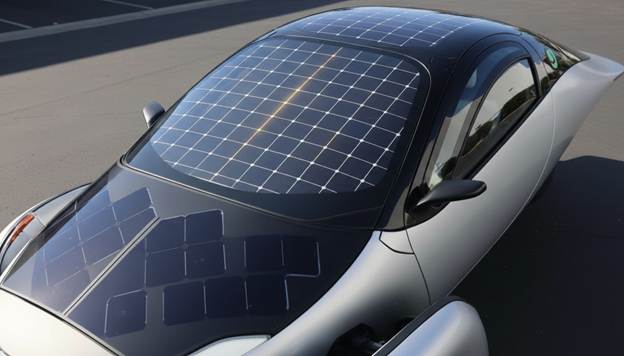
This claim is only plausible because of the car’s fanatical devotion to efficiency. While a new Hummer EV lumbers along at 1.2 miles per kWh, the Aptera sips energy, achieving an astonishing 10 miles per kWh. This efficiency comes from its design: it's lightweight (under 2,200 lbs) and has a mind-bendingly low drag coefficient of just 0.13. For context, a slippery Tesla Model 3 is 0.23.
Why is this a game-changer? The average American commute is under 30 miles per day. This means for millions of people in states like California, Arizona, or Florida, the Aptera could genuinely be a vehicle they never plug in. This isn't just a convenience; it solves the single biggest hurdle for EV adoption: charging for apartment dwellers, condo residents, and anyone without a dedicated home garage. It's an EV that unplugs itself from the grid.
The $40,000 Question: Will Anyone Buy a Spaceship?
Let's be clear: the Aptera looks like nothing else on the road. It is a two-seat, three-wheeled, dolphin-shaped pod. Its radical efficiency is its greatest asset, but its radical design is its greatest commercial challenge.
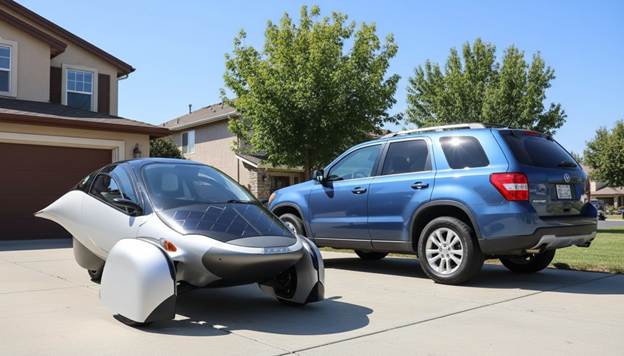
The automotive market is built on conformity. The "crossover" (a tall, inefficient hatchback) rules the world. Aptera is asking buyers to not only adopt a new powertrain but a new vehicle classification. It’s legally a motorcycle or autocycle in many states, which can have different insurance and licensing requirements. It only has two seats, immediately disqualifying it as a primary family vehicle.
This is the central tension of Aptera’s existence. It cannot be a mass-market car, but it doesn't need to be. Its design is a pure, uncompromising expression of function-over-form. The question is whether there are enough people who will choose ultimate efficiency and "weird" over the practicality of a four-door, five-seat box. Aptera is betting that for a dedicated second car or the ultimate commuter vehicle, the answer is a resounding yes.
Performance, Price, and the Final Hurdle
While it looks like an eco-pod, it doesn't move like one. Aptera is planning an all-wheel-drive version with in-wheel motors that will rocket the lightweight car from 0-60 mph in a blistering 3.5 seconds, with a top speed of 110 mph.
The pricing and range structure is brilliantly modular. The line is expected to start at $25,900 for a model with a 250-mile range battery. From there, buyers can opt for larger batteries, topping out with a 1,000-mile range version (a range once thought impossible) for around $47,000.
The first model slated for production is the Launch Edition, a 400-mile range version with a target price of $40,000. This is the vehicle currently being refined on the new validation line in Carlsbad.
But there is one final, massive hurdle: money. With the validation line now active, Aptera has stated it needs to secure $65 million in additional funding to complete this phase, tool its main assembly line, and begin low-volume production. This is the last boss battle. The company has the tech, the design, and over 46,000 pre-orders. Now, it just needs the cash to build.
The Aptera Buyer Profile
So, who is this car for? It's not the family hauling kids to soccer practice.
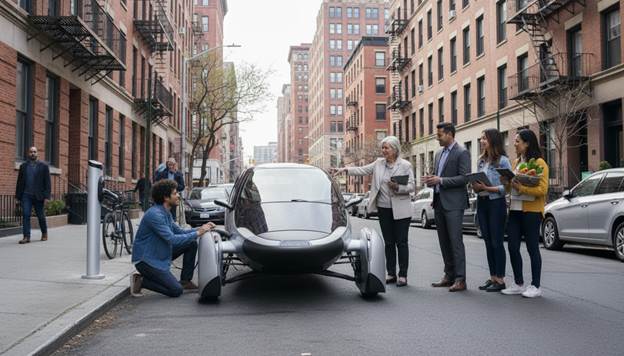
The Aptera customer is a distinct tribe. They are the tech-forward early adopter who sees the vehicle as a statement. They are the hyper-miling commuter who views gasoline or even grid-charging as a personal failure of efficiency. They are the environmentally-conscious driver who wants the lowest-footprint vehicle on Earth.
Most critically, they are the urban apartment dweller who has been locked out of the EV revolution. This is the person who wants an EV but has no access to a garage, a driveway, or even a reliable Level 2 charger at their complex. For them, a car that charges itself while parked on the street isn't a gimmick; it's the only solution.
Wrapping Up
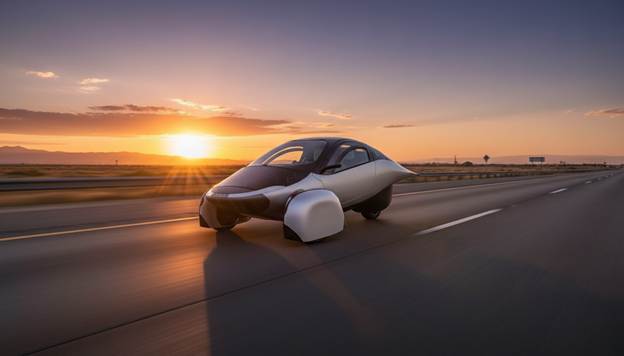
Aptera Motors is closer than it has ever been to realizing a dream that died in 2011. The company has proven it can rebound from a total collapse. Its engineers have proven a 0.13 drag coefficient is possible. And its "Never Charge" concept has proven to be a compelling solution to the EV's biggest charging problem.
The validation line is running. The carbon-composite bodies are being built. The journey from ambitious idea to tangible product is in its final, most difficult stage. If Aptera can secure that last $65 million, it won't just be launching a car; it will be launching a compelling, radical, and wonderfully weird new category of transportation.
Disclosure: Images rendered by ChatGPT 5.0 and Artlist.io
Rob Enderle is a technology analyst at Torque News who covers automotive technology and battery developments. You can learn more about Rob on Wikipedia and follow his articles on Forbes, X, and LinkedIn.
Set Torque News as Preferred Source on Google
Follow us today...


Comments
these images are ai slop…
Permalink
these images are ai slop. why not just use the actual photos of aptera? dude wasting water and power for no good reason
It looks like Aptera has…
Permalink
It looks like Aptera has landed the $65M it needs and is laying the foundation for low-volume production to begin. The money came as a ELOC from New Circle Capital and was announced around the same time Aptera began trading on the Nasdaq stock market.
Lets be blunt here. Do your…
Permalink
In reply to It looks like Aptera has… by Marcus Stoney (not verified)
Lets be blunt here. Do your research.
Your repeating many of their lies out right. They are in fact being sued for not having actually purchased the existing IP by Zaptera who can easily prove the assignment of the patents to them via the patent office. Their wefunder presentation which appeared in 2019 already had the simple body built from multiple pieces long before the move to body in carbon. 2024 they revealed their bill of materials was in excess of fifty thousand dollars a unit mostly from the body in carbon pieces. How can the base model start at $26,000 when the only difference between it and the launch edition is a 15 kWh smaller battery pack and Aptera already showed the battery cost of the large pack to be best case $6,000 dollars.
No external door handles for first responders to help you out and no side air bags, why would anyone trade away safety to save a dollar or two a day versus the more traditional, versatile, and importantly far safer EVs that cost less?
Why would anyone trade the…
Permalink
Why would anyone trade the safety and flexibility of a conventional EV that costs thousands less for this three wheel vehicle? Aptera will not even have side air bags so how they plan to meet safety standards consumers rightfully expect is beyond me.
With a carbon fiber tub,…
Permalink
In reply to Why would anyone trade the… by Chris (not verified)
With a carbon fiber tub, carbon and steel roll cage, large crumple zones, a battery pack designed to add strength to the metal frame, frontal airbags (and a cabin design that puts you away from side impacts), superior accident avoidance shown in the Moose Test, a body design that has impacts glancing off it instead of being absorbed by the vehicle and its passengers, the Aptera is by far one of the safest cars on the road.
The computer modeling already shows it, which is why they are building four vehicles to crash test right now. They want to demonstrate how safe this vehicle is even though they are not required to by the government.