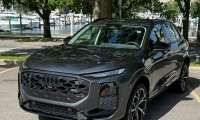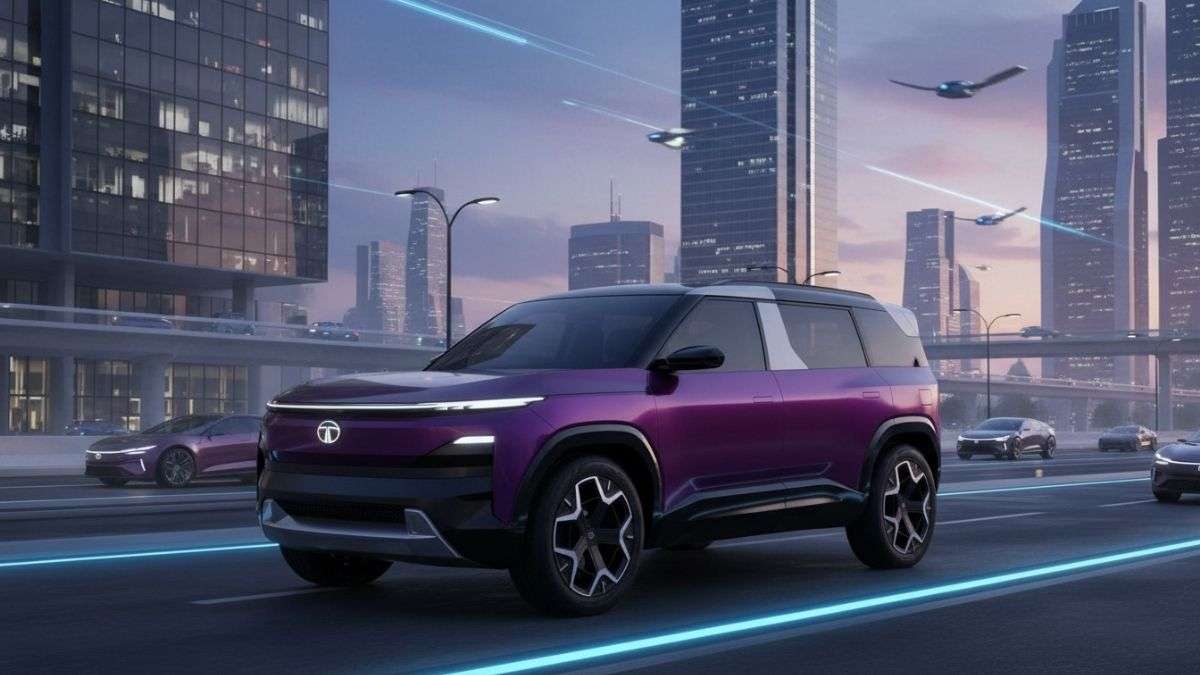

In the world of Indian automotive history, few names evoke as much nostalgic passion as the Tata Sierra. For those of us who grew up in the 1990s, the original three-door Sierra, with its commanding presence and signature alpine windows, was the definitive poster car—a rugged, aspirational symbol of adventure. It was bold, it was different, and it was, unfortunately, ahead of its time. Plagued by a three-door layout in a family-focused market and reliability concerns, the Sierra faded into legend.
Now, it’s back. And it’s not just a comeback; it’s a reincarnation.
Tata Motors, riding a wave of unprecedented success, is bringing the Sierra back as a cutting-edge EV and ICE SUV, with a launch expected in late 2025 or early 2026. This isn't just a nostalgic cash-grab. It’s a calculated, high-stakes move that represents the next chapter in Tata's ambitious electric-first strategy. The new Sierra is designed to be a "lifestyle" vehicle, a premium offering that leverages its heritage to carve out a new space in a ferociously competitive market.
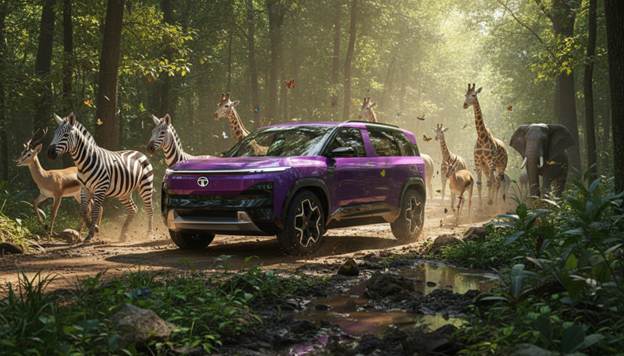
Tata's EV Kingdom: A Crown Under Siege
To understand why the Sierra matters, you first have to understand Tata's current EV dominance. For the last few years, to say "Tata" was to say "EV" in India. Buoyed by the runaway success of the Nexon EV and, more recently, the Punch EV, Tata Motors effectively created the mass-market EV segment in the country. They were the first to offer practical, affordable, and desirable electric vehicles, capturing a staggering 60-70% of the market.
However, that peak dominance is now being challenged. As of mid-2025, while still the market leader, Tata's market share has dipped to under 40%. Competitors like MG Motor and Mahindra & Mahindra, along with new entrants, have woken up and are launching compelling alternatives. The kingdom is no longer unchallenged.
This is precisely where the Sierra EV enters the chat. It's not just another volume-seller; it's a flagship. It's designed to elevate the brand, pull customers up from a Nexon or Punch, and prove that Tata can compete not just on price, but on premium features, design, and aspiration.
Advantages and Disadvantages: The Sierra's New Battleground
The original Sierra was a simple, rugged, body-on-frame off-roader. The new one is the polar opposite: a sophisticated, monocoque, feature-packed tech showcase.
The Advantages are undeniable:
- Design & Nostalgia: Tata has masterfully retained the icon's soul. While now a practical five-door, the production-spec Sierra keeps the signature wrap-around rear glass (the alpine windows), blending it with a modern, boxy, and muscular stance. It’s a head-turner.
- A Tech-Loaded Cabin: The interior is where the Sierra will truly fight its battles. It's expected to be a massive step up for Tata, featuring a panoramic triple-screen dashboard (digital driver display, central infotainment, and a dedicated passenger screen), a panoramic sunroof, ventilated seats, and Level 2 ADAS.
- The 'acti.ev' Platform: Underpinning the Sierra EV is Tata's advanced, "Gen 2" acti.ev platform. This allows for multiple battery pack options (likely 65-75kWh), a dual-motor all-wheel-drive (AWD) variant, and an expected real-world range of 450-500 km.
But the Disadvantages are just as significant:
- Loss of Identity: The purists will scoff. The new Sierra is not a hardcore off-roader. It's a "soft-roader" designed for the city. Fans of the original's rugged, body-on-frame build will find the new model's unibody construction and tech-first focus a departure from its "tough" roots.
- Premium Price: This tech doesn't come cheap. The EV variant is expected to be priced in the ₹25-30 Lakh (ex-showroom) range. This pushes it well past its mass-market rivals and into a premium segment where badge-snobbery and quality expectations are exponentially higher.
- Hyper-Competition: The Sierra is parachuting into the single most crowded and brutal market segment in India. It will fight the ICE-powered Hyundai Creta and Kia Seltos, while its EV variant will be a premium alternative to its own siblings, the Harrier EV and Safari EV.
The JLR Connection: A Shared Future?
One of the most intriguing aspects of Tata's EV strategy is its relationship with its luxury subsidiary, Jaguar Land Rover (JLR). While the Sierra EV is built on Tata's own acti.ev platform, the company's next wave of premium vehicles, the "Avinya" series, will be built on JLR's "EMA" electric platform.
This platform-sharing is a one-way street designed to fast-track Tata's entry into the truly global, high-end EV space. However, this collaboration has reportedly hit a snag. Recent reports suggest JLR has shelved plans to manufacture its own EVs at Tata's new Tamil Nadu plant, citing costs and slowing demand. This has, in turn, reportedly delayed the Avinya program.
What this means for the Sierra is indirect but important. It puts more pressure on Tata's homegrown platforms like acti.ev to succeed and carry the brand's premium ambitions. The Sierra EV must prove that Tata doesn't need to borrow a JLR platform to build a world-class, desirable, and premium electric SUV.
Who Is the Ideal Customer?
The new Sierra isn't for the person who wants to go rock-crawling. The ideal customer is the tech-savvy urban professional. They likely grew up with the original Sierra as a dream, and now they have the income to buy the modern interpretation.
They are a "lifestyle" buyer—someone who values design and wants to stand out from the sea of Cretas and Seltoses. They want a family car that is also a tech-hub and a style statement. They are likely an "EV upgrader," moving from a first-generation Nexon EV and seeking more space, range, and luxury without leaving the Tata ecosystem.
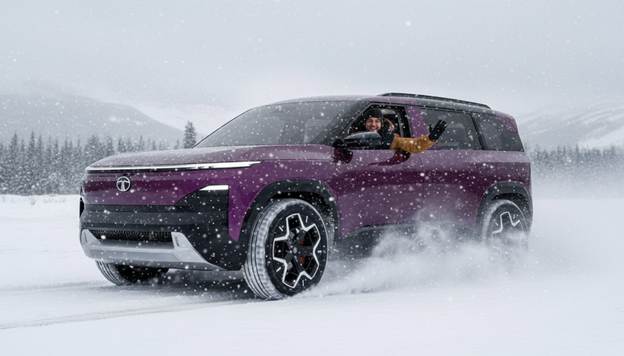
What's Needed for Success
Nostalgia will get the Sierra a test drive, but it won't close the sale. To succeed, Tata must execute flawlessly on four fronts:
- Flawless Quality: At a ₹30 Lakh price point, there is zero room for error. The fit, finish, and material quality must feel more premium than any Tata that has come before.
- Deliver the Range: The 450-500 km range can't just be on paper. It needs to be achievable in real-world Indian driving conditions.
- Seamless Tech: A triple-screen dashboard is a "wow" feature, but only if the software is fast, intuitive, and bug-free—something many automakers, including Tata, have struggled with.
- Competitive Pricing: Tata must justify the premium. The Sierra must feel like it offers significantly more design, tech, and "lifestyle" cachet than its rivals to command its expected price tag.
Wrapping Up
The return of the Tata Sierra is more than just a 90s revival. It’s a bellwether for Tata Motors. It represents the brand's graduation from a mass-market EV pioneer to a confident, mature automaker capable of building premium, aspirational, and globally competitive products on its own terms. If they get it right, the new Sierra won't just be a successful SUV; it will be the vehicle that reclaims and redefines Tata's dominance for the next decade.
Disclosure: Images rendered by ChatGPT 5.0
Rob Enderle is a technology analyst at Torque News who covers automotive technology and battery developments. You can learn more about Rob on Wikipedia and follow his articles on Forbes, X, and LinkedIn.
Set Torque News as Preferred Source on Google
Follow us today...