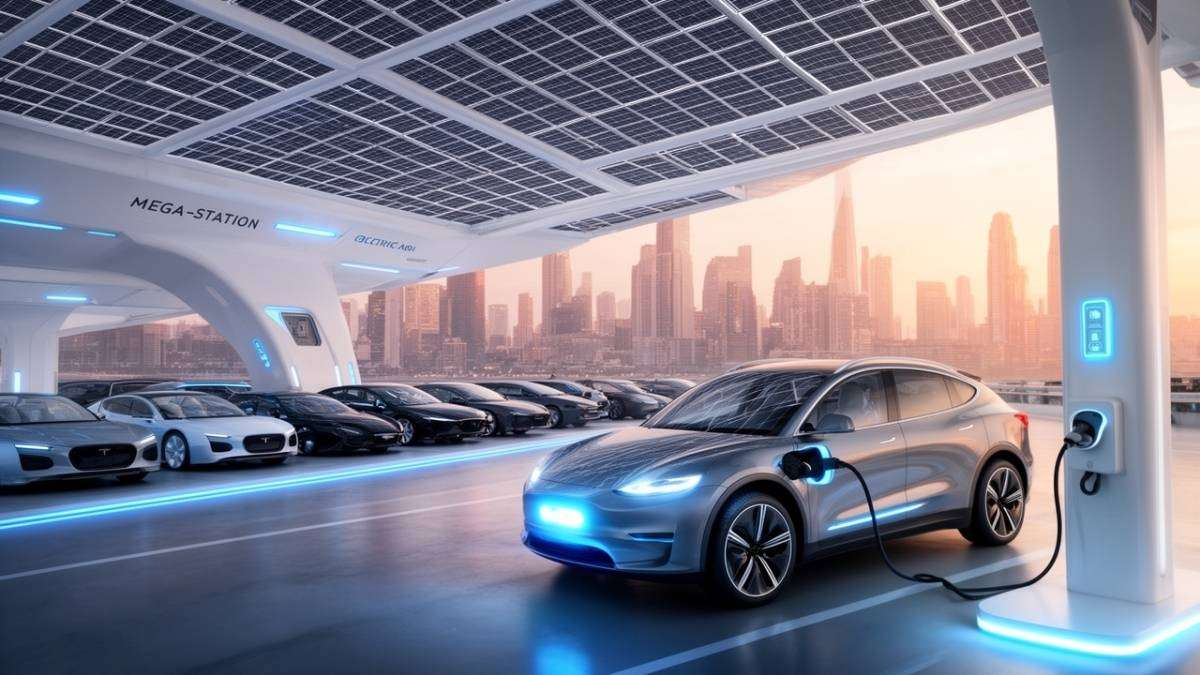

The transition from internal combustion engines (ICE) to electric vehicles (EVs) has long been stalled by what I call the “Convenience Gap.” For over a century, the gasoline car has held a singular, unassailable advantage: the five-minute refill. You pull in, you pump, you leave. EVs, by contrast, have historically forced us to develop a sudden interest in mediocre rest-stop coffee for 40 minutes while our cars "sipped" electrons.
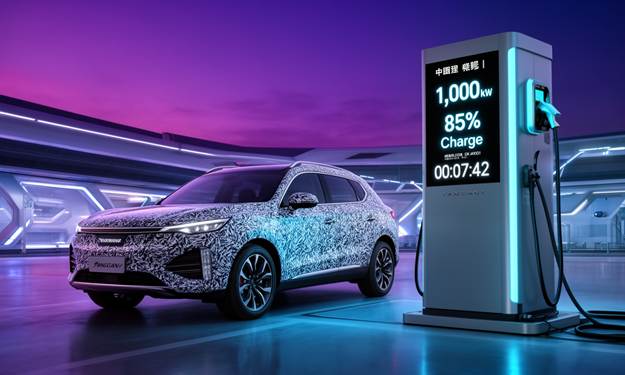
But on January 28, 2026, the fortress of the ICE vehicle didn't just crack; it may have been leveled. Leaked spy shots and testing data have emerged showing BYD’s upcoming flagship SUV—likely under the ultra-luxury Yangwang brand—shattering records with 1,000 kW charging speeds. If these specs hold for production, we are looking at a full charge in under 10 minutes, with the ability to add 250 miles of range in just five minutes.
We are no longer talking about "charging" in the traditional sense. We are talking about a firehose of energy that finally matches the refueling experience of a petrol car.
The Infrastructure Nightmare: One Charger, One Neighborhood
The primary problem with 1,000 kW (one megawatt) charging isn’t the car; it’s the "straw" we’re using to drink from the grid. To put this in perspective, a single 1,000 kW charger pulls enough power to run hundreds of average homes simultaneously.
If you put ten of these at a highway rest stop, you aren’t just building a gas station; you’re building a small substation. Most existing municipal grids in the U.S. and Europe simply cannot handle these "spike" loads. These stations will require on-site Battery Energy Storage Systems (BESS) to act as a buffer—slowly drawing from the grid all day so they can dump a megawatt of power into your SUV in minutes without blowing the neighborhood’s transformers.
The Rollout Speed: China’s "Flash" vs. The West’s "Wait"
How quickly will this reach you? In China, the rollout is already aggressive. BYD has partnered with state-owned energy giants like Sinopec to deploy thousands of these "Flash Charging" stations across their existing gas station footprints.
In the U.S. and Europe, the timeline is more conservative. We are still struggling to standardize 350 kW chargers, and current CCS and NACS connectors have thermal limits that make 1,000 kW difficult without active liquid cooling in both the cable and the car’s inlet. Expect 1,000 kW to be a luxury-only experience in the West for the next 3 to 5 years, confined initially to specific high-traffic commercial trucking and luxury car corridors.
The End of ICE Competitive Dynamics
For decades, the ICE vehicle has survived on the "range and refuel" argument. But at 1,000 kW, that argument dies. When an EV can add 400 km of range in five minutes, the ICE car becomes a vibrating, loud, and expensive-to-maintain relic.
Once charging time reaches parity with a gas station visit, the Total Cost of Ownership (TCO) becomes the only metric that matters. Since EVs are already significantly cheaper to fuel and maintain, removing the "time penalty" for charging removes the last major psychological barrier for the mass market.
Pushing Beyond the Megawatt: Inductive Wireless and the Future
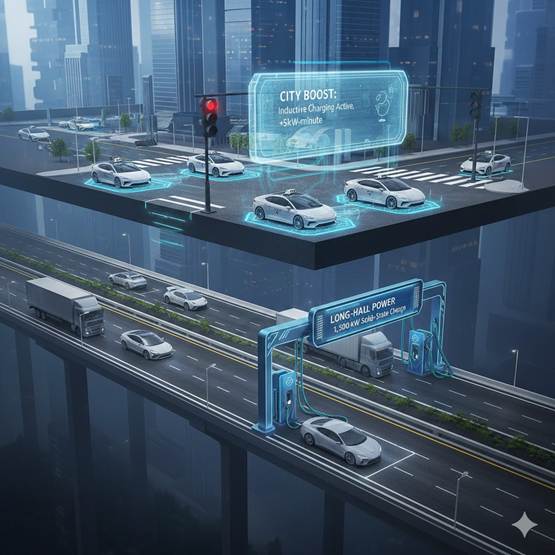
Can we go even faster? The bottleneck eventually becomes the battery's chemistry—specifically, shedding the heat generated by such a massive power dump. We are seeing a move toward solid-state batteries which could potentially handle 1,500 kW or more with less risk of thermal runaway.
However, the real game-changer might be inductive wireless charging. While wireless charging is currently much slower than wired, it offers "hidden" charging. If every stoplight and parking spot gives you a small boost wirelessly, the need for 1,000 kW "bursts" on a highway diminishes. We will likely see a two-tier future: wireless for the city, and "megawatt" wired for the long-haul.
A Decade of Electrons: The EV Timeline (2026–2036)
Year
Milestone
2026
The Megawatt Era Begins: BYD and premium competitors launch 1,000 kW flagship SUVs; initial infrastructure rollouts in China and EU.
2028
Solid-State Arrival: First-gen solid-state batteries enter production, offering safer 1,000 kW+ charging with higher energy density.
2030
The 5-Minute Standard: 1,000 kW charging becomes the benchmark for all mid-range EVs; ICE sales hit a terminal decline in most major markets.
2033
Wireless Ubiquity: Inductive charging pads become common in taxi ranks and upscale parking, reducing the reliance on dedicated charging stations.
2036
Grid Independence: Most megawatt stations are powered by local solar/wind and BESS storage, making them independent of the aging 20th-century grid.
Wrapping Up
BYD’s move to 1,000 kW is a shot across the bow of every legacy automaker still complacent with 150 kW "fast" charging. While the infrastructure challenges are immense—requiring a complete rethink of how we buffer the power grid—the technological path is clear. We are moving toward a future where the "cost" of driving isn't measured in time spent waiting, but in the efficiency of the tech under the hood. For the ICE vehicle, the clock isn't just ticking; it's about to run out.
Disclosure: Images rendered by Artlist.io and Nano Banana Pro
Rob Enderle is a technology analyst at Torque News who covers automotive technology and battery developments. You can learn more about Rob on Wikipedia and follow his articles on Forbes, X, and LinkedIn.
Set Torque News as Preferred Source on Google
Follow us today...