
The automotive world is no stranger to resurrections, but few are as eagerly anticipated or as stylistically bold as the return of Lancia. Once the titan of rally stages and the purveyor of Italian elegance, Lancia has spent recent years in a dormant state, confined largely to the Italian domestic market. However, under the stewardship of Stellantis, the brand is waking up. The alarm clock? The Lancia Pu+Ra HPE, a concept car that serves not just as a design study, but as a "manifesto" for the next ten years of the brand. It is a vehicle that attempts to bridge a century of history with a radical electric future, blending the nostalgia of the Stratos with the comfort of high-end Italian furniture.
Defining "Pu+Ra": A New Design Language
The name itself—Pu+Ra HPE—is a code that unlocks the car’s philosophy. "Pu+Ra" stands for "Pure" and "Radical," the two pillars of Lancia’s new design language. The goal is to combine the soft, pure volumes of historical models like the Aurelia and Flaminia with the radical, brutalist geometry that defined the brand’s racing heritage.
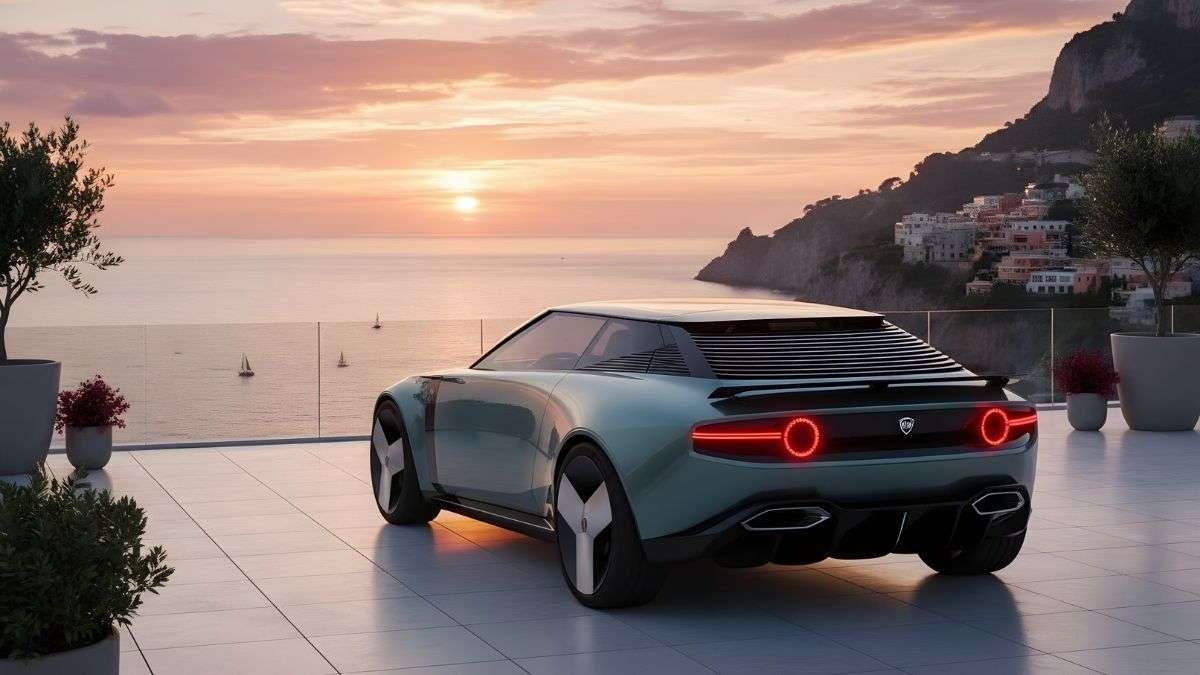
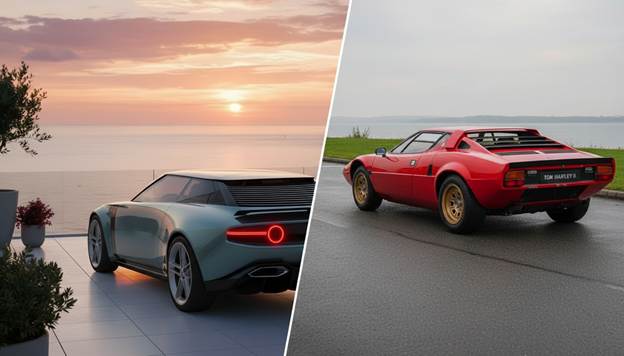
Visually, the car is a striking departure from the aggressive, angry styling that dominates the current EV market. The silhouette is streamlined and fluid, seemingly carved from a single block of matter. Yet, it is punctuated by sharp, geometric intersections. The car’s profile reveals a flowing line that descends towards the rear, a direct nod to the aerodynamics of the Aurelia B20.
However, the "Radical" element is most visible in the rear. Here, Lancia has gifted enthusiasts with a modern reinterpretation of the legendary Lancia Stratos. The hollow, circular taillights are an unmistakable tribute to the rally beast that dominated the WRC in the 1970s. Between these lights sits the new Lancia lettering, executed in a font that is cleaner and more fashion-oriented than its predecessors. This tension between the soft, sensual side profile and the technical, geometric rear creates a visual dynamism that is rare in modern car design.
HPE: From Estate to Electric
History buffs will recognize the "HPE" badge from the 1970s Lancia Beta, where it stood for "High Performance Estate." In a clever pivot for the 21st century, Lancia has repurposed the acronym to mean "High Performance Electric."
While specific powertrain details on concept cars are often theoretical, Lancia claims the Pu+Ra HPE is designed around the Stellantis STLA platform parameters. The target specs are impressive: a range of over 700 kilometers (435 miles), a charging time of just over 10 minutes, and energy efficiency of less than 10 kWh per 100 km. These figures suggest a vehicle that is not only stylish but highly competitive in the efficiency stakes, potentially outpacing current leaders if these targets translate to production.
One of the most delightful historical Easter eggs is found in the rear window. The horizontal lines that streak across the glass are a contemporary reference to the "venetian blind" sunshades of the original Beta HPE. It is a feature that serves a dual purpose: invoking nostalgia while managing light ingress and aerodynamics, proving that retro cues can be functional rather than just decorative.
The Cassina Collaboration: The Interior as a Living Room
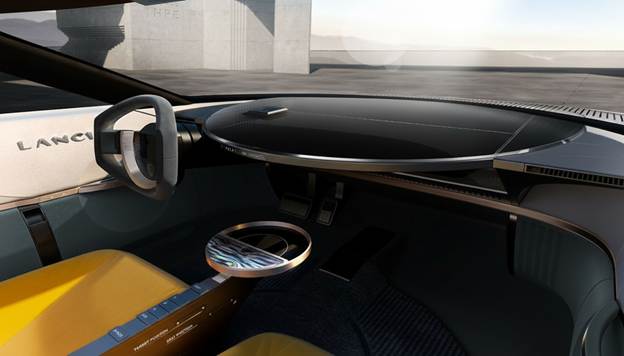
Perhaps the most unique aspect of the Pu+Ra HPE is its interior, which rejects the cockpit-focused ethos of German sports sedans in favor of an "Italian home feeling." To achieve this, Lancia partnered with Cassina, a leader in high-end Italian furniture. The result is a cabin that looks less like a car and more like a Milanese lounge.
The centerpiece of this philosophy is the "coffee table" element found on the center console. It is a round, flat surface that invites interaction, a stark contrast to the button-laden transmission tunnels of today. The seats are inspired by Cassina’s iconic Maralunga armchairs, featuring bright yellow ochre velvet made from sustainable materials.
Sustainability is a major theme here. The warm, natural wool carpet is circular—echoing the geometric theme—and the door panels are finished in a material called Marm\More, which is up to 50% recycled waste from marble dust. This approach positions Lancia to compete not just on luxury, but on "wellness," offering a sanctuary that feels warmer and more human than the sterile, screen-heavy interiors of competitors like the Tesla Model 3 or the Mercedes EQE.
S.A.L.A.: The Tech Interface of Tomorrow
While the interior feels analog and warm, the technology driving it is cutting-edge. The Pu+Ra HPE introduces the S.A.L.A. (Sound Air Light Augmentation) interface. In Italian, sala means "living room," reinforcing the domestic theme.
S.A.L.A. is a virtual interface that centralizes the audio, climate control, and lighting functions. Instead of digging through sub-menus, the driver or passenger can choose one of three modes—Immersive, Wellbeing, or Entertainment—and the car automatically adjusts the environment. It adapts the music, the ambient lighting, and the temperature to create a specific mood. This "Chameleon" technology aims to reduce driver distraction by intuitive automation, a feature that will be critical as cars become more complex. This system is confirmed to debut on the upcoming Lancia Ypsilon in 2024, making it the first tangible piece of the concept to reach consumers.
Will It Come to Market?
The burning question for any concept this dramatic is: Will they actually build it?
The answer is nuanced. Lancia has stated that the Pu+Ra HPE is a "brand manifesto." This means you will likely never buy a car that looks exactly like this coupe. However, Lancia CEO Luca Napolitano has confirmed that the design elements seen here will directly influence the three upcoming production models: the new Ypsilon (2024), the Gamma flagship (2026), and the revived Delta (2028).
The Y-shaped light signature on the nose, the circular taillights, and the S.A.L.A. interface are guaranteed production features. The Gamma, expected to be a sportback sedan, will likely inherit the Pu+Ra’s silhouette and fluid lines. The Delta will almost certainly adopt the geometric, muscular stance and the Stratos-inspired rear lighting.
In terms of market viability, Lancia faces a steep climb. It is re-entering markets (France, Germany, Spain, etc.) where it has been absent for years. Its primary competitors will be the premium "design" segments—think Polestar, Genesis, and perhaps DS Automobiles (its sibling brand). The Pu+Ra HPE suggests Lancia will carve out a niche for "Classic Italian Luxury" in the EV space, differentiating itself from the tech-heavy minimalism of Silicon Valley and the cold precision of German engineering.
Wrapping Up
The Lancia Pu+Ra HPE is more than just a pretty shape; it is a statement of intent. It proves that Stellantis understands the value of Lancia’s heritage and is willing to let the brand be weird, artistic, and distinctly Italian. While we may not see this exact shooting brake on the dealership floor, its DNA will course through the veins of every Lancia for the next decade. If the production cars can capture even half of this concept's charm—specifically that incredible interior atmosphere and the Stratos winks—Lancia has a fighting chance at a glorious second act.
Disclosure: Images rendered by Artlist.io
Rob Enderle is a technology analyst at Torque News who covers automotive technology and battery developments. You can learn more about Rob on Wikipedia and follow his articles on Forbes, X, and LinkedIn.
Set Torque News as Preferred Source on Google
Follow us today...