
For decades, the formula for automotive dominance was written in German. If you wanted the pinnacle of performance mixed with luxury, you looked to Affalterbach or Munich. Mercedes-AMG and BMW M have long stood as the gatekeepers of the high-performance executive segment, resting on laurels earned through decades of internal combustion supremacy. However, the electric transition has leveled the playing field in a way that few legacy manufacturers anticipated, opening the door for ambitious disruptors.
Enter the Genesis GV60 Magma. This isn't just a faster version of a crossover; it is a statement of intent. Having spent time analyzing the trajectory of the automotive market, it is becoming clear that Genesis is no longer content with being a "value" alternative to the German establishment. With the Magma program, they are aiming directly for the throat of the industry leaders.
Genesis: From Budget Alternative to Performance Powerhouse
To understand the significance of the GV60 Magma, one must look at the sheer velocity of the Genesis brand’s evolution. Less than a decade ago, Genesis was a badge on a Hyundai. Today, it is arguably producing some of the most compelling luxury vehicles on the road. The brand followed the Lexus playbook but accelerated it: establish reliability and value, then layer on world-class design, and finally, introduce high-performance halo models.
Mercedes-AMG took nearly 50 years to evolve from a tuning shop to a manufacturer of dedicated performance vehicles. Genesis is attempting to compress that timeline into a fraction of the years. The Magma sub-brand is their answer to AMG, but designed natively for the electric era. Where Mercedes is currently struggling to reconcile its V8 heritage with a 4-cylinder hybrid future (as seen in the mixed reception of the C63 S E Performance), Genesis carries no such baggage. They are free to define what "performance" means for a new generation of buyers who may prioritize digital engagement over mechanical heritage.
Design and Quality: The Magma Aesthetic
The design language of the GV60 Magma is distinct, aggressive, and undeniably premium. Genesis calls their ethos "Athletic Elegance," but the Magma treatment pushes this into brutalist territory. The car sits lower and wider than the standard GV60, featuring widened fenders that house larger 21-inch wheels designed for aero efficiency and brake cooling.
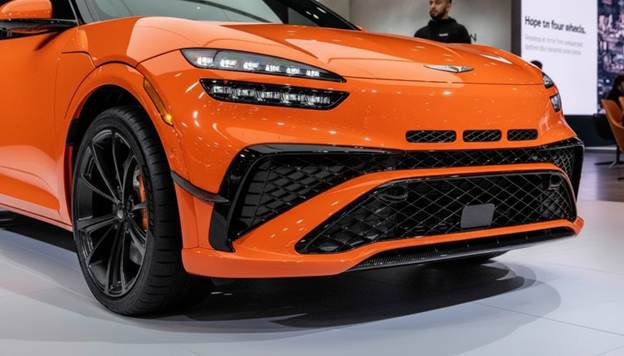
The signature Magma orange paint is more than just a color; it’s a branding exercise reminiscent of Ferrari’s Rosso Corsa or Kawasaki Green, signaling performance from a mile away. But beyond the paint, the quality of execution is where Genesis is arguably pulling ahead of Mercedes. Recent Mercedes offerings have faced criticism for an over-reliance on glossy black plastics and creaky interiors. In contrast, Genesis has doubled down on tactile materials—knurled metal, Nappa leather, and suede.
The interior of the GV60 Magma retains the "Crystal Sphere" shifter—a piece of automotive theater that rotates when the car is started—but adds bucket seats and specific Magma interface graphics. It feels substantial in a way that some modern luxury EVs do not, striking a balance between the tech-forward minimalism of a Tesla and the ornate, screen-heavy approach of the Mercedes Hyperscreen.
Performance: Putting AMG on Notice
Let's talk numbers, because in this segment, they matter. The GV60 Magma is expected to output 640 horsepower (likely in boost mode), a figure that eclipses the Mercedes-AMG GLA 45 S and rivals the output of much larger, more expensive machinery. While the Mercedes-AMG GLA 45 wrings an impressive 416 hp from its 2.0-liter turbo-four, the GV60 Magma leverages the instant torque of dual electric motors to deliver a 0-60 mph time that will likely shatter the 3.5-second barrier.
However, straight-line speed is a commodity in the EV era. Any manufacturer can bolt in a big battery and a strong motor. Where the GV60 Magma attempts to differentiate itself is in suspension tuning and track capability. Genesis engineers have widened the track and retuned the suspension geometry to ensure this heavy EV can dance in the corners. This is a direct challenge to the BMW M division and AMG, who have historically owned the "handling" metric. If Genesis can deliver a crossover that hides its weight as well as the Hyundai Ioniq 5 N (with which it shares a platform), AMG should be genuinely worried.
In terms of cost, early estimates place the GV60 Magma in the $74,000 to $80,000 range. When you consider that a well-optioned AMG GLA 45 S or an electric Mercedes-AMG EQE SUV can easily soar past six figures, the Genesis presents a compelling value proposition. You are essentially getting supercar acceleration and Bentley-levels of interior finish for the price of a mid-range German SUV.
The Visceral Connection: Artificial Sound and Virtual Shifting
Perhaps the most controversial aspect of the GV60 Magma—and the most fascinating from a technological standpoint—is its attempt to simulate the soul of a gas car. The biggest complaint enthusiasts have about EVs is that they are appliance-like: fast, but sterile. Genesis is addressing this head-on with virtual gear shifting and artificial sound.
This system, likely adapted from the widely praised N e-shift in the Ioniq 5 N, interrupts torque delivery to simulate the "jolt" of a dual-clutch transmission. It sounds counterintuitive to introduce inefficiency into an EV, but human beings are analog creatures. We crave feedback. By simulating a redline and shift points, Genesis gives the driver a way to meter power output in corners that a linear EV pedal cannot match.
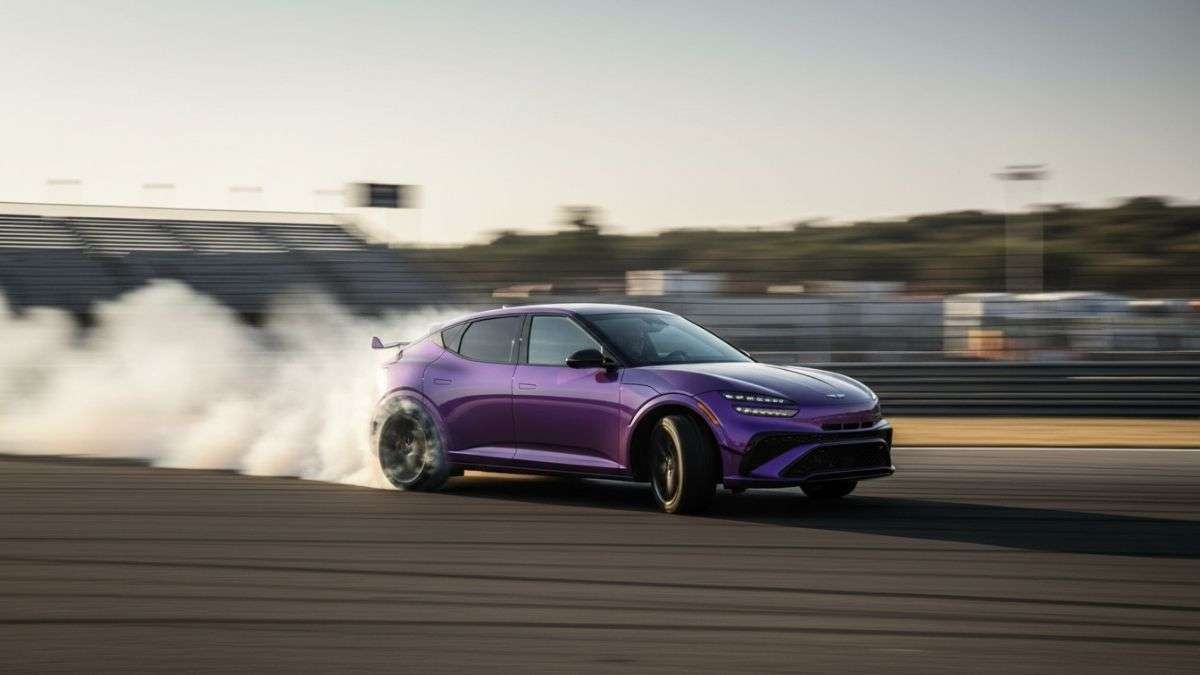
Furthermore, the inclusion of a Virtual Drift Mode speaks to the car's software-defined nature. By manipulating the torque split between the front and rear motors, the car can induce oversteer at the press of a button. This is technology serving emotion. While Mercedes is piping in "spaceship" sounds into their EQ models, Genesis is realizing that what drivers actually miss is the mechanical engagement of the past. They are using digital tools to recreate an analog experience, a strategy that could be the key to winning over the die-hard petrolheads currently clutching their AMG V8 keys.
Wrapping Up
The Genesis GV60 Magma is more than a new model; it is a watershed moment for the brand. It demonstrates that Genesis has the confidence to stop following and start leading. By combining 640 horsepower with a chassis capable of handling it, and then layering on software that mimics the engagement of internal combustion, they have created a product that exposes the current identity crisis happening at Mercedes-AMG.
Mercedes is currently caught between two worlds, downsizing engines while trying to convince buyers that hybrids are the future of performance. Genesis, unburdened by a century of combustion legacy, has simply built the most engaging EV they could imagine. While the badge snobbery that protects the German brands remains strong, products like the GV60 Magma are chipping away at that fortress, one virtual gear shift at a time.
Disclosure: Images rendered by Artlist.io
Rob Enderle is a technology analyst at Torque News who covers automotive technology and battery developments. You can learn more about Rob on Wikipedia and follow his articles on Forbes, X, and LinkedIn.
Set Torque News as Preferred Source on Google
Follow us today...