


If you’ve been watching the automotive space as long as I have, you’ve learned to distinguish between "lab experiments" and "market shifts." For a decade, autonomous vehicles (AVs) were firmly in the former category—cool tech that worked mostly in sunny Phoenix and occasionally got confused by a wayward traffic cone. But this week, the game changed. Waymo just closed a staggering $16 billion funding round, valuing the Alphabet subsidiary at $126 billion.
To put that in perspective, that’s more than the market cap of Ford and General Motors combined. This isn't "R&D money"; this is "deployment money." We are witnessing the birth of a global utility that will eventually make the concept of "owning a car" look as archaic as owning a horse for your daily commute.
The Tipping Point for Urban Ownership
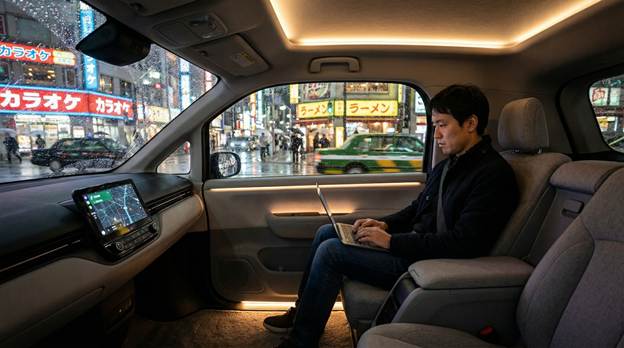
We’ve been talking about the "death of car ownership" for years, but the timeline just moved up. With this level of capital, Waymo isn't just adding a few cars to San Francisco; they are scaling a global presence aimed at 20+ new cities including London and Tokyo.
In major metros, the transition from owning a car to subscribing to a fleet is now a "when," not an "if." Within the next five to seven years, if you live in a city, the economic argument for owning a depreciating, 4,000-pound hunk of metal that sits idle 95% of the time will evaporate. You won't buy a car; you’ll subscribe to a mobility tier.
The Brutal Math of the Autonomous Subscription
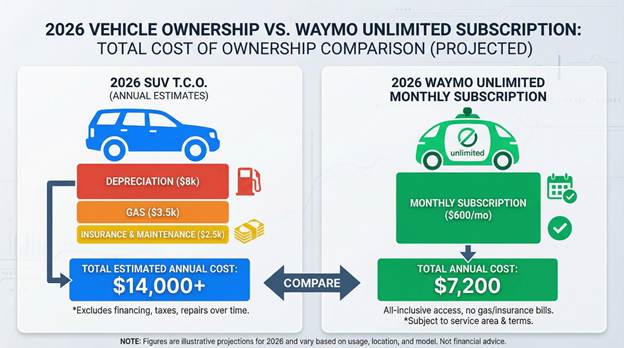
As a former accountant, I always look at the numbers, and they are brutal for the traditional car industry. Currently, the cost of a ride-hailing service is dominated by the human driver—roughly 60% of the fare. By removing the driver and utilizing an all-electric fleet, the cost per mile is projected to drop from roughly $2.00 in a traditional Uber to well under $1.00 per mile by 2030.
When a monthly Waymo subscription—including insurance, fuel (electricity), and maintenance—costs half of what a car payment and insurance premium do, the "pride of ownership" will be replaced by the "joy of extra cash." For the average family, this shift could reclaim $10,000 to $15,000 in annual household income. That is a life-changing economic stimulus.
The Competitive Landscape: Waymo vs. Everyone Else
Right now, Waymo is the undisputed king of the hill. While Tesla talks about "Full Self-Driving" (which still requires a human to pay attention), Waymo is already doing it. They’ve surpassed 100 million fully autonomous miles and are delivering 400,000 paid rides per week.
- Tesla: Still relies on a vision-only system that many experts (myself included) believe lacks the redundancy needed for true L4/L5 autonomy without a steering wheel.
- Zoox (Amazon): Has a brilliant "carriage-style" vehicle, but they are lagging in geographic deployment.
- The Chinese Players (Baidu/Apollo): They are scaling fast in China, but geopolitical tensions make their entry into Western markets a massive question mark.
Waymo’s $16 billion war chest allows them to out-spend and out-scale everyone while perfecting the "Waymo Driver" AI across different vehicle platforms like Zeekr and Hyundai.
The Obsolescence of the Human Driver
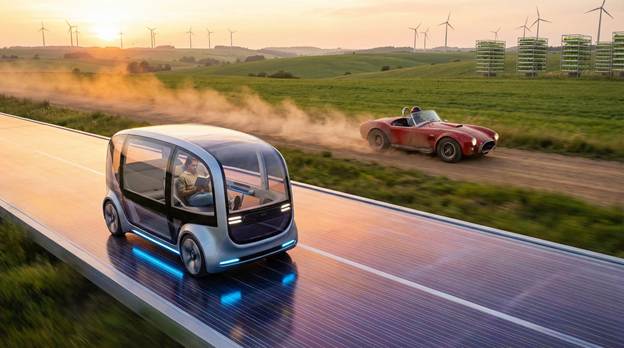
So, when do we stop driving? If you look at the commercial trucking sector, we are already seeing driverless hauls on highways. For passenger cars, I expect human drivers to become "mostly obsolete" in developed urban centers by 2035.
By 2040, driving a car yourself will likely be a hobby—like sailing or horseback riding—restricted to private tracks or specific rural zones. The safety data is simply too compelling to ignore. Waymo’s data already shows a 90% reduction in serious injury crashes compared to human drivers. Insurance companies will eventually price human drivers off the road through astronomical premiums.
Unexpected Problems and Surprising Benefits
We aren't prepared for the "zombie car" problem—empty AVs circling blocks to avoid parking fees, potentially doubling traffic congestion if not regulated. We also aren't ready for the massive displacement of 4.7 million professional driving jobs in the US alone.
However, the benefits will be startling. Imagine a city with no parking lots. Those asphalt deserts can become parks, affordable housing, or expanded sidewalks. For the elderly and the disabled, the "freedom of the road" will finally be literal, regardless of their physical ability to operate a vehicle.
Wrapping Up
Waymo’s $16 billion injection is the final nail in the coffin for the 20th-century model of personal car ownership. We are moving toward a world where transportation is a background utility, safer and cheaper than we ever imagined. The only question left is: what will you do with the extra two hours of your day and the extra $1,000 in your pocket every month?
Disclosure: Images rendered by Artlist.io
Rob Enderle is a technology analyst at Torque News who covers automotive technology and battery developments. You can learn more about Rob on Wikipedia and follow his articles on Forbes, X, and LinkedIn.
Set Torque News as Preferred Source on Google
Follow us today...



Comments
Ya know, but taking a 2000…
Permalink
Ya know, but taking a 2000-mile family road trip in a Waymo would just be weird, wouldn't it?