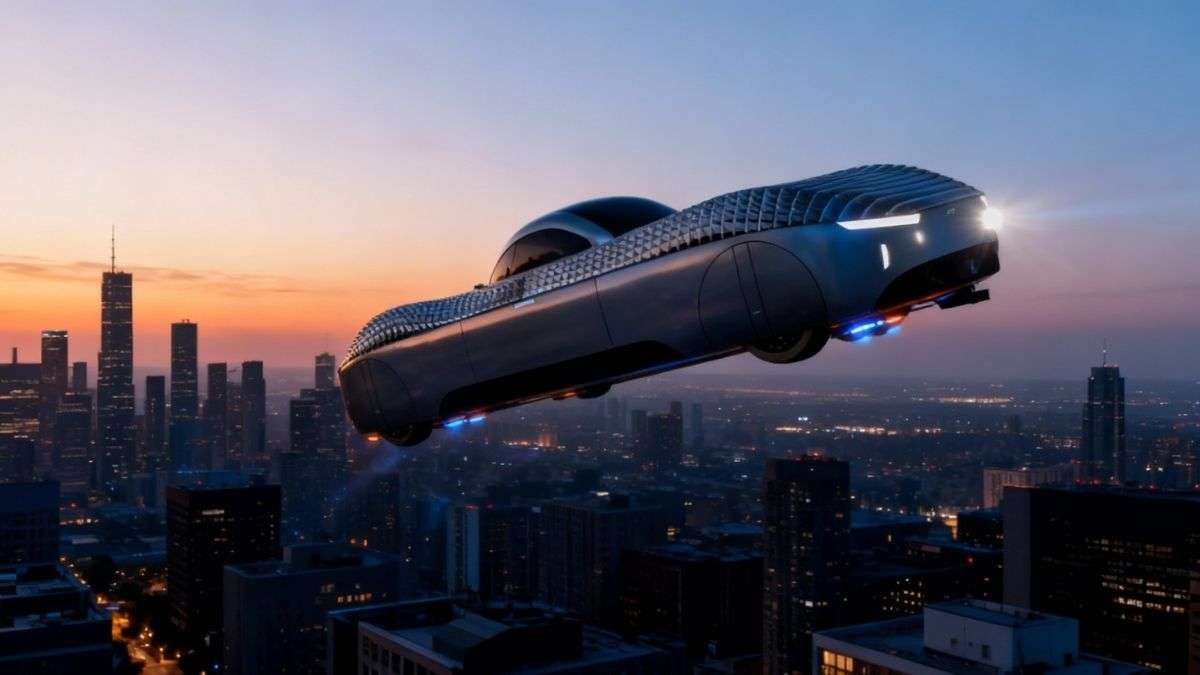

For decades, the "flying car" has been the ultimate symbol of a future that never seems to arrive. It’s been a staple of science fiction and the fever dream of inventors, always just over the horizon. Now, Alef Aeronautics, a California-based startup, claims it’s on the verge of making that dream a reality with its "Model A." With a sleek, futuristic design, a staggering $300,000 price tag, and reports of nearly 3,000 preorders, Alef has captured the public's imagination.
But as we approach their ambitious target of starting deliveries by year's end, a healthy dose of journalistic skepticism is required. Is the Model A truly the dawn of a new era in transportation, or is it another magnificent, high-priced concept destined to remain grounded by the harsh realities of physics, finance, and federal regulation?
What Exactly is the Model A?
Before dissecting its prospects, we must understand what the Model A is—and what it isn’t. Unlike the "air taxi" concepts being developed by competitors like Joby and Archer, which are essentially small, human-carrying drones, the Alef Model A is being billed as a true "flying car."
Its groundbreaking design features a carbon-fiber body with a mesh top. This allows air to flow through to eight propellers housed within the chassis, providing the vertical lift needed to take off and land like a helicopter. Once airborne, the entire vehicle pivots 90 degrees onto its side, with the cockpit gimballed to keep the driver (or pilot) facing forward. In this orientation, the car's body acts as a bi-plane wing, and separate propellers provide forward thrust.
Critically, the Model A is also designed to be a "low-speed vehicle" (LSV) on the ground, capable of driving short distances on public roads and, crucially, fitting into a standard garage. This is its key differentiator: a seamless transition from driveway to airway.
Production: Closer Than Ever, or Light-Years Away?
Alef Aeronautics made headlines in 2023 when it announced it had received a Special Airworthiness Certificate from the Federal Aviation Administration (FAA). This was widely reported as the "first" such certificate for a flying car, fueling speculation that production was imminent.
However, this is a crucial distinction. This certificate is not "type certification," which is what a new aircraft needs for mass production and commercial sale. Instead, it’s an experimental certificate. This allows Alef to fly its prototypes for specific, limited purposes like research, development, and exhibition. It’s an essential step, but it’s the first step on a mountain—not the summit.
Full FAA certification for a novel aircraft design is a notoriously slow, complex, and expensive process that often takes the better part of a decade. For a vehicle as radical as the Model A—one that must also satisfy National Highway Traffic Safety Administration (NHTSA) standards for road use—the regulatory mountain is twice as high.
That $300K Price and the 3,300 Preorders
Alef claims it has amassed over 2,850 preorders (with some reports, including the user's prompt, citing as many as 3,300), each backed by a $150 deposit (or $1,500 for the "priority" queue). On paper, this represents nearly a billion dollars in potential revenue, a staggering figure that suggests a rabid market is waiting.
But will these preorders convert to actual sales? It’s highly unlikely. A $150 fully-refundable deposit is not a purchase commitment; it’s a low-cost, zero-risk way to buy a ticket for the "what if." It’s reserving a spot in line for a dream. When the time comes to wire $300,000 for the final product, the vast majority of these deposit-holders will almost certainly evaporate.
The $300,000 price itself places the Model A squarely in the realm of supercars and luxury yachts. This is not a vehicle for the masses. It is a toy for the ultra-wealthy. While this niche market is lucrative, it’s also fickle. The first iteration of a new technology is often buggy, limited, and expensive. The Model A is unlikely to be an exception. The "early adopters" for this product will be paying for bragging rights, not for a practical transportation solution.
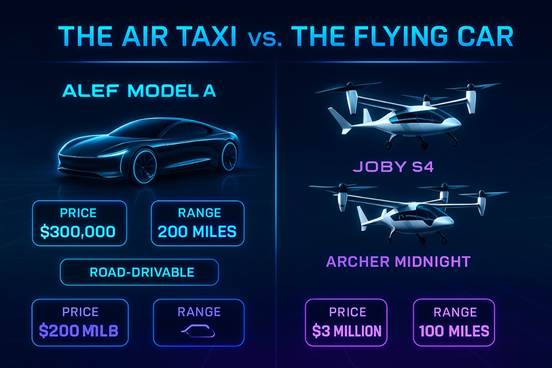
The Air Taxi vs. The Flying Car
The Model A’s unique "car-plane" approach sets it apart from the rest of the burgeoning advanced air mobility (AAM) market. Competitors like Joby Aviation and Archer Aviation are not building "flying cars." They are building eVTOL (electric Vertical Take-Off and Landing) aircraft.
These are, for all intents and purposes, electric helicopters designed to operate as part of an air taxi service, flying between dedicated "vertiports." You will not buy one, nor will you park it in your garage. You will summon one with an app, much like an Uber.
This business model, while less romantic, is arguably more realistic. By avoiding the complexities of road-drivability, Joby and Archer can focus purely on aerodynamic efficiency, safety, and a clear service-based business model. They face the same FAA certification hurdles, but not the added nightmare of NHTSA compliance.
The Model A, by contrast, is a compromise. Its design must be passable on the road (where it’s limited to low speeds) and functional in the air. As any engineer knows, a vehicle designed to do two things rarely does either as well as a vehicle designed for one.
Will They Meet the Year-End Delivery Date?
In a word: no.
Alef's stated ambition to begin deliveries by the end of 2025 has always seemed wildly optimistic. As of late 2025, with only an experimental certificate in hand, the notion of delivering a fully certified, consumer-ready, $300,000 vehicle is pure fantasy.
There will be no commercial deliveries this year. The more pressing question is whether there will be any this decade. Launching a new car company is legendarily difficult; just ask Tesla or Rivian. Launching a new aircraft company is even harder. Launching a hybrid of the two is a challenge of almost unimaginable complexity.
Wrapping Up
The Alef Aeronautics Model A is a beautiful and inspiring piece of engineering. It’s a bold, imaginative swing for the fences that captures the exact future we were all promised by The Jetsons. The design is brilliant, and the team behind it is undoubtedly talented.
However, as a commercially viable product, it remains a very, very long shot. The regulatory hurdles are monumental, the production challenges are immense, and the market at its $300,000 price point is a tiny, unproven sliver. The preorders are a sign of public enthusiasm, not a reliable sales forecast.
The Model A has done something remarkable: it’s made us all dream of the flying car again. But for now, and for the foreseeable future, it remains just that—a dream. Don’t sell your Toyota just yet.
Disclosure: Images rendered by ChatGPT 5.0
Rob Enderle is a technology analyst at Torque News who covers automotive technology and battery developments. You can learn more about Rob on Wikipedia and follow his articles on Forbes, X, and LinkedIn.
Set Torque News as Preferred Source on Google
Follow us today...