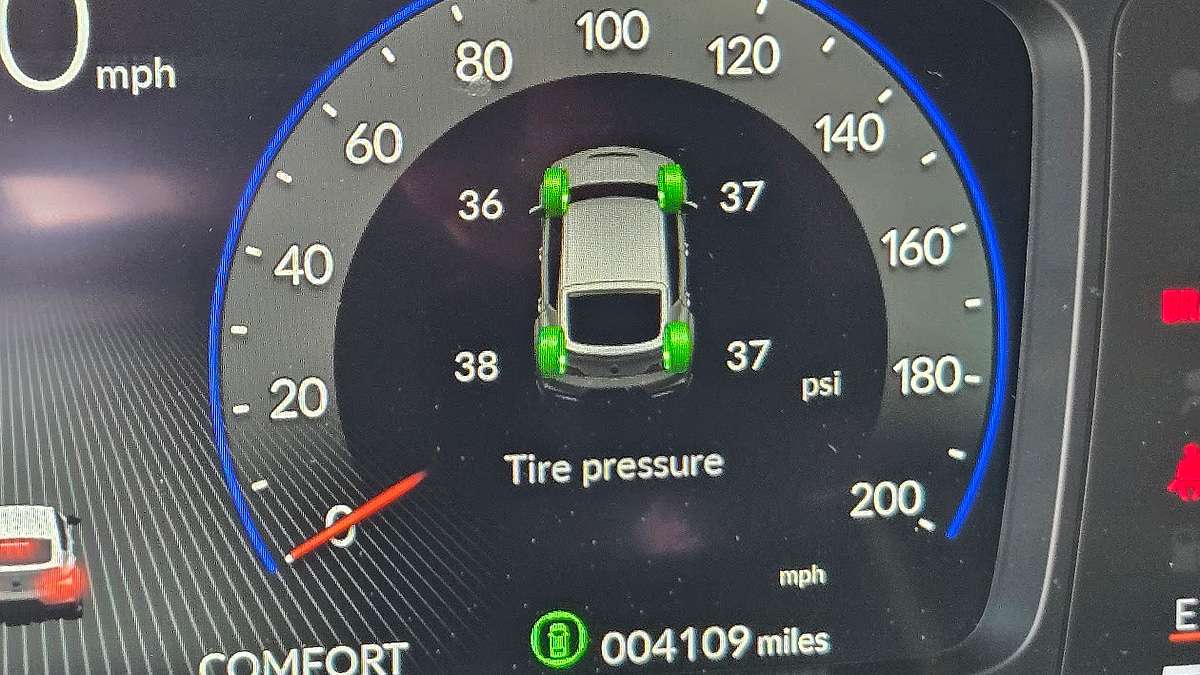

If your car’s ride feels harsh, it’s not the suspension. Every spring, a rough ride feeling leads thousands of drivers to think something is wrong with their car. Nothing is. Their tires just haven't gotten the memo that winter is over. As temperatures rise, so does the pressure in your tires. This makes your car feel like it’s lost its cushion, because it literally has, and it’s all due to physics.
If your car is a Honda Accord and you've been getting TPMS alerts, the steps are essentially identical. The tire pressure monitoring system light in your Honda Accord behaves the same way, and the fix always begins at that door-jam sticker.
PV=nRT. That's the formula. I'd walk you through the derivation, but my engineering diploma is gathering dust, and I don't want to embarrass myself. The short version: gases expand or increase in pressure when heated. Your tires can't expand outward because the steel belts won't allow it, so the pressure builds inward instead. Physics is relentless that way.
The perfect pressure inside your tires was carefully calculated by engineers when your car was designed. Too little, and the car is sloppy and unsafe on the road. Too much and the ride is harsh. You see, the sidewall of your tire is your friend. It absorbs minor road impacts and imperfections to smooth out the ride and make it pleasant. If your tires are overinflated, you lose that first line of defense against potholes and railroad crossings.
Tire pressure increases roughly one PSI for every ten degrees Fahrenheit of temperature gain. Fill your tires to 33 PSI on a 30-degree January morning, and by the time an 80-degree May afternoon rolls around, you're sitting at 38 PSI. That’s five pounds over spec, and your spine knows it.
The editors at Edmunds put their own staff's tire inflation habits to the test and found that the most common mistake drivers make is assuming that more air is always better, when in fact, a tire running just 5 PSI above spec noticeably degrades both ride quality and braking performance.
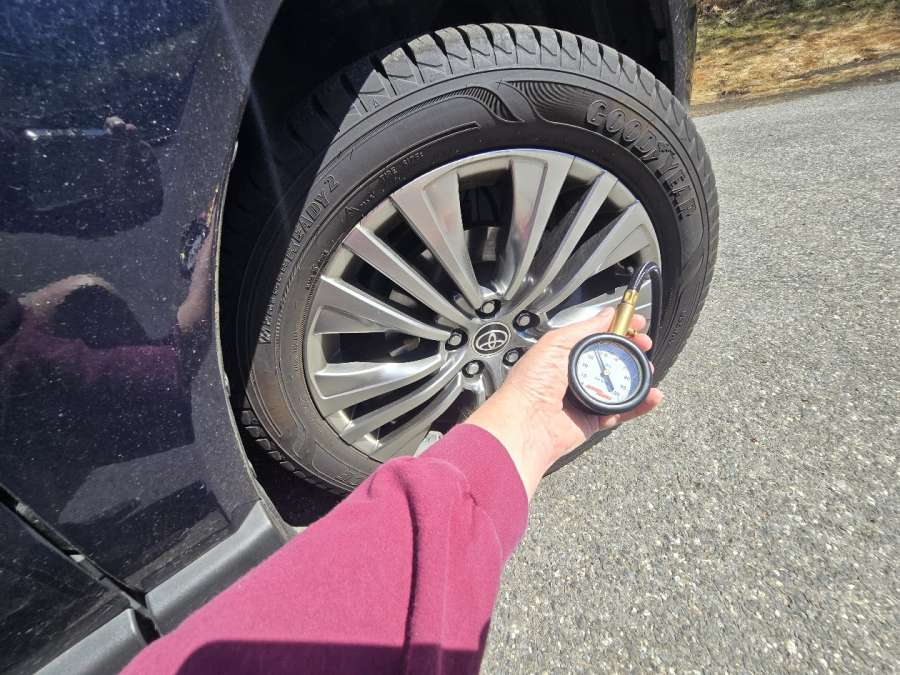
How To Set Your Car’s Tire Pressure
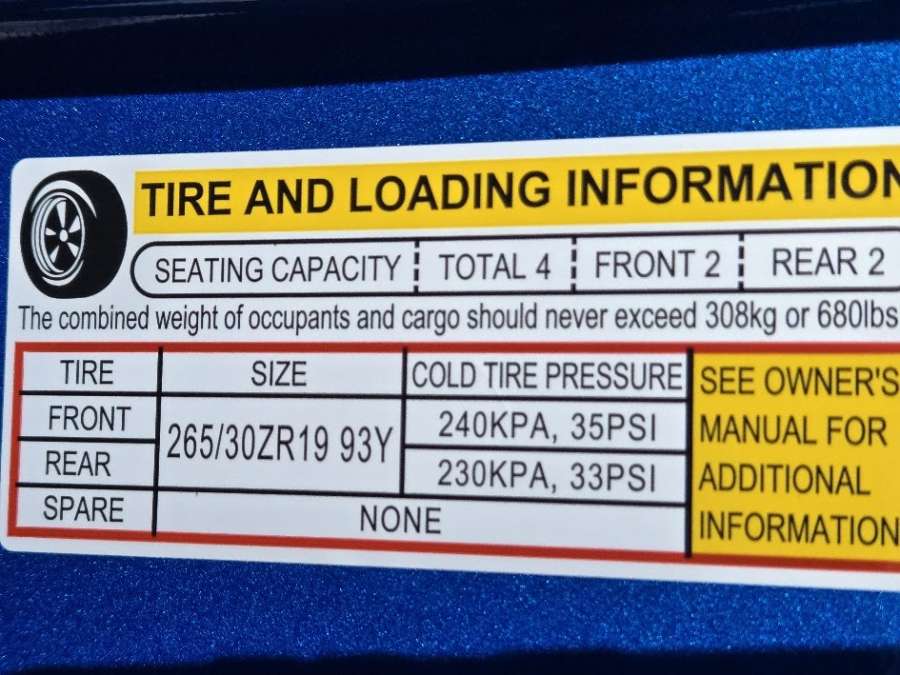
Always check your tire pressure in the morning before you drive. The first step is to find something to kneel on. A piece of cardboard will do. You need that so you don't put holes in your favorite jeans. Next, open your driver’s side door and look at the door jam. See that yellow sticker there? It tells you what the proper tire pressure is for your specific car. Let’s use 33 PSI as an example. It’s a common pressure for many vehicles today.
Find yourself a pressure gauge. Amazon has them. The hardware store has them. Dollar General, Walmart, and all those places have a tire pressure gauge. Or ask a friend. If I’m your friend, ask me; I have about 20 pressure gauges. I’ll give you one to keep.
Find the valve stem on your tire, and undo the cap. Check the pressure first. If it is higher than the door jam sticker suggests, let some out. Every pressure gauge has a little pin on the back that you can press into the Schrader valve (the small pin inside the stem opening) to release air. Do it in three-second increments, and then re-check until you get the pressure down to the setpoint. Some fancy pressure gauges have a button you can press to watch the pressure drop. I like those.
After you are done, be sure to put that little cap back on the stem. It likely rolled under the car, but it’s important. This sounds more complicated than it is. The whole job takes about two minutes.
Once you're done, your car's tire pressure monitoring system will update within a mile or two of driving. If the dashboard warning light goes on after that, one tire may still be out of range and worth rechecking.
If you drive a Chevy Bolt or another EV and notice a disagreement between your gauge and what the car says, you're not alone. A Chevy Bolt owner reporting their tire pressure gauge reading 39 while the car said 32 is a surprisingly common scenario that often comes down to an improperly calibrated gauge, not a faulty sensor.
Set It and Forget It: Almost
Remember to check the pressure again around Halloween, and add back a few PSI as temps drop. Then check again around New Year's Eve. Make this your habit, and your car will always have the best possible ride and best fuel efficiency. Two minutes twice a year. That's the difference between a car that rides like it should and one that has you Googling suspension shops.
John Goreham is a 14-year veteran of Torque News. An accomplished writer and a long-time expert in vehicle testing, Goreham also serves as the Vice President of the New England Motor Press Association and has a growing social media presence. He’s also a 10-year staff writer and community moderator for Car Talk. Goreham holds a B.S. in Mechanical Engineering and an undergraduate Certificate in Marketing. In addition to vehicle and tire content, he offers deep dives into market trends and opinion pieces. You can follow John Goreham on X and TikTok, and connect with him on LinkedIn.
Set Torque News as Preferred Source on Google
Follow us today...