
The news this week about traffic deaths is that the New York Times scrutinized pedestrian death statistics and estimated that “...about 200 to 400 pedestrians a year would not have died if vehicles had remained approximately the same size over the past quarter-century.” That is a fascinating statement. Here’s another one that is not an estimate, but factual, based strictly on forensics and police reports:
Alcohol was a factor in 3,044 pedestrian deaths in 2024 alone. That’s 43% of all pedestrian deaths.
It was not hard to find that statistic. It’s listed right in the summary of the data that the New York Times scrutinized, looking for a way to blame big vehicles for something to scare readers about. Why isn’t "alcohol is killing pedestrians" the headline?
The reason is fact fatigue. We’re all so tired of hearing that alcohol kills us that instead of focusing on the top-line killer, we now nibble around the edges, looking for novel, "estimated" ways to report on. It’s better for clicks, pageviews, subscription renewals, and all that jazz if the new killer is somehow more interesting than self-administered liquid poison. Nobody wants to be bored by the obvious truth. They want to be seduced by a new possible fear.
The New York Times looked for a correlation between hood height and "...the recent increase in pedestrian deaths." Let’s pause here for a moment and look at another inconvenient fact. Pedestrian deaths have not recently risen. They went down as of the last data, which is calendar 2024, and reported just this past month. It was not a small decline. The data show that 287 fewer pedestrians were killed in 2024 than in 2023. Not more. Less. If you want to be outraged by the “increase in pedestrian deaths,” you’re going to really dislike this next fact. 2024 had the fewest pedestrian traffic deaths in the past four years. Remember, these are the most recent years on record; the 2024 data is the newest and most current available.
The Disconnect Between the Media’s Portrayal of Pedestrian Traffic Deaths and the Reality
When the media or even NHTSA create a story about pedestrian deaths, they include an image to make our brains wake up and focus on the issue. Car and Driver, for example, uses an image of pedestrians in a crosswalk, in groups, in daylight. The faces are blurred, so it’s hard to tell the gender. NHTSA uses a cartoonish image of a parent walking, holding a child’s hand. Now let’s look at what the facts say about how pedestrians die in traffic accidents.
These are facts pulled from the NHTSA’s most recent data:
1) The age of most pedestrians killed in traffic is 40-44 years old. Kids 10 and under make up less than 10% of deaths. Of the approximately 7,000 total deaths, kids under 10 make up about 600.
2) Seven out of ten pedestrians killed are male.
3) 76% of pedestrian deaths happen in the dark, according to NHTSA. Not daytime, like in Car and Driver’s Image.
4) A whopping 84% of all pedestrians killed are killed in cities.
5) 73% of pedestrians killed are not at an intersection.
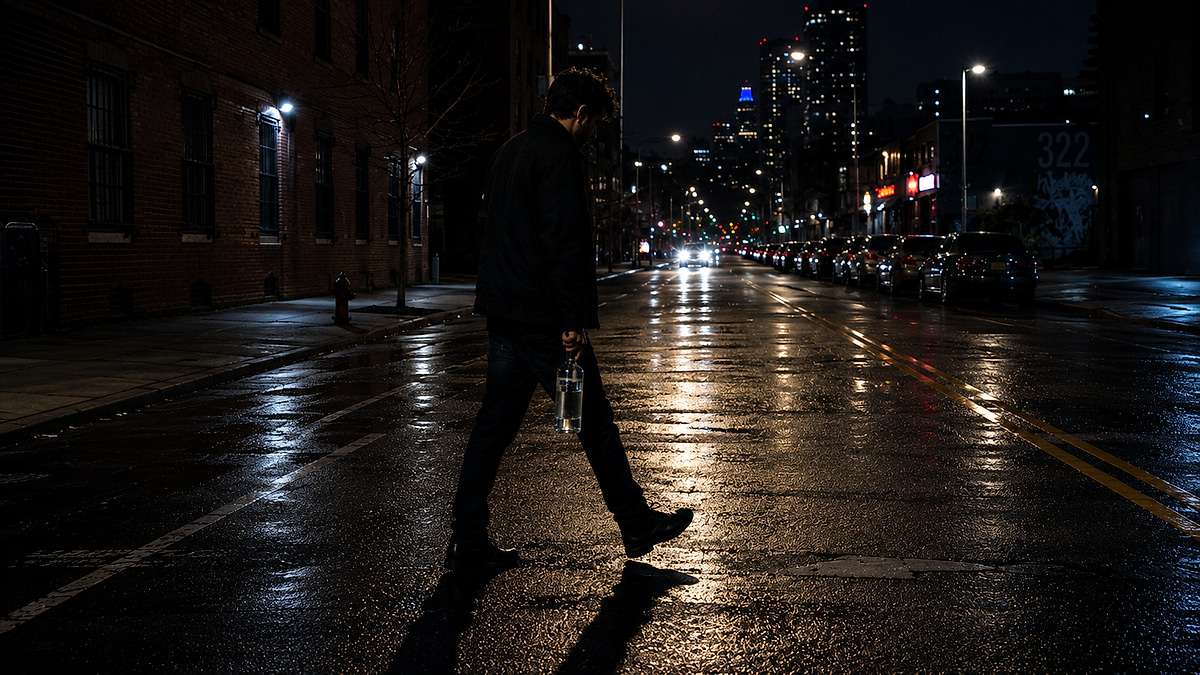
So, let’s create the most likely scenario of a fatal accident involving a pedestrian. An adult man walking in the dark in a city, not at an intersection, and the chances are very high that either the pedestrian, the driver, or both have been drinking.
Let’s now circle back to the headline we chose, which pins the blame for a lot of pedestrian deaths on alcohol. NHTSA has very accurate, very detailed information on this subject because police and coroners use technology to measure the blood alcohol levels of the pedestrians and drivers involved.
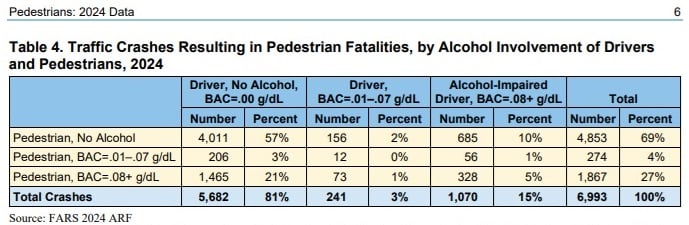
Generally, it’s the pedestrian who is impaired, not the driver of the vehicle that strikes them. 27% of pedestrians killed had a blood alcohol content (BAC) of 0.8% or greater in 2024, according to NHTSA. That means the pedestrian was drunk, for those of you not up to speed on BAC levels. Hammered, not buzzed. An additional 3% are buzzed with a measurable BAC, but below the legal definition of drunk. So, nearly a third of the people who die by being hit by a vehicle are impaired by alcohol. Mostly males at night. Mind you, this does not count the pedestrians who are under the influence of other substances. Just alcohol. In some fatal accidents, everyone involved is either drunk or at least under the influence of alcohol. We’ll let you tease that out of the data if you wish. Here's the direct link.
Care to guess how many drivers who kill pedestrians with their vehicle are legally drunk according to police measurements? It’s roughly 15%. Shocked that it’s the pedestrians who are more often than the drivers who are drunk by about a 2-to-1 ratio? Maybe we automatically assume that the pedestrian was not at fault when they were killed. Why do we assume that? Car bad. Walker good. That’s how we think, regardless of what the data say.
Knowing that thousands of pedestrians are killed each year while they are drunk and that almost half of all pedestrian deaths involve alcohol, do you still think the New York Times well-researched, well-crafted, and widely re-reported story about 200 to 400 pedestrians a year being killed by vehicles due to the height of vehicle hoods is really a key public safety consideration? Tell us in the comments below.
About the Author:
John Goreham has lost family members, friends, and neighbors to drunk drivers. He has never owned a full-size pickup or large SUV. An accomplished writer and a long-time expert in vehicle testing, Goreham also serves as the Vice President of the New England Motor Press Association and has a growing social media presence. He’s also a 10-year staff writer and community moderator for Car Talk. Goreham holds a B.S. in Mechanical Engineering and an undergraduate Certificate in Marketing. In addition to vehicle and tire content, he offers deep dives into market trends and opinion pieces. You can follow John Goreham on X and TikTok, and connect with him on LinkedIn.
The top of the page image was generated to reflect the facts presented in the story. The chart showing alcohol-related pedestrian deaths is taken from the U.S. Department of Transportation's National Highway Safety Administration report dated June 2026. It is report DOT HS 813 818, and a link to the report is provided in the story.
Set Torque News as Preferred Source on Google
Follow us today...