
For the better part of a decade, the automotive industry has existed in what could be described as a "digital prison." As the race toward full autonomy accelerated, the world’s most ambitious electric vehicle (EV) manufacturers found themselves tethered to a handful of tech giants, most notably Nvidia, to provide the high-performance computer chips that act as the car's "brain." While these off-the-shelf processors are undeniably powerful, they impose a structural ceiling on innovation.
Car companies are forced to design their vehicles around someone else’s hardware roadmap, their pricing, and their rigid technical limitations. This dependency has slowed progress in areas like energy efficiency, real-time decision-making, and seamless over-the-air updates.
NIO Breaks Free: The Birth of the Shenji NX9031
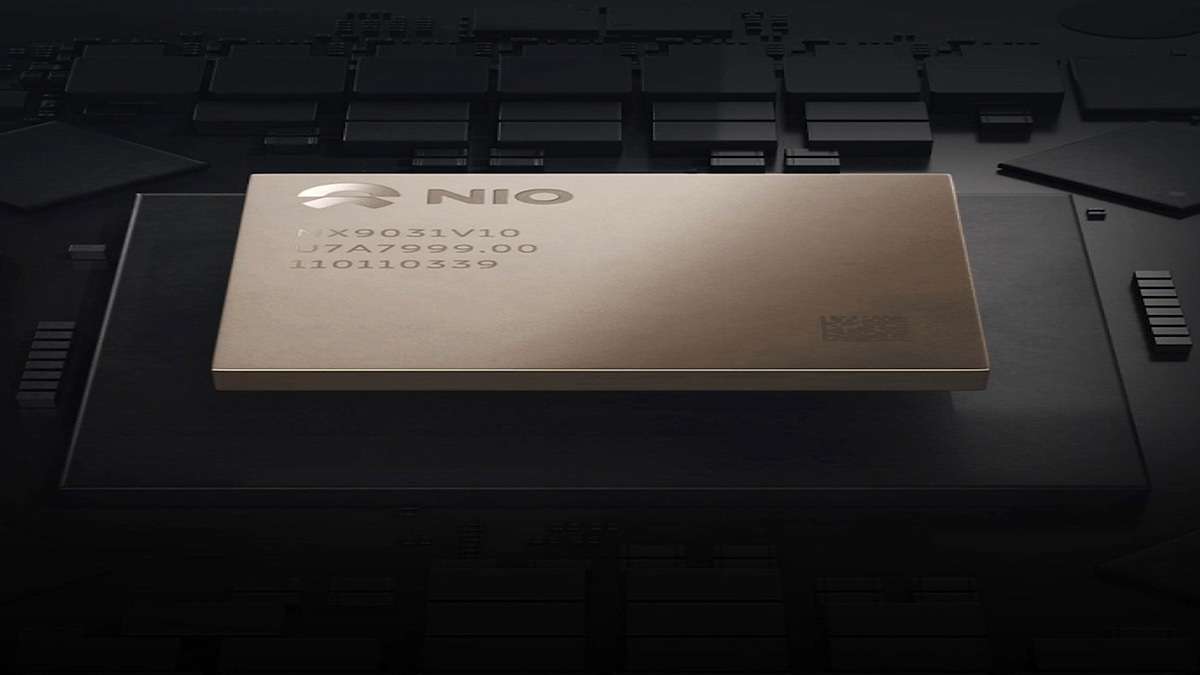
NIO, the Chinese EV pioneer, has officially shattered this paradigm. With the launch of its proprietary 5-nanometer autonomous driving chip, the Shenji NX9031, the company has transitioned from a mere consumer of silicon to a silicon architect. This is not just another car part; it is a massive strategic move that fundamentally changes how we think about the future of electric vehicles. By taking full control of its computing hardware, NIO is unlocking new levels of performance, efficiency, and customization that were previously unimaginable.

It’s a "Tailor-Made" Brain
Most automakers rely on "off-the-shelf" chips designed to be general-purpose tools. They are "jacks-of-all-trades" meant to work for a wide variety of car brands, which inevitably leads to compromises. NIO’s Shenji chip is different. Because NIO designed both the high-level software (the "World Model" AI that drives the car) and the physical hardware (the chip itself), the two work in perfect, symbiotic harmony.
Think of it like a professional athlete wearing a custom-fitted, high-performance shoe instead of a generic one bought off the rack. Because the NX9031 was built specifically to process the unique neural networks of NIO’s AI, it handles data with much higher precision and lower latency than a generic chip ever could.
Key Advantages of Vertical Integration
•Zero Compromises: Software engineers optimize code directly for the hardware—no more workarounds for third-party limitations.
•Blazing-Fast Execution: New AI features deploy instantly with over-the-air updates.
•Superior Real-World Performance: Smoother handling of complex urban scenarios like sudden pedestrian movements or unpredictable traffic.
•Future-Proof Design: The chip evolves alongside NIO’s software, keeping vehicles smarter year after year.
Massive Efficiency: The "Four-in-One" Trick
In the past, high-level autonomous systems required a massive bank of processors, often four separate Nvidia Orin-X chips, all working in tandem to process data from cameras, LiDAR, and radar. This setup is a nightmare for engineering: it takes up significant physical space, generates a massive amount of heat, and consumes precious battery energy.
NIO’s new Shenji chip is a masterclass in efficiency. Because it was architected for this specific workload, a single NX9031 chip can handle the same processing tasks that previously required four older-generation chips.
Why This Efficiency Matters for Drivers
• Lighter Vehicles: Reduced hardware weight improves handling and range.
• Cooler Operation: Less heat means smaller cooling systems and lower maintenance.
• Extended Battery Life: More miles per charge without sacrificing advanced driver-assistance systems (ADAS).
• 5nm Powerhouse: Over 50 billion transistors deliver flagship performance while sipping far less power.
The Money-Making "Side Hustle"
Here is the part most industry observers are still missing: NIO isn't just keeping this technology to themselves. They have created a dedicated subsidiary, Anhui Shenji Technology, to manage this business.
Profitability Through Licensing
• Turn R&D into Revenue: What was once a costly “cost center” now generates income by licensing chips to other automakers and robotics firms.
• Economies of Scale: Higher production volumes lower the unit cost for NIO’s own vehicles.
• Competitive Pricing Power: Helps keep mass-market models like Onvo and Firefly affordable.
• Broader Industry Impact: Positions NIO as a supplier of the “operating system of mobility,” not just a car maker.
Why This is the Future: "Silicon Sovereignty"
We live in a world where global supply chains can be disrupted by trade tensions, export bans, or manufacturing bottlenecks at a moment’s notice. By owning the blueprint for their own chips, NIO is protecting its future. They are no longer at the mercy of third-party suppliers who might prioritize other customers or face their own manufacturing hurdles.
Benefits of Silicon Sovereignty
•Unrestricted Innovation Speed: Upgrade vehicle intelligence instantly without waiting for external roadmaps.
•Geopolitical Independence: A strategic shield against supply-chain risks.
•Continuous Over-the-Air Improvements: Features like intelligent navigation and predictive safety evolve directly from NIO’s labs.
•Highest Safety Standards: ISO 26262 ASIL-D compliance built in from day one.
The Verdict: A New Era for NIO
NIO is no longer just a car manufacturer; they have become a high-end tech firm. While the rest of the industry is still waiting on tech giants to hand them the tools they need, NIO has spent the time and money to build their own.
The Shenji NX9031 is proof that the next generation of cars won't be defined by who has the best engine, but by who has the smartest, most integrated "brain." NIO is betting that if they control the hardware, they control the future of the road. This vertical integration could inspire other EV makers to follow suit, sparking a new wave of innovation across the sector.
Models like the flagship ET9 already showcase the chip's capabilities in dual-chip setups for over 2,000 TOPS of combined power, while mass-market offerings such as the revamped Onvo L60 bring this advanced intelligence to more affordable segments. Even premium SUVs like the NIO ES9 benefit from the in-house tech, blending luxury with next-level autonomy.
As the EV landscape grows more competitive, NIO's move toward self-reliance in silicon sets a new benchmark. It not only enhances vehicle performance and efficiency but also opens doors for broader applications in robotics and beyond. For consumers, this translates to safer, smarter, and more efficient cars that evolve with them over time. In the end, building your own "brain" is about owning the roadmap to tomorrow's mobility. NIO has taken a bold step that could redefine what drivers expect from their EVs.
So does the idea of a car company building its own "brain" make you trust their autonomous driving features more, or do you prefer the established tech giants? Share your opinion in the comments below.
About The Author
Marc Beresford, known as Nio Admirer on X, is an automotive enthusiast with a strong interest in NIO and its vehicles. Marc regularly share NIO and EV news, updates, and analysis about the company across X, LinkedIn , and Youtube, with a focus on delivering clear and timely information to followers. Marc has been closely following NIO since 2020.
Image by Nio Pressroom.
Set Torque News as Preferred Source on Google
Follow us today...