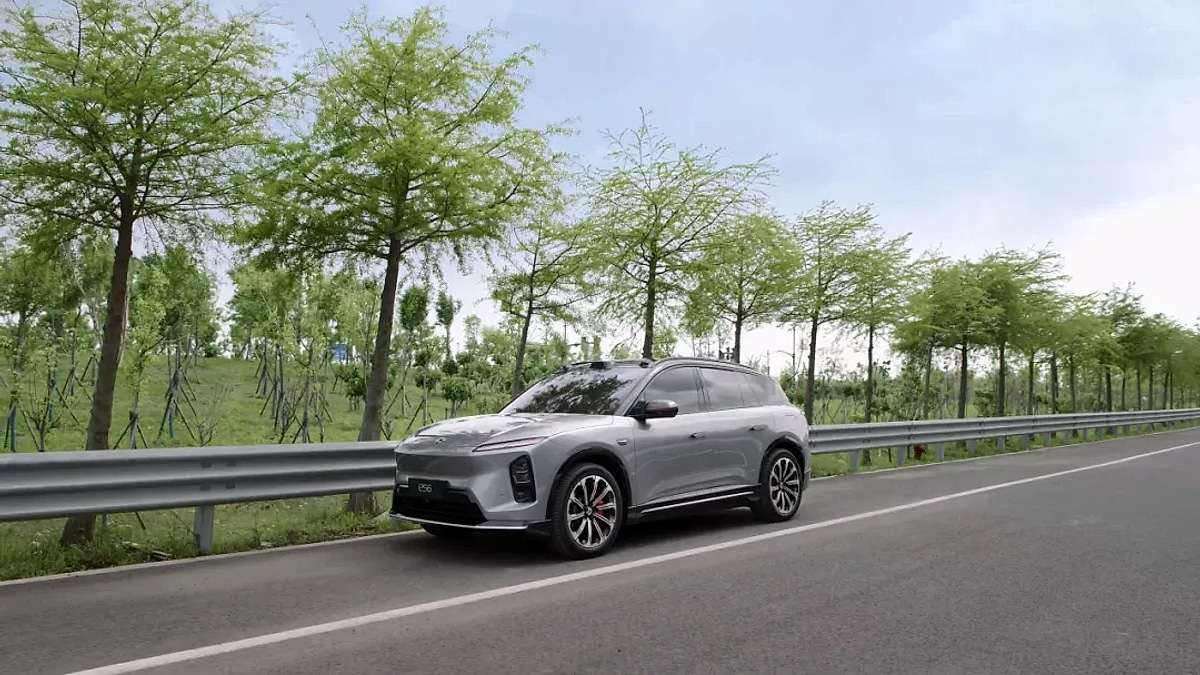

The automotive industry has reached a watershed moment in intelligent driving. Today, June 18, 2026, marks the official release of the newest NIO World Model, a technological leap that is poised to redefine our expectations of what vehicles can accomplish. As a firm believer in the potential of electric mobility to transform our daily lives, I find this development nothing short of revolutionary. By implementing a sophisticated, three layer training framework that integrates world models, supervised fine tuning, and closed loop reinforcement learning, NIO has set a new standard for the entire sector.
A Masterclass in End to End Control
What makes this release particularly compelling is the bold transition to direct actuator control. In the past, intelligent driver assistance systems relied heavily on sampled trajectory methods. While effective, these systems often lacked the nuanced, human like responsiveness that builds true driver confidence. With the new model, the system is the first in China to directly output steering, acceleration, and braking signals. This is a game changer for anyone who values a smooth and intuitive driving experience. By bypassing the traditional, fragmented approach to path planning, NIO has effectively shortened the decision making loop, resulting in a vehicle that feels less like a computer on wheels and more like an extension of the driver.
For those tracking the evolution of this technology, it is clear that we are moving toward a future where NIO’s latest software update will be remembered as a primary catalyst for safer, more efficient urban transit. The ability to handle complex, real world road features, such as tidal lanes and intricate variable lane signage, in real time is a testament to the robustness of their proprietary hardware and software integration.
The Power of Synchronization
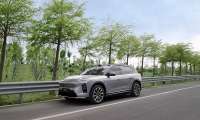
One of the most impressive feats accompanying this release is the scale and precision of the rollout. NIO has successfully deployed this update across a massive fleet of over 700,000 vehicles in China. Achieving such a seamless update across three distinct hardware platforms, including both the third party Nvidia Orin X and their own cutting edge Shenji NX9031 chip, is a logistical and engineering masterpiece.
As noted in reports on NIO’s recent technological advancementsNIO’s recent technological advancements, the company’s ability to maintain high performance standards across diverse architectures is what gives them a distinct competitive edge. They are not merely iterating on existing code; they are fundamentally rethinking the relationship between the vehicle’s sensor suite and its physical control surfaces. This NIO vehicle technology integration means that drivers of models dating back four years can suddenly access capabilities that were purely theoretical just a few months ago.
Safety Meets Human Centric Design
We have all experienced the frustrations of older driver assist systems: phantom braking, indecision at complex intersections, or rigid lane keeping that fights against natural human input. The beauty of the three layer training framework lies in its inherent balance. By using a world model to simulate and understand the environment, followed by supervised fine tuning and the safety critical feedback of closed loop reinforcement learning, NIO has created a system that is as cautious as it is capable.
This is not about replacing the human driver, but rather, about enhancing our capabilities and lowering the mental load associated with long commutes or dense urban driving. When you look at NIO’s intelligent driving vision NIO’s intelligent driving vision through this lens, it becomes apparent that the goal is harmony between human intent and machine execution. The reduction in latency and the refinement of vehicle control suggest that we are entering a phase where the vehicle’s actions are almost perfectly aligned with the driver’s own situational awareness.
Looking Toward the Future
As someone who watches this space closely, I am genuinely excited to see how this performs in the wild over the coming months. The shift toward mapless navigation is another pillar of this release that cannot be overstated. By reducing reliance on high definition maps, NIO is proving that intelligence belongs on the vehicle, not just in a static, pre recorded database. This flexibility is what will allow autonomous features to proliferate into more regions and more diverse road conditions than ever before.
We are witnessing the maturity of embodied artificial intelligence. The convergence of cloud native operating systems and real time model training has turned the modern electric vehicle into a living, evolving organism. With this update, NIO has cemented its position at the forefront of this transition, proving that they are willing to push the boundaries of what is possible in mass produced, consumer facing technology. The commitment to maintaining this level of excellence across a legacy fleet of 18 different vehicle models is the hallmark of a company that puts its users and their long term ownership experience at the very center of its strategy.
The journey toward full autonomy is long and fraught with technical hurdles, but today, the path forward looks clearer and more promising than it ever has. The NIO World Model is not just a software update; it is a declaration of intent. It tells us that the future of mobility is not a distant dream, but a tangible, driving reality that we can experience today.
What do you think about this major update from NIO? Are you excited to see end to end control becoming a reality, or do you have concerns about the role of AI in our daily driving? I would love to hear your thoughts.
Return tomorrow, or check our Torque News Home Page for more interesting automotive news articles
About The Author
Marc Beresford, known as Nio Admirer on X, is an automotive enthusiast with a strong interest in NIO and its vehicles. Marc regularly shares NIO and EV news, updates, and analysis about the company across X, LinkedIn, and YouTube, with a focus on delivering clear and timely information to followers. Marc has been closely following NIO since 2020.
Set Torque News as Preferred Source on Google
Follow us today...