
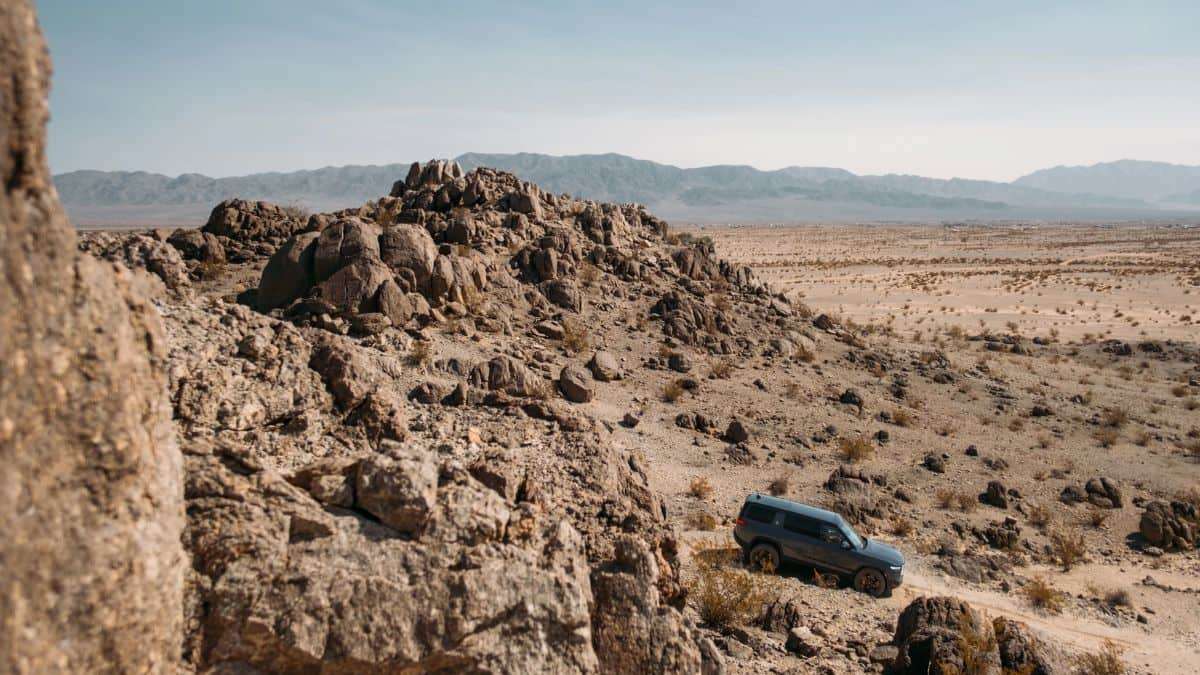

Wow, I had a fun time in the dirt with my EV. Off roading is yet another way that EVs are defying convention. They offer advantages for off-roading like instant and massive torque which delivers precise control and climbing capability. A simpler drivetrain with fewer parts reduces the risk of damage or leaks from rough terrain. Add that to their higher ground clearance from features like air suspension and you have the makings for a more carefree experience. Another advantage to overly complex gas-powered vehicles is how EV technology delivers individual wheel control, providing superior traction and stability on challenging surfaces. Their silent operation minimizes environmental disturbance and wildlife interaction.
The growing EV off road community is buzzing on social media. Here’s an ongoing Reddit post a ton of responses from EV off roaders detailing things like roof-top tents, auto-leveling, range, EV comparisons, etc.
“My good friend has a Rivian R1S and we not only go overlanding, we take it off-roading quite a bit. It’s a damn video game cheat code. He has a RTT (roof top tent) and that auto level feature is incredible.”
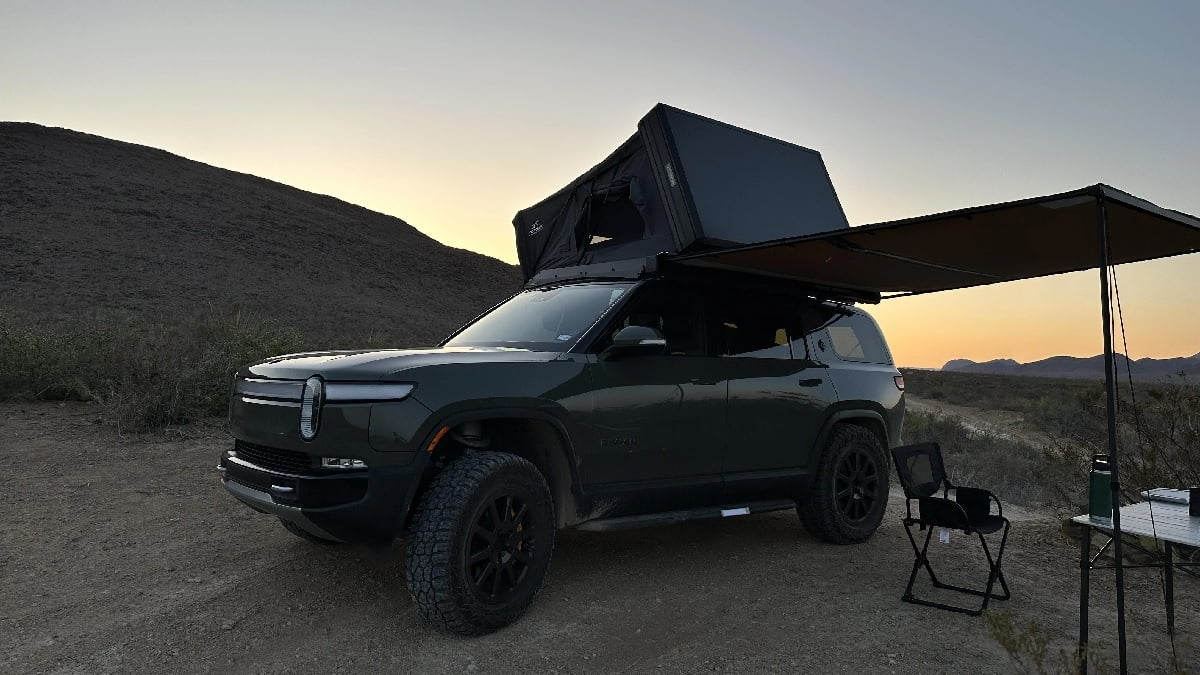
LifeWithAdd responded with a lot of insights from real off-road EV experiences:
“I go on overlanding trips all the time with two friends in Rivians and we’ve never had any issues. It’s got tons of power and 15” of ground clearance, the whole underside is one smooth UHMW (ultra-high molecular weight) polyethylene skid plate that lets it slide right over any obstacles. Also, it doesn’t idle so every time we stop it’s basically off using no power. Making the stop and go slower exploration of overlanding a perfect use for them. I’m not sure a lot of people realize how far 350 miles of range really is. It’s further than my diesel truck will go on a full tank.
That said there are a few areas of the southwest that are kinda off limits for them since chargers are rare out there. However, the Moab area has plenty of fast chargers so that’s not any issue at all. I personally drive a Tacoma and wouldn’t switch just yet but wouldn’t hesitate too as the infrastructure grows. Ideally, I want a plug-in hybrid, that would be the ultimate overlanding vehicle.
Also, I don’t think people realize how many chargers there really are. They aren’t gas stations, they are in movie theater parking lots, on the sides of coffee shops, behind the truck stop. If you’re not looking for them you don’t notice them, charging isn’t as hard as it was in the past.”
CryptographerHot4636 added a comment about back country range:
“I got out a lot in my Rivian R1T. Never had an issue or ran out of power, and I've been "100 miles deep". You use more energy on freeways than trails, driving slow on back roads, and fire trails are significantly more efficient.”
Speedy_SpeedBoi commented about how the new Scout EV might perform:
“I'm also watching the Scout with great interest. I'm currently in a Jeep 4xE, but I could see that changing for a Scout, depending on how the range extender functions. I also want to see how it reviews and wait for prices to calm down.”
There are internal combustion off road legends like the Jeep Wrangler, Toyota 4Runner, and the Land Rover Defender. Their rigid chassis and suspension set them far apart from daily driving SUVs. As EVs come into their own, it’s clear that they will push the envelope beyond what gas-powered off road vehicles can deliver.
What Gives EVs the Off Road Edge?
From how power is precisely delivered to the wheels, a low center of gravity, and regenerative breaking, EVs have some unique advantages in the off road environment.
Electric motors really improve the feel of trail driving in ways that matter. They deliver instant torque from zero rpm, so the tires bite without delay on ledges and loose climbs. Power arrives in a smooth, linear wave, which keeps throttle inputs calm when you need to precisely finesse it. Quad motor layouts can meter force to each wheel, letting the truck pivot and crawl with surgical control. The result is confident progress where internal combustion setups often lurch forward needing revs, shifting, and clutch work that results in crude control.
The control extends beyond the throttle and power delivery to the wheels. Regenerative braking acts like a built-in hill descent tool, easing speed with precision while feeding a little energy back to the battery pack. Brakes stay cooler and steadier because the motors take the majority of the workload. Software can blend traction control with virtual locking behavior, so cross axle ruts become less dramatic. The driver can focus on choosing and maintain a line rather than momentum tricks, which reduces impacts and reduces the wear on suspension components over long days on uneven ground.
The experience is quieter and cleaner on the trail. Silent operation lets you hear tire feedback and spotter calls, and for those of us who care, it reduces wildlife disturbance. Simpler drivetrains mean fewer fluids and seals to nick on rocks, which lowers the odds of a messy leak. Electric powertrains do not breathe air the way internal combustion engines do, so fording streams and rivers can be more confident.
Design advantages continue when you look down below. Air suspension can lift the body to create some impressive ground clearance, then drop for efficiency on the road. Battery mass sits low in the chassis, which reduces body roll and increases stability on steep side hills. Flat underbodies slide over obstacles rather than snagging housings and crossmembers. Multiple motors create useful redundancy, so a single traction loss does not stall progress.
The EV Off Road Vehicles
There’s a growing list of EVs that can be considered off road. We broke our choice into four groups consisting of vehicles from Rivian, GM, Scout Automotive and Mercedes Benz. Rather than getting into sundry items like pricing (they are all expensive) and range, we call out what makes each different.
Rivian delivers serious hardware and smart software with their R1T and R1S. The current battery packs include a Standard LFP at about 106 kWh, a Large NMC at about 141 kWh, and a Max NMC at about 183 kWh. Ground clearance reaches a towering 15 inches with air suspension, while curb weights sit in heavy half ton territory. Camp Mode levels the truck for sleeping, and the modular Gear Tunnel accommodates Rivian’s travel kitchen accessory.
GMC Hummer EV arrives as an Ultium powered brute with extravagant capability and price to match. It’s available in pickup and SUV versions. The battery pack is around 200 kWh. Curb weight hovers near whopping 9,000 pounds. Adaptive air suspension delivers Extract Mode, raising ground clearance nearly six inches for a total of about 15.9 inches, while four-wheel steering enables CrabWalk. Onboard Power Station accessories can export roughly three kilowatts for tools or camp power.
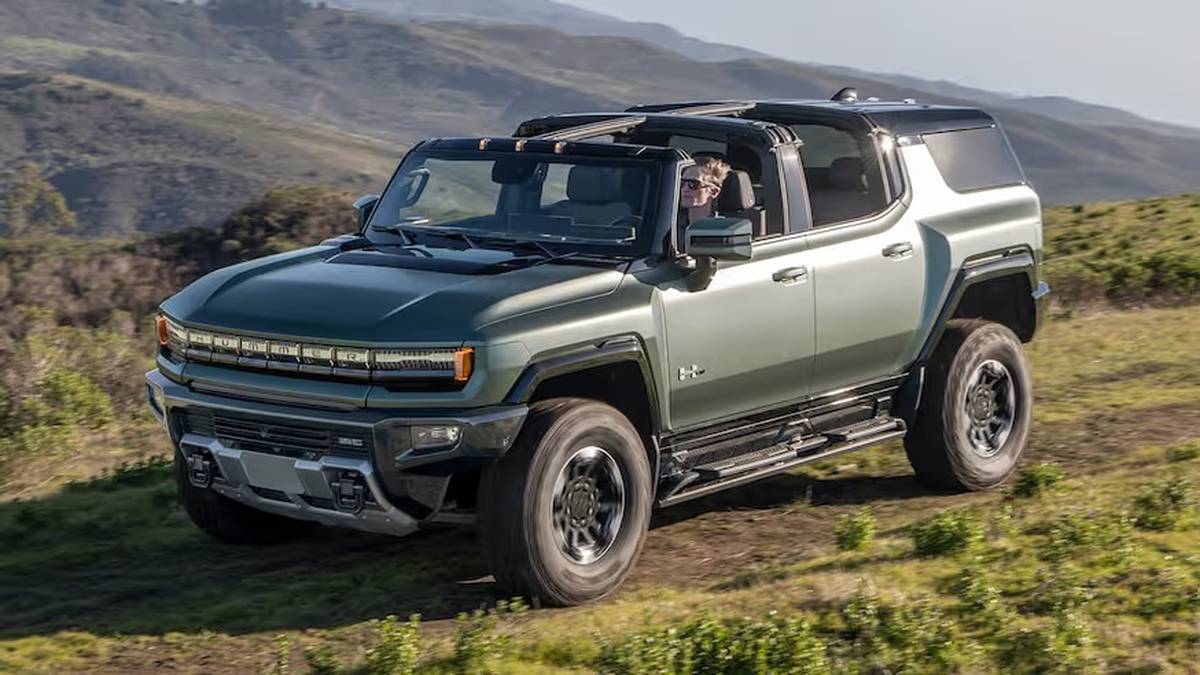
The Chevy Silverado EV and GMC Sierra EV also ride on the Ultium platform with a variety of trims, from the work focused WT and Elevation to luxury RST and Denali, plus a soon to be added off road Trail Boss and AT4. Battery choices include a 170 kWh Extended Range pack and a 205 kWh Max Range pack. A tested Silverado EV LT weighed about 8,486 pounds. Ground clearance varies by trim, with Silverado LT around 8.9 inches and Sierra AT4 adding a two-inch lift and 35-inch tires. PowerBase and Energy Transfer export up to 10.2 kW with multiple outlets for campsite duty, while midgates extend sleeping and cargo options.
Mercedes Benz G 580 with EQ Technology electrifies the G Class formula with a reinforced ladder frame and four motors. A 116-kWh usable battery feeds 579 horsepower. Curb weight is about 6,746 pounds, ground clearance is about 9.8 inches, and wading depth is rated at about 33.5 inches. Adaptive dampers and a synthetic low range support crawl control, while features like G Turn and robust accessory rails keep the heritage vibe alive for luxury camping trips.
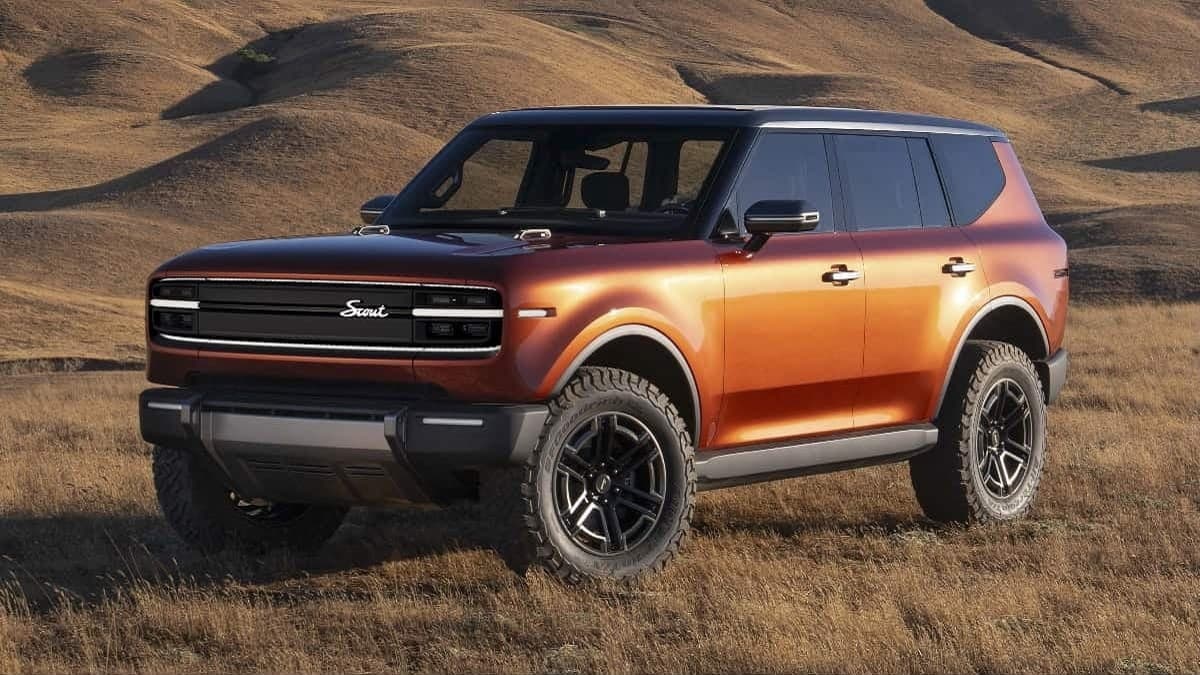
Looking towards the future, the Scout Traveler SUV and Scout Terra pickup leverage a classic trail heritage with modern electrification. Scout Motors is a reincarnated American brand originally known for producing durable off road vehicles in the 1960s and 1970s. They are now owned by Volkswagen Group and are launching Scout to develop electric vehicles specifically for the U.S. market. Official specs remain in flux before production, yet the company has previewed body-on-frame construction, a solid rear axle, front and rear locking differentials, and more than a foot of ground clearance. A 240-volt outlet and off-road tuned suspension, with available air springs and active damping, point to overlanding potential, but weight, final EPA range, and battery size have not been published. Production is expected to begin in 2026 at a new facility in South Carolina.
Please Drop Your Thoughts in the Comments Below
How far have you comfortably traveled on forest roads between charges during a weekend trip?
Have you relied on regenerative braking as your primary descent control on technical hills?
Chris Johnston is the author of SAE’s comprehensive book on electric vehicles, "The Arrival of The Electric Car." His coverage on Torque News focuses on electric vehicles. Chris has decades of product management experience in telematics, mobile computing, and wireless communications. Chris has a B.S. in electrical engineering from Purdue University and an MBA. He lives in Seattle. When not working, Chris enjoys restoring classic wooden boats, open water swimming, cycling and flying (as a private pilot). You can connect with Chris on LinkedIn and follow his work on X at ChrisJohnstonEV.
Set Torque News as Preferred Source on Google
Follow us today...



Comments
The off road picture reminds…
Permalink
The off road picture reminds me of a comment from a Security Police airman at Edwards Air Base back in ancient days (1970s). The purpose of 4 wheel drive was to let people get much farther out in the desert before getting stuck and needing rescue. It will probably be the same for EVs.
I hadn’t thought about that,…
Permalink
In reply to The off road picture reminds… by Michael Rogers (not verified)
I hadn’t thought about that, but you make a good point. There’s no reason why EVs can’t be used to rescue stuck vehicles. They certainly have the range.
It also appears that ICE is…
Permalink
It also appears that ICE is even less efficient than usual in these conditions. Electric Classic Cars discovered this when on an off-roading trip in their converted Landie, they were with a diesel Land Rover on the same route at the same time, the diesel had to refill long before the EV Landie