

Volvo recently confirmed that it will manufacture an extended-range electric vehicle (EREV) at its Ridgeville, South Carolina, plant. They are betting that sales of fully electric vehicles will decline after the end of the federal tax credit, which expires towards the end of the year. This is a strange decision considering the many discontinued EREVs pulled from the U.S. market.
This decision hasn’t gone unnoticed by social media, and the response to the Volvo announcement hasn’t been promising. Here’s one Reddit thread with a lot of pushback:
Miserable-Towel-5079 started the thread:
“I don’t understand the point of extended range electric vehicles except for specific niche situations.
Not having to maintain a gas engine is one of the biggest perks of having an EV.
Having to get oil and filters changed twice a year for those (one? two? zero?) times I need to drive further than my battery range and can’t stop at a DC charger for whatever reason seems just really burdensome to me.”
crimsonpowder sees commercial use, but questions EREV passenger cars:
EREV is good for long-haul trucking for the same reason that diesel electric locomotives are standard. But I don't see the benefit in passenger cars.
thirteensix made an interesting point about plug-in hybrid cars:
“People don't buy extended range EVs. There are tons of PHEVs on the market. A huge number never even get plugged in.”
A funny comment from critter2482:
“Great job Volvo, right on track for 2015…”
DonkeyFuel commented about range anxiety even with 100 miles of battery range:
“I think I read that this thing, likely the next-gen XC90, will have like 100 miles of electric range. That's just wild to think we are going to an era of PHEVs with 100 miles of range. The notion of this level of range anxiety is insane to me.
Ten years ago, before there were a variety of EVs with ranges exceeding 300 miles, a gas-powered range extender made sense for a narrow set of consumers. That set of customers has all but disappeared. The U.S. car market is littered with the carcasses of discontinued EREVs including the Chevrolet Volt (2011–2019), BMW i3 REx (2014–2021 U.S.), Fisker Karma (2011–2012), and Karma GS-6 / Revero GT (2020–2024).”
What’s the Difference between Extended-Range EV and Plug-in Hybrid?
Extended range electric vehicles (EREV/Rex) and plug-in hybrid (PHEV) vehicles are similar in that they both have internal combustion engines that require fuel and all the associated costs, complications, and frustrations that come with them. However, they are different enough to justify two different categories of vehicle.
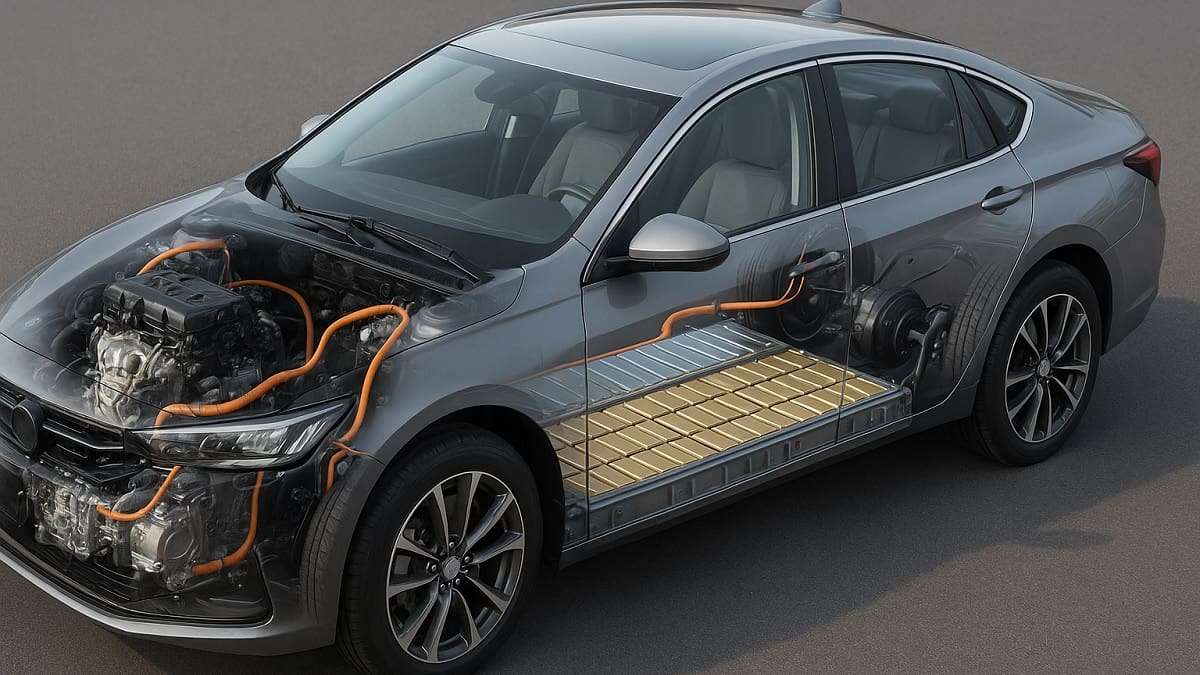
One thing to look at is how the wheels are driven. An extended range EV (EREV), or a range extender vehicle (Rex), uses electric motors to always drive the wheels. A small gasoline engine is carried onboard as a generator that makes electricity when the battery is low, so propulsion remains primarily electric. Some designs can couple the engine at certain speeds for efficiency, although the driving character remains like an EV. A plug-in hybrid uses both an electric motor and a gasoline engine to propel the car. Power can switch or blend between them, so the engine can directly drive the wheels whenever the system decides it is optimal.
How the car feels while driving is another difference. An EREV delivers instant torque, smooth acceleration, and quiet operation, while the engine may start only to maintain charge or provide heat. A plug-in hybrid can feel like an EV in town, then bring the engine online for hills, high speeds, or cabin heat, which reintroduces shifts, noise, and traditional laggy acceleration.
Battery size also differs. EREVs typically carry larger packs and offer longer electric only range, while many plug-in hybrids prioritize a smaller pack and shorter electric range.
Examples of EREV/Rex vehicles are the Chevy Volt, and BMW i3 REx. Examples of PHEV vehicles are the Prius Prime, RAV4 Prime, Outlander PHEV, Wrangler 4xe.
Note that some brands, like Tesla, us the phrase “extended range” to describe models with larger batteries. This shouldn’t be confused for REEVs.
Here’s The Disagreement
Extended range EVs promise the calm, quiet glide of electric drive while removing range anxiety, yet the tradeoffs are real. One undeniable fact is that EREVs generate emissions, a reason why many consumers purchase pure electric vehicles (BEVs).
The biggest compromise is complexity. You are carrying two powertrains, a full EV system and a gasoline engine plus an electrical generator. That means oil changes, coolant, filters, spark plugs, exhaust components, and more sensors to keep healthy. Because it doesn’t need to be plugged in, ownership feels simpler than a traditional hybrid, but it still requires all of the engine maintenance that a pure EV never needs.
Weight and space are the next hurdles. A battery, motor, fuel tank, engine, and generator adds weight and consumes volume that might have been cargo space or clever storage. Extra weight makes handling feel less crisp, lengthens stopping distances, and wears tires faster.
Efficiency and performance shift once the battery buffer drops. On sustained climbs or at high speeds, the generator may not cover peak demand, so acceleration can feel flat until the pack recovers. Some models carry small fuel tanks to meet regulatory targets, which makes road trips a series of frequent short fills. Light gasoline use creates another quirk. Fuel can age in the tank, so the car may run the engine periodically to keep systems healthy, introducing noise and vibration at moments when you expected EV silence.
Many EREVs also trail modern battery electrics on charging speed. Slow DC charging or none at all reduces the convenience advantage that BEVs now deliver on long routes.
Ownership logistics can feel murky. Incentives and emissions rules sometimes treat an EREV like a hybrid, which can mean smog checks that pure electric vehicles (BEVs) avoid. It can also mean smaller or no rebates.
The small niche EREV category confuses shoppers, which can affect resale value and dealer support.
Real world emissions depend on habits. Frequent charging yields an excellent footprint, while frequent engine use moves outcomes closer to a typical hybrid vehicle.
Volvo’s Decision to Introduce a New EREV
When it comes to Volvo, they started their journey into electrification with plug-in hybrids. The first was the V60 Plug-in Hybrid for Europe, a diesel electric model launched for sale in 2012 that previewed Volvo’s “Twin Engine” idea and made headlines as an early production plug-in hybrid.
Volvo entered the battery electric era with the XC40 Recharge, unveiled in October 2019 as Volvo’s first all-electric model and the first of its Recharge line. Production started in 2020.
Their BEV lineup expanded with the C40 Recharge, a coupe styled sibling to the XC40, revealed in March 2021. The brand then moved upmarket with the EX90, a fully electric three row flagship revealed in November 2022. It followed by going smaller with the Volvo EX30, revealed in June 2023 as a compact, born electric SUV.
The Volvo and Polestar EVs have been relatively well received so it’s difficult to understand why they have decided to take a step backwards by investing in gas-powered extended range EV. Time will tell if this was a good decision.
What Do You Think?
Would a range extender change your view of range anxiety?
Which daily habits decide whether an EREV beats a BEV for your driving patterns?
Chris Johnston is the author of SAE’s comprehensive book on electric vehicles, "The Arrival of The Electric Car." His coverage on Torque News focuses on electric vehicles. Chris has decades of product management experience in telematics, mobile computing, and wireless communications. Chris has a B.S. in electrical engineering from Purdue University and an MBA. He lives in Seattle. When not working, Chris enjoys restoring classic wooden boats, open water swimming, cycling and flying (as a private pilot). You can connect with Chris on LinkedIn and follow his work on X at ChrisJohnstonEV.
Set Torque News as Preferred Source on Google
Follow us today...







Comments
BIODiesel in a small…
Permalink
BIODiesel in a small generator to recharge the battery would be best.
Running a Diesel at optimum efficiency and clean Bio fuel would be the trick.
As a Honda Clarity PHEV…
Permalink
As a Honda Clarity PHEV owner, I will say this car is more EREV in nature than a traditional plug in hybrid where the engine drives the wheels. The Clarity mainly uses battery for my around town driving. When I need to get on the highway for a longer drive, I simply turn on the engine and it produces electricity to send to the AC motor. That’s similar to how an EREV functions. It can also charge the battery pack if it’s low. The car relies on have a battery pack that has some range on it because the AC motor uses more electricity than the engine alone can output.
So for Volvo… it will depend on how they develop this car. If they make it to where it mainly drives on battery, and the engine is only needed for longer drives, and it just produces electricity or charges the battery, then it sounds like a solid product. Will it sell? Depends on how much of an audience is out there for a car like that. If I had a BEV that could do 100 miles and had an engine inside that can turn on for extended driving on the highway, I would like that. But 100 miles is a good amount of battery range for city driving and the engine might not be used much at all if someone only drove it around town. The future buyers of this vehicle need to decide if it’s worth it for them.
I disagree. For people who…
Permalink
I disagree. For people who live in a metropolitan area and who never drive cross country, I think your argument has merit. For those of us who live in between rural and metropolitan areas, we always have to drive 30 to 45 minutes one way to get to civilization. In order to do anything else, it is a minimum 20 minute drive. If I'm going to be spending 40 to $70,000 for a car, it's going to perform every single thing that I needed to do. When I go run errands, I want EV. When I drive 500 mi so my family can see our relatives, I don't want to rely on an immature charging network with an immature battery technology that charges too slow. This is the perfect in between. I even had a Chevy Volt, it would have been the perfect car if it had 100 mi range on the battery, and all wheel drive.
Bravo!!! We have >135K…
Permalink
In reply to I disagree. For people who… by Paul Pasika (not verified)
Bravo!!!
We have >135K miles on our 2013 and visited 38 States in it. Never once has it ever been plugged into a public charging station.
We did take advantage of outdoor electrical outlets at motels a couple times that were meant for vehicles with engine block heaters in northern climates. Other than that, we just used gas.
By not resetting the trip meter on one road trip, the aggregate fuel usage displayed was ~40 mpg.
Our 2013 now has > 135K miles on it and our 2014 has > 68K mostly city miles on it.
We have the EV Extend - 1,500-watt inverter package attached to the 2013 and have used it several times in emergencies to power critical circuits and a few times out at the ranch to power shop fans at family gatherings.
I live in Texas and fully…
Permalink
In reply to I disagree. For people who… by Paul Pasika (not verified)
I live in Texas and fully agree with you. I have an EV and every time I leave the city in peak winter or summer, am really worried. Only major highways have chargers and many don't work. An EREV with a small tank would surely reduce the anxiety.
This article proves that…
Permalink
This article proves that those who denigrate the idea of an EREV really don't, and perhaps can't "get it". The logic used against them is so twisted as to be comical.
Let's examine the argument above of the engine and fuel tank adding weight and space that could otherwise be used for cargo or "clever storage". Using a Chevy Volt as an example, it has a 40-50 EV range on a 17kw battery. Unless you keep the range the same while adding cargo space instead of the engine, you'll need a larger battery - much larger. In fact you'd need 3-4 times more battery which will both add more weight than the engine and a full gas tank, and take up as much or more of the "clever storage".
So you see that if your mind is already made up on a given subject, before objectively analyzing the issues, you can make any random argument appear to support your preconceived conclusions..
I think the point is kind of…
Permalink
I think the point is kind of getting missed here. A majority of our on-road vehicles are still fully flags powered. EREV is going to be a fully electric drive train with a onboard generator in it (Think Edison Truck design late 2025). The issue that they are solving is range anxiety for people who drive longer than 300 miles in places that have no chargers available either due to lack of tech or too many EVs in the area. OR work trucks. They are creating the industry like Ram's REV. The same design. It's more efficient. Our greatest defeat with combustion engineering isn't emission, it IS transmission. Electric drivetrains have 96% of power generated from the motor is transmitted to the wheels? Most vehicles barely utilize 80% of the power generated especially at higher RPM. As well as the performance drop off of combustion engines at those higher RPM's
We're retired and own two…
Permalink
We're retired and own two Chevy Volts. They fully meet our needs for local errands as active seniors.
We ONLY charge them at home in our garage. Our Solar Panel System fully covers our charging needs along with covering ~80% of our total household electricity usage. We typically fill our 2014 Volt with gasoline twice yearly and our 2013 Volt once yearly. Both require oil changes every two years. No other non-warranty services have been required on either other than the 12v batteries. As an example, neither have required ANY work on the brakes since they're not engaged unless you're having to make a panic stop that locks the wheels.
Downhill travel ADDS battery range! Descending Pikes Peak added 54 miles of battery range with hand-touchable brakes!
We've visited 38 states in our 2013 before purchasing a motorhome 4 years ago. Neither of our Volts have ever been connected to a public charging station. Both get an aggregated ~40mpg on the highway.
In essence, our Volts are our perfect retirement vehicles for our local errands.
We now use our motorhome for all out of town travel.
Miles Of Smile!
One aspect I forgot to…
Permalink
In reply to We're retired and own two… by Nirm51 (not verified)
One aspect I forgot to mention in my original comment is about emergency preparedness.
During Winter Storm Uri, I powered essential electrical circuits in our home using our 2013 Volt and the 1,500-watt EV Extend inverter package I had previously purchased for the 5 days of black outs and brown outs in San Antonio.
After Hurricane Beryl left my bedridden mom in the Houston area without power to run her medically-nessasary home health equipment, I arrived with my fully fueled Volt to power essential circuits there. She was on a priority list for her oxygen supply, but they couldn't meet the area-wide demand.
With a hack that enables the vehicle to remain turned on in Hold Mode while parked for more than 2 hours (a safety feature) I was able to keep her circuits live (fridge, freezer, oxygen accumulator, etc.) for several days until we could secure a generator from outside the Houston area that could power those and additional things like air conditioning.
The Volt only runs the gas engine in Hold Mode to maintain the current State-Of-Charge of the main battery, running 10 minutes or so at a time a few times per hour depending on the load from the inverter. I estimate that the tank of fuel (9.3 gallon) could have powered the inverter for ~10 days.
Keep in mind that working gas stations were also in short supply. Knowing that, I filled my tank before reaching Houston and drove the last few miles in battery mode in order to arrive with a full tank of gas.
I don't think i could have successfully accomplished a multi-day event like Beryl with a pure BEV.
I read your piece titled "I…
Permalink
I read your piece titled "I Don’t Understand the Point of Gas-Powered EVs Like the Chevy Volt, but I’ve Been Told I’m Missing the Point, Here’s Why I Disagree"
And yes, I do think you are in fact missing the point. I think the best way to get the point across is that you are specifically, and lots of the redditors whose comments you shared, think there is "the" reason for getting an EV, as opposed to various reasons.
Miserable-Towel-5079 said "I don’t understand the point of extended range electric vehicles except for specific niche situations."
Wrong.
By adding a range extender to an EV, you are not fulfilling a niche, you are actually making the vehicle broader in functionality. EVs have limited range and charging limitations (location, wait times to get to use a charge, wait times to complete the charge).
The electric portion could be used for around town purposes, and the ICE range extender doesn't just give you more immediate range, but also more flexibility as you can drive for hundreds of miles, fill up in 2 minutes, and hit the road again for hundreds more miles.
They also said "Having to get oil and filters changed twice a year for those (one? two? zero?) times I need to drive further than my battery range and can’t stop at a DC charger for whatever reason seems just really burdensome to me.”"
EVs have their perks but many Americans drive long distances fairly regularly. Maybe *this* person only drives far 0, 1, 2 times per year, but for me it's almost weekly. 5 days a week I might not drive more than 50 miles total to and from the store or soccer practice for the kids. But come the weekend we're going a few counties over, pumpkin patches, hiking, Christmas tree farms, family reunions, weddings, wine tasting, etc. An EV wouldn't always cut it.
They also said "Not having to maintain a gas engine is one of the biggest perks of having an EV."
This is a non-issue for many people. I have only ever had ICE cars and I don't consider them high maintenance. My oil changes cost $25 and take about 10 minutes, in and out. Regular maintenance is not a big deal. And also, EVs also have oil and require oil changes.
You said "One undeniable fact is that EREVs generate emissions, a reason why many consumers purchase pure electric vehicles (BEVs)."
How many is many? Because no one I have talked to cares about emissions, included people that have EVs. People buy them for convenience and/or cost of charging at home especially if they have solar, or maybe even free charging if their employer offers free chargers. They buy them for the EV credit. I don't think many people actually care about emissions. People say they do in public because it's the 'right' answer, but behind closed doors few actually care.
The maintenance schedule for…
Permalink
In reply to I read your piece titled "I… by Andrew Hernandez (not verified)
The maintenance schedule for oil changes on a GEN I Chevy Volt is once every 2 years. We have two Volts. I typically wait for a dealer coupon to arrive in the mail for cheap (often <$20) oil change offers.
Um, great if you’re in the…
Permalink
Um, great if you’re in the city, try this when sales job takes you outside the range and you have to explain to the client “I had to recharge” IF you can find a place to do it. Or family lives further than 300 miles. If it works for you, great-don’t preach to us that it doesn’t.
And just wait until you have…
Permalink
And just wait until you have to replace that battery. There goes all of your “gas savings”.
Nice try, but EV batteries…
Permalink
In reply to And just wait until you have… by Greg G. (not verified)
Nice try, but EV batteries last 300 thousand plus miles. Put another way, they last one and a half gas-powered vehicles.
Yes, I agree. The hysteria…
Permalink
Yes, I agree. The hysteria surrounding PHEVs is puzzling. With the EV market in slow motion, some OEMs are acting all smug because they didn't invest in electrification, (see Toyota and Mazda.) Newsflash: the electrification of the automobile is inevitable; it's just going to take longer.
I love my Tesla. I pay $15 a…
Permalink
I love my Tesla. I pay $15 a month to charge at home (midnight to 6am, gives me about 150 miles per day).
thirteensix made an…
Permalink
thirteensix made an interesting point about plug-in hybrid cars:
“People don't buy extended range EVs. There are tons of PHEVs on the market. A huge number never even get plugged in.”
This is true. We purchased our 2014 used (a "pristine," never smoked in, lease return) in 2019 with only 32K on the odometer. The aggregate mpg was < 50 mpg which means that it was rarely charged. Since we've owned it, the aggregate has risen to > 90 mpg.
While more complex, the EREV…
Permalink
While more complex, the EREV as in the Volt is a superior car to a Hybrid. No transmission and stress on the engine. The small 1.3L engine runs at three speeds, all perfectly tuned. Constant torque. There is little maintenance on a EREV engine because of the optimal operation. Also the limited range battery, 30-40 miles, handles 90% of my daily driving. So even after 140,000 miles I have only needed 4 oil changes. The electricity for that 30-40 miles on pure electric costs about half of gasoline. And since I do have a engine generator, I have no range anxiety, and get about 42 mph on the highway on gasoline. EREV are not hybrids, they are much better, and more reliable.
I bought a bmw i3 rex…
Permalink
I bought a bmw i3 rex specifically for the range extender. It's a bmw moped engine, very reliable and has been around for years. I almost never need it and charge at home. The gas tank is two gallons and takes up very little room. Love the car and will probably upgrade to the scout rex when it comes out.
I previously leased a Volt…
Permalink
I previously leased a Volt. I liked the technology, battery driving for daily use and range extender for travel. But I didn't care much for the car in terms of drivability, comfort, etc. I purchased a used 2016 Cadillac ELR in 2018. It makes up for all the shortcomings of the Volt, although it's a 2 door, rather than 4, which I like. I also own a Bolt, which is not as comfortable or as enjoyable to drive due to handling, etc. I love the bolt for around town, if I'm not in it too long. I definitely prefer the Cadillac for both short and long distance driving. I use very little gas in the ELR, although with a range of about 32 miles, and a larger city, where I do some weekly shopping, is 12 miles to the city limit. So when I'm in town, I never use gas. For my weekly shopping, I use very little gas, about a gallon per month. I've taken the Bolt on a longer voyage and it was not very satisfying, because of the aforementioned comfort and the short charging range. I did find a better app for charging and that helped, but I would still prefer the Cadillac.
I'm waiting for the Optiq to improve its range beyond 450 miles. Then I will trade my Bolt for an Optiq. But I'll probably keep the ELR because it makes sense for me and it's enjoyable to drive.
As was said in Field of…
Permalink
As was said in Field of Dreams, "If you build it they will come", is the mantra for solid-state batteries.
First we need 600 miles of range and 10 minute charging, then the charging infrastructure will follow. Then we can cut the battery size in half for 300 miles of range and reduced costs for the batteries and everything else that can be reduced as the weight of the EV is reduced.
At this point no one will be buying ICE vehicles as they won't be price competitive.
I think about freedom often,…
Permalink
I think about freedom often, especially when I review who is chasing my dollars. If not the government or "big oil" then its some healthcare entity. Consider the impact big oil has had on the freedom of billions of people on the planet. If people can get an electric car with the kind of range that means they can almost always recharge at home, that's the kind of freedom big oil and the big electric utilities would oppose. This provides the incentive for setting up renewables-based recharging at home, freeing one from the grasp of both big and hugely infuential groups. Volvo understands how to give people thier freedom back by removing the one aspect of transportation which has long made slaves of common people, the I.C.E. propulsion.
I think about freedom often,…
Permalink
I think about freedom often, especially when I review who is chasing my dollars. If not the government or "big oil" then its some healthcare entity. Consider the impact big oil has had on the freedom of billions of people on the planet. If people can get an electric car with the kind of range that means they can almost always recharge at home, that's the kind of freedom big oil and the big electric utilities would oppose. This provides the incentive for setting up renewables-based recharging at home, freeing one from the grasp of both big and hugely infuential groups. Volvo understands how to give people thier freedom back by removing the one aspect of transportation which has long made slaves of common people, the I.C.E. propulsion. In our free society we recognize how competition is needed to make things better over time. Big oil is lacking only one thing, real competition.