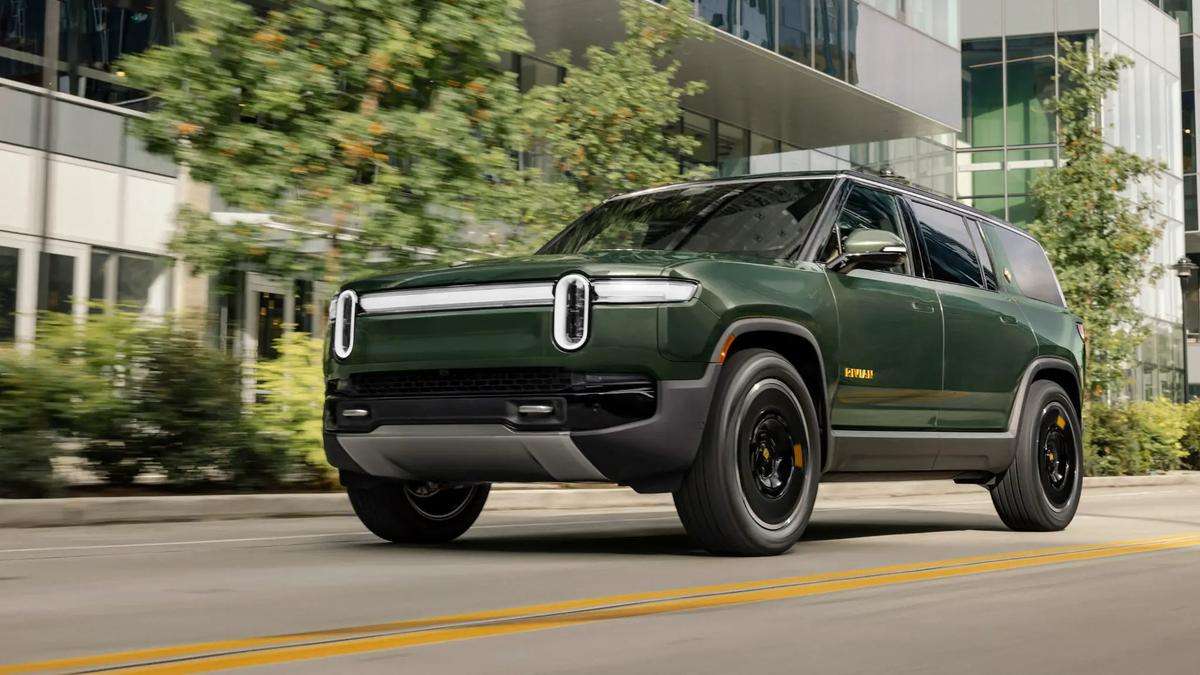

The Rivian R1S occupies an unusual and increasingly important place in the modern automotive landscape. It is a large, capable electric SUV that asks to be taken seriously as both transportation and tool, promising adventure without abandoning refinement.
For buyers stepping into the brand through the used market, however, the experience can feel less like a polished showroom handoff and more like inheriting a sophisticated piece of machinery mid-conversation.
One recent owner’s account offers a clear-eyed look at what that transition can involve.
“Purchased a slightly used 2026 when I was looking for a 2024 - 2025 max battery. I absolutely love it, but there are some quirks.First secret from before purchase - ChatGPT was awesome in searching for what I wanted. Hopefully, that helps someone. I found mine on Edmunds before it was listed on any sites.
Since it was a used car, the original owner never cleared his/her account. I've submitted the bill of sale, and have not heard anything back (only 3rd business day), no gripe here. BUT, I've tried to confirm with Rivian that the paperwork is sufficient, or when I should try to submit my license, 20 mins waiting for chat, 22 mins on the phone, no connection with a person. (Yes, I know I should wait it out, but after dealing with a personal matter and paperwork, I don't trust people to actually perform their tasks. Non-connection seems lackluster. I want to set everything up once I am the Owner.
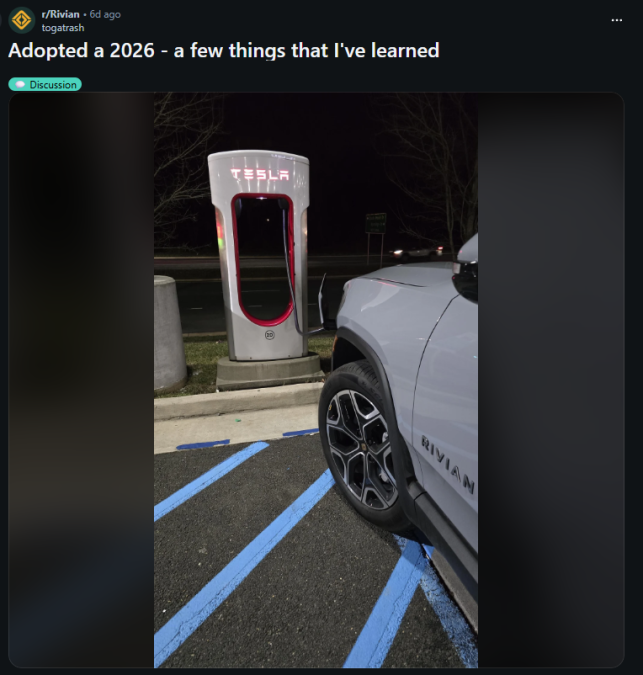
Tesla Supercharging as seen in the photo. Most Tesla superchargers are not the recent ones with the 9.5-foot cable. I've found an ADA accessible one that I have parked on the side.
Advertising
2026 models do not have key fobs. Key Card and Kind of a pain. I can't do the digital key until I am the Owner. Unless I am missing something?
2026 models do not come with a charging cord. Went to eBay to purchase a Rivian charge cord, but realized I need a NACS.
But I am loving everything else.”
There is no anger in this post, and that matters. What comes through instead is adjustment, the kind that happens when a vehicle built around software, accounts, and ecosystems changes hands. Rivian’s ownership model is clearly optimized for first buyers, not second ones, and the lag between submitting paperwork and gaining full digital access can feel longer than it probably is. For an owner eager to set up keys, charging, and personalization, that waiting period becomes the most conspicuous friction point.
Rivian R1S: How It’s Built
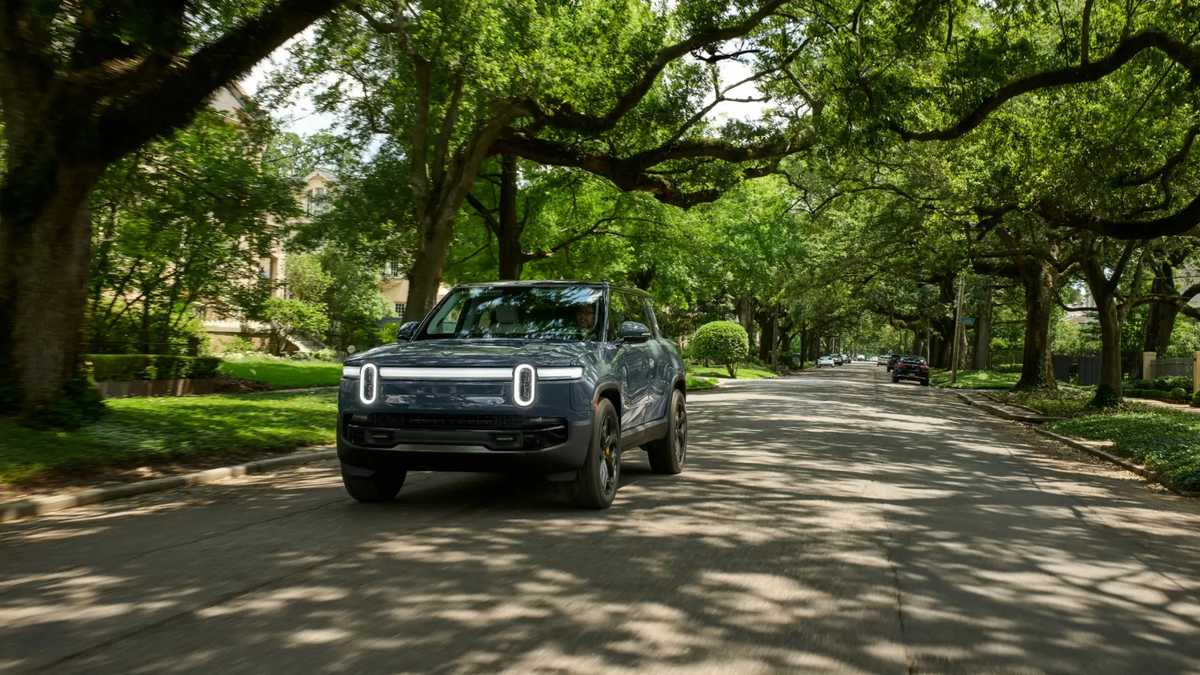
- The R1S uses a three-row SUV layout built on an electric skateboard platform, allowing flexible interior packaging while keeping a relatively short overall length for its class.
- Electric all-wheel-drive configurations provide consistent traction across surfaces, supporting both on-road stability and light off-road use without mechanical driveline complexity.
- Cabin design emphasizes durable materials and a restrained interface, combining touchscreen controls with select physical inputs for frequently used features.
- Ride quality balances mass and capability, delivering a composed feel at speed while revealing firmness over uneven pavement due to weight and suspension tuning.
Charging, unsurprisingly, sits near the center of the learning curve. The R1S’s compatibility with Tesla Superchargers opens up real convenience, but cable length and stall layout remain practical concerns. As the owner notes, not all Superchargers have the longer cables needed to accommodate Rivian’s port placement, sometimes forcing creative parking solutions. Another Rivian owner in the comments points out that Tesla’s own guidance often amounts to parking over the line and accepting that a second stall may be blocked. It is not elegant, but it is currently part of the landscape.
The absence of a traditional key fob on newer models generated predictable confusion, though the community was quick to contextualize it. Owners of earlier vehicles note that once the account transfer is complete, the phone key becomes the primary interface, rendering both cards and fobs largely redundant in daily use. The physical key still has value for valets or edge cases, but Rivian’s direction is clear. Access is digital first, even if the transition period tests patience.
Charging equipment proved to be another small surprise. The lack of a supplied charging cord pushed the owner toward the secondary market, where compatibility details quickly matter. A commenter offered a practical solution, recommending Tesla’s current-generation mobile charger as a cheaper and fully functional alternative, with the added benefit of intelligent plug adapters. It is the sort of peer-to-peer advice that fills the gaps between official documentation and lived experience.
Used EV ownership, particularly with a brand as young as Rivian, carries procedural wrinkles that have little to do with the vehicle’s underlying quality. The R1S itself emerges largely unscathed, described repeatedly as capable, enjoyable, and deeply satisfying once the logistics fall into place.
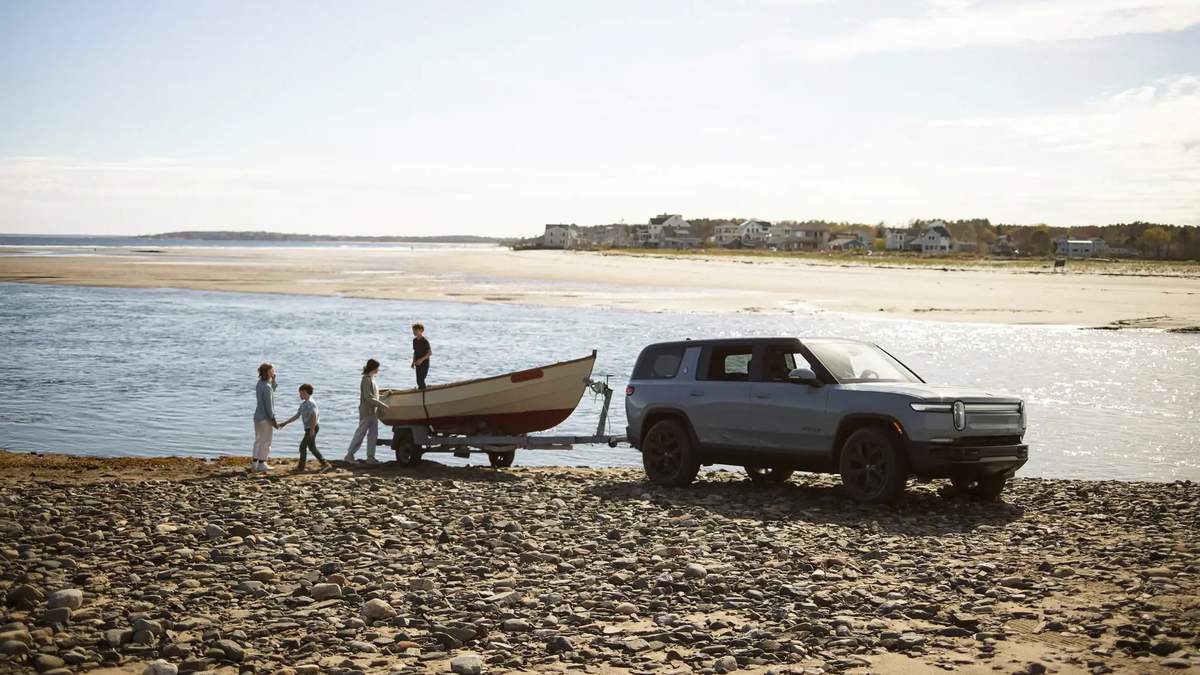
Buying a used Rivian R1S in 2026 means inheriting not just a vehicle, but a digital identity that must be properly handed over. The process can be slower and less transparent than one might hope, yet the reward is a vehicle that delivers on its promise once the dust settles. For this owner, the conclusion is simple and telling. Despite the paperwork, the cables, and the waiting, the R1S remains exactly what it was supposed to be: a serious, compelling machine that earns its place in the driveway.
Image Sources: Rivian Media Center
Noah Washington is an automotive journalist based in Atlanta, Georgia. He enjoys covering the latest news in the automotive industry and conducting reviews on the latest cars. He has been in the automotive industry since 15 years old and has been featured in prominent automotive news sites. You can reach him on X and LinkedIn for tips and to follow his automotive coverage.
Set Torque News as Preferred Source on Google
Follow us today...