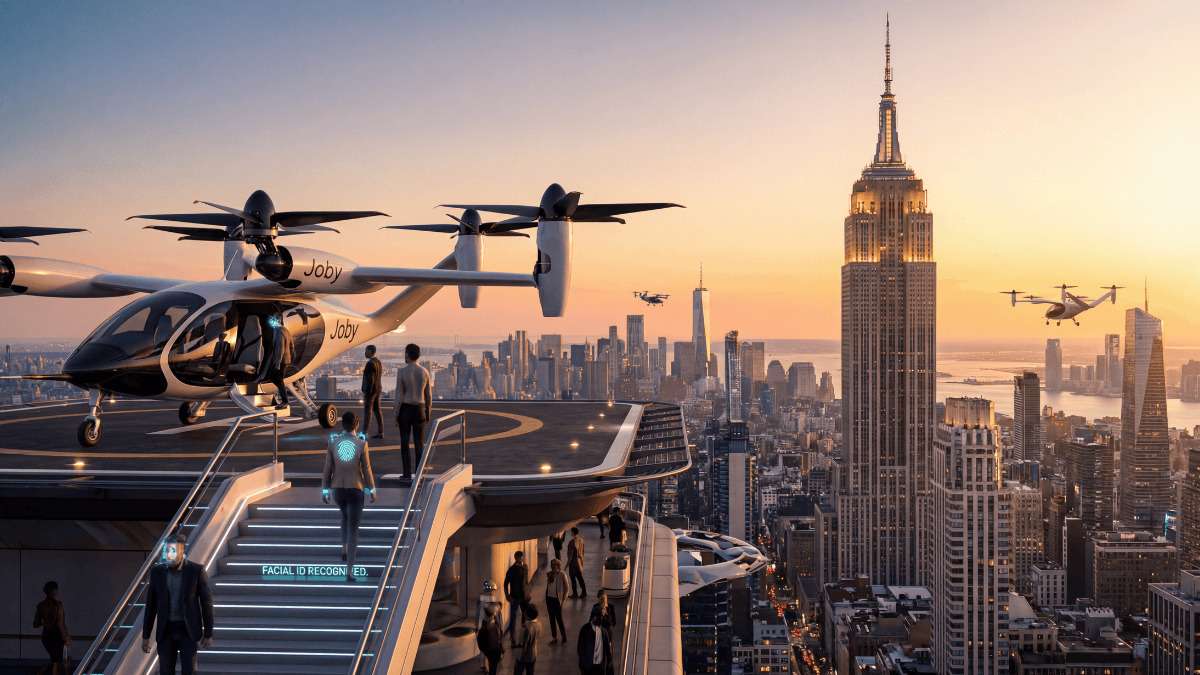

The morning commute in Tokyo is often defined by the rhythmic surge of the Yamanote line or the disciplined silence of a Shinkansen platform. However, a new rhythm is being tested above the neon-lit canyons of Shinjuku and Minato. Developers in Japan are currently piloting facial recognition check-in systems and automated security screenings on skyscraper rooftops—designated "vertiports" for the coming age of Electric Vertical Takeoff and Landing (eVTOL) aircraft.
As reported by 4Hoteliers, the integration of biometric security with hospitality and travel infrastructure is accelerating. This isn't just about unlocking a phone; it’s about a seamless, "walk-through" security experience that eliminates the friction of traditional airport TSA lines. For the United States, a nation defined by its vertical urban sprawl and chronic ground-level congestion, the question isn't if this technology will arrive, but whether our existing concrete jungles are ready to support it.
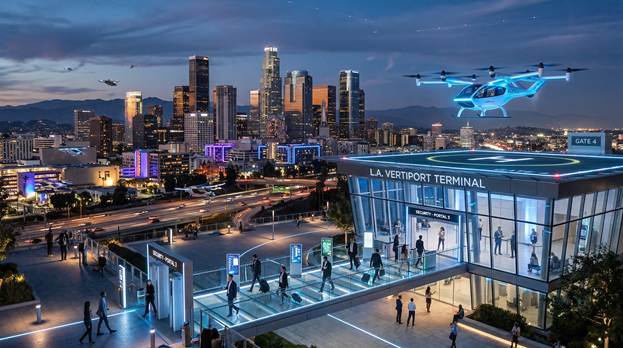
The State of the American Rooftop: Existing Infrastructure
To understand the feasibility of a Tokyo-style service in the U.S., we must first look at the "real estate" already in the sky. Unlike many European cities, major American hubs like Los Angeles, New York, and Chicago are peppered with helicopter landing pads.
In Los Angeles, a decades-old fire code (Regulation 10) required every building over 75 feet to have a flat roof with a helipad for emergency rescues. While that requirement was rescinded in 2014, it left a legacy of hundreds of usable, albeit underutilized, takeoff and landing zones. In New York City, the infrastructure is more restricted due to noise ordinances and the tragic 1977 Pan Am Building crash, but the bones of a vertical network remain in the form of commercial heliports like Blade’s West 30th Street location.
The transition from a "helicopter pad" to a "vertiport" involves more than just a coat of paint. A true vertiport requires high-capacity electric charging stations, acoustic dampening, and, crucially, the digital security layer being tested in Tokyo. Using existing pads provides a massive head start, but the "last-yard" challenge—getting a passenger from the lobby to the roof—is where facial recognition becomes essential. If a passenger has to wait for a manual ID check at a security desk, the time saved by flying is lost.
City Scale: Where Does the Vertical Commute Make Sense?
Urban Air Mobility (UAM) is not a universal solution. It is a surgical strike against "super-commutes." The service makes the most sense in "Tier 1" megacities characterized by geographic bottlenecks—places where a 10-mile trip can take 90 minutes by car.
- The Sprawl Kings (Los Angeles, Houston, Phoenix): In cities where "distance is time," eVTOLs provide a bypass. A flight from Santa Monica to DTLA in 8 minutes is a value proposition that justifies the infrastructure cost.
- The Island Hubs (New York City, Miami, San Francisco): Bridges and tunnels are the enemies of efficiency. Moving people over the East River or San Francisco Bay via rooftop vertiports bypasses the most congested infrastructure in the country.
- The Regional Connectors (Atlanta, Dallas-Fort Worth): These cities have massive corporate footprints spread across suburban "edge cities." Connecting a corporate headquarters in Plano to a rooftop in Dallas via a 15-minute flight is the primary target for early adopters.
As noted by Deloitte’s insights on UAM, the viability of these services depends on "multimodal integration." If the vertiport isn't located on a building where people already work or live, the "Uber-to-the-vertiport-to-the-eVTOL" chain becomes too cumbersome.
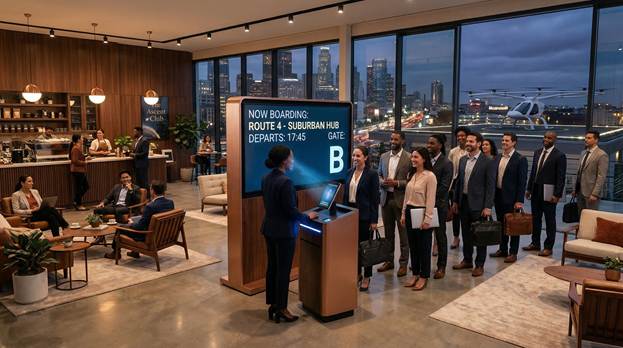
Executive Perk or Rank-and-File Reality?
The most contentious debate surrounding UAM is the "democratization of the sky." Critics argue that rooftop vertiports will become "wealth silos," allowing CEOs to soar over the poverty and traffic of the streets below.
Initially, the Tokyo model—with its high-end facial recognition and premium skyscraper access—will undoubtedly be an executive-class service. The price point of early eVTOL operations is expected to mirror "Uber Black" or private charter rates. Companies like Blade Air Mobility already offer a glimpse of this, providing helicopter transfers that cater to the high-net-worth individual.
However, the long-term business model for developers and aircraft manufacturers relies on volume. For a skyscraper owner, a vertiport that only sees two flights a day is a wasted asset. To make the math work, these systems must move toward a "corporate shuttle" model. Imagine a company like Google or JPMorgan Chase subsidizing "Sky-Passes" for mid-level managers to travel between regional offices.
The facial recognition technology being tested in Tokyo is actually a tool for democratization. By automating security, you lower the overhead costs of the terminal. When security is "frictionless" and doesn't require a team of five TSA agents per rooftop, the cost per passenger drops. Eventually, the goal is for a "rank-and-file" employee to use their corporate badge—or their face—to board a 4-person autonomous shuttle as easily as they board an elevator.
The Frontrunners: Who Will Land on the Roof First?
Several companies are currently in a "Space Race" to utilize these rooftop pads. The technology being tested in Tokyo provides the "ground game," but the "air game" is being won by a handful of innovators:
- Joby Aviation: With significant backing from Toyota and Delta Air Lines, Joby is perhaps the closest to a commercial launch in the U.S. They have already performed test flights in New York City and are working closely with the FAA on certification. Their aircraft is designed for a pilot and four passengers, focusing on a low noise profile that makes rooftop landings socially acceptable.
- Archer Aviation: Archer has secured massive orders from United Airlines and is specifically targeting "trunk routes" from airports to city centers. They recently announced plans for a vertiport network in Los Angeles by 2026, utilizing existing infrastructure where possible.
- Beta Technologies: While many focus on passengers, Beta is perfecting the "charging" side of the equation. Their "Alia" aircraft and their interoperable charging stations are essential for the Tokyo-style rooftop model to function sustainably.
- Wisk Aero: Owned by Boeing, Wisk is betting on a fully autonomous future. Their 6th-generation air taxi has no pilot on board, which would maximize seating for "rank-and-file" employees but requires the most stringent automated security and facial recognition systems to ensure passenger safety.
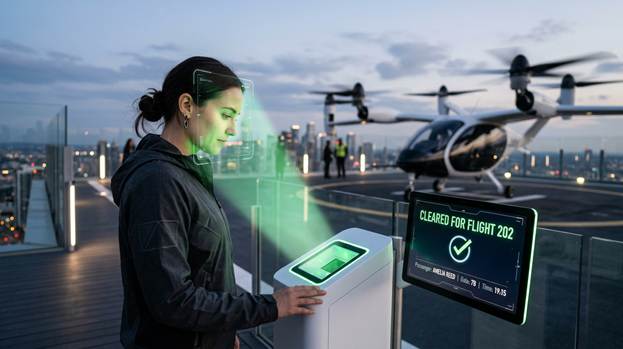
The Privacy Hurdle: A Cultural Divide
While Tokyo developers are finding success with facial recognition, the American market faces a unique challenge: privacy regulation. States like Illinois (BIPA) and California (CCPA) have strict laws regarding biometric data. For a rooftop service to work in the U.S., developers must prove that the facial data used for "check-in" is encrypted, ephemeral, and strictly used for flight manifest requirements.
If U.S. developers can bridge the gap between "high-tech security" and "personal privacy," the rooftop helipads of our major cities will transform from emergency-only relics into the most valuable transit hubs in the country.
Wrapping Up
The trials currently underway in Tokyo are more than just a tech demo; they are a stress test for the future of urban density. By combining facial recognition security with existing rooftop infrastructure, developers are solving the "bottleneck" problem of air travel. In the United States, the abundance of existing helipads in cities like Los Angeles and the aggressive timelines of companies like Joby and Archer suggest that the "vertical commute" is less than five years away.
While initially a playground for the C-suite, the automation provided by biometric check-ins is the key to scaling this service for the broader workforce. The sky is no longer the limit; it is the new HOV lane. The only question remains whether American passengers are ready to trade their privacy for a 10-minute commute over the clouds.
Disclosure: Images rendered by Artlist.io
Rob Enderle is a technology analyst at Torque News who covers automotive technology and battery developments. You can learn more about Rob on Wikipedia and follow his articles on TechNewsWord, TGDaily, and TechSpective.
Set Torque News as Preferred Source on Google
Follow us today...