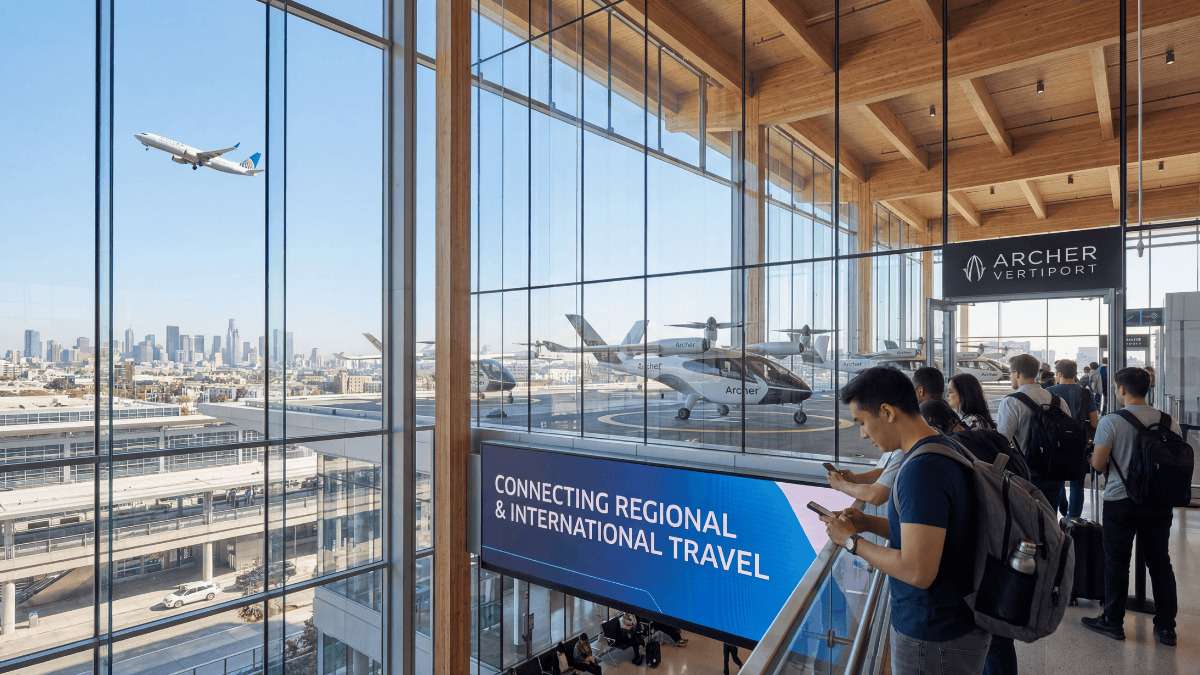

For decades, the "flying car" has been the ultimate vaporware of the futurist community—a persistent mirage of mid-century optimism that never quite cleared the horizon. But according to Archer Aviation CEO Adam Goldstein, the mirage has just materialized into a multi-billion-dollar infrastructure. During recent federal pilot initiative briefings, Goldstein declared that the Advanced Air Mobility (AAM) industry is currently facing its "Waymo moment."
Just as Waymo transitioned from experimental autonomous rigs to a seamless, app-based ride-hailing reality in cities like Phoenix and San Francisco, Archer is positioning its Midnight aircraft to do the same for the skies. With projected fares as low as $3 to $4 per mile, the financial math of the daily commute is about to be rewritten. We are no longer talking about toys for the ultra-wealthy; we are talking about the obsolescence of the garage.
The Historical Flight Path: From Sci-Fi Dreams to eVTOL Reality
The dream of the flying taxi didn't start with Archer; it began with the realization that 2D infrastructure cannot handle 3D population growth. In the early 20th century, pioneers like Glenn Curtiss showcased the "Autoplane," which was essentially a car with removable wings. For a century, the industry struggled with the "dual-mode" problem—vehicles that were mediocre cars and dangerous airplanes.
The shift that allowed Archer to emerge was the revolution in distributed electric propulsion (DEP). Unlike traditional helicopters, which are loud, maintenance-intensive, and have single points of failure (the main rotor), Archer’s Midnight aircraft utilizes multiple small electric motors. This technology, combined with breakthroughs in high-energy-density lithium-ion batteries, has moved flying taxis from the realm of science fiction into the immediate reality of FAA certification tracks.
Archer’s history is defined by its rapid institutional backing, securing partnerships with United Airlines and Stellantis. This isn't a garage startup; it is a scaled industrial play aimed at solving the "last 50 miles" of transit.
The "Waymo Moment": Scaling the Invisible Infrastructure
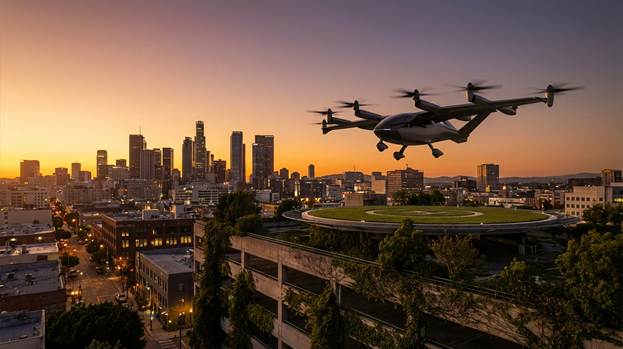
When Goldstein refers to a "Waymo moment," he is describing the transition from technology validation to operational scaling. For years, Waymo had the best sensors and the smartest AI, but it wasn't a "business" until you could download an app and have a car appear without a driver.
Archer is hitting this milestone through "Project Air Corridor." Federal pilot initiatives are currently mapping out specific, high-volume routes—such as Downtown Manhattan to Newark Liberty International Airport. By narrowing the scope to specific "aerial highways," Archer can prove safety and efficiency in a controlled environment before expanding. This mirrors Waymo’s geofencing strategy. Once the public sees these aircraft flying fixed routes with boring, repetitive safety, the psychological barrier to entry will vanish.
The $3-Per-Mile Math: Making the Personal Car Obsolete
The most shocking claim from the Archer camp is the price point. At $3 to $4 per mile, a 10-mile cross-city hop would cost roughly $30 to $40. While that sounds higher than a subway token, it is strikingly competitive with Uber Black or the total cost of owning, insuring, and parking a luxury sedan in a major metro area.
Research suggests that the average American spends over $12,000 annually to own and operate a new vehicle. If Archer can scale its "Air-as-a-Service" model, the value proposition changes. Why pay a $800 monthly car loan, $200 in insurance, and $400 in parking if you can summon a Midnight aircraft for your three most grueling weekly commutes and use ground-based autonomous EVs for the rest?
When the cost of "flight-hailing" drops below the cost of "car-owning," we will see a massive divestment in personal terrestrial vehicles. The garage will become an extra bedroom; the driveway will become a garden.
The Regulatory Tailwind: FAA and the Path to Type Certification
Historically, the FAA has been the "Department of No" for radical innovation. However, the regulatory landscape is shifting with unprecedented speed. The FAA recently released its Innovate28 plan, a roadmap for enabling competitive air taxi operations in at least one location by 2028.
Archer is currently working through the "Type Certification" process, ensuring that every bolt and line of code meets commercial airline standards. The federal government’s willingness to create "Special Federal Aviation Regulations" (SFAR) for AAM pilot certification shows that Washington views this as a national security and economic priority. They don't want to lose the electric aviation race to China’s EHang or Europe’s Lilium. This regulatory "green-lighting" is the wind beneath Archer's wings.
The Question of Ownership: Wealthy Toy or Public Utility?
Will you ever own a "flying car"? For 99% of the population, the answer is likely no—and that’s a good thing.
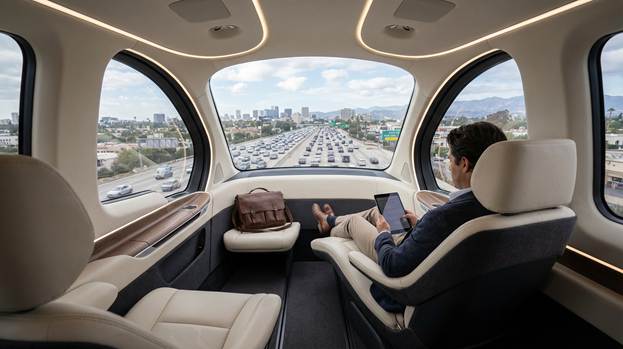
Private ownership of an eVTOL (electric Vertical Take-Off and Landing) aircraft makes little sense for the average person. The maintenance requirements, pilot licensing (even with simplified flight controls), and the need for designated take-off and landing pads make it a logistical nightmare. For the ultra-wealthy, private eVTOLs will replace the helicopter—cleaner, quieter, and more socially acceptable.
However, for the masses, the "Waymo model" of fractionalized use is the only path forward. Archer’s business model isn't selling planes to individuals; it’s selling seats to commuters. By maintaining the fleet themselves, they ensure maximum "up-time" and safety. Private ownership is the past; "Mobility-as-a-Service" (MaaS) is the future.
A Future Without Asphalt: The Post-Car Cityscape
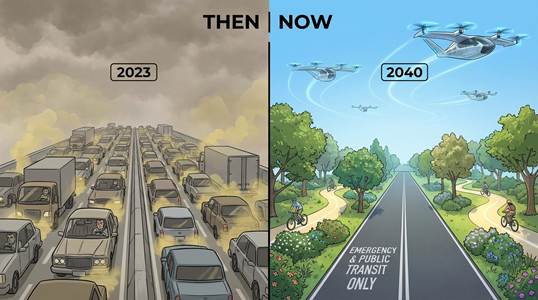
Imagine a city in 2040. The deafening roar of six-lane highways has been replaced by a rhythmic, low-frequency hum. Because Archer’s aircraft are roughly 100 times quieter than a helicopter, they can land in the heart of residential neighborhoods without disturbing the peace.
In this future, "commuting" is no longer a test of psychological endurance. A trip from San Jose to San Francisco, which currently takes 90 minutes in grueling traffic, becomes a 12-minute scenic flight. As terrestrial car ownership fades, cities will begin to reclaim the 30% of urban land currently dedicated to parking. We will see the "Green-of-the-Grid"—where former parking lots become parks, and street-side parking becomes bike lanes and pedestrian walkways. The flying taxi is, ironically, the key to making our cities more walkable.
Wrapping Up
Archer Aviation’s "Waymo moment" is more than just a marketing buzzword; it is a signal that the infrastructure of the 21st century is finally moving upward. By targeting a price point of $3–$4 per mile, Archer is attacking the primary moat of the automotive industry: affordability.
When you combine the declining cost of renewable energy, the efficiency of electric propulsion, and a favorable regulatory environment, the argument for owning a two-ton steel box that sits idle 95% of the time begins to crumble. We are standing at the precipice of a transition as significant as the move from the horse and buggy to the Model T. The sky is no longer the limit; it is the destination.
Disclosure: Images rendered by Artlist.io
Rob Enderle is a technology analyst at Torque News who covers automotive technology and battery developments. You can learn more about Rob on Wikipedia and follow his articles on TechNewsWord, TGDaily, and TechSpective.
Set Torque News as Preferred Source on Google
Follow us today...